Sesamum calycinum subsp. angustifolium
(Oliv.) Ihlenf. & Seidenst.
Wild simsim
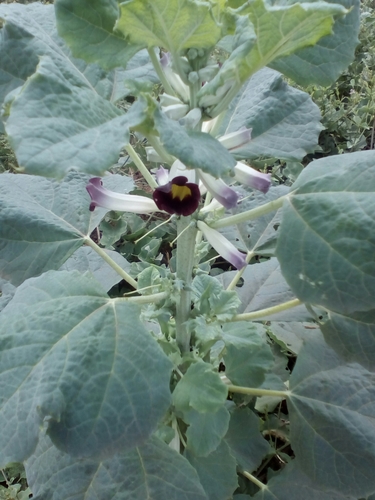
iNaturalist· cc-by-nc
(c) poomba123, some rights reserved (CC BY-NC)
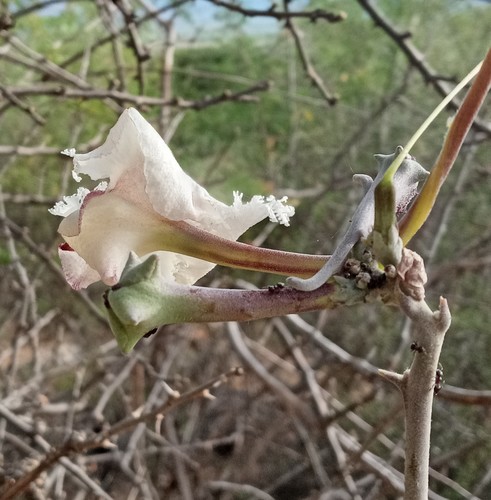
iNaturalist· cc-by-nc
(c) Bart Wursten, some rights reserved (CC BY-NC), uploaded by Bart Wursten
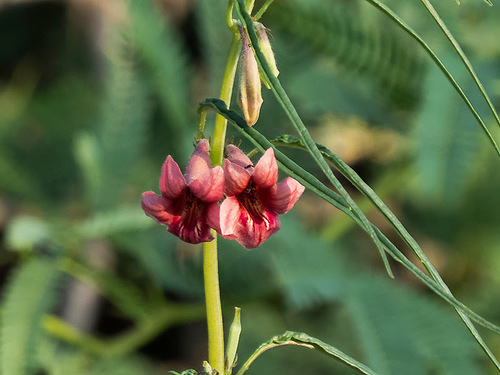
iNaturalist· cc-by-nc
(c) Colin Ralston, some rights reserved (CC BY-NC), uploaded by Colin Ralston
Description
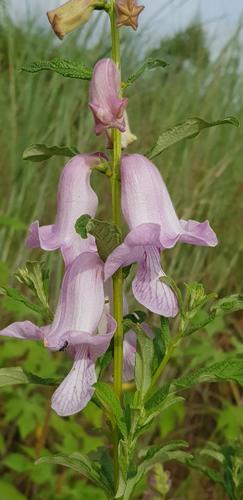
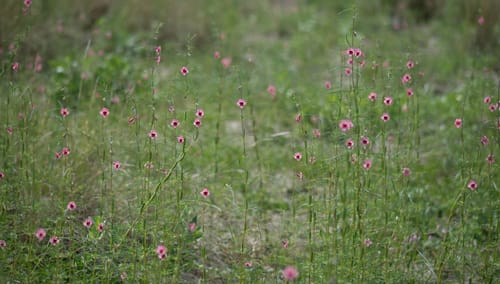
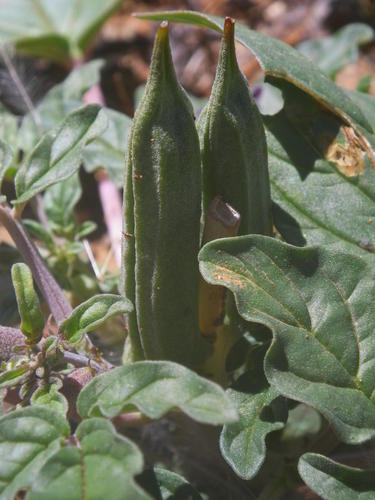
A herb. It may or may not be branched. It grows 75-200 cm tall. The leaves are narrow and alternate or opposite. They are 2-12 cm long by 0.1-4 cm wide. The lower leaves can have irregular teeth. The flowers are dull red. They are a slightly bell shaped. They are 2.5 cm long. The fruit is a capsule 2.5 cm long. It has a beak.
Edible Uses
Young shoots and leaves are cooked and eaten; they are slimy and often chopped and cooked with other leaves or used to thicken sauces. Seeds are eaten in sauces and soups, and are pressed for edible oil.
Traditional Uses
The young shoots and leaves are cooked and eaten. They are slimy so are chopped and cooked with other leaves. They are also used to thicken sauces. The seeds are eaten in sauces and soups. They seeds produce an edible oil.
Distribution
A tropical plant. It grows in waste places and is a weed of cultivated areas. It grows from sea level to 2,000 m above sea level.
Where It Grows
Africa, Botswana, Burundi, Central Africa, Congo, East Africa, Kenya, Malawi, Mozambique, Namibia,Nigeria, South Africa, Southern Africa, South Sudan, Tanzania, Uganda, West Africa, Zambia, Zimbabwe,
Cultivation
Plants can be grown by seeds. A spacing of 20 cm is suitable.
Production
Young shoots can be harvested 6 weeks after sowing. The shoots are too tough to use when flowering and fruiting start. The leaves are collected in the rainy season and the seeds in the dry season.
Other Information
It is occasionally cultivated and sold in markets. It is locally appreciated. It has average palatability.
Synonyms
Also Known As
Chewe, Derere resamwenda, Echama, Eku gogoro, Emelerait, Kafulu, Mfuta, Mlenda mwitu, Nyuom jong, Nyuomweng, Oboto, Onyulo, Othigu-zingili, Otigo-anino, Otigo nino, Sope
References (26)
- Burkill, H. M., 1985, The useful plants of west tropical Africa, Vol. 4. Kew.
- Fowler, D. G., 2007, Zambian Plants: Their Vernacular Names and Uses. Kew. p 53
- Goode, P., 1989, Edible Plants of Uganda. FAO p 30 (As Sesamum angustifolium)
- Goode, P., 1989, Edible Plants of Uganda. FAO p 39
- Grivetti, L. E., 1980, Agricultural development: present and potential role of edible wild plants. Part 2: Sub-Saharan Africa, Report to the Department of State Agency for International Development. p 42, 49
Show all 26 references Hide references
- Grubben, G. J. H. and Denton, O. A. (eds), 2004, Plant Resources of Tropical Africa 2. Vegetables. PROTA, Wageningen, Netherlands. p 464
- H. G. A. Engler, Pflanzenw. Ost-Afrikas C:365. 1895
- INFOODSUpdatedFGU-list.xls
- Jardin, C., 1970, List of Foods Used In Africa, FAO Nutrition Information Document Series No 2.p 100
- Johns, T., and Kokwaro, J.O., 1991, Food Plants of the Luo of Siayo District, Kenya. Economic Botany 45(1), pp 103-113
- Martin, F.W. & Ruberte, R.M., 1979, Edible Leaves of the Tropics. Antillian College Press, Mayaguez, Puerto Rico. p 211
- Masters, T., 2021, Traditional food plants of the upper Aswa River catchment of northern Uganda—a cultural crossroads. Journal of Ethnobiology and Ethnomedicine (2021) 17:24
- Nayar, N.M., 1979, Sesame, in Simmonds, N.W., (ed), Crop Plant Evolution. Longmans. London. p 231
- Newman, 1970,
- Nyongesa, B. O., et al, 2014, Genetic relationship between sesame (Sesamum indicum L.) and related wild species based on chromosome counts and isozyme markers. African Journal of Agricultural Research. 9(10) pp. 1052-1060 (As Sesamum angustifolium)
- Ojelel, S. & Kakudidi, E. K., 2015, Wild edible plant species utilized by a subsistence farming community in the Obalanga sub-county, Amuria district, Uganda. Journal of Ethnobiology and Ethnomedicine. 11:7 (As Sesamum angustifolium)
- Ojelel, S., et al, 2019, Wild edible plants used by communities in and around selected forest reserves of Teso-Karamoja region, Uganda. Journal of Ethnobiology and Ethnomedicine (2019) 15:3 (As Sesamum angustifolium)
- Oniang’o, R., Grum, M. and Obel-Lawson, E., editors. 2008. Developing African leafy vegetables for improved nutrition. Regional workshop, 6-9 December 2005. Rural Outreach Program, Nairobi, Kenya. p 3 (As Sesamum angustifolium)
- Peters, C. R., O'Brien, E. M., and Drummond, R.B., 1992, Edible Wild plants of Sub-saharan Africa. Kew. p 160
- Reis, S. V. and Lipp, F. L., 1982, New Plant Sources for Drugs and Foods from the New York Botanical Garden herbarium. Harvard. p 278 (As Sesamum angustifolium)
- Ruffo, C. K., Birnie, A. & Tengnas, B., 2002, Edible Wild Plants of Tanzania. RELMA p 608
- Shava, S., et al, 2009, Traditional food crops as a source of community resilience in Zimbabwe. International Journal of the African Renaissance 4(1) (As Sesamum angustifolium)
- Smith, F. I. and Eyzaquirre, P., 2007, African leafy vegetables: Their role in the World Health Organization's global Fruit and Vegetables Initiative. AJFAND, Vol. 7 No. 3
- Tallantire & Goode, 1975,
- Terra, G.J.A., 1973, Tropical Vegetables. Communication 54e Royal Tropical Institute, Amsterdam, p 73
- Williamson, J., 2005, Useful Plants of Malawi. 3rd. Edition. Mdadzi Book Trust. p 225