Sesamum alatum
Thonn. ex Schumach.
Winged sesame
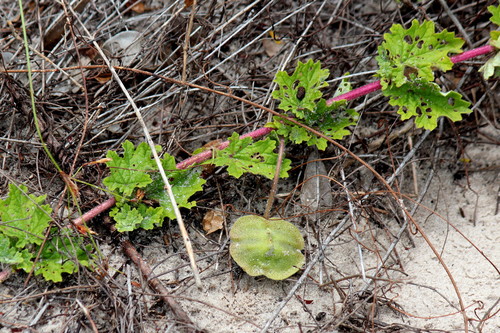
iNaturalist· cc-by
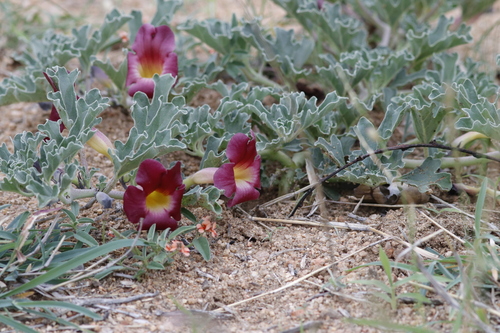
(c) Paulmathi Vinod, some rights reserved (CC BY), uploaded by Paulmathi Vinod
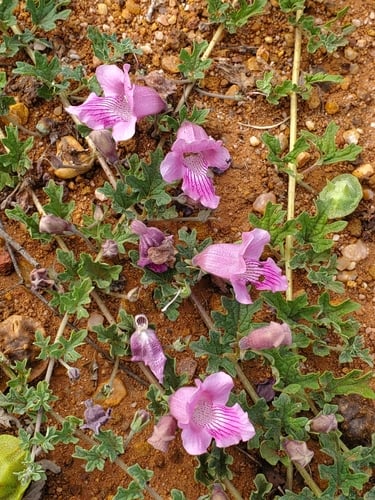
iNaturalist· cc-by-nc
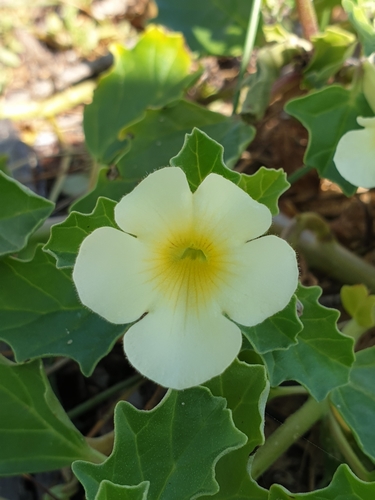
(c) Marinda, some rights reserved (CC BY-NC)
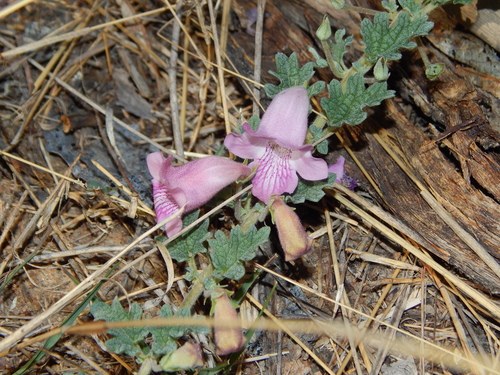
iNaturalist· cc-by-nc
(c) Marinda, some rights reserved (CC BY-NC)
Summary
Source: WikipediaSesamum alatum is a species of flowering plant in the Pedaliaceae. It is in the same genus as sesame. In English it is called winged-seed sesame. Its native range spans from Western Sahara to Egypt and south to KwaZulu-Natal in South Africa.
Description
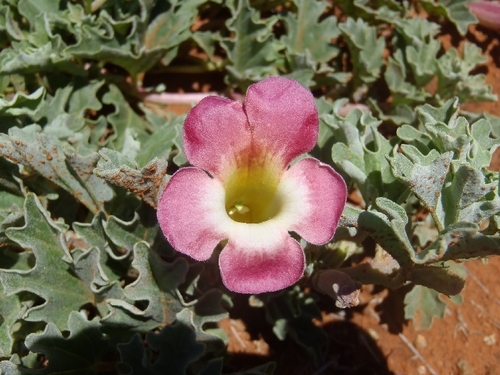
A shrub. It is erect and grows 45-150 cm high. There are few branches. The leaves at the base have irregular lobes. The upper leaves are narrow and single. They are 10 cm long by 4 m wide. The flowers occur singly. They are in the axils of leaves. They are pink tubes. The fruit are 3.5 cm long by 7 mm across. It tapers downward and ends in a beak.
Edible Uses
The seeds are edible and can be eaten raw, cooked, pulverized into a powder, or pressed to make oil. In Sudan the seed is both pressed for oil and the seed pods of the plant are eaten. The oil content of winged-seed sesame contains higher amounts of oleic acid and palmitic acid, but lower amounts of linoleic acid than Sesamum Indicum. In Chad, where in the local Arabic dialect they are known as Sumsum al rhazal the leaves are eaten. They are a cultivated crop in some areas of Ghana and the young shoots are edible with a mucilaginous texture; being cooked and eaten as a vegetable.
Traditional Uses
The seeds are rich in oil which is used in cooking. The seeds are ground into flour. They are also eaten as a snack. The leaves are cooked and used as a vegetable. They are also used as a thickening agent.
Medicinal Uses
The Shona call the plant guzozo and throughout its native rage, locals use the plant as an aphrodisiac, a cure to diarrhoea and various intestinal disorders. Antidiabetic Renoprotective activity has been claimed to be present in the plant which are said to combat Type 2 Diabetes and other metabolic disorder, characterized by chronic hyperglycemia, although the exact compounds that are responsible for that activity has yet to be discovered.
Distribution
It is a tropical plant. It mostly grows on sandy soils. It grows in dry savannah. It grows between 600-900 m above sea level. It can grow in arid places. It grows in the Sahara.
Where It Grows
Africa, Benin, Botswana, Burkina Faso, Cameroon, Central Africa, Chad, Congo, East Africa, Eswatini, Ethiopia, Ghana, India, Kenya, Madagascar, Mali, Mediterranean, Morocco, Mozambique, Namibia, Niger, Nigeria, North Africa, Senegal, South Africa, Southern Africa, Sudan, Swaziland, Tanzania, Uganda, West Africa, Zambia, Zimbabwe,
Cultivation
A plant of the drier tropics. The plant is sometimes a weed within its native range.
Other Information
A minor vegetable of local importance.
Notes
There are 19 Sesamum species.
Synonyms
Also Known As
Chinhonhoane, Cimangamangane, Gazelle's sesame, Ludvonca-loludliwako, Namt, Selg Imohr, Sum-sum al rhazal, Tacoutta, Udonqa
References (27)
- Abbiw, D.K., 1990, Useful Plants of Ghana. West African uses of wild and cultivated plants. Intermediate Technology Publications and the Royal Botanic Gardens, Kew. p 41
- Achigan-Dako, E, et al (Eds), 2009, Catalogue of Traditional Vegetables in Benin. International Foundation for Science.
- Burkill, H. M., 1985, The useful plants of west tropical Africa, Vol. 4. Kew.
- Busson, 1965,
- CRÉAC'H,
Show all 27 references Hide references
- Dalziel, J. M., 1937, The Useful plants of west tropical Africa. Crown Agents for the Colonies London.
- Facciola, S., 1998, Cornucopia 2: a Source Book of Edible Plants. Kampong Publications, p 168
- Fox, F. W. & Young, M. E. N., 1982, Food from the Veld. Delta Books. p 290
- Grubben, G. J. H. and Denton, O. A. (eds), 2004, Plant Resources of Tropical Africa 2. Vegetables. PROTA, Wageningen, Netherlands. p 462
- Jansen, P.C.M., 2004. Sesamum alatum Thonn. ex Schumach. [Internet] Record from Protabase. Grubben, G.J.H. & Denton, O.A. (Editors). PROTA (Plant Resources of Tropical Africa), Wageningen, Netherlands. < http://database.prota.org/search.htm>. Accessed 22 October 2009
- Jardin, C., 1970, List of Foods Used In Africa, FAO Nutrition Information Document Series No 2.p 47, 100
- Kiple, K.F. & Ornelas, K.C., (eds), 2000, The Cambridge World History of Food. CUP p 1864
- Kunkel,
- Long, C., 2005, Swaziland's Flora - siSwati names and Uses http://www.sntc.org.sz/flora/
- Martin, F.W. & Ruberte, R.M., 1979, Edible Leaves of the Tropics. Antillian College Press, Mayaguez, Puerto Rico. p 211
- Nassif, F., & Tanji, A., 2013, Gathered food plants in Morocco: The long forgotten species in Ethnobotanical Research. Life Science Leaflets 3:17-54
- Peters, C. R., O'Brien, E. M., and Drummond, R.B., 1992, Edible Wild plants of Sub-saharan Africa. Kew. p 160
- Pickering, H., & Roe, E., 2009, Wild Flowers of the Victoria Falls Area. Helen Pickering, London. p 92
- Royal Botanic Gardens, Kew (1999). Survey of Economic Plants for Arid and Semi-Arid Lands (SEPASAL) database. Published on the Internet; http://www.rbgkew.org.uk/ceb/sepasal/internet [Accessed 5th May 2011]
- Ruiters-Welcome, A. K., 2019, Food plants of southern Africa. Ph.D. thesis. Univ. of Johannesburg p 85
- C. F. Schumacher, Beskr. Guin. pl. 284. 1827
- Swaziland's Flora Database http://www.sntc.org.sz/flora
- Tanaka,
- Terra, G.J.A., 1973, Tropical Vegetables. Communication 54e Royal Tropical Institute, Amsterdam, p 73
- Vernon, R., 1983, Field Guide to Important Arable Weeds of Zambia. Dept of Agriculture, Chilanga, Zambia. p 70
- Welcome, A. K. & Van Wyk, B.-E., 2019, An inventory and analysis of the food plants of southern Africa. South African Journal of Botany 122 (2019) 136–179
- World Checklist of Useful Plant Species 2020. Royal Botanic Gardens, Kew