Sambucus gaudichaudiana
DC.
White elderberry, Native elder
iNaturalist· cc-by-nc-sa
(c) Reiner Richter, some rights reserved (CC BY-NC-SA)
iNaturalist· cc-by-nc-sa
(c) Reiner Richter, some rights reserved (CC BY-NC-SA)
iNaturalist· cc-by-nc
(c) maggie_acf, some rights reserved (CC BY-NC)
Summary
Source: WikipediaSambucus gaudichaudiana, commonly known as white elderberry, is a species of flowering plant in the family Adoxaceae and is endemic to eastern Australia. It is a perennial shrub but with stems that are produced annually with pinnate leaves that have three to eleven leaflets, small white flowers and small but edible fruit. It grows in cool forest and shady gorges.
Description
A low shrub. It grows about 1-3.5 m high. It has soft, hollow branches. It is soft wooded at the base. The leaves are divided into leaflets along the stalk. There are 5-9 leaflets. The leaflets are 5-15 cm long and have teeth along their edge. The flowers are white. They occur in clusters in a much branched head. The fruit are pale yellow and round and fleshy.
Edible Uses
The fruit can be eaten raw or cooked; it is juicy, slightly sour but pleasant, and usually sweet, though some forms are bitter. The fruit is small but is borne in large clusters, making harvesting easy. Some caution is advised regarding toxicity. The flowers can also be eaten raw or cooked.
Traditional Uses
The fruit are cooked and are sweet and eaten. They are also used for jam.
This uses section is brief — help expand it
Medicinal Uses
None known
Known Hazards
Although no specific mention has been seen for this species, the leaves and stems of some, if not all, members of this genus are poisonous. The fruit of many species (although no records have been seen for this species) has been known to cause stomach upsets to some people. Any toxin the fruit might contain is liable to be of very low toxicity and is destroyed when the fruit is cooked.
Distribution
It is a temperate plant. It grows on limestone outcrops. It also grows in fern gullies. Tasmania Herbarium.
Where It Grows
Australia*, Tasmania*,
Cultivation
We have very little information on this species and do not know if it will be hardy in Britain, though judging by its native range it is only likely to be hardy outdoors in the mildest areas of the country. The plant is more of a sub-shrub, producing annual shoots from a perennial rootstock. The following notes are based on the general needs of the genus. Tolerates most soils, including chalk, but prefers a moist loamy soil. Tolerates some shade but is best in a sunny position. Tolerates atmospheric pollution and coastal situations. Plants in this genus are notably resistant to honey fungus.
Propagation
Seed is best sown as soon as ripe in autumn in a cold frame, where it should germinate in early spring. Stored seed sown in spring will germinate more reliably after 2 months of warm followed by 2 months of cold stratification. Prick seedlings into individual pots when large enough; if growth is strong, plant out in early summer, otherwise hold in a sheltered nursery bed or pots and plant out the following spring. Half-ripe cuttings of 7–10cm with a heel can be taken in July or August in a frame. Hardwood cuttings of 15–20cm with a heel from the current season's growth can be taken in late autumn in a frame or sheltered outdoor bed.
Other Uses
None known
Notes
There are about 25 Sambucus species. Also put in the family Sambucaceae and Caprifoliaceae.
Dangerous Lookalikes
This plant can be confused with the following toxic species. Always verify identification carefully before consuming any wild plant.
Pokeweed
Phytolacca americana
Jakec
White elderberry
Sambucus gaudichaudiana
(c) Reiner Richter, some rights reserved (CC BY-NC-SA)
Pokeweed: Thick red/purple herbaceous stems (no bark), berries in a line (raceme), simple large leaves, large white taproot.
White elderberry: Woody bark, berries in broad flat clusters (cymes), compound leaves with 5-7 leaflets.
Also Known As
Burne-burne
References (17)
- Bonney, N., 2012, Edible Wild Native Plants for Southern Australia. p 110
- Cameron, M., (Ed.) 1981, A Guide to Flowers & Plants of Tasmania. Reed p 54
- Cherikoff V. & Isaacs, J., The Bush Food Handbook. How to gather, grow, process and cook Australian Wild Foods. Ti Tree Press, Australia p 196
- Cribb, A.B. & J.W., 1976, Wild Food in Australia, Fontana. p 56
- Curtis, W.M., 1963, The Students Flora of Tasmania Vol 2 p 265
Show all 17 references Hide references
- Glowinski, L., 1999, The Complete Book of Fruit Growing in Australia. Lothian. p 176
- Gott, B & Conran, J., 1991, Victorian Koorie Plants. PO Box 666 Hamilton, Victoria 3300, Australia. p 36
- Harris, S., Buchanan, A., Connolly, A., 2001, One Hundred Islands: The Flora of the Outer Furneaux. Tas Govt. p 219
- Hastings Advance Community College, 2017, Uses for Native Plants of the Mornington Peninsula. 86pp. p 67
- Lazarides, M. & Hince, B., 1993, Handbook of Economic Plants of Australia, CSIRO. p 210
- Low, T., 1991, Wild Food Plants of Australia. Australian Nature FieldGuide, Angus & Robertson. p 65
- Morley, B.D., & Toelken, H.R., (Eds), 1983, Flowering Plants in Australia. Rigby. p 245
- Plants for a Future database, The Field, Penpol, Lostwithiel, Cornwall, PL22 0NG, UK. http://www.scs.leeds.ac.uk/pfaf/
- Tasmanian Herbarium Vascular Plants list p 18
- Whiting, J. et al, 2004, Tasmania's Natural Flora. Tasmania's Natural Flora Editorial Committee PO Box 194, Ulverstone, Tasmania, Australia 7315 p 86
- Woolmore, E et al, 2002, King Island Flora: A Field Guide. p 36
- www.ceres.org.au/bushfoodcatalogue
More from Adoxaceae
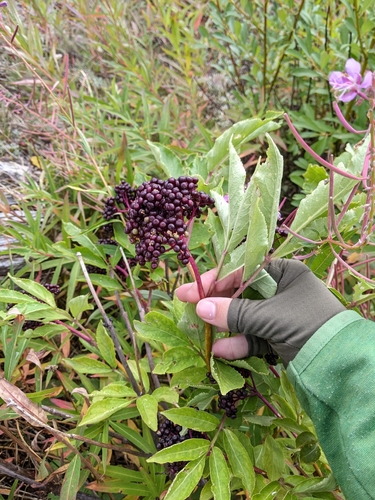
Sambucus melanocarpa
Black berried elder, Black elder, Blackbead elderberry
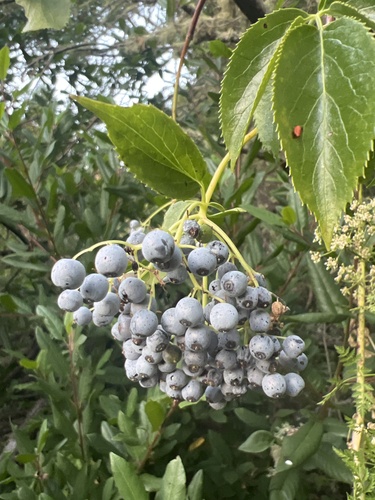
Sambucus mexicana
Mexican elderberry
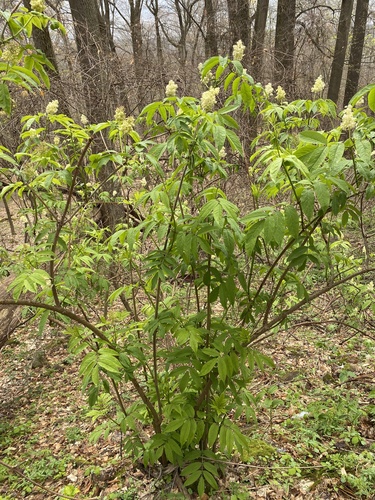
Sambucus microbotrys
Red elder, European Red Elderberry

Sambucus nigra
European Elderberry, Black Elder
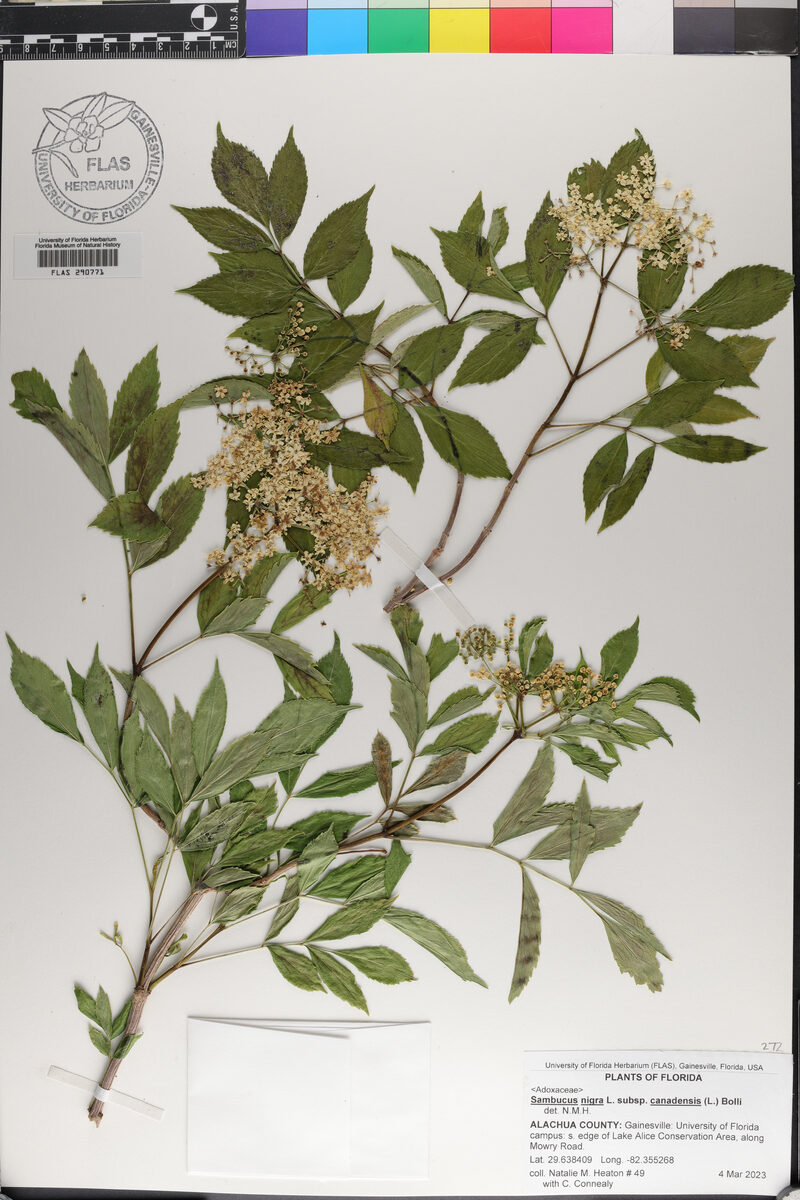
Sambucus nigra subsp. canadensis
Canadian elderberry
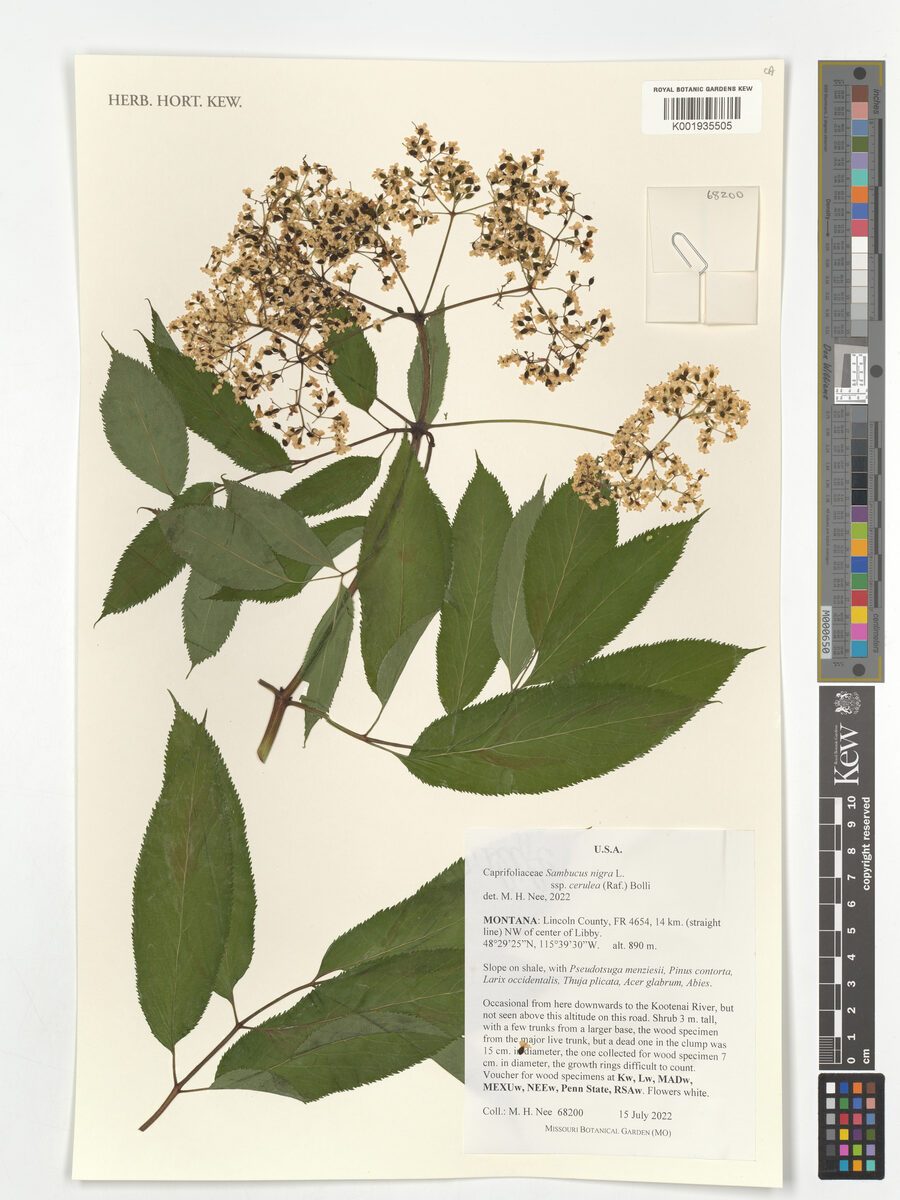
Sambucus nigra subsp. cerulea
Blue black elder