Sambucus nigra subsp. canadensis
(L.) Bolli
Canadian elderberry
gbif· cc-by-nc
Florida Museum of Natural History Herbarium - University of Florida
Summary
Source: WikipediaSambucus nigra is a species complex of flowering plants in the family Viburnaceae native to most of Europe. Common names include elder, elderberry, black elder, European elder, European elderberry, and European black elderberry. It grows in a variety of conditions including both wet and dry fertile soils, primarily in sunny locations. The plant is widely grown as an ornamental shrub or small tree. Both the flowers and the berries have a long tradition of culinary use, primarily for cordial and wine. Although the plant is commonly used in dietary supplements and traditional medicine, there is no scientific evidence that it provides any significant health benefit.
Description
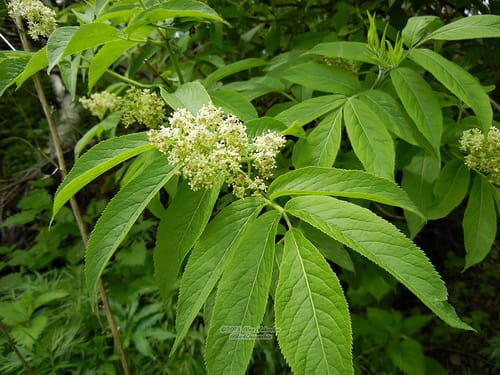
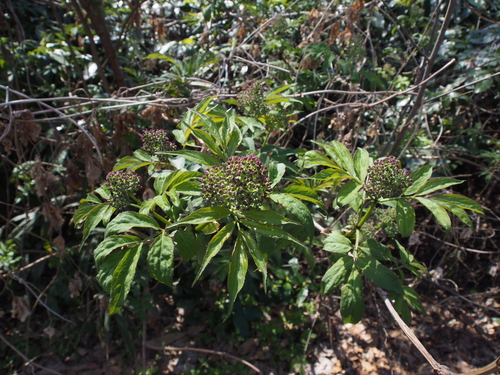
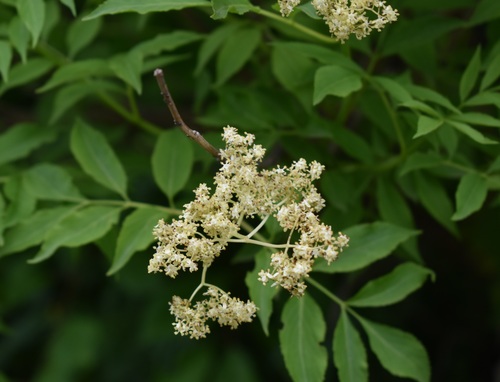
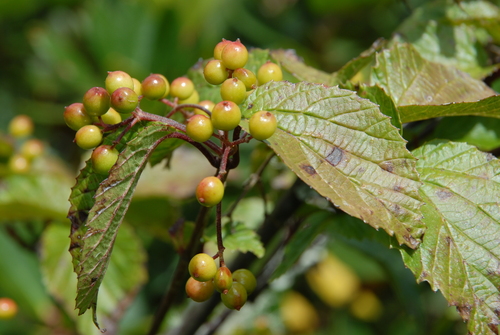
An upright shrub. It grows to 4 m tall. It has stout shoots. The leaves are divided along the stalk. The leaves are 30 cm long with 9 or more long leaflets which are light green and have teeth around the edge. The end leaflet is often the largest. The leaflets are 5-15 cm long and have teeth along the edge. The flowers occur in flattened panicles. The flowers are white. The flower heads can be 20 cm across. They occur in broad flat clusters. The fruit are purple-black and 5 mm across. They are edible. There are several named cultivated varieties.
Edible Uses
The dark blue or purple berries are mildly poisonous in their raw state, but are edible after cooking. They can be used to make jam, jelly, chutney, and Pontack sauce. In Scandinavia and Germany, soup made from the elderberry (e.g. the German Fliederbeersuppe) is a traditional meal. Commonly, the flowerheads are used in infusions, giving a drink in Northern Europe and the Balkans. These drinks are sold commercially as elderflower cordial or elderflower pressé. In Europe, the flowers are made into a syrup or cordial (in Romanian: socată, in Swedish: fläder(blom)saft, in Danish: hyldeblomstsaft / hyldedrik), which is diluted with water before drinking. The popularity of this traditional drink recently has encouraged some commercial soft drink producers to introduce elderflower-flavoured drinks (Fanta Shokata, Freaky Fläder). The flowers also may be dipped into a light batter and then fried to make elderflower fritters. The berries may be made into elderberry wine. In Hungary, an elderberry brandy is made that requires 50 kilograms of fruit to produce 1 litre of brandy. In south-western Sweden, it is traditional to make a snaps liqueur flavoured with elderflower. Elderflowers are used in liqueurs such as St-Germain, and in a mildly alcoholic sparkling elderflower 'champagne', although a more alcoholic home-made version can be made. In Beerse, Belgium, a variety of jenever called beers vlierke is made from the berries.
Traditional Uses
The flowers can be dipped in batter and fried in oil. The flower buds are pickled and used as capers. The berries can be made into jelly. They are used in pies, jams, preserves, sauces, chutneys, vinegar, pancakes and muffins. The juice can be made into a drink and wine. The dried fruit can be used in deserts. The dried flowers are used for tea. CAUTION: The unripe fruit can cause vomiting.
Medicinal Uses
This plant is used in traditional medicine by native peoples and herbalists. Extracts of the flowers and fruits are used for cold and flu symptoms, although there is no high-quality clinical evidence that it is effective for treating any disease.
Known Hazards
Components of the elderberry plant, including its fruit, contain diverse phytochemicals, such as alkaloids, lectins, and cyanogenic glycosides, which may be toxic if consumed raw. The seeds and all green parts of the plant contain cyanogenic glycosides. Consumption of berries, leaves, bark or stems, if not properly prepared, may cause nausea, vomiting, and severe diarrhea. Elderberry plant constituents or products should not be consumed during pregnancy or by people with allergies or gastrointestinal diseases. Elderberry products may cause adverse effects when used with prescription drugs.
Distribution
It needs damp, rich soil. It grows along roadside ditches and stream banks. They occur in tropical America. In tropical Queensland in Australia they grow between 680-1000 m altitude. It suits hardiness zones 3-10.
Where It Grows
Asia, Australia, Belize, Bolivia, Canada, Central America, Costa Rica, Cuba, Dominica, Dominican Republic, El Salvador, Guadeloupe, Guatemala, Haiti, Honduras, India, Martinique, Mexico, Nicaragua, North America, Pacific, Panama, Papua New Guinea, PNG, USA, West Indies,
Cultivation
Plants can be grown from seed or cuttings.
Notes
There are about 25 Sambucus species. Also put in the family Sambucaceae.
Dangerous Lookalikes
This plant can be confused with the following toxic species. Always verify identification carefully before consuming any wild plant.
Pokeweed
Phytolacca americana
Jakec
Canadian elderberry
Sambucus nigra subsp. canadensis
Florida Museum of Natural History Herbarium - University of Florida
Pokeweed: Thick red/purple herbaceous stems (no bark), berries in a line (raceme), simple large leaves, large white taproot.
Canadian elderberry: Woody bark, berries in broad flat clusters (cymes), compound leaves with 5-7 leaflets.
Synonyms
Also Known As
American elder, White elder, Sweet elder
References (31)
- Ambasta, S.P. (Ed.), 2000, The Useful Plants of India. CSIR India. p 545
- Arriaga, M. R. et al, 2014, Catalogue of fruit species in the southeast of the State of Mexico, Mexico. Revista Mexicana de Ciencias Agricolas Vol. 5 Num. 8. pp 1509-1517
- Beckstrom-Sternberg, Stephen M., and James A. Duke. "The Foodplant Database." http://probe.nalusda.gov:8300/cgi-bin/browse/foodplantdb.(ACEDB version 4.0 - data version July 1994)
- Brickell, C. (Ed.), 1999, The Royal Horticultural Society A-Z Encyclopedia of Garden Plants. Convent Garden Books. p 931
- Cooper, W. and Cooper, W., 2004, Fruits of the Australian Tropical Rainforest. Nokomis Editions, Victoria, Australia. p 112
Show all 31 references Hide references
- Cundall, P., (ed.), 2004, Gardening Australia: flora: the gardener's bible. ABC Books. p 1308
- Diss. Bot. 223:168. 1994
- Duke, J.A., 1992, Handbook of Edible Weeds. CRC Press. p 176
- Elias, T.S. & Dykeman P.A., 1990, Edible Wild Plants. A North American Field guide. Sterling, New York p 190
- Facciola, S., 1998, Cornucopia 2: a Source Book of Edible Plants. Kampong Publications, p 222 (As Sambucus canadensis)
- Farrar, J.L., 1995, Trees of the Northern United States and Canada. Iowa State University press/Ames p 173
- Fisk, J. R. & Hoover, E., 2015, Wild Fruits of Minnesota. A Field Guide. University of Minnesota p 30
- Flowerdew, B., 2000, Complete Fruit Book. Kyle Cathie Ltd., London. p 178
- Glowinski, L., 1999, The Complete Book of Fruit Growing in Australia. Lothian. p 176
- Grandtner, M. M., 2008, World Dictionary of Trees. Wood and Forest Science Department. Laval University, Quebec, Qc Canada. (Internet database http://www.wdt.qc.ca)
- Hedrick, U.P., 1919, (Ed.), Sturtevant's edible plants of the world. p 592
- Henty, E.E., 1980, Harmful Plants in Papua New Guinea. Botany Bulletin No 12. Division Botany, Lae, Papua New Guinea. p 30 Pl.11
- Heywood, V.H., Brummitt, R.K., Culham, A., and Seberg, O. 2007, Flowering Plant Families of the World. Royal Botanical Gardens, Kew. p 291
- Hibbert, M., 2002, The Aussie Plant Finder 2002, Florilegium. p 286
- https://www.fireflyforest.com/flowers/category/edible-plants/ Edible Plants – Southeastern Arizona Wildflowers and Plants
- John, L., & Stevenson, V., 1979, The Complete Book of Fruit. Angus & Robertson p 127
- Kiple, K.F. & Ornelas, K.C., (eds), 2000, The Cambridge World History of Food. CUP p 1771
- Lazarides, M. & Hince, B., 1993, Handbook of Economic Plants of Australia, CSIRO. p 210
- Little, E.L., 1980, National Audubon Society Field Guide to North American Trees. Alfred A. Knopf. p 669
- Llamas, K.A., 2003, Tropical Flowering Plants. Timber Press. p 41
- Loughmiller, C & L., 1985, Texas Wildflowers. A Field Guide. University of Texas, Austin. p 41
- Plants for a Future database, The Field, Penpol, Lostwithiel, Cornwall, PL22 0NG, UK. http://www.scs.leeds.ac.uk/pfaf/
- Plants of Haiti Smithsonian Institute http://botany.si.edu
- Self, M., 199, Phoenix Seeds catalogue. p 15
- USDA, ARS, National Genetic Resources Program. Germplasm Resources Information Network - (GRIN). [Online Database] National Germplasm Resources Laboratory, Beltsville, Maryland. Available: www.ars-grin.gov/cgi-bin/npgs/html/econ.pl (10 April 2000)
- van Wyk, B., 2005, Food Plants of the World. An illustrated guide. Timber press. p 336