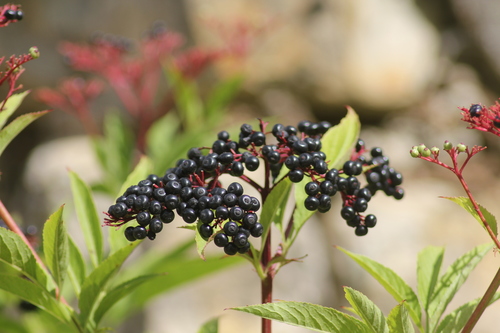
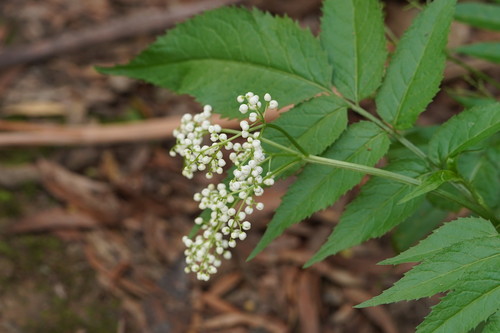
Sambucus microbotrys
Rydb.
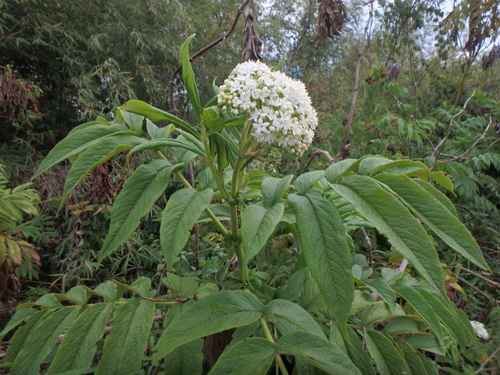
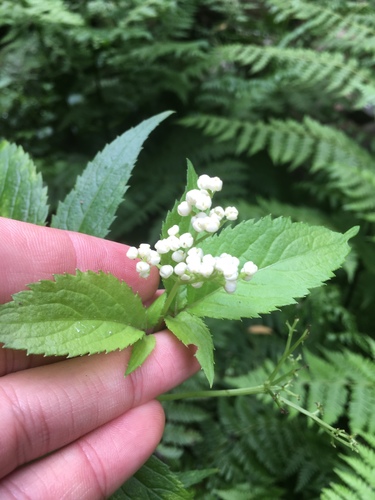
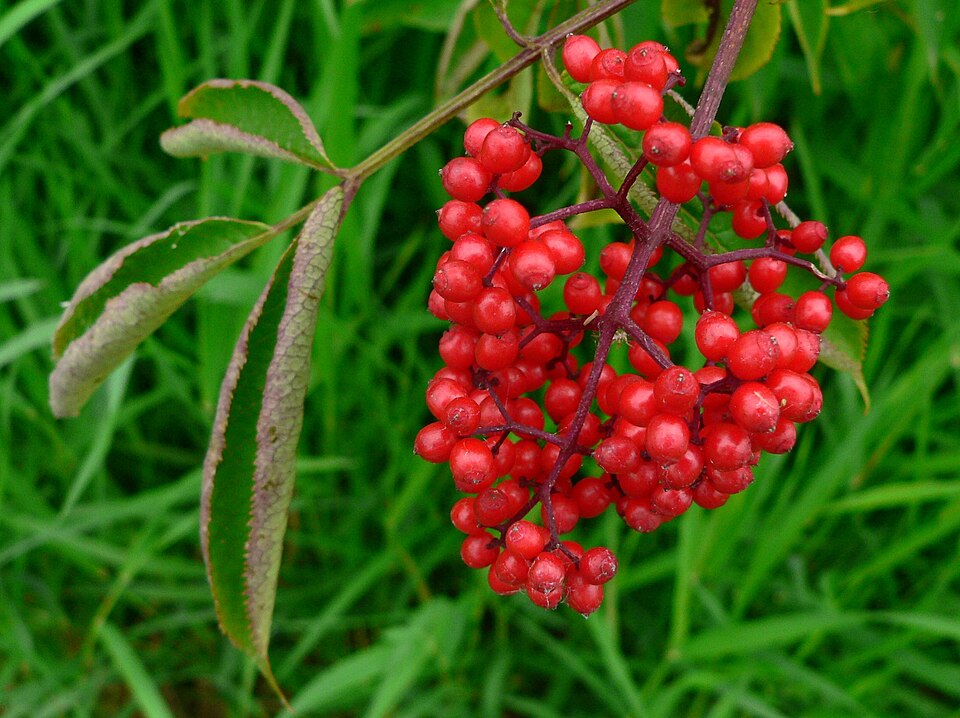
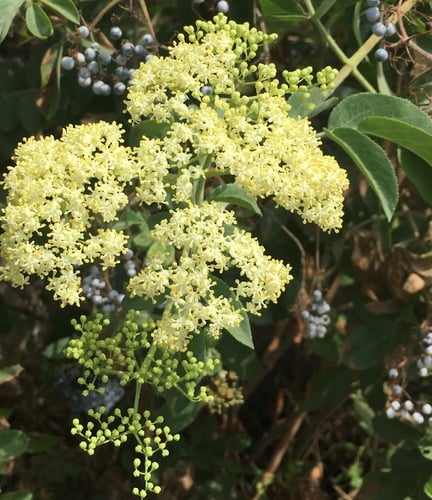
Red elder, European Red Elderberry
iNaturalist· cc0
no rights reserved
iNaturalist· cc-by-nc-sa
(c) Liv MW, some rights reserved (CC BY-NC-SA)
iNaturalist· cc-by-nc
(c) Stanley Wood, some rights reserved (CC BY-NC)
Summary
Deciduous shrub reaching 2 m, hardy to UK zone 6. Hermaphrodite flowers pollinated by insects. Adapts to light sandy, medium loamy, or heavy clay soils across mildly acid to basic pH. Tolerates semi-shade or full sun, prefers moist conditions, withstands strong winds and air pollution but not salt spray.
Description
Deciduous shrub reaching 2 m, hardy to UK zone 6. Hermaphrodite flowers pollinated by insects. Adapts to light sandy, medium loamy, or heavy clay soils across mildly acid to basic pH. Tolerates semi-shade or full sun, prefers moist conditions, withstands strong winds and air pollution but not salt spray.
Edible Uses
Both the flowers and fruit are edible raw or cooked. The fruit is about 4mm in diameter and is borne in large clusters. Some caution is advised regarding toxicity.
Medicinal Uses
None known
Known Hazards
Although no specific mention has been seen for this species, the leaves and stems of some, if not all, members of this genus are poisonous. The fruit of many species (although no records have been seen for this species) has been known to cause stomach upsets to some people. Any toxin the fruit might contain is liable to be of very low toxicity and is destroyed when the fruit is cooked.
Distribution
It is a temperate plant.
Where It Grows
North America, USA,
Cultivation
Tolerates most soils, including chalk, but prefers a moist loamy soil. Grows well in heavy clay soils. Tolerates some shade but is best in a sunny position. Tolerates atmospheric pollution and coastal situations. Plants in this genus are notably resistant to honey fungus.
Propagation
Seed is best sown as soon as it is ripe in autumn in a cold frame, where it should germinate in early spring. Stored seed sown in spring will likely germinate better with 2 months warm followed by 2 months cold stratification. Prick seedlings into individual pots when large enough to handle. If growth is good, young plants can go into permanent positions in early summer; otherwise, overwinter them in a sheltered nursery bed or in pots and plant out the following spring. Cuttings of half-ripe wood, 7–10cm with a heel, can be taken in July/August in a frame. Cuttings of mature wood from the current season's growth, 15–20cm with a heel, can be taken in late autumn in a frame or sheltered outdoor bed.
Other Uses
None known
Notes
There are about 25 Sambucus species. Also put in the family Sambucaceae.
Dangerous Lookalikes
This plant can be confused with the following toxic species. Always verify identification carefully before consuming any wild plant.
Pokeweed
Phytolacca americana
Jakec
Red elder
Sambucus microbotrys
no rights reserved
Pokeweed: Thick red/purple herbaceous stems (no bark), berries in a line (raceme), simple large leaves, large white taproot.
Red elder: Woody bark, berries in broad flat clusters (cymes), compound leaves with 5-7 leaflets.
Synonyms
References (3)
- Beckstrom-Sternberg, Stephen M., and James A. Duke. "The Foodplant Database." http://probe.nalusda.gov:8300/cgi-bin/browse/foodplantdb.(ACEDB version 4.0 - data version July 1994)
- Bull. Torrey Bot. Club 28:503. 1897
- Plants for a Future database, The Field, Penpol, Lostwithiel, Cornwall, PL22 0NG, UK. http://www.scs.leeds.ac.uk/pfaf/