Sambucus nigra
Linn.
European Elderberry, Black Elder
wikimedia· cc0
Woman's International Exhibition (1900 : London, England) Kiralfy, Imre, 1845-1919 Spottiswoode & Co., publisher (via Wikimedia Commons)
wikimedia· cc0
Rosser1954 Roger Griffith (via Wikimedia Commons)
wikimedia· cc0
Rosser1954 Roger Griffith (via Wikimedia Commons)
iNaturalist· cc-by-nc
(c) Matthew Zlatunich, some rights reserved (CC BY-NC)
iNaturalist· cc-by-nc
(c) Matthew Zlatunich, some rights reserved (CC BY-NC)
iNaturalist· cc-by-nc
(c) Matthew Zlatunich, some rights reserved (CC BY-NC)
Summary
Source: WikipediaSambucus nigra is a species complex of flowering plants in the family Viburnaceae native to most of Europe. Common names include elder, elderberry, black elder, European elder, European elderberry, and European black elderberry. It grows in a variety of conditions including both wet and dry fertile soils, primarily in sunny locations. The plant is widely grown as an ornamental shrub or small tree. Both the flowers and the berries have a long tradition of culinary use, primarily for cordial and wine. Although the plant is commonly used in dietary supplements and traditional medicine, there is no scientific evidence that it provides any significant health benefit.
Description
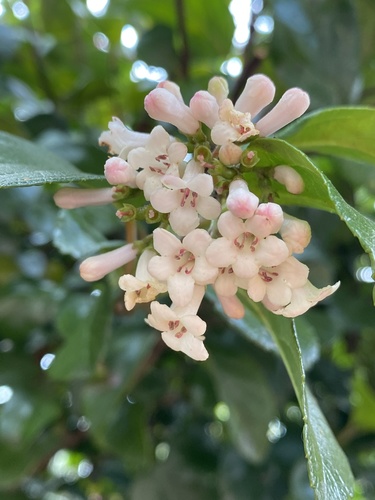
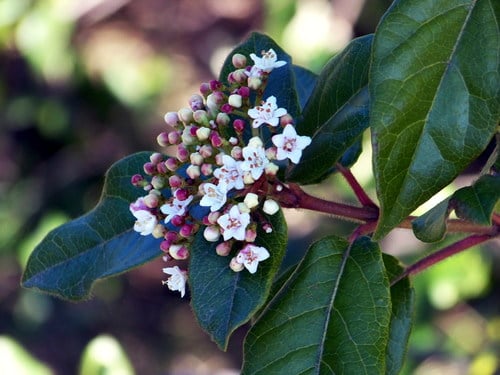
A small tree or bush. It loses its leaves during the year. It grows up to 6-10 m high. The bark is light grey. It has brown warty lenticels. It has stout shoots. The leaves have 5-7 leaflets and the edges toothed. The leaves are 25 cm long. The flowers are musk-scented and in flattened heads. These are 20 cm across. It has a small black fruit. These are round and glossy. They are 8 mm across. They hang down in bunches. There are 3 oval brown seeds.
Edible Uses
The fruit, about 8mm in diameter and borne in large clusters, can be eaten raw or cooked, though many find the raw flavour unappealing. Drying the fruit reduces its bitterness. It is widely used in jams, preserves, pies, sauces, chutneys, and wine, and also adds flavour and colour to these preparations. Some caution is advised regarding toxicity. The flowers can be eaten raw or cooked and may also be dried for later use. Crisp, somewhat juicy, and aromatically flavoured, they make a refreshing snack and can be used to impart a muscatel flavour to stewed fruits, jellies, and jams — particularly gooseberry jam. The flowers are also commonly used to make sparkling wine, and a sweet tea can be made from the dried flowers. The leaves are used to give a green colouring to oils and fats.
Traditional Uses
The ripe fruit are used for jams and drinks. They are also used for wine. They are high in Vitamin C. The flowers can be eaten cooked. They are added to salads and made into fritters fried with eggs. The flowers have a slightly bitter taste and are used in elder flower cordial. The flowers and leaves are boiled for herbal tea. The seeds are pressed for oil. CAUTION The roots, leaves and stems are reported to be poisonous. The fruit are considered poisonous when green but edible when black.
Medicinal Uses
Elder has a long history as both a household remedy and a herbalist's plant, sometimes called 'the medicine chest of country people.' The flowers are the primary part used in modern herbalism, though all parts have traditional applications. The inner bark, collected from young trees in autumn and best sun-dried, is diuretic, strongly purgative, and emetic in large doses; it is used for constipation and arthritic conditions. An emollient ointment can be made from the green inner bark. The leaves, used fresh or dried (harvested during fine weather in June and July), are purgative, though more nauseous than the bark. They are also diaphoretic, diuretic, expectorant, and haemostatic. Leaf juice is considered a good treatment for inflamed eyes, and a leaf ointment is emollient, used on bruises, sprains, chilblains, and wounds. Fresh flowers are used in the distillation of Elder Flower Water, and can be preserved in salt for later distillation. The water is mildly astringent and a gentle stimulant, used mainly in eye and skin lotions. Dried flowers are diaphoretic, diuretic, expectorant, galactogogue, and pectoral. An infusion treats chest complaints and inflamed eyes, and serves as a spring tonic and blood cleanser. Externally, flowers are applied in poultices to ease pain and reduce inflammation, and as an ointment to treat chilblains, burns, wounds, and scalds. The fruit is depurative, mildly diaphoretic, and gently laxative. A tea from dried berries is considered a remedy for colic and diarrhoea, and wines and preserves made from the fruit are said to retain its medicinal properties. The pith of young stems is used in treating burns and scalds. The root, no longer commonly used, was historically valued as an emetic and purgative effective against dropsy. A homeopathic remedy made from the fresh inner bark of young branches is used to relieve asthmatic symptoms and spurious croup in children. The German Commission E Monographs approve Sambucus nigra for coughs, bronchitis, fevers, and colds.
Known Hazards
Components of the elderberry plant, including its fruit, contain diverse phytochemicals, such as alkaloids, lectins, and cyanogenic glycosides, which may be toxic if consumed raw. The seeds and all green parts of the plant contain cyanogenic glycosides. Consumption of berries, leaves, bark or stems, if not properly prepared, may cause nausea, vomiting, and severe diarrhea. Elderberry plant constituents or products should not be consumed during pregnancy or by people with allergies or gastrointestinal diseases. Elderberry products may cause adverse effects when used with prescription drugs.
Distribution
It is a temperate plant. It only fruits consistently between 400 m and 1800 m altitude in the tropics. The plant grows up to 2600 m altitude. It can grow in the European Alps up to 1500 m altitude. It is damaged by drought but can tolerate frost. It needs a protected shady position. It grows naturally in temperate regions in the northern hemisphere. It favours soils with a high nitrogen content. In Argentina it grows from sea level to 1,000 m above sea level. It suits hardiness zones 5-10. Arboretum Tasmania.
Where It Grows
Africa, Albania, Andorra, Argentina, Armenia, Asia, Australia, Austria, Azerbaijan, Azores, Balkans, Bangladesh, Belarus, Belgium, Bosnia, Britain, Bulgaria, Caucasus, Central Africa, Central Asia, Chile, China, Croatia, Cyprus, Czech Republic, Denmark, Estonia, Europe, Falklands, Finland, France, Gabon, Georgia, Germany, Greece, Hungary, India, Ireland, Italy, Kazakhstan, Lithuania, Luxembourg, Macedonia, Mediterranean, Mexico, Middle East, Netherlands, New Zealand, North Africa, Norway, Pacific, Pakistan, Palestine, Papua New Guinea, PNG, Poland, Portugal, Romania, Russia, San Marino, Scandinavia, SE Asia, Serbia, Sicily, Slovakia, Slovenia, South America, Spain, Sweden, Switzerland, Syria, Tasmania, Turkey, Türkiye, Ukraine,
Cultivation
A very easily grown plant, it tolerates most soils and situations, growing well on chalk, but prefers a moist loamy soil. Grows well in heavy clay soils. Tolerates some shade but fruits better in a sunny position. Tolerates atmospheric pollution and coastal situations. Another report says that it is intolerant of very smoky atmospheres. The elder is very occasionally cultivated for its edible fruit, there are some named varieties though most of these have been developed for their ornamental value. The sub-species S. nigra alba has white/green fruits that are nicer than the type species and are quite nice raw. The elder also has a very long history of folk use, both medicinally and for a wide range of other uses. All in all it is a very valuable plant to have in the garden. The leaves often begin to open as early as January and are fully open in April. The leaves fall in October/November in exposed sites, later in sheltered positions. Young stems can be killed by late frosts but they are soon replaced from the ground level. Very tolerant of pruning, plants can be cut back to ground level and will regrow from the base. The flowers have a sweet, almost overpowering smell, not exactly pleasant when inhaled near to for it has fishy undertones, but from a distance its musky scent is appealing. Very resistant to the predations of rabbits. The flowers are very attractive to insects. The fruit is very attractive to birds and this can draw them away from other cultivated fruits. The elder is an early colonizer of derelict land, the seed arriving in the defecations of birds and mammals. It is a very good pioneer species for re-establishing woodlands. Plants in this genus are notably resistant to honey fungus. In garden design, as well as the above-ground architecture of a plant, root structure considerations help in choosing plants that work together for their optimal soil requirements including nutrients and water. Elderberries are usually harvested in late summer to early autumn, around August to September (Northern Hemisphere), when the berries are fully ripe. Elderberry typically flowers in late spring to early summer, around May to June (Northern Hemisphere), producing clusters of small white or cream-colored flowers. Elderberry is a fast-growing shrub or small tree, reaching heights of 3 to 6 meters (10 to 20 feet) in a few years under optimal conditions. It prefers moist, well-drained soils and can thrive in a variety of environments, including disturbed areas. Sambucus nigra, also known as the European black elderberry, is self-fertile. However, cross-pollination can increase fruit production.
Propagation
Seed is best sown as soon as it is ripe in autumn in a cold frame, where it should germinate in early spring. Stored seed sown in spring will likely germinate better with 2 months warm followed by 2 months cold stratification. Prick seedlings into individual pots when large enough to handle. If growth is good, young plants can go into permanent positions in early summer; otherwise, overwinter them in a sheltered nursery bed or in pots and plant out the following spring. Cuttings of half-ripe wood, 7–10cm with a heel, can be taken in July/August in a frame. Cuttings of mature wood from the current season's growth, 15–20cm with a heel, can be taken in late autumn in a frame or sheltered outdoor bed. Suckers can also be divided during the dormant season.
Other Uses
Elderberry is useful in agroforestry for attracting pollinators and wildlife, as a hedge or windbreak, and in riparian plantings for erosion control. The plant is a valuable compost heap addition — its flowers are an alternative ingredient in 'QR' herbal compost activator, and nearby roots improve fermentation of the compost heap. The leaves act as an effective insect repellent when rubbed on skin, and can be powdered and placed among plants as a deterrent or made into an insecticidal spray by boiling 3–4 handfuls of leaves in a litre of water, straining, cooling, and applying. This preparation is effective against many insects and also treats fungal problems such as leaf rot and powdery mildew. Dried flowering shoots repel insects and rodents. The flowers are used in skin lotions, oils, and ointments. The species tolerates salt-laden gales and can be grown as a shelter hedge in exposed maritime locations, though it is bare in winter. It functions well as a pioneer species in woodland establishment, being tough, wind-resistant, and fast-growing, providing shelter for longer-lived species while generally persisting in sunnier spots within maturing woodland. Dyes are obtained from several parts: the fruit and bark yield dyes, the bark of older branches and the root contribute to black dye, the leaves yield a green dye with alum as mordant, and the berries produce blue and purple shades and have been used as a hair dye to turn hair black. The blue pigment from the fruit acts as a litmus indicator, turning green in alkaline solutions and red in acid ones. The hollow stems of young branches have been used as pipes for blowing air into fires and for making musical instruments. The pith of the wood is used for making microscope slides and treating burns and scalds. The mature wood is white and fine-grained, easily cut and polished, and valued for making skewers, mathematical instruments, and toys. The plant provides forage for mule deer, elk, sheep, and small birds, and offers nesting habitat for hummingbirds, warblers, and vireos. Elderberries are a favoured food for migrating band-tailed pigeons in northern California.
Production
It bears fruit all year round. The fruit are usually dried to remove the bitter taste before using. The flowering season is short in colder areas in Europe but is extended in warmer climates. The flowers can be picked and left in heaps to warm for a few hours before the petals separate. These are then sifted and dried.
Other Information
Plants are fairly common in the highlands of Papua New Guinea but the fruit are rarely used. It is a cultivated plant. It is foraged and used in restaurants in Sweden.
Notes
There are about 25 Sambucus species. Also put in the family Sambucaceae.
Dangerous Lookalikes
This plant can be confused with the following toxic species. Always verify identification carefully before consuming any wild plant.
Pokeweed
Phytolacca americana
Jakec
European Elderberry
Sambucus nigra
Woman's International Exhibition (1900 : London, England) Kiralfy, Imre, 1845-1919 Spottiswoode & Co., publisher (via Wikimedia Commons)
Pokeweed: Thick red/purple herbaceous stems (no bark), berries in a line (raceme), simple large leaves, large white taproot.
European Elderberry: Woody bark, berries in broad flat clusters (cymes), compound leaves with 5-7 leaflets.
Nutrition
| Part | Moisture | kJ | kcal | Protein | Vit A | Vit C | Iron | Zinc |
|---|---|---|---|---|---|---|---|---|
| Fruit | 226 | 54 | 2.5 | — | — | — | — | — |
Synonyms
Also Known As
Bazga, Bez, Bezas, Bez cerny, Bozel, Chaouk, Cheren baz, Cierna baza, črni bezeg, Czarny bez, Didgula, Fabodza, Grand sureau, Murver, Must leeder, Sambucas, Sambuco, Sabuco, Sambugu, Sauco, Savucu, Schwarzer holunder, Soc negru, Svarthyll, Svirchovina, Syoeu ne, Vlier, Zoha, Zovina
References (104)
- Abbet, C., et al, 2014, Ethnobotanical survey on wild alpine food plants in Lower and Central Valais (Switzerland). Journal of Ethnopharmacology 151 (2014) 624–634
- Ambasta, S.P. (Ed.), 2000, The Useful Plants of India. CSIR India. p 545
- Arora, R. K., 2014, Diversity in Underutilized Plant Species - An Asia-Pacific Perspective. Bioversity International. p 86
- Barreau, A., et al, 2016, How Can We Teach Our Children if We Cannot Access the Forest? Generational Change in Mapuche Knowledge of Wild Edible Plants in Andean Temperate Ecosystems of Chile. Journal of Ethnobiology 36(2): 412–432
- Benvenuti, S. & Mazzoncini, M., 2021, The Biodiversity of Edible Flowers: Discovering New Tastes and New Health Benefits. Frontiers in Plant Science Article 569499.
Show all 104 references Hide references
- Blanco-Salas, J., et al, 2019, Wild Plants Potentially Used in Human Food in the Protected Area “Sierra Grande de Hornachos” of Extremadura (Spain). Sustainability 2019, 11, 456
- Bodkin, F., 1991, Encyclopedia Botanica. Cornstalk publishing, p 906
- Bonet, M. A. & Valles, J., 2002, Use of non-crop food vascular plants in Montseny biosphere reserve (Catalonia, Iberian Peninsula). International Journal of Food Sciences and Nutrition (2002) 53, 225–248
- Bremness, L., 1994, Herbs. Collins Eyewitness Handbooks. Harper Collins. p 83
- Brickell, C. (Ed.), 1999, The Royal Horticultural Society A-Z Encyclopedia of Garden Plants. Convent Garden Books. p 930
- Burnie, G & Fenton-Smith, J., 1999, A Grower's Guide to Herbs. Murdoch Books. p 31
- Bussman, R. W., et al, 2016, A comparative ethnobotany of Khevsureti, Samtskhe-Javakheti, Tusheti, Svaneti, and Racha-Lechkhumi, Republic of Georgia (Sakartvelo), Caucasus. Journal of Ethnobiology and Ethnomedicine (2016) 12:43
- Bussman, R. W., et al, 2021, Unity in diversity—food plants and fungi of Sakartvelo (Republic of Georgia), Caucasus. Journal of Ethnobiology and Ethnomedicine (2021) 17:72 p 4
- Chamorro, M. F., & Ladio, A., 2020, Native and exotic plants with edible fleshy fruits utilized in Patagonia and their role as sources of local functional foods. BMC Complementary Medicine and Therapies. 20:155
- Cerne, M., 1992, Wild Plants from Slovenia used as Vegetables. Acta Horticulturae 318
- Christanell, A., et al, 2010, The Cultural Significance of Wild Gathered Plant Species in Kartitsch (Eastern Tyrol, Austria) and the Influence of Socioeconomic Changes on Local Gathering Practices. Chapter 3 in Ethnobotany in the New Europe. Berghahn Books.
- Ciftcioglu, C. G., 2015, Sustainable wild-collection of medicinal and edible plants in Lefke region of North Cyprus. Agroforest Syst. Springer
- Cordero, S. E., Abello, L. A., & Galvez, F. L., 2017, Plantas silvestres comestibles y medicinales de Chile y otras partes del mundo. CORMA p 121
- Crawford, M., 2012, How to grow Perennial Vegetables. Green Books. p 101
- Cribb, A.B. & J.W., 1976, Wild Food in Australia, Fontana. p 56, 162
- Cruz, I. M., et al, 2015, Edible fruits and seeds in the State of Mexico. Revista Mexicana de Ciencias Agricolas. Vol. 6. Num. 2 pp 331-346
- Curtis, W.M., 1963, The Students Flora of Tasmania Vol 2 p 265
- Daly, A. B., 20014, Narrating changing foodways: wild edible plant knowledge and traditional food systems in Mapuche lands of the Andean Temperate Forests, Chile. Masters Thesis Vancouver. p 45
- Denes, A., et al, 2012, Wild plants used for food by Hungarian ethnic groups living in the Carpathian Basin. Acta Societatis Botanicorum Poloniae 81 (4): 381-396
- Dolina, K. & Luczaj, L., 2014, Wild food plants used on the Dubrovnik coast (south-eastern Croatia) Acta Soc Bot Pol 83(3):175–181
- Ertug, F, Yenen Bitkiler. Resimli Türkiye Florası -I- Flora of Turkey - Ethnobotany supplement
- Esperanca, M. J., 1988. Surviving in the wild. A glance at the wild plants and their uses. Vol. 1. p 330
- Facciola, S., 1998, Cornucopia 2: a Source Book of Edible Plants. Kampong Publications, p 223
- Flora of Pakistan. www.eFloras.org
- Flowerdew, B., 2000, Complete Fruit Book. Kyle Cathie Ltd., London. p 178
- French, B.R., 1986, Food Plants of Papua New Guinea, A Compendium. Asia Pacific Science Foundation p 276
- Geraci, A., et al, 2018, The wild taxa utilized as vegetables in Sicily (Italy): a traditional component of the Mediterranean diet. Journal of Ethnobiology and Ethnomedicine (2018) 14:14
- Girard, N. J., 2020, Sustainable Foraging of Wild Edible Plants in Norway. A Biocultural Approach. M. Sc. thesis Norwegian University. p 37
- Glowinski, L., 1999, The Complete Book of Fruit Growing in Australia. Lothian. p 176
- Hammer, K. & Spahillari, M., 1999, Crops of European origin. in Report of a networking group on minor crops. IPGRI p 46
- Harris, E & J., 1983, Field Guide to the Trees and Shrubs of Britain. Reader's Digest. p 176
- Hedrick, U.P., 1919, (Ed.), Sturtevant's edible plants of the world. p 592
- Hemphill, I, 2002, Spice Notes Macmillan. p 171
- Heywood, V.H., Brummitt, R.K., Culham, A., and Seberg, O. 2007, Flowering Plant Families of the World. Royal Botanical Gardens, Kew. p 290
- Hibbert, M., 2002, The Aussie Plant Finder 2002, Florilegium. p 286
- http://nordicfood lab/org/blog/2102/9/wild-edible-plants-an-overview
- http://www.botanic-gardens-ljubljana.com/en/plants
- Irving, M., 2009, The Forager Handbook, A Guide to the Edible Plants of Britain. Ebury Press p 201
- Kiple, K.F. & Ornelas, K.C., (eds), 2000, The Cambridge World History of Food. CUP p 1771
- Kremer, B.P., 1995, Shrubs in the Wild and in Gardens. Barrons. p 171
- Kybal, J., 1980, Herbs and Spices, A Hamlyn Colour Guide, Hamlyn Sydney p 178
- John, L., & Stevenson, V., 1979, The Complete Book of Fruit. Angus & Robertson p 128
- Lazarides, M. & Hince, B., 1993, Handbook of Economic Plants of Australia, CSIRO. p 210
- Lentini, F. and Venza, F., 2007, Wild food plants of popular use in Sicily. J Ethnobiol Ethnomedicine. 3: 15
- Lord, E.E., & Willis, J.H., 1999, Shrubs and Trees for Australian gardens. Lothian. p 261
- Luczaj, L., 2012, Ethnobotanical review of wild edible plants of Slovakia. Acta Societatis Botanicorum Poloniae 81(4):245-255
- Luczaj, L. et al, 2012, Wild food plant use in 21st century Europe: the disappearance of old traditions and the search for new cuisines involving wild edibles. Acta Soc Bot Pol 81(4):359–370
- Luczaj, L. et al, 2013, Wild edible plants of Belarus: from Rostakinski's questionnaire of 1883 to the present. Journal of Ethnobiology and Ethnomedicine 9:21
- Łukasz Łuczaj and Wojciech M Szymański, 2007, Wild vascular plants gathered for consumption in the Polish countryside: a review. J Ethnobiol Ethnomedicine. 3: 17
- Luczaj, L., et al, 2015, Wild food plants and fungi used by Ukrainians in the western part of the Maramureş region in Romania. Acta Soc Bot Pol 84(3):339–346
- Mabey, R., 1973, Food for Free. A Guide to the edible wild plants of Britain, Collins. p 154, 177
- Mattalia, G., et al, 2012, Traditional uses of wild food and medicinal plants among Brigasc, Kye ́, and Provenc ̧al communities on the Western Italian Alps. Genet Resour Crop Evol. Springer
- Michael, P., 2007, Edible Wild Plants and Herbs. Grub Street. London. p 81
- Miskoska-Milevska, E. et al, 2020, Traditional uses of wild edible plants in the Republic of North Macedonia. PHYTOLOGIA BALCANICA 26(1): 155–162, Sofia, 2020 p 158
- Moerman, D. F., 2010, Native American Ethnobotany. Timber Press. p 511
- Nedelcheva A., 2013, An ethnobotanical study of wild edible plants in Bulgaria. EurAsian Journal of BioSciences 7, 77-94
- Ozbucak, T. B. et al, 2006, The Contribution of Wild Edible Plants to Human Nutrition in the Black Sea Region of Turkey. Ethnobotanical Leaflets 10: 98-103
- Pardo-de-Santayana, M., et al, 2005, The gathering and consumption of wild edible plants in the Campoo (Cantabria, Spain). International Journal of Food Sciences and Nutrition. 56(7): 529-542
- Pardo-de-Santayana, M., et al, 2007, Traditional knowledge of wild edible plants used in the northwest of the Iberian Peninsula (Spain and Portugal): a comparative study. Journal of Ethnobiology and Ethnomedicine 2007, 3:27
- Pasha, M. K. & Uddin, S. B., 2019, Minor Edible Fruits of Bangladesh. Bangladesh J. Plant Taxon. 26(2): 299–313
- Pasta, S., et al, 2020, An Updated Checklist of the Sicilian Native Edible Plants: Preserving the Traditional Ecological Knowledge of Century-Old Agro-Pastoral Landscapes. Frontiers in Plant Science. Volume 11|Article 388
- Pieroni, A., 1999, Gathered wild food plants in the Upper Valley of the Serchio River (Garfagnana), Central Italy. Economic Botany 53(3) pp 327-341
- Pieroni, A.,& Giusti, M. E., 2009, Alpine Ethnobotany in Italy: Journal of Ethnobiology and Ethnomedicine. 5:32
- Pieroni, A. et al, 2013, One century later: the folk botanical knowledge of the last remaining Albanians of the upper Reka Valley, Mount Korab, Western Macedonia. Journal of Ethnobiology and Ethnomedicine. 9:22
- Pieroni, A. & Soukand, R., 2017, Are Borders more Important than Geographical Distance? The Wild Food Ethnobotany of the Boykos and its Overlap with that of the Bukovinian Hutsuls in Western Ukraine. Journal of Ethnobiology 37(2): 326–345
- Pieroni, A. & Soukand, R., 2018, Forest as Stronghold of Local Ecological Practice: Currently Used Wild Food Plants in Polesia, Northern Ukraine. Economic Botany, XX(X) pp. 1-21
- Plants for a Future database, The Field, Penpol, Lostwithiel, Cornwall, PL22 0NG, UK. http://www.scs.leeds.ac.uk/pfaf/
- Postman, J. D., et al, 2012, Recent NPGS Coordinated Expeditions in the Trans-Caucasus Region to Collect Wild Relatives of Temperate Fruit and Nut Crops. In Acta Horticulturae Number 948 p 191-198
- Prakofjewa, J., et al, 2023, Boundaries Are Blurred: Wild Food Plant Knowledge Circulation across the Polish-Lithuanian-Belarusian Borderland. Biology 2023, 12, 571.
- Raponda-Walker, A & Sillans, R., 1961, Les Plantes Utiles du Gabon. Editions Paul Lechevalier, Paris. p 119
- Redzic, S. J., 2006, Wild Edible Plants and their Traditional Use in the Human Nutrition in Bosnia-Herzegovina. Ecology of Food and Nutrition, 45:189-232
- Redzic, S., 2010, Use of Wild and Semi-Wild Edible Plants in Nutrition and Survival of People in 1430 Days of Siege of Sarajevo during the War in Bosnia and Herzegovina (1992–1995). Coll. Antropol 34 (2010) 2:551-570
- Rigat, M et al, 2009, Ethnobotany of Food Plants in the High River Ter Valley (Pyrenees, catalonia, Iberian Peninsula): Non-Crop Food Vascular Plants and Crop Food Plants with medicinal Properties. Ecology of Food and Nutrition, 48:303-327
- Ryan, S., 2008, Dicksonia. Rare Plants Manual. Hyland House. p 50
- Segura, S. et al, 2018, The edible fruit species in Mexico. Genet Resour Crop Evol (2018) 65:1767–1793
- Sansanelli, S., et al, 2014, Wild food plants traditionall consumed in the area of Bologna (Emilia Romagna region, Italy). Journal of Ethnobiology and Ethnomedicine 10:69
- Sansanelli, S., et al, 2017, Ethnobotanical survey of wild food plants traditionally collected and consumed in the Middle Agri Valley (Basilicata region, southern Italy). Journal of Ethnobiology and Ethnomedicine (2017) 13:50
- Schmidt, E., Lotter, M., & McCleland, W., 2007, Trees and shrubs of Mpumalanga and Kruger National Park. Jacana Media p 658
- Schuler, S., (Ed.), 1977, Simon & Schuster's Guide to Trees. Simon & Schuster. No. 166
- Schunko, C., et al, 2010, Organic farmers use of wild food plants and fungi in a hilly area in Styria (Austria). Journal of Ethnobiology and Ethnomedicine 6:17
- Schunko, C., et al, 2012, Intracultural variation of knowledge about wild plant uses in the Biosphere Reserve Grosses Walsertal (Austria). Journal or Ethnobiology and Ethnomedicine, 8:23
- Self, M., 199, Phoenix Seeds catalogue. p 15
- Sfikas, G., 1984, Trees and shrubs of Greece. Efstathiadis Group. Athens. p 186
- Shikov, A. N. et al, 2017, Traditional and Current Food Use of Wild Plants Listed in the Russian Pharmacopoeia. Frontiers in Pharmacology. Vol. 8 Article 841
- Skinner, G. & Brown, C., 1981, Simply Living. A gatherer's guide to New Zealand's fields, forests and shores. Reed. p 46
- Simkova, K. et al, 2014, Ethnobotanical review of wild edible plants used in the Czech Republic. Journal of Applied Botany and Food Quality 88, 49-67
- Sp. pl. 1:269. 1753
- Soukand, R. & Kalle, R., 2016, Perceiving the Biodiversity of Food at Chest-height: use of the Fleshy Fruits of Wild Trees and Shrubs in Saaremaa, Estonia. Hum Ecol 44:265–272
- Svanberg, I., 2012, The use of wild plants as food in pre-industrial Sweden. Acta Societatis Botanicorum Poloniae 81(4): 317-327
- Tardio, J., et al, 2006, Ethnobotanical review of wild edible plants in Spain. Botanical J. Linnean Soc. 152, 27-71
- Tasmanian Herbarium Vascular Plants list p 18
- Ulian, T., et al, 2020, Unlocking plant resources to support food security and promote sustainable agriculture. Plants, People, Planet. 2020;2:421–445.
- Upson, R., & Lewis R., 2014, Updated Vascular Plant Checklist and Atlas for the Falkland Islands. Falklands Conservation and Kew.
- van Wyk, B., 2005, Food Plants of the World. An illustrated guide. Timber press. p 336
- Vorstenbosch, T., et al, 2017, Famine food of vegetal origin consumed in the Netherlands during World War II. Journal of Ethnobiology and Ethnomedicine (2017) 13:63
- Vari, A., et al, 2020, Berries, greens, and medicinal herbs—mapping and assessing wild plants as an ecosystem service in Transylvania (Romania). Journal of Ethnobiology and Ethnomedicine (2020) 16:13
- Wiersema, J. H. & Leon, B., 2013, World Economic Plants. A Standard Reference CRC Press. 2nd Ed. p 611
- World Checklist of Useful Plant Species 2020. Royal Botanic Gardens, Kew
- www.chileflora.com