Sambucus africana
Standl.
iNaturalist· cc-by-nc-sa
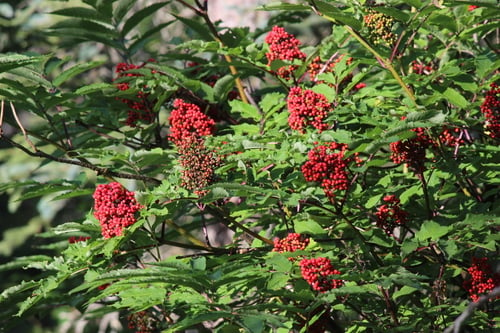
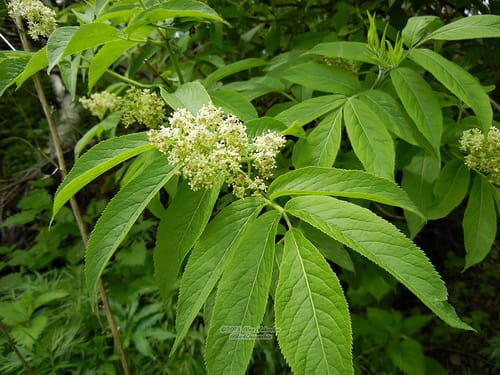
(c) Pádraic Flood, some rights reserved (CC BY-NC-SA), uploaded by Pádraic Flood
iNaturalist· cc-by-nc
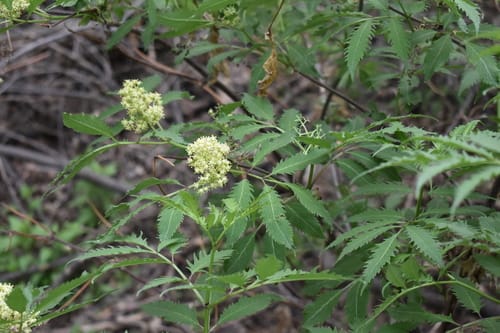
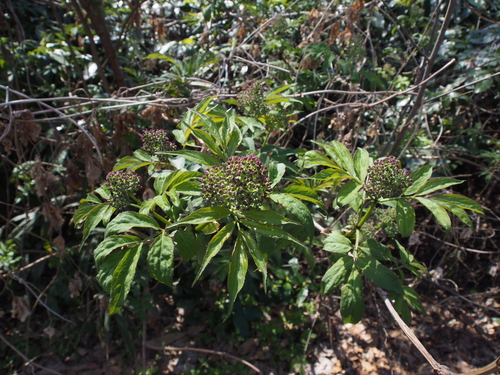
(c) Tommaso Sitzia, some rights reserved (CC BY-NC), uploaded by Tommaso Sitzia
iNaturalist· cc-by-nc-sa
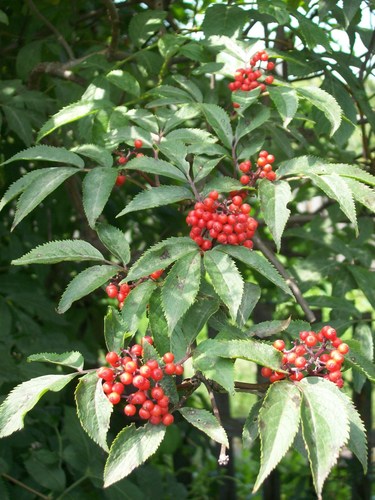
(c) Pádraic Flood, some rights reserved (CC BY-NC-SA), uploaded by Pádraic Flood
Description
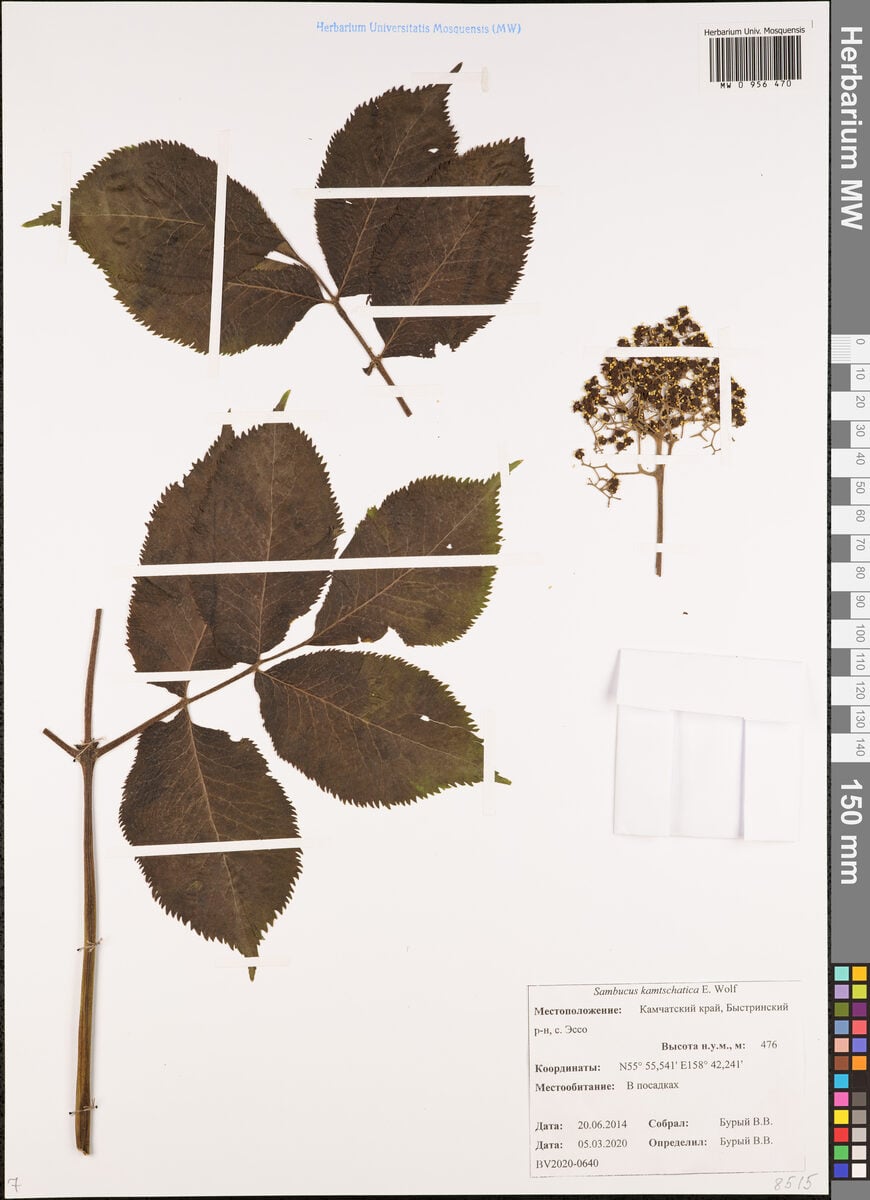
A shrub. It grows up to 1-2 m high. It can grow 5 m high in warmer zones. The stem is juicy at first but then becomes woody. It is hollow or has a soft pith. The young shoots are hairy. The leaves have 6-11 leaflets along a 75 cm leaf. The leaflets are large with teeth along the edge. The leaflets are 12 cm long by 4 cm wide. One side of the leaflet is attached to the leaf stalk lower than the other. The leaf stalk is 12 cm long and with a leafy stipule at the base. The flowers are small and white. They are in a flattened head 7-15 cm across. The fruit is a small purple-black berry. It is edible. The berry is 7 mm across and ribbed. It contains 3-4 hard red seeds.
Edible Uses
The small purple-black berries are edible.
Traditional Uses
The fruit are eaten.
This uses section is brief — help expand it
Distribution
A tropical plant. It occurs in East Africa. It grows in upland grassland.
Where It Grows
Africa, East Africa, Kenya, Uganda, Tanzania,
Cultivation
Plants are grown from seeds. Seeds can be collected of plants when mature. Seed sould be sown as soon as it is collected.
Production
Plants are fast growing. They can be pruned and trimmed.
Notes
There are about 25 Sambucus species. This has now been reduced to 9 species and some subspecies. Also put in the family Sambucaceae.
Dangerous Lookalikes
This plant can be confused with the following toxic species. Always verify identification carefully before consuming any wild plant.
Pokeweed
Phytolacca americana
Jakec
Sambucus africana
Sambucus africana
(c) Pádraic Flood, some rights reserved (CC BY-NC-SA), uploaded by Pádraic Flood
Pokeweed: Thick red/purple herbaceous stems (no bark), berries in a line (raceme), simple large leaves, large white taproot.
Sambucus africana: Woody bark, berries in broad flat clusters (cymes), compound leaves with 5-7 leaflets.
References (3)
- Bolli, R., 1991, Revision of the genus Sambucus. Dissert. Bot. 223:1-227 pl. 1-29
- Heywood, V.H., Brummitt, R.K., Culham, A., and Seberg, O. 2007, Flowering Plant Families of the World. Royal Botanical Gardens, Kew. p
- Katende, A.B., Birnie, A & Tengnas B., 1995, Useful Trees and Shrubs for Uganda. Identification, Propagation and Management for Agricultural and Pastoral Communities. Technical handbook No 10. Regional Soil Conservation Unit, Nairobi, Kenya. p 544