Araucaria araucana
(Molina.) K. Koch.
Monkey Puzzle Tree, Chilean pine
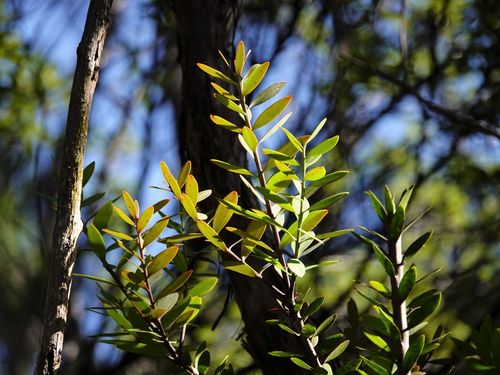
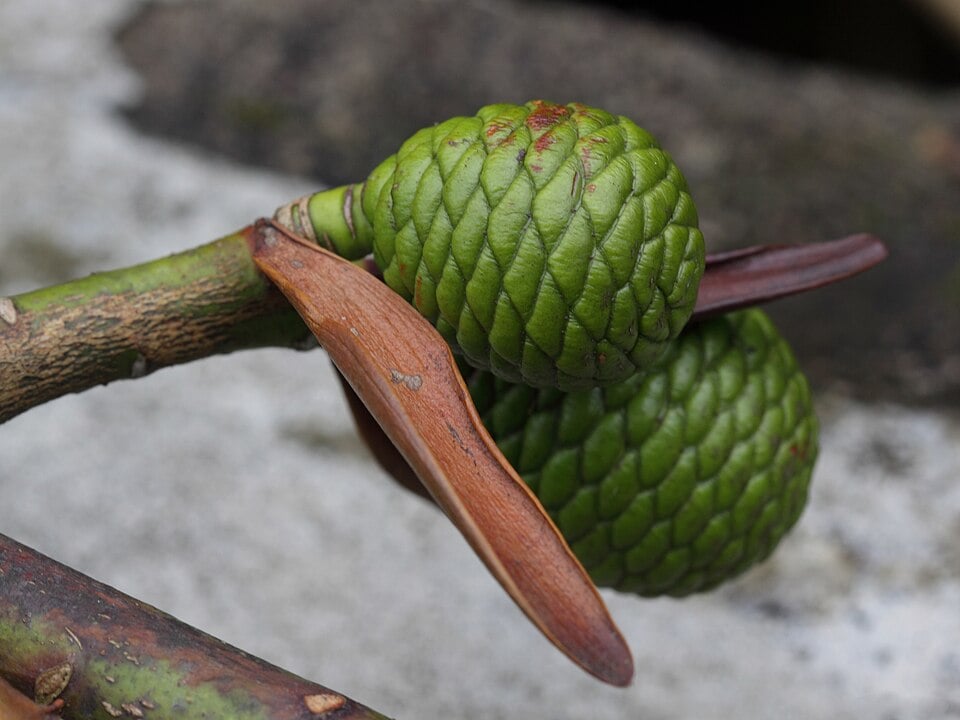
iNaturalist· cc-by-nc
(c) joseluisblazquez, some rights reserved (CC BY-NC)
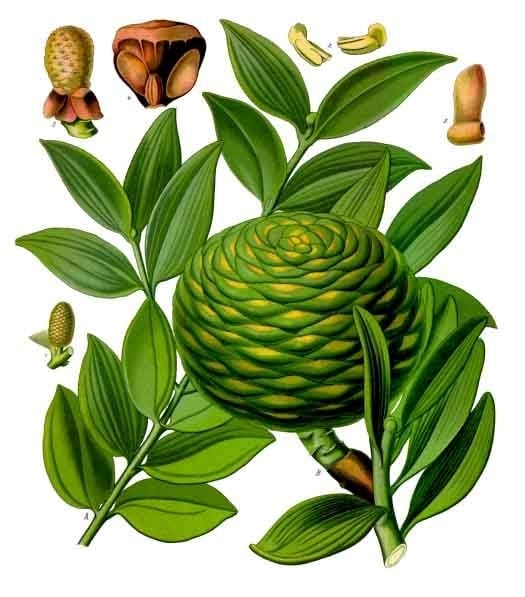
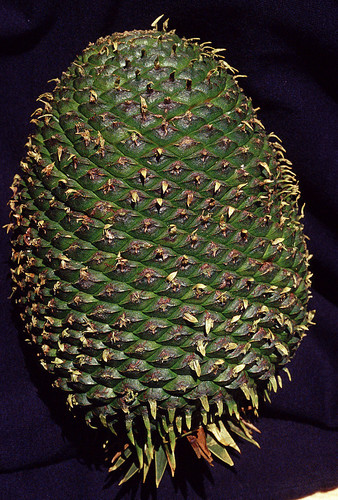
iNaturalist· cc-by-nc
(c) alfonseu, some rights reserved (CC BY-NC), uploaded by alfonseu
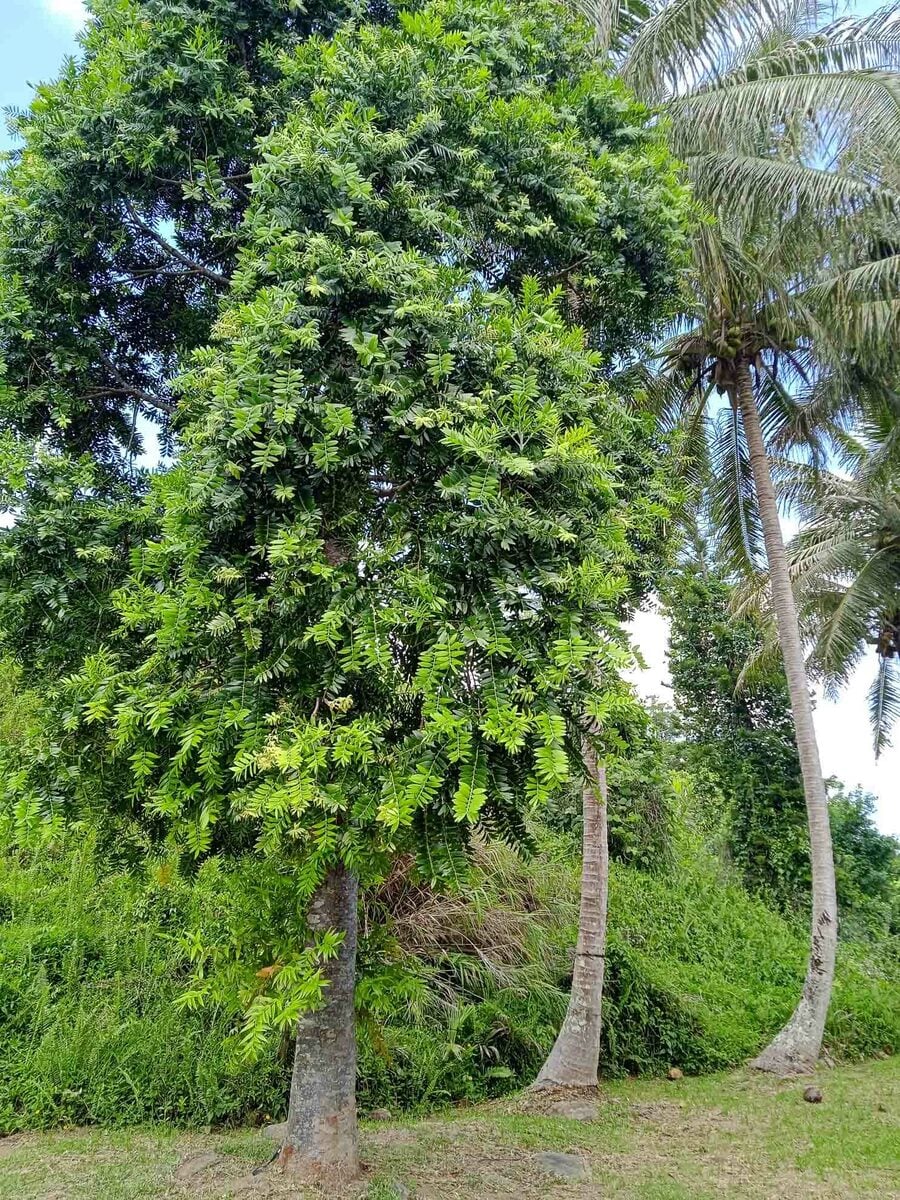
iNaturalist· cc-by-nc
(c) Jeff Bisbee, some rights reserved (CC BY-NC), uploaded by Jeff Bisbee
Summary
Source: WikipediaAraucaria araucana, commonly called the pewen, monkey-puzzle, pehuen or piñonero or Chile pine, is an evergreen tree belonging to the family Araucariaceae and growing to a height of 30–40 m (98–131 ft) and a trunk diameter of 1–1.5 m (3.3–4.9 ft). Native to central and southern Chile and western Argentina, it is the hardiest species in the conifer genus Araucaria. It is also the official tree of Chile and of the neighboring Argentine province of Neuquén. The IUCN changed its conservation status to Endangered in 2013, because logging, forest fires, and grazing have caused its population to dwindle.
Description
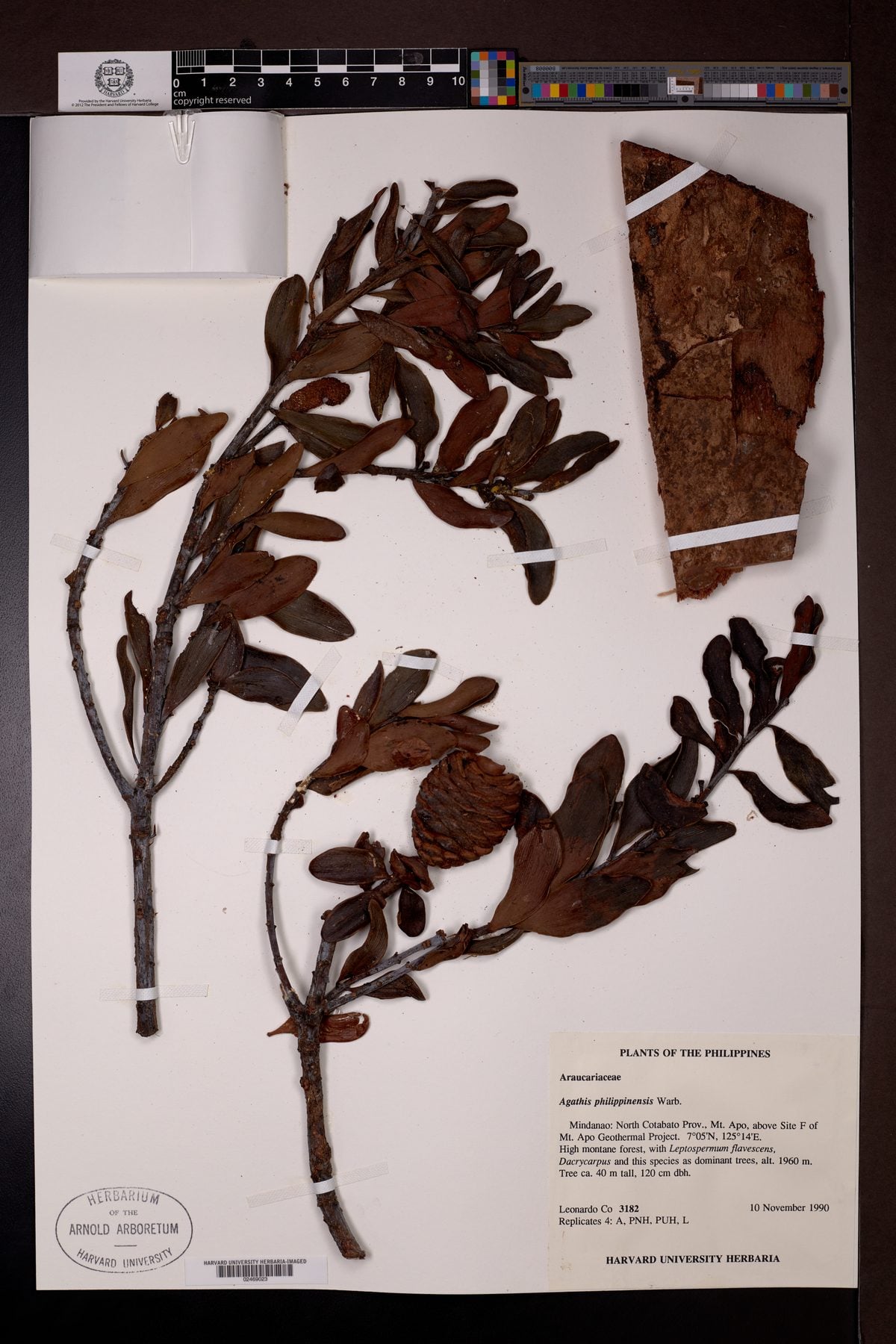
A large tree. It grows 15-35 m tall and spreads to 6-9 m wide. The trunk can be 1.2 m across. It keeps its leaves throughout the year. The branches are in tiers or layers of 4-8 but have unusual shapes. The branches hang downwards at least near the base. The leaves are dark green and glossy with spines at the tip. They are large and bract like. They are arranged densely along the branches. The seed cones are spiky and take 3 years to mature. They are 10-15 cm long and at the ends of branches. The pollen cones are 8-12 cm long and occur in the axils of leaves. The seeds are very large and are 25-40 mm long. They are brown and ridged. They are attached to a scale.
Edible Uses
Edible Parts: Seed Edible Uses: Seed - raw or cooked. Rich in starch. The seed is soft like a cashew nut and has a slight flavour of pine nuts. This is a delicious seed and it makes very pleasant eating. It is a food that can easily be eaten in quantity and can be used as a staple food in the diet. Fairly large, the seeds are about the size of an almond and can be 3cm long x 1cm wide. They are harvested in the autumn and, when kept in cool, dry conditions will store for at least 9 months.
Traditional Uses
The seeds are boiled or roasted and eaten. They are also eaten raw. They are also used to make an alcoholic drink. Caution: Alcohol is a cause of cancer.
Medicinal Uses
Vulnerary A resin obtained from incisions in the trunk is used in the treatment of ulcers and wounds.
Distribution
It is a temperate plant. It grows in sub-antarctic regions. It grows naturally in cool moist coastal and upland regions of Chile and Argentina. In Argentina it grows between 600-1,700 m above sea level. It can tolerate drought conditions. They need a well drained soil. It does best with cool misty summers. It can tolerate frost to -20°C. It suits hardiness zones 7-9. West Takone. Kyneton Botanical Gardens. Arboretum Tasmania. National Arboretum Canberra.
Where It Grows
Africa, Andes, Argentina, Australia, Brazil, Britain, Canada, Central America, Chile, Colombia, Dominican Republic, East Africa, Europe, Hawaii, India, Ireland, Mozambique, North America, Panama, South America, Tasmania, USA, West Indies,
Cultivation
Plants are grown from seed. The temperature needs to be above 20°C. They can also be grown from sprouts from stumps. It is necessary to have trees of both sexes for fruit to form.
Propagation
Seed - best sown as soon as it is ripe in a cold frame or it can be stored cool and moist then sown February in a greenhouse. Although the plants are quite cold-tolerant, the root systems of seedling plants can be damaged in spells of very cold weather so give some extra protection at this time if necessary. The seed usually germinates in 1 - 2 months at 15°c. As soon as they are large enough to handle, prick the seedlings out into individual pots. The plants have a rather sparse root system and are best placed in their final positions as soon as possible. Give them some protection for their first winter. Cuttings of half-ripe wood, May to July in a cold frame. Only epicormic side-shoots should be used, normal side-shoots do not develop properly. An epicormic shoot is one that develops from a dormant bud on the main trunk of the tree.
Other Uses
Resin Shelterbelt Wood Very tolerant of maritime exposure, trees can be grown as part of a shelterbelt, though they are very slow growing and have an open canopy and so do not give a lot of shelter. A resin is obtained from incisions in the trunk. This is used mainly for medicinal purposes. Wood - pale yellowish, good quality, takes a beautiful polish. Used for joinery and carpentry. Special Uses Carbon Farming Food Forest
Production
Trees take 40 years until first nuts are produced.
Other Information
Seeds are enjoyed in Chile. Estimates are that 3,400 tons of seeds are harvested for eating in Brazil.
Notes
There are 19 Araucaria species. There are 13 species in New Caledonia.
Synonyms
Also Known As
Chile nuts, Nguilliu, Pehuen, Pino araucaria, Pinon
References (46)
- Ambasta S.P. (Ed.), 2000, The Useful Plants of India. CSIR India. p 49
- Barreau, A., et al, 2016, How Can We Teach Our Children if We Cannot Access the Forest? Generational Change in Mapuche Knowledge of Wild Edible Plants in Andean Temperate Ecosystems of Chile. Journal of Ethnobiology 36(2): 412–432
- Bircher, A. G. & Bircher, W. H., 2000, Encyclopedia of Fruit Trees and Edible Flowering Plants in Egypt and the Subtropics. AUC Press. p 37
- Bodkin, F., 1991, Encyclopedia Botanica. Cornstalk publishing, p 95
- Brickell, C. (Ed.), 1999, The Royal Horticultural Society A-Z Encyclopedia of Garden Plants. Convent Garden Books. p 130
Show all 46 references Hide references
- Brouk, B., 1975, Plants Consumed by Man. Academic Press, London. p 208
- Ciesla, W.M., 1998, Non-wood forest products from conifers. Non-wood forest products 12, FAO, Rome, p 81
- Coombes, A.J., 2000, Trees. Dorling Kindersley Handbooks. p 34
- Cordero, S. E., Abello, L. A., & Galvez, F. L., 2017, Plantas silvestres comestibles y medicinales de Chile y otras partes del mundo. CORMA p 35
- Cundall, P., (ed.), 2004, Gardening Australia: flora: the gardener's bible. ABC Books. p 171
- Daly, A. B., 20014, Narrating changing foodways: wild edible plant knowledge and traditional food systems in Mapuche lands of the Andean Temperate Forests, Chile. Masters Thesis Vancouver. p 45
- Dendrologie 2(2):206. 1873
- Etherington, K., & Imwold, D., (Eds), 2001, Botanica's Trees & Shrubs. The illustrated A-Z of over 8500 trees and shrubs. Random House, Australia. p 98
- Facciola, S., 1998, Cornucopia 2: a Source Book of Edible Plants. Kampong Publications, p 26
- Farrar, J.L., 1995, Trees of the Northern United States and Canada. Iowa State University press/Ames p 39
- Flowerdew, B., 2000, Complete Fruit Book. Kyle Cathie Ltd., London. p 187, 209,
- Glowinski, L., 1999, The Complete Book of Fruit Growing in Australia. Lothian. p 132
- Gouldstone, S., 1983, Growing your own Food-bearing Plants in Australia. Macmillan p 154
- Grandtner, M. M. & Chevrette, J., 2013, Dictionary of Trees, Volume 2: South America: Nomenclature, Taxonomy and Ecology. Academic Press p 41
- Harris, E & J., 1983, Field Guide to the Trees and Shrubs of Britain. Reader's Digest. p 229
- Hedrick, U.P., 1919, (Ed.), Sturtevant's edible plants of the world. p 67
- Jackes, D. A., Edible Forest Gardens
- Joyce, D., 1998, The Garden Plant Selector. Ryland, Peters and Small. p 166
- Kiple, K.F. & Ornelas, K.C., (eds), 2000, The Cambridge World History of Food. CUP p 1891
- Ladio, A. H. & Lozada, M., 2000, Edible Plant Use in a Mapuche Community of North-western Patagonia, Human Ecology. Vol. 28, No. 1. pp. 53-71
- Ladio, A. H., 2001, The Maintenance of Wild Edible Plant Gatherings in a Mapuche Community of Patagonia. Economic Botany, Vol. 55, No. 2, pp. 243-254
- Ladio, A. H. and Lozada, M., 2003, Comparison of wild edible plant diversity and foraging strategies in two aboriginal communities of northwestern Patagonia. Biodiversity and Conservation 12: 937–951
- Ladio, A. H. and Lozada, M., 2004, Patterns of use and knowledge of wild edible plants in distinct ecological environments: a case study of a Mapuche community from northwestern Patagonia. Biodiversity and Conservation 13:1153-1173
- Lamberton, K (Ed.), 2004, The Australian gardening encyclodepia. Murdoch Books, NSW Australia. p 173
- Leon-Lobos, P. et al, 2022, Patterns of Traditional and Modern Uses of Wild Edible Native Plants of Chile: Challenges and Future Perspectives. Plants 2022, 11, 744
- Lord, E.E., & Willis, J.H., 1999, Shrubs and Trees for Australian gardens. Lothian. p 77
- Lyle, S., 2006, Discovering fruit and nuts. Land Links. p 71
- Marinelli, J. (Ed), 2004, Plant. DK. p 134
- Menninger, E.A., 1977, Edible Nuts of the World. Horticultural Books. Florida p 158
- Phillips, R. & Rix, M., 2002, The Botanical Garden Vol. 1. Trees and Shrubs. MacMillan. p 19
- Plants for a Future database, The Field, Penpol, Lostwithiel, Cornwall, PL22 0NG, UK. http://www.scs.leeds.ac.uk/pfaf/
- Rapoport, E. H. & Ladio, A. H., 1999, Plantas comestibles. Bosque Volume 20 No. 2. ISSN 0314-8799
- Roa, J. A. G. & Boada, D. S. G., 2018, Fundación para el Fortalecimiento de la Fruticultura y Plantas Alimenticias no Convencionales en Colombia.
- Ryan, S., 2008, Dicksonia. Rare Plants Manual. Hyland House. p 64
- Schuler, S., (Ed.), 1977, Simon & Schuster's Guide to Trees. Simon & Schuster. No. 7
- Ulian, T., et al, 2020, Unlocking plant resources to support food security and promote sustainable agriculture. Plants, People, Planet. 2020;2:421–445.
- Young, J., (Ed.), 2001, Botanica's Pocket Trees and Shrubs. Random House. p 98
- Wickens, G.E., 1995, Edible Nuts. FAO Non-wood forest products. FAO, Rome. p173
- Wiersema, J. H. & Leon, B., 2013, World Economic Plants. A Standard Reference CRC Press. 2nd Ed. p 63
- World Checklist of Useful Plant Species 2020. Royal Botanic Gardens, Kew
- www.chileflora.com