Agathis dammara
(Lamb) L. C. Rich.
Damar
Wikipedia· cc-by-sa
Wikimedia Commons - Agathis_dammara_-_Köhler–s_Medizinal-Pflanzen-155.jpg
wikimedia· cc-by-sa
Wikimedia Commons - Krzysztof Ziarnek, Kenraiz
Summary
Source: WikipediaAgathis dammara, commonly known as the Amboina pine or dammar pine, is a coniferous timber tree native to Sulawesi, the Maluku Islands and the Philippines.
Description
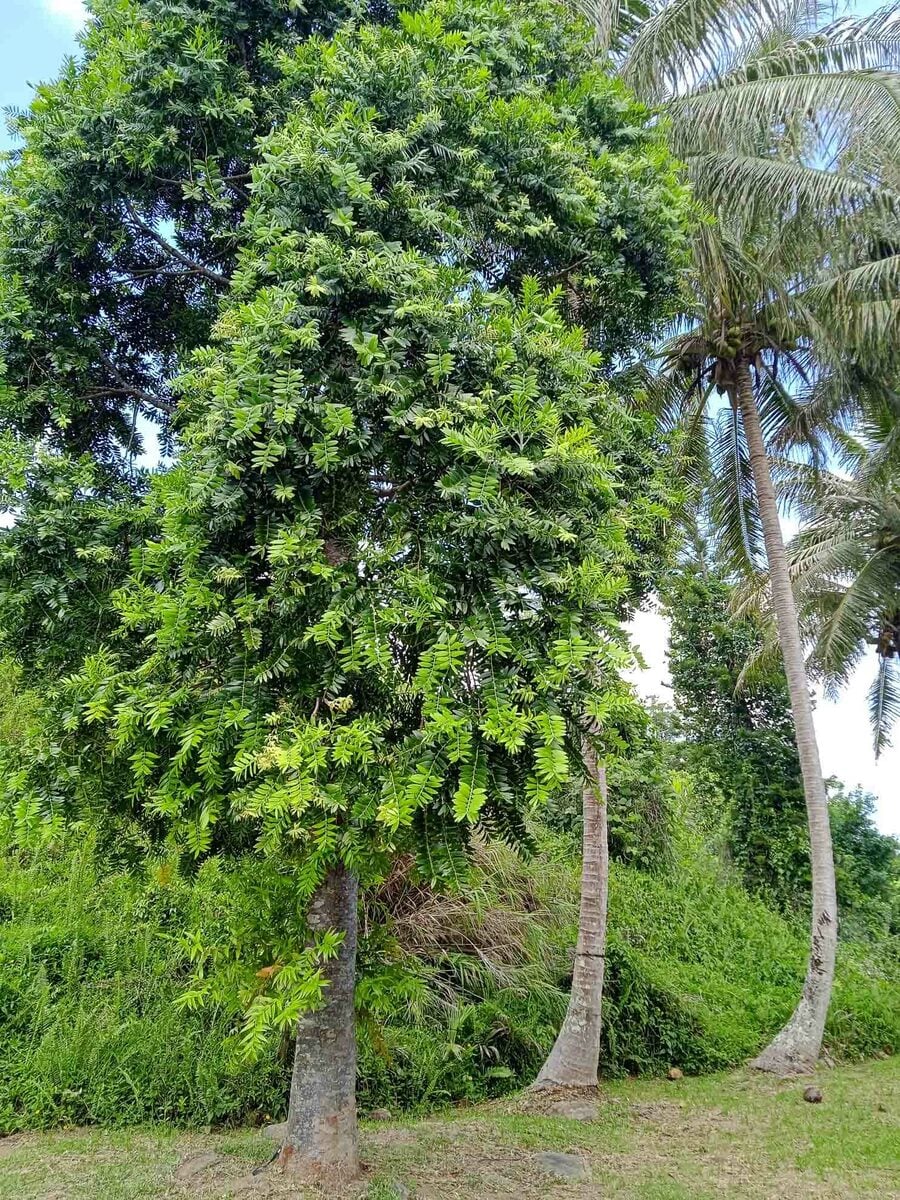
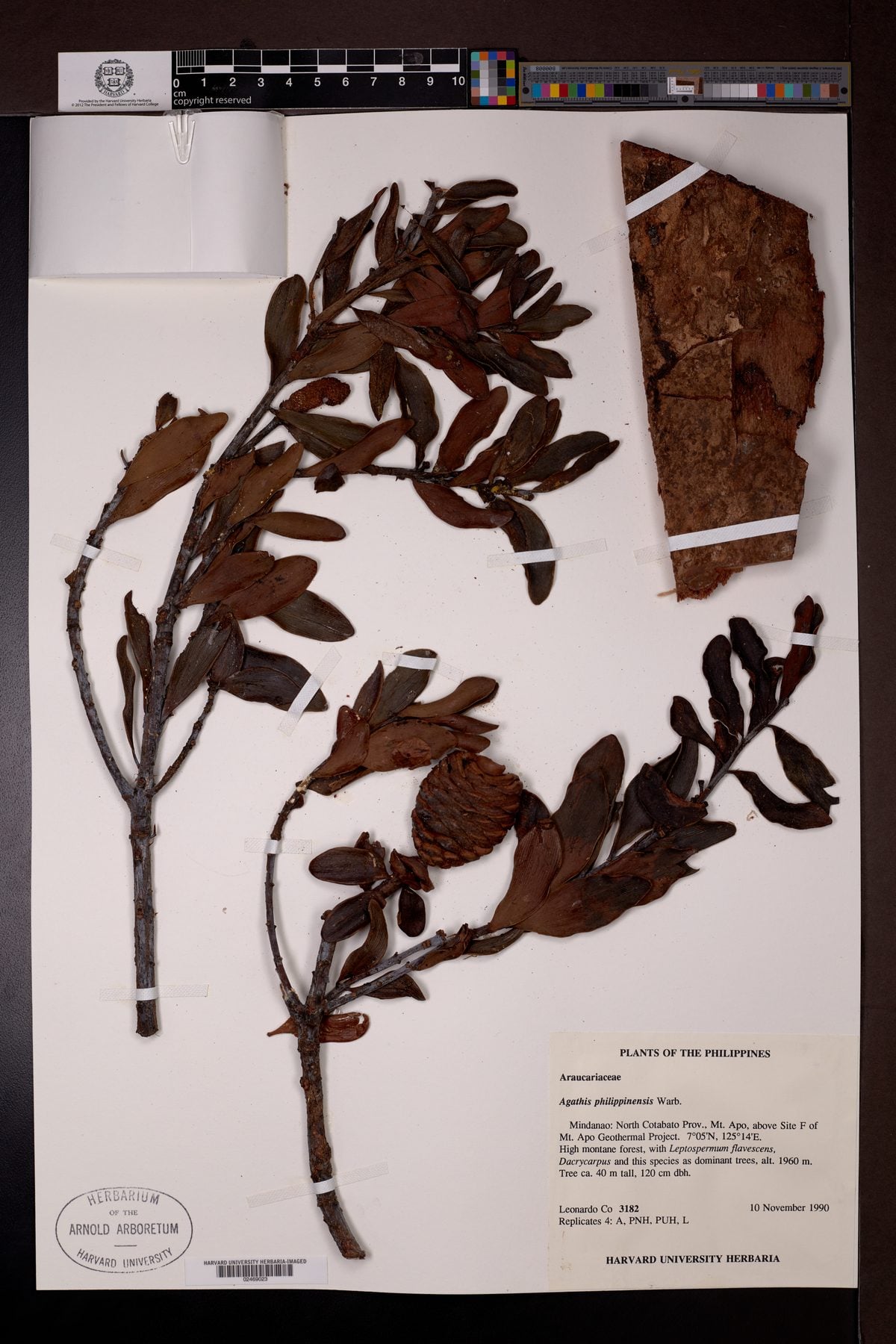
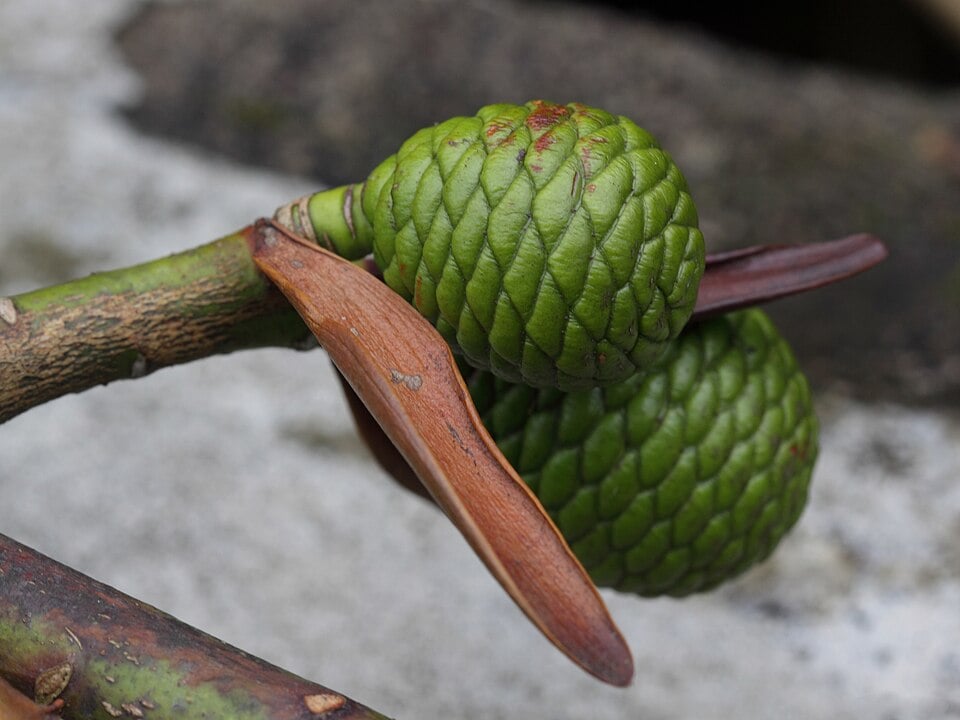
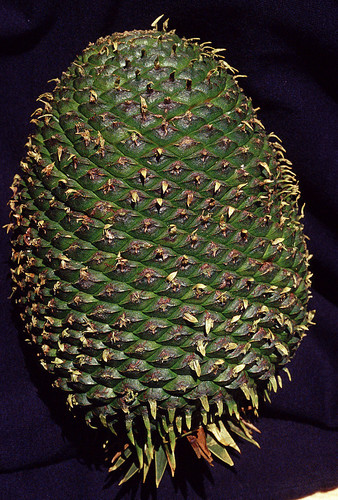
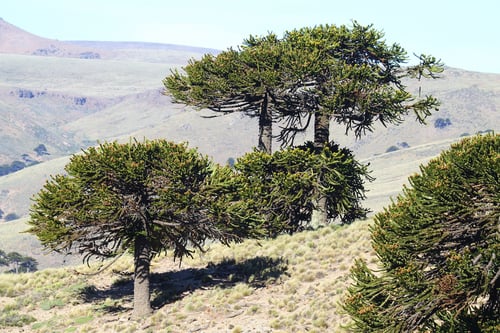
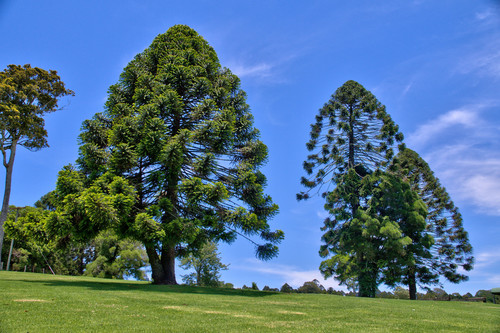
A tree. It grows 40 m tall. The trunk is 45 cm across. The crown is a cone shape. The branches are slightly drooping. The leaves are dark green and 5-12 cm long by 1-5 cm wide. The pollen cones. These are 5-8 cm long by 2-3 cm wide. The seed cones are broadly oval and 10 cm long. The seeds are 1.2 cm long by 7 mm wide. They have a wing on one side.
Edible Uses
None known
Medicinal Uses
None known
Distribution
It is a tropical plant. It occurs in the mountains. It grows in rainforest.
Where It Grows
Asia, China, Indonesia, Malaysia, Philippines, SE Asia,
Cultivation
Plants can be grown from seeds. It can be grown from cuttings.
Propagation
Seed cannot tolerate desiccation and stores for no more than around 2 months under normal conditions; no pre-treatment is required. Sow with the winged part of the seed pointing upwards and approximately 66% of the seed buried in the soil. Germination begins within 6 days, with 90–100% germination rates achieved within 10 days. The plant can also be propagated from cuttings of leading shoots.
Other Uses
Agathis dammara is cultivated as a plantation tree and used in enrichment planting and reforestation schemes across its natural range. The trunk yields the well-known dammar resin in abundance, graded into hard, semi-hard, and soft forms. It is used for varnishing enamels and interior work, and was formerly an important component of varnish and linoleum production. Resin quality depends partly on age, as it can be harvested from living trees or collected from the soil in semi-fossil condition. Harvesting begins when the trunk reaches around 25cm in diameter (approximately 20 years old). Triangular cuts, arranged in vertical rows around the trunk, are made and enlarged at each tapping until they become holes 15–20cm deep and wide. A tree around 30 metres tall and 60–80cm in diameter typically carries 9–11 holes in each of 4–5 vertical rows; tappers use a rattan belt and the lower holes as footholds to reach higher ones. Exuded resin is left to dry on the tree before collection, and cuts are refreshed anywhere from weekly to monthly depending on distance from the village. Tapping can continue for 30 years. The scaly, fibrous bark is burnt to deter mosquitoes. The timber is pale cream to golden or dark reddish-brown when resinous, with a lustrous surface, straight grain, and fine, uniform texture. It is not generally durable, is vulnerable to termite attack, and prone to blue stain, but works easily with hand and machine tools, finishing cleanly and accepting nails, screws, paint, polish, and glue well, with good veneer peeling characteristics. It is used for vats, tanks, patternmaking, millwork, boatbuilding, furniture components, face veneers, shingles, and pencil slats, as well as general-purpose construction, boat masts, joinery, household utensils, matches, veneer, packaging, moulding, plywood, and pulpwood.
Other Information
It is a cultivated plant.
Notes
Dammar resin is collected from the plant. It is used in medicine.
Synonyms
References (2)
- Lacuna-Richman, C., 2006, The use of non-wood forest products by migrants in a new settlement: experiences of a Visayan community in Palawan, Philippines. Journal of Ethnobiology and Ethnomedicine. 2:36
- www.eFloras.org Flora of China