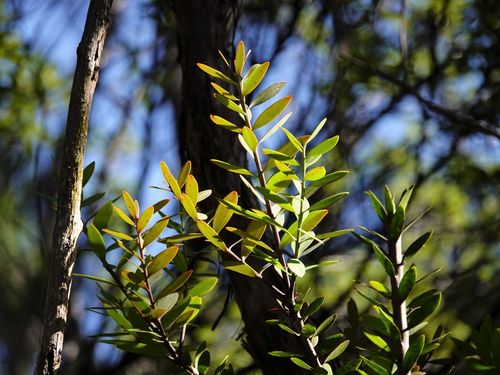
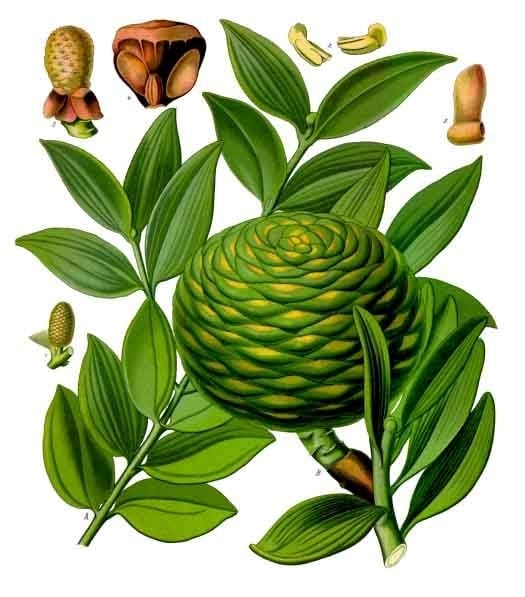
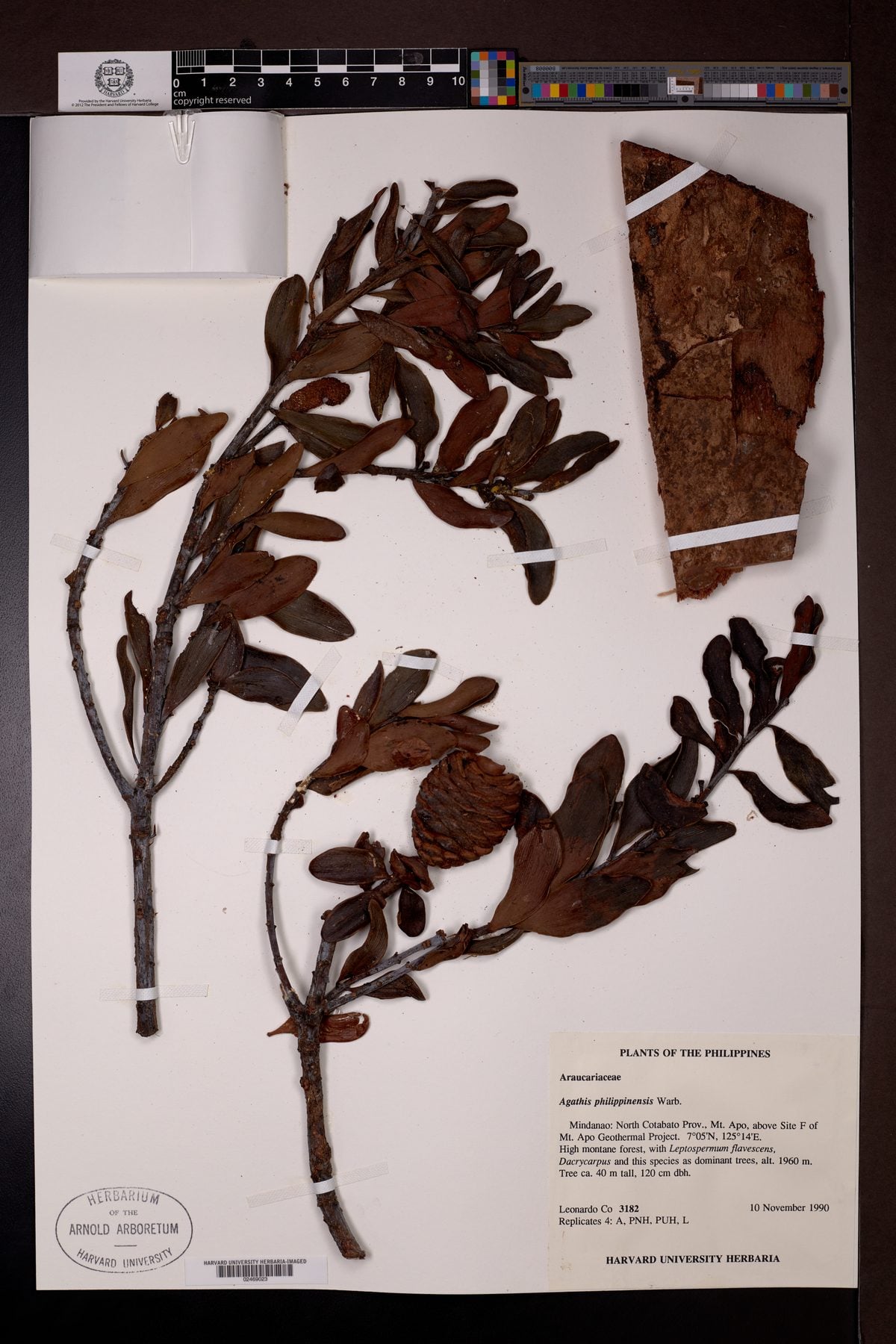
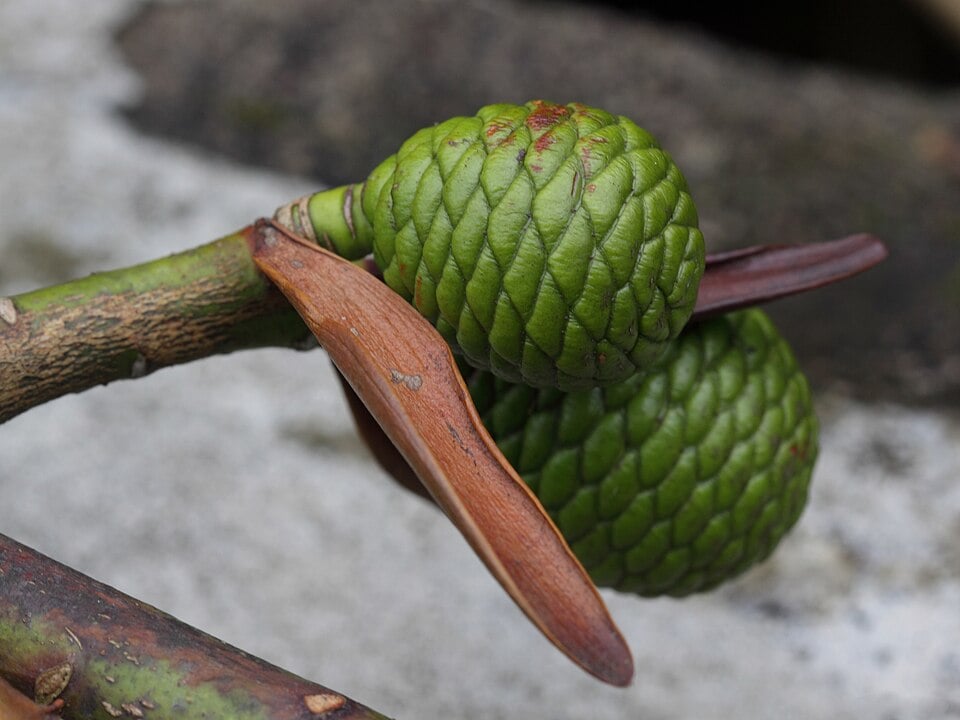
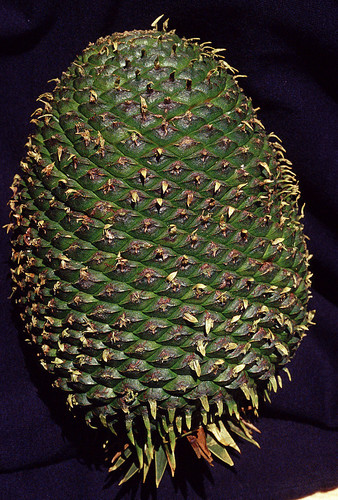
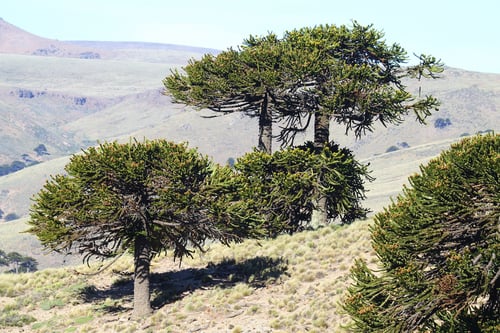
Agathis moorei - (Lindl.) Mast.
(Lindl.) Mast.
Pacific Kauri, Moore Kauri
gbif· cc-by-nc
juju98
gbif· cc-by-nc
juju98
gbif· cc-by-nc
Dominique Fleurot
Description
Agathis moorei is an evergreen Tree growing to 25 m (82ft) by 7 m (23ft) at a medium rate. See above for USDA hardiness. It is hardy to UK zone 10 and is frost tender. The flowers are pollinated by Wind. It is noted for attracting wildlife. Suitable for: light (sandy), medium (loamy) and heavy (clay) soils, prefers well-drained soil and can grow in nutritionally poor soil. Suitable pH: mildly acid and neutral soils. It can grow in full shade (deep woodland) semi-shade (light woodland) or no shade. It prefers moist soil.
Edible Uses
Seeds
Distribution
Western Pacific - New Caledonia.
Where It Grows
PACIFIC: New Caledonia
Cultivation
Young plants grow better in the shelter and shade of the woodland, but require increasing amounts of light as they grow larger. High nitrogen fertilizer annually.
Propagation
Seed - it cannot tolerate desiccation and does not store for much more than 2 months in normal conditions. It does not require pre-treatment. Sowing is done with the wing part of the seed pointing upwards and 66% of the seed buried in the soil. Germination commences within 6 days, with 90 - 100% germination rates within 10 days. Cuttings of leading shoots.
Other Uses
Containers Dye Fuel Furniture Lacquer Lighting Resin Varnish Waterproofing Wood. Agathis species in general yield a high-quality resin, often known as Manila Copal. The resins obtained from Agathis borneensis, Agathis dammara, Agathis lanceolata, Agathis macrophylla and Agathis philippinensis are the most important commercially, but all members of the genus yield useable quantities. The resin is obtained in three forms. Firstly, it naturally exudes from the bark, branches, cones etc of the tree, especially as a result of any damage - some of these exudations can weigh as much as 20 kilos. The second form, known as fossil resin, is dug up from the ground - some of this resin can be of fairly recent origin (perhaps secreted by the roots of trees that have been felled, but much of it can be up to 50,000 years old, perhaps formed on a tree that fell naturally and was then gradually buried. The third form of resin is harvested by tapping the tree, though this can easily damage the tree and lead to premature death. The resin has a range of applications. Traditionally it has been used as a fuel for campfires, a torch, as a waterproofing on boats, as a medicine, the smoke from the burning resin is used as a black dye and for tattooing. The resin is used commercially in making high-quality varnishes, lacquers, linoleum. The heartwood is a creamy-white or light yellow, often with a pink reflection, turning golden brown on exposure; it is not clearly demarcated from the 8 - 11cm wide band of heartwood. The texture is fine; the grain straight. The wood is light in weight, soft, not very durable, being susceptible to dry wood borers and termites, and moderately susceptible to fungi. The wood seasons well with only a slight risk of checking or distorting; once dried it is stable in service. It works well with normal tools; screwing and nailing are good; glueing is correct. The wood has a wide range of uses, including for cabinetwork and high-class furniture, interior panelling and joinery, turnery, woodware, light carpentry, boxes and crates, cooperage, veneer etc.
Synonyms
Also Known As
Kaori Blanc, Kaori rouge