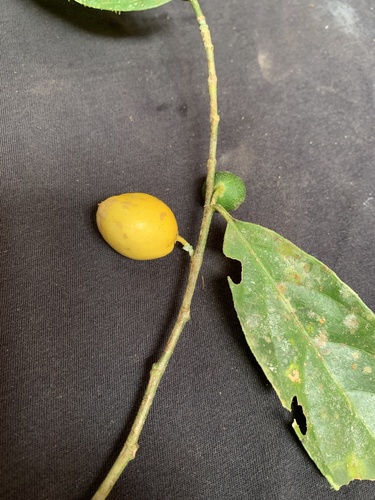
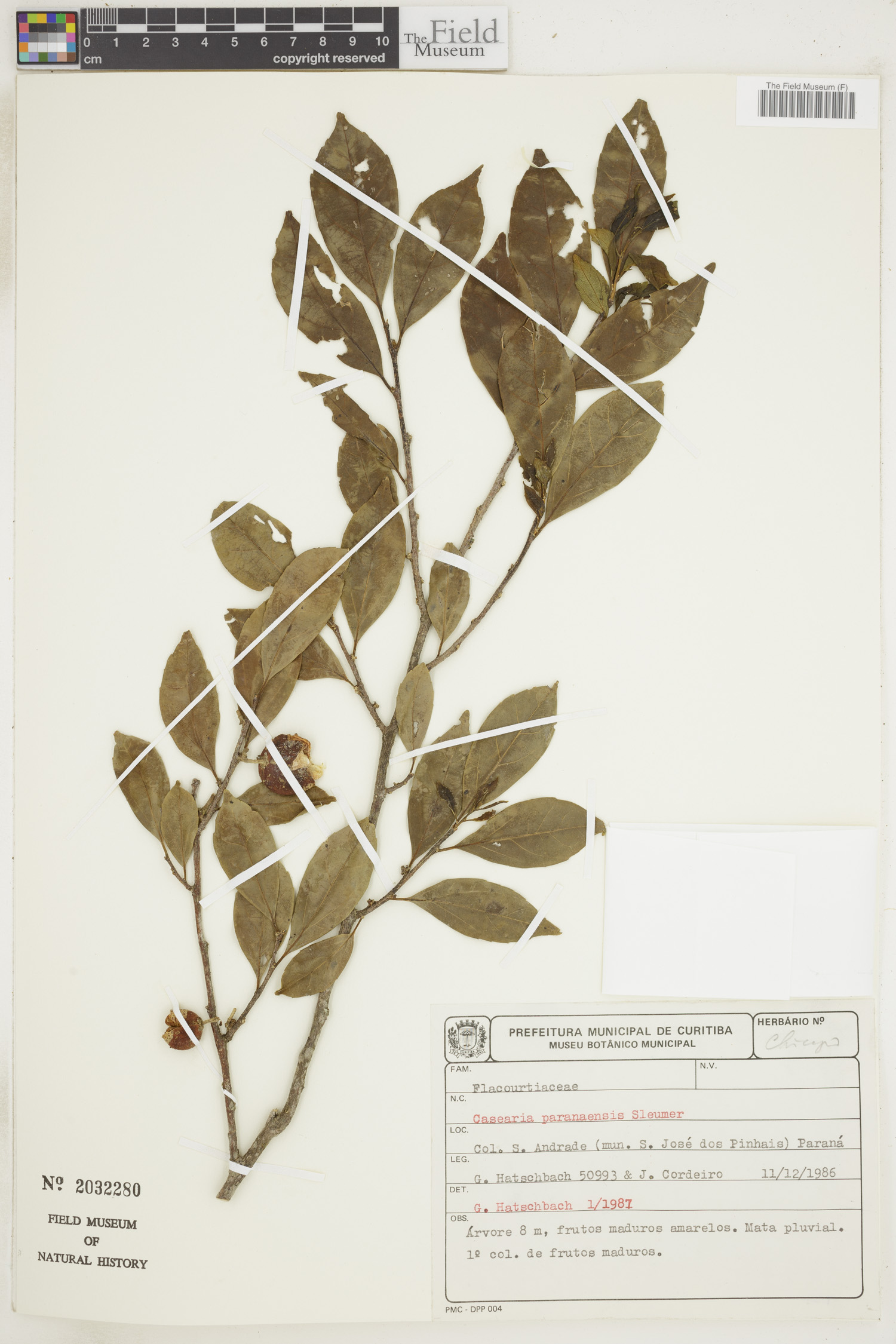
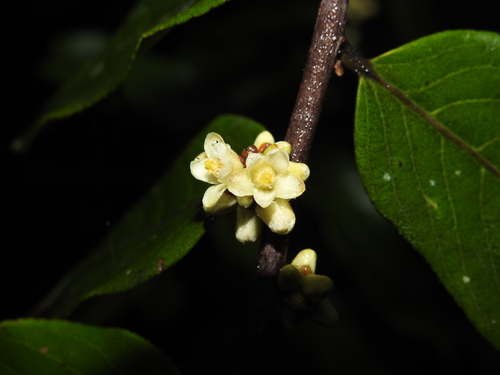
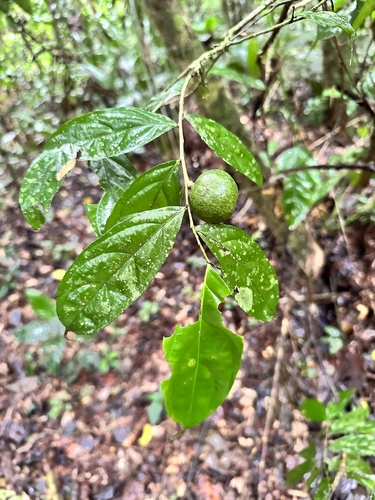
Salix nigra
Marshall
Black willow, Swamp willow, Goodding willow
iNaturalist· cc-by-nc
(c) sehnature, some rights reserved (CC BY-NC)
iNaturalist· cc-by-nc-nd
(c) Dan Mullen, some rights reserved (CC BY-NC-ND)
iNaturalist· cc-by-sa
(c) Douglas Goldman, some rights reserved (CC BY-SA), uploaded by Douglas Goldman
Summary
Source: WikipediaSalix nigra, or the black willow, is a species of willow native to a large portion of North America, from New Brunswick and southern Ontario west to Arizona and California, and south to northern Florida and Texas.
Description
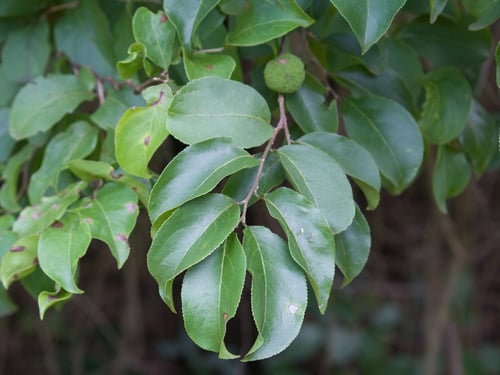
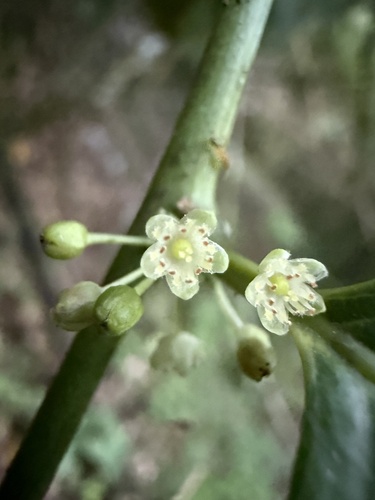
A large tree. It loses its leaves during the year. It grows 12-30 m high. The trunk is 30-80 cm across. The bark is scaly and often becomes rough. Young branches have scars from where twigs fell off. The leaves are narrow and sword shaped. There are very small teeth along the edge. The leaves are green on both surfaces. The flowers are separately male and female in catkins. The male catkins are 2-5 cm long.
Edible Uses
The inner bark can be eaten raw or cooked, or dried and ground into a powder to blend with cereal flour for bread-making. It has a very bitter flavour and is regarded as a famine food, used only when all else fails. Young shoots can be eaten raw or cooked, though they are not very palatable.
Medicinal Uses
The bark is anodyne, anti-inflammatory, antiperiodic, antiseptic, astringent, diaphoretic, diuretic, febrifuge, hypnotic, sedative, and tonic. It has been used in the treatment of gonorrhoea, ovarian pains, and nocturnal emissions. Used interchangeably with S. alba, it is taken internally for rheumatism, arthritis, gout, inflammatory stages of auto-immune diseases, diarrhoea, dysentery, feverish illnesses, neuralgia, and headache. The bark can also be applied as a poultice to cuts, wounds, sprains, bruises, and swellings. Bark is harvested in summer and dried for later use. The fresh bark contains salicin, which probably decomposes into salicylic acid (closely related to aspirin) in the human body, and is used as an anodyne, febrifuge, and ingredient in spring tonics. The leaves are used internally for minor feverish illnesses and colic, and can be harvested throughout the growing season for use fresh or dried.
Distribution
It is a temperate plant. Trees cannot tolerate shade. It grows to 1,500 m altitude in the southern USA. It suits hardiness zones 4-10.
Where It Grows
Australia, Canada, North America, USA,
Cultivation
Succeeds in most soils, including wet, ill-drained or intermittently flooded soils, but prefers a damp, heavy soil in a sunny position. Rarely thrives on chalk. A fast-growing but relatively short-lived species, it can reach 15 metres tall within 10 years from seed in the wild. Twigs tend to break off easily in storms, these will then often root and grow into new trees. A good bee plant, providing an early source of nectar. Trees are impatient of root disturbance and should be moved regularly before being planted in their permanent positions, which is best done whilst the plants are young. The root system is rather aggressive and can cause problems with drains. Plants should not be grown within 10 metres of buildings. Closely related to Salix caroliniana, hybridising with that species where their ranges overlap. This species is also likely to hybridize freely with other members of this genus. Although the flowers are produced in catkins early in the year, they are pollinated by bees and other insects rather than by the wind. Plants in this genus are notably susceptible to honey fungus. Seedlings are very fast-growing, they can reach 1.2 metres tall in their first year. Plants are used commercially for papermaking. Dioecious. Male and female plants must be grown if seed is required.
Propagation
Seed must be surface sown as soon as it is ripe in late spring, as viability is very short — perhaps only a few days. Cuttings of mature wood from the current year's growth can be taken November to February and rooted in a sheltered outdoor bed or planted directly into their permanent position with a weed-suppressing mulch; success is very easy. Plant out into permanent positions in autumn. Half-ripe cuttings can be taken June to August and rooted in a frame, also very easily.
Other Uses
The young, very flexible stems are used in basket and furniture making. Twigs can be split lengthways, sun-dried, and used as the foundation for coiled basketry. The plant is usually coppiced annually for this purpose, though coppicing every two years yields thicker poles for uprights. Fibres from the stems are used in paper-making: stems are harvested in spring or summer, leaves removed, stems steamed to strip the fibres, which are then cooked for 2 hours with lye and beaten with mallets or processed in a blender. The resulting paper is red-brown in colour. The trees are widely used in erosion control, as their roots form dense networks that stabilize stream banks. The bark is a good source of tannin, and a decoction or infusion of the bark can be used as a hair wash to encourage hair growth. The wood is light, soft, and non-splintering, weighing 27 lb per cubic foot, and is used where great strength is not required — for artificial limbs and barn floors, for example. A good charcoal is also obtained from the wood. This species is valued as a dynamic accumulator.
Production
Trees are fast growing. Trees live for 70 years.
Notes
There are about 300 Salix species.
Synonyms
References (5)
- Arbust amer. 139. 1785
- Cundall, P., (ed.), 2004, Gardening Australia: flora: the gardener's bible. ABC Books. p 1298
- Farrar, J.L., 1995, Trees of the Northern United States and Canada. Iowa State University press/Ames p 326
- Plants for a Future database, The Field, Penpol, Lostwithiel, Cornwall, PL22 0NG, UK. http://www.scs.leeds.ac.uk/pfaf/
- Schuler, S., (Ed.), 1977, Simon & Schuster's Guide to Trees. Simon & Schuster. No. 164