Casearia esculenta
Roxb.
iNaturalist· cc-by-nc
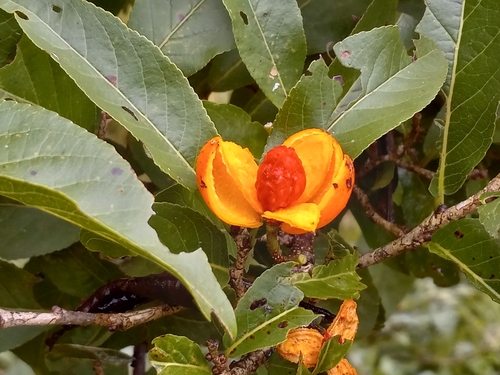
(c) zchau99, some rights reserved (CC BY-NC)
iNaturalist· cc-by-sa
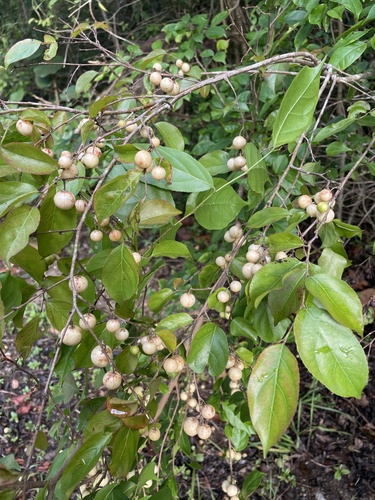
(c) Dinesh Valke, some rights reserved (CC BY-SA)
iNaturalist· cc-by-sa
(c) Dinesh Valke, some rights reserved (CC BY-SA)
Description
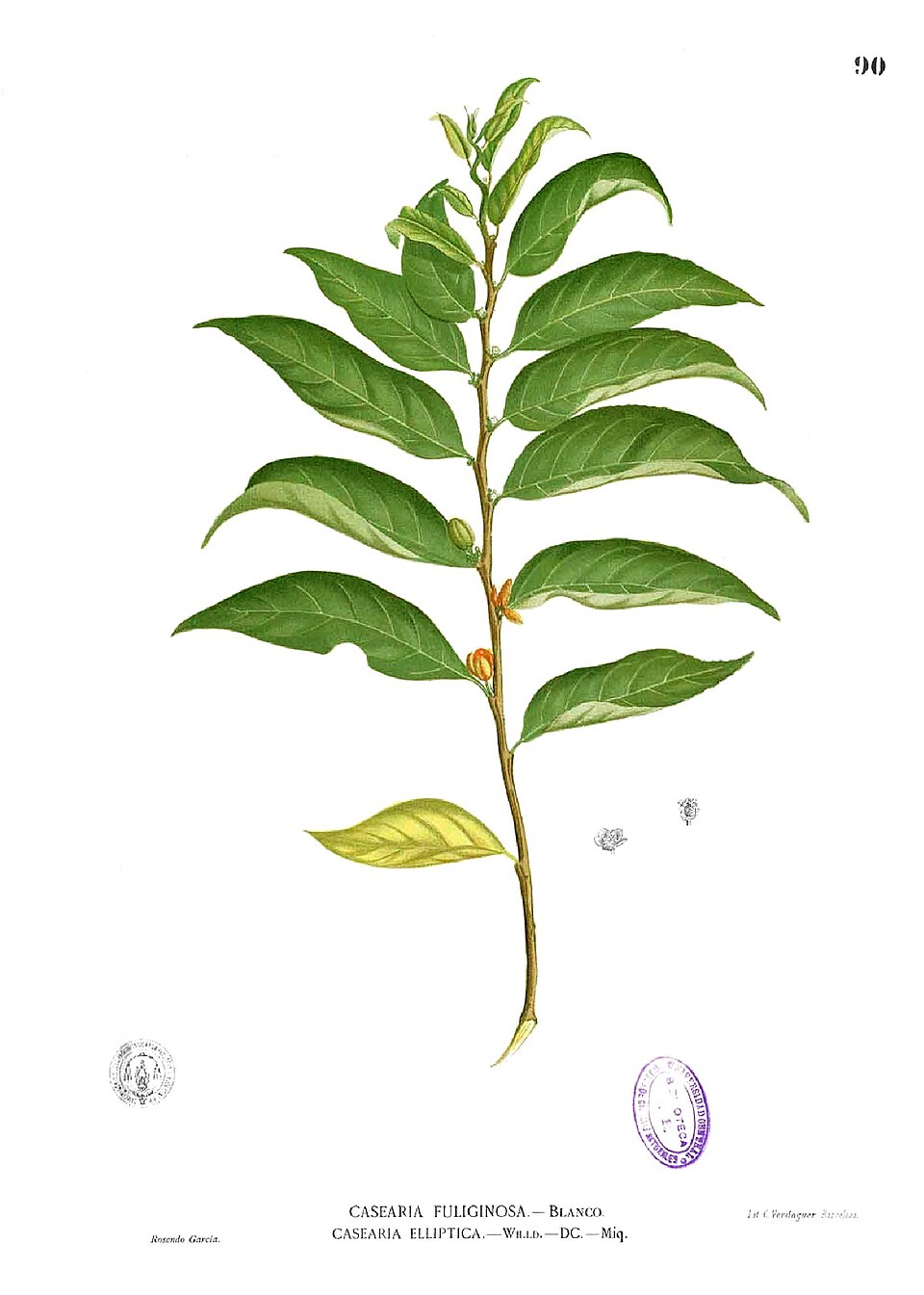
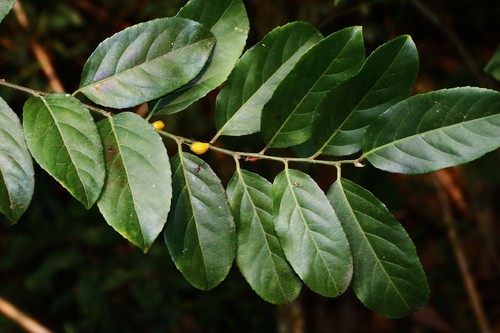
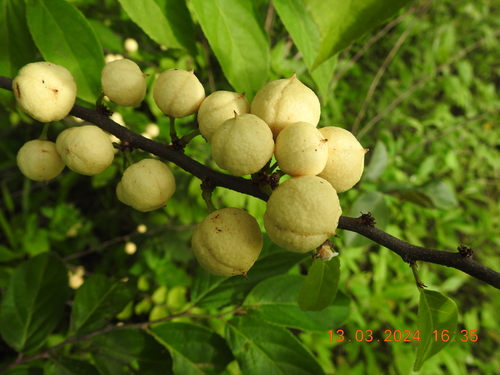
An erect shrub growing to 4 m high with thick, shiny, narrowly oval leaves that taper to the tip. It produces small, dull green flowers in the leaf axils followed by pointed fruit with three orange-colored valves containing edible pulp.
Edible Uses
Fruit. The orange-yellow, broadly ovoid fruit is about 18mm long, containing several seeds surrounded by an edible fleshy, scarlet aril. Leaves and young shoots - cooked. Eaten in stews.
Traditional Uses
The leaves are used in stews and curries. The fruit are edible.
This uses section is brief — help expand it
Medicinal Uses
The wood and leaves are used medicinally. The root is astringent and cathartic. It promotes the action of the liver. A decoction of the root is used in the treatment of diabetes. It has a great reputation as a remedy for hepatic enlargements, where it removes the feeling of weight and tension in the hepatic region and acts as a gentle aperient upon the bowels. A decoction or paste of the root is used externally in the treatment of piles. Both aqueous and alcohol extracts of the stems have been shown to be effective in reducing blood sugar levels, and to be of help in the treatment of diabetes. A crude aqueous extract of the roots has shown hypoglycaemic activity. The roots contain a resin and tannins. The bark contains tannins and a principle related to cathartic acid.
Known Hazards
The fruit is a capsute containing several seeds. Although the capsule of some species (and possibly also the seeds contained therein) is somewhat toxic, the fleshy aril surrounding the seeds is a different matter and in some species (such as this one) is often eaten and is considered to be perfectly wholesome.
Distribution
E. Asia - southern India, Sri Lanka.
Where It Grows
Leaves, Fruit,
Propagation
The seed of species in this genus often has a short period of viability and so is best sown as soon as it is ripe. The seed is collected when the fruits start to open - leave them in the sun to open completely to release the seed, then rinse the seed in water to remove the arils. Sow the seed in a partially shaded position in a nursery seedbed, only just covering the seed, and keep moist. Germination rates vary, but can usually be expected to be low, with the seed sprouting within 20 - 30 days. When the seedlings are 3 - 5cm tall, pot them up into individual containers and they should be ready to plant out a few months later. Cuttings.
Other Uses
The white to pale yellow wood is even-grained, moderately hard and heavy.
Other Information
Salicaceae
Notes
An erect shrub. It grows 4 m high. The leaves are thick and entire. They are narrowly oval and taper to the tip. They are shiny. The flowers are small and dull green. They are in the axils of leaves on a small knob. The fruit are pointed and have 3 orange coloured valves. The fruit pulp is edible.
Also Known As
Doddahanise, Kakkaippilai, Kilar, Konda jungara, Kottargovai, Kron suri, Kulkulta, Malampavatta, Mori, Pannimurangam, Saptrangi, Vella kunnan
References (9)
- Ambasta S.P. (Ed.), 2000, The Useful Plants of India. CSIR India. p 108
- Bircher, A. G. & Bircher, W. H., 2000, Encyclopedia of Fruit Trees and Edible Flowering Plants in Egypt and the Subtropics. AUC Press. p 88
- Dobriyal, M. J. R. & Dobriyal, R., 2014, Non Wood Forest Produce an Option for Ethnic Food and Nutritional Security in India. Int. J. of Usuf. Mngt. 15(1):17-37
- Hedrick, U.P., 1919, (Ed.), Sturtevant's edible plants of the world. p 173
- Patiri, B. & Borah, A., 2007, Wild Edible Plants of Assam. Geethaki Publishers. p 7
Show all 9 references Hide references
- Reddy, K. N. et al, 2007, Traditional knowledge on wild food plants in Andhra Pradesh. Indian Journal of Traditional Knowledge. Vol. 6(1): 223-229
- Sarma, H., et al, 2010, Updated Estimates of Wild Edible and Threatened Plants of Assam: A Meta-analysis. International Journal of Botany 6(4): 414-423
- Singh, H.B., Arora R.K.,1978, Wild edible Plants of India. Indian Council of Agricultural Research, New Delhi. p 21
- Wild edible plants of Himachal Pradesh