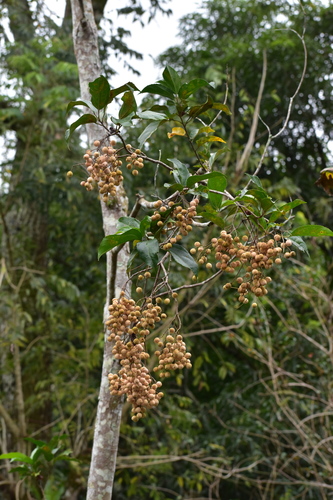
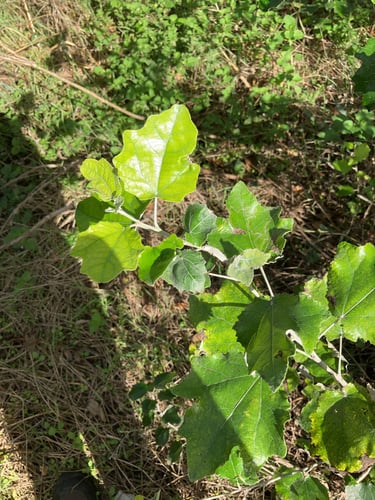
Salix alba
L.
White willow, European willow
wikimedia· cc-by
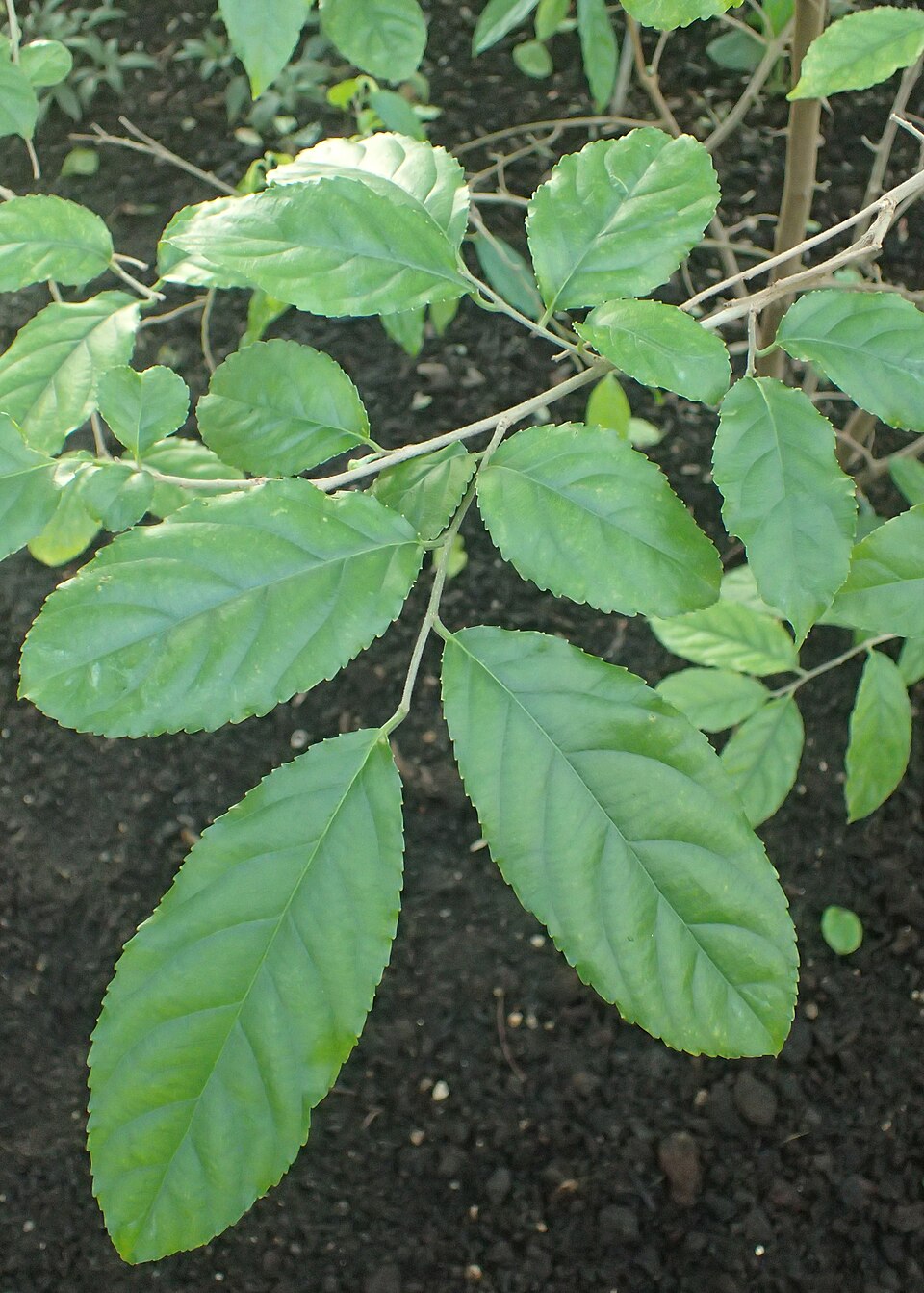
Willow (via Wikimedia Commons)
wikimedia· cc-by-sa
MPF (via Wikimedia Commons)
wikimedia· cc-by
Badagnani (via Wikimedia Commons)
iNaturalist· cc-by-nc
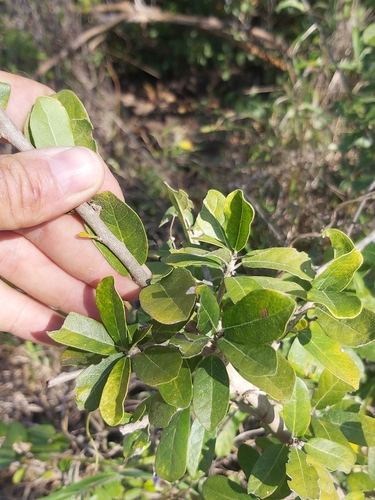
(c) saartje281, some rights reserved (CC BY-NC)
iNaturalist· cc-by-nc
(c) Misha Zitser, some rights reserved (CC BY-NC)
iNaturalist· cc-by-nc
(c) Misha Zitser, some rights reserved (CC BY-NC)
Summary
Source: WikipediaSalix alba, the white willow, is a species of willow native to Europe and western and Central Asia. The name derives from the white tone to the undersides of the leaves. It is a medium to large deciduous tree growing up to 10–30 m tall, with a trunk up to 1 m diameter and an irregular, often-leaning crown. The bark is grey-brown and is deeply fissured in older trees. The shoots in the typical species are grey-brown to green-brown. The leaves are paler than most other willows because they are covered with very fine, silky white hairs, in particular on the underside; they are 5–10 cm long and 0.5–1.5 cm wide. The flowers are produced in catkins in early spring and are pollinated by insects. It is dioecious, with male and female catkins on separate trees; the male catkins are 4–5 cm long, the female catkins 3–4 cm long at pollination, lengthening as the fruit matures. When mature in midsummer, the female catkins comprise numerous small (4 mm) capsules, each containing numerous minute seeds embedded in silky white hairs, which aids wind dispersal.
Description
A shapely deciduous tree. It often has 1-4 trunks and an open crown of spreading branches. It grows up to 20-25 m tall and 9-12 m wide. The leaves are silvery but blue-green and silky underneath. They are alternate and on short stalks. The leaves are 5-7 times as long as wide. The leaves have fine teeth. The male flowers are yellow catkins. The female flowers are green catkins. The seeds are fluffy. They are blown by the wind.
Edible Uses
The inner bark can be eaten raw or cooked. It can be dried, ground into a powder, and added to cereal flour for making bread. The flavour is very bitter, especially when fresh, and it is used as a famine food only when all else fails. Leaves and young shoots are eaten raw or cooked, though they are not very palatable and are used only in times of scarcity. Leaves can also be used as a tea substitute.
Traditional Uses
The young leaves are used as food in times of scarcity. The leaves are also used for a tea like drink. The inner bark is dried and powdered then used for bread. (It is very bitter unless dried)
Medicinal Uses
White willow is the original source of salicylic acid, the precursor of aspirin, and has been used for thousands of years to relieve joint pain and manage fevers. The bark is anodyne, anti-inflammatory, antiperiodic, antiseptic, astringent, diaphoretic, diuretic, febrifuge, hypnotic, sedative, and tonic. It has been used internally for dyspepsia connected with debility of the digestive organs, rheumatism, arthritis, gout, inflammatory stages of auto-immune diseases, feverish illnesses, neuralgia, and headache. Its tonic and astringent properties make it useful during convalescence from acute diseases and in treating worms, chronic dysentery, and diarrhoea. The bark contains salicin, which probably decomposes into salicylic acid in the human body. Bark is harvested in spring or early autumn from 3–6 year old branches and dried for later use. Leaves are used internally for minor feverish illnesses and colic. An infusion of the leaves has a calming effect helpful in treating nervous insomnia, and when added to bathwater it can relieve widespread rheumatism. Leaves can be harvested throughout the growing season and used fresh or dried. The German Commission E Monographs approve willow for diseases accompanied by fever, rheumatic ailments, and headaches.
Known Hazards
Gastrointestinal bleeding & kidney damage possible. Avoid concurrent administration with other aspirin-like drugs. Avoid during pregnancy. Drug interactions associated with salicylates applicable.
Distribution
It is a temperate plant. It is native to W. Asia and Europe. It grows along riversides and in meadows by water. It is frost hardy. It grows in damp soil. In Argentina it grows below 500 m above sea level. It suits hardiness zones 2-10. Arboretum Tasmania.
Where It Grows
Africa, Albania, Andorra, Argentina, Australia, Austria, Balkans, Belgium, Britain, Canada, Chile, China, Crete, Czech Republic, Europe, France, Germany, Greece, Hungary, India, Iraq, Italy, Luxembourg, Macedonia, Mediterranean, Middle East, Netherlands, North Africa, North America, Pakistan, Poland, Portugal, Romania, Russia, San Marino, South America, Spain, Switzerland, Tasmania, Turkey, Türkiye, USA, Yugoslavia,
Cultivation
A very easily grown plant, it succeeds in most soils, including wet, ill-drained or intermittently flooded soils, but prefers a damp, heavy soil in a sunny position. Rarely thrives on chalk and dislikes poor thin soils. Very tolerant of maritime exposure and atmospheric pollution. Trees respond well to coppicing or pollarding. Best planted into its permanent position as soon as possible, trees respond badly to transplanting unless they are moved regularly. The root system is rather aggressive and can cause problems with drains. A very important food plant for the caterpillars of many species of butterflies and a good bee plant, providing an early source of nectar and pollen. A very good wildlife habitat, more than 200 species of insects are associated with this tree. There are many sub-species and cultivars in this species. S. alba caerulea is the cricket bat willow, cultivated for its wood. S. alba vitellina. (L.)Stokes. has been cultivated for its very tough stems that are used as tie rods in basket making. The cultivar 'Cardinal' is also grown for its use in basket making. This species is used commercially in papermaking. Hybridizes freely with other members of this genus, especially S. fragilis, to which it is closely related. Trees cast a relatively light shade. Dioecious. Male and female plants must be grown if seed is required.
Propagation
Seed must be surface sown as soon as it is ripe in late spring, as viability is very short — perhaps only a few days. Cuttings of mature wood from the current year's growth can be taken November to February and placed in a sheltered outdoor bed or planted straight into their permanent position with a good weed-suppressing mulch; branches of older wood up to 2.5 metres long can also be used. This method is very easy. Plant out into permanent positions in autumn. Cuttings of half-ripe wood taken June to August in a frame are also very easy.
Other Uses
Young stems are very flexible and used in basket making, with plants usually coppiced annually for this purpose, or every two years if thicker poles are needed as uprights. Bark can be used for tying plants. A fibre from the stems is used to make paper: stems are harvested in spring or summer, leaves removed, and stems steamed until fibres can be stripped; the fibres are then cooked for 2 hours with lye and beaten with mallets or put through a blender, producing a red-brown paper. The tree grows fast and tolerates maritime exposure, making it suitable for shelterbelts. Its rapid growth and wind tolerance also make it a useful pioneer species for establishing woodland conditions on difficult sites; cuttings spaced about every 5 metres will quickly provide shelter for less wind-tolerant woodland trees, though its far-ranging, greedy roots mean it does less to enrich the soil than species such as alders. The wood is elastic, soft, easy to split, and does not splinter; it is used for construction, turnery, poles, and tool handles. The wood is also used to make charcoal, which has medicinal uses.
Other Information
It is cultivated.
Notes
There are about 300 Salix species.
Also Known As
Bhushan, Bis, Madnu, Malchang, Salgueiro-branco, Vivir
References (20)
- Ambasta, S.P. (Ed.), 2000, The Useful Plants of India. CSIR India. p 540
- Bremness, L., 1994, Herbs. Collins Eyewitness Handbooks. Harper Collins. p 82
- Coombes, A.J., 2000, Trees. Dorling Kindersley Handbooks. p 291
- Cundall, P., (ed.), 2004, Gardening Australia: flora: the gardener's bible. ABC Books. p 1296
- Harris, E & J., 1983, Field Guide to the Trees and Shrubs of Britain. Reader's Digest. p 116
Show all 20 references Hide references
- Hedrick, U.P., 1919, (Ed.), Sturtevant's edible plants of the world. p 590
- Hibbert, M., 2002, The Aussie Plant Finder 2002, Florilegium. p 283
- Kermath, B. M., et al, 2014, Food Plants in the Americas: A survey of the domesticated, cultivated and wild plants used for Human food in North, Central and South America and the Caribbean. On line draft. p 776
- Kiple, K.F. & Ornelas, K.C., (eds), 2000, The Cambridge World History of Food. CUP p 1880
- Little, E.L., 1980, National Audubon Society Field Guide to North American Trees. Alfred A. Knopf. p 327
- Lord, E.E., & Willis, J.H., 1999, Shrubs and Trees for Australian gardens. Lothian. p 71
- Moerman, D. F., 2010, Native American Ethnobotany. Timber Press. p 500
- Plants for a Future database, The Field, Penpol, Lostwithiel, Cornwall, PL22 0NG, UK. http://www.scs.leeds.ac.uk/pfaf/
- Romanowski, N., 2007, Edible Water Gardens. Hyland House. p 114
- Sainty, G.R. & Jacobs, S.W.L., 1981, Waterplants of New South Wales. Water Resources Commission. NSW p 399
- Schuler, S., (Ed.), 1977, Simon & Schuster's Guide to Trees. Simon & Schuster. No. 161
- Sfikas, G., 1984, Trees and shrubs of Greece. Efstathiadis Group. Athens. p 162
- Sp. pl. 2:1021. 1753
- Tasmanian Herbarium Vascular Plants list p 53
- Zeven, A. C. & de West, J. M. J., 1982, Dictionary of cultivated plants and their regions of diversity. Wageningen. p 86