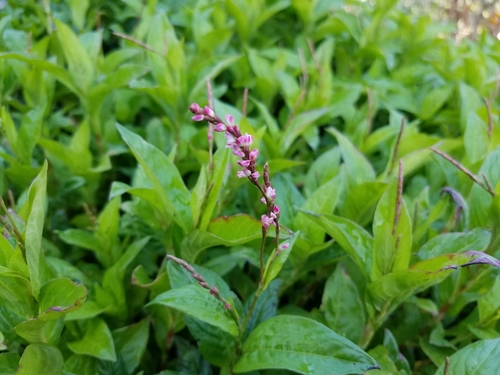
Rumex salicifolius
Weinm.
Willow dock, Mexican Dock
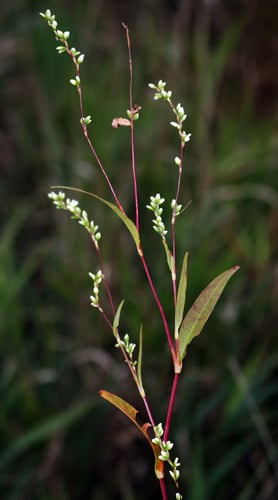
iNaturalist· cc-by-nc
(c) Ron Vanderhoff, some rights reserved (CC BY-NC)
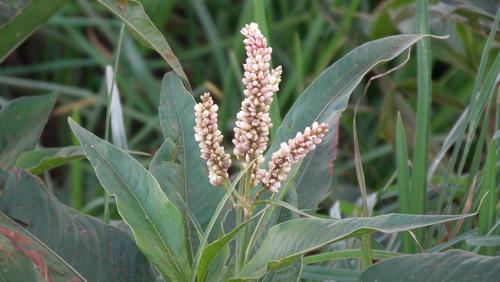
iNaturalist· cc-by
(c) Andrey Zharkikh, some rights reserved (CC BY)
Summary
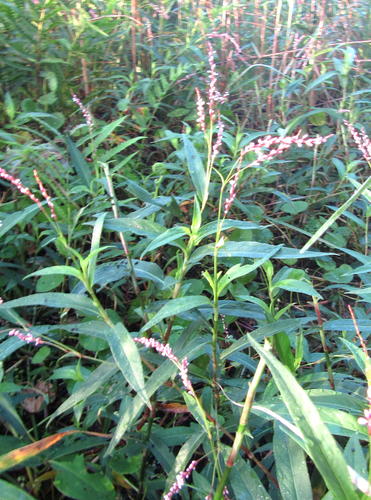
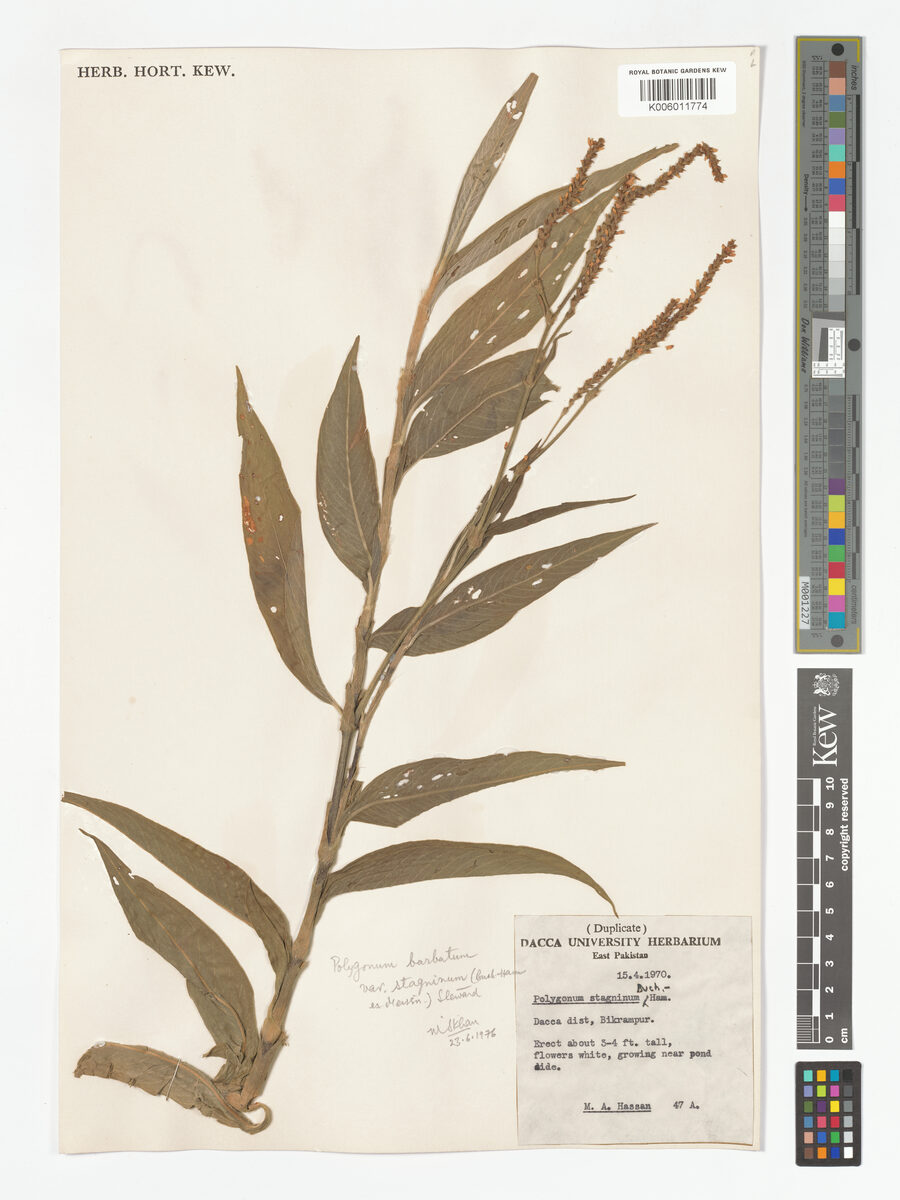
Source: WikipediaRumex salicifolius is a species of flowering perennial plant in the knotweed family known by the common names willow dock and willow-leaved dock. It is native to much of western North America, and more specifically, in southern and central parts of California, and some parts of Arizona and Nevada. It can also be found in parts of Europe as an introduced species and a roadside weed. It is an extremely variable plant which is generally divided into many varieties, some of which may actually be specimens of other species.
Description
Perennial growing 0.6 m tall. Hermaphroditic and wind-pollinated. Tolerates light sandy, medium loamy, and heavy clay soils, preferring well-drained conditions. Grows in mildly acid, neutral, or basic soils. Adapts to semi-shade or full light and prefers moist soil. Tolerates coastal exposure.
Edible Uses
Young leaves can be cooked and used as greens. The stems are also edible cooked — they can be peeled and boiled with sugar for use like rhubarb, or baked and peeled to eat the inner pulp either hot or cold. The seeds are edible cooked and can be ground into a powder, then cooked with water until they reach the consistency of a thick gravy.
Traditional Uses
The seeds are parched, pounded and cooked into a thick porridge. The stems are boiled with sugar or roasted. The inner pulp is eaten. The leaves are used as greens.
Medicinal Uses
The roots are astringent, act as a blood purifier and laxative, and can be used as a poultice or salve. A decoction of the roots has been used to treat severe constipation, and an infusion has been used for stomach aches. Mashed roots have been applied as a salve on sore limbs and on chicken pox rash. The dried, powdered root has been used as a dusting powder on sores and cuts.
Known Hazards
Plants can contain quite high levels of oxalic acid, which is what gives the leaves of many members of this genus an acid-lemon flavour. Perfectly alright in small quantities, the leaves should not be eaten in large amounts since the oxalic acid can lock-up other nutrients in the food, especially calcium, thus causing mineral deficiencies. The oxalic acid content will be reduced if the plant is cooked. People with a tendency to rheumatism, arthritis, gout, kidney stones or hyperacidity should take especial caution if including this plant in their diet since it can aggravate their condition.
Distribution
It is a temperate plant.
Where It Grows
Canada, North America, Slovenia, USA,
Cultivation
We have very little information on this species and do not know if it will be hardy in Britain, though judging by its native range it should succeed outdoors in most parts of this country. Plants should also be tolerant of maritime exposure. The following notes are based on the general needs of the genus. Succeeds in most soils but prefers a deep fertile moderately heavy soil that is humus-rich, moisture-retentive but well-drained and a position in full-sun or part shade.
Propagation
Sow seed in spring in a cold frame. Prick seedlings out into individual pots once large enough to handle, and plant out during summer. Plants can also be propagated by division in spring.
Other Uses
No specific dye data has been recorded for this species, but roots of many plants in this genus yield dark green to brown and dark grey dyes without requiring a mordant.
Notes
There are about 200 Rumex species.
Also Known As
Vrbovolistna kislica
References (4)
- Flora 4:28. 1821
- http://www.botanic-gardens-ljubljana.com/en/plants
- Moerman, D. F., 2010, Native American Ethnobotany. Timber Press. p 498
- Plants for a Future database, The Field, Penpol, Lostwithiel, Cornwall, PL22 0NG, UK. http://www.scs.leeds.ac.uk/pfaf/