Persicaria serrulata
Brouss. ex Willd.
Slender Knotweed
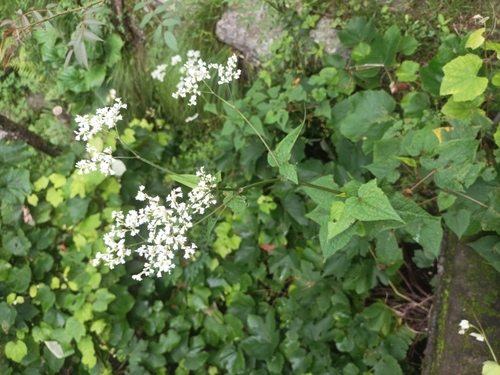
iNaturalist· cc-by-nc
(c) Ricky Taylor, some rights reserved (CC BY-NC)
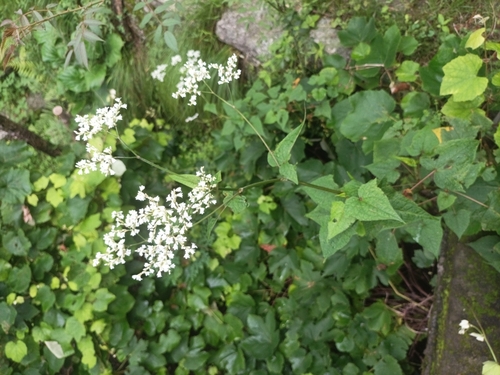
iNaturalist· cc-by-nc
(c) Ricky Taylor, some rights reserved (CC BY-NC)
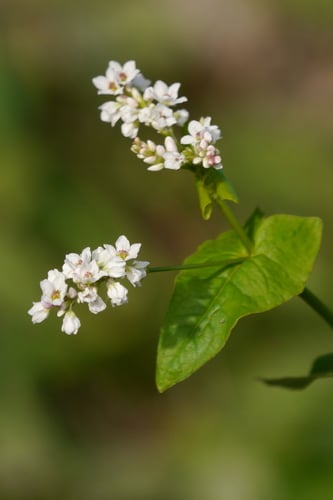
iNaturalist· cc-by-nc
(c) Ricky Taylor, some rights reserved (CC BY-NC)
Description
An annual herb. The stems are slender. It is erect and grows 60-90 cm high. When lying along the ground, stems form roots at the nodes. The leaves are alternate and almost without stalks. The leaf blades are long and narrow. They are 11 cm long. They are dark green. At the base they clasp the stems. This forms a sheath with hairs along the fringe. The flowers are small, pink and in spikes. These are 2-9 cm long and have a zigzag shape. The fruit is a 3 sided nutlet. It is smooth and shiny.
Edible Uses
Young leaves are chopped and boiled before eating. Both leaves and seeds are edible portions. It is eaten throughout Malawi, though primarily as a famine food.
Traditional Uses
The young leaves are chopped, boiled and eaten.
This uses section is brief — help expand it
Medicinal Uses
Used as a famine food in traditional contexts.
Distribution
A tropical plant. It grows in Mediterranean countries. It grows in moist places. It can grow as a flat plant on the mud at the edge of the water. In Tanzania it grows in swamps from sea level to 2,000 m above sea level.
Where It Grows
Africa, Asia, Australia, Central Africa, Congo, East Africa, Eritrea, Ethiopia, Kenya, Madagascar, Malawi, Mediterranean, Mozambique, Tanzania, Zambia,
Production
Leaves are collected in the dry season.
Other Information
It is eaten all over Malawi. It is common but not popular. It is mainly eaten as a famine food.
Notes
There are about 50 Polygonum species.
Synonyms
Also Known As
Mchendeka, Msendeka, Musendeka, Musona, Muswente, Nsendechere, Nsendeka, Nsendekere
References (13)
- Blamey, M and Grey-Wilson, C., 2005, Wild flowers of the Mediterranean. A & C Black London. p 38 (As Polygonum salicifolium)
- Dashorst, G.R.M., and Jessop, J.P., 1998, Plants of the Adelaide Plains & Hills. Botanic Gardens of Adelaide and State Herbarium. p 52 (As Polygonum salicifolium)
- Food Composition Tables for use in Africa FAO http://www.fao.org/infoods/directory No. 756 (As Polygonum salicifolium)
- Grivetti, L. E., 1980, Agricultural development: present and potential role of edible wild plants. Part 2: Sub-Saharan Africa, Report to the Department of State Agency for International Development. p 45 (As Polygonum salicifolium)
- Hort. berol. 2:428. 1809 (As Polygonum salicifolium)
Show all 13 references Hide references
- Jardin, C., 1970, List of Foods Used In Africa, FAO Nutrition Information Document Series No 2.p 96 (As Polygonum salicifolium)
- Lazarides, M. & Hince, B., 1993, Handbook of Economic Plants of Australia, CSIRO. p 195 (As Polygonum salicifolium)
- Malaisse, F., 1997, Se nourrir en floret claire africaine. Approche ecologique et nutritionnelle. CTA., p 67 (As Polygonum salicifolium)
- Martin, F.W. & Ruberte, R.M., 1979, Edible Leaves of the Tropics. Antillian College Press, Mayaguez, Puerto Rico. p 214 (As Polygonum salicifolium)
- Plants for a Future database, The Field, Penpol, Lostwithiel, Cornwall, PL22 0NG, UK. http://www.scs.leeds.ac.uk/pfaf/ (As Polygonum salicifolium)
- Ruffo, C. K., Birnie, A. & Tengnas, B., 2002, Edible Wild Plants of Tanzania. RELMA p 534 (As Polygonum salicifolium)
- Terra, G.J.A., 1973, Tropical Vegetables. Communication 54e Royal Tropical Institute, Amsterdam, p 68 (As Polygonum salicifolium)
- Williamson, J., 2005, Useful Plants of Malawi. 3rd. Edition. Mdadzi Book Trust. p 205 (As Polygonum salicifolium)