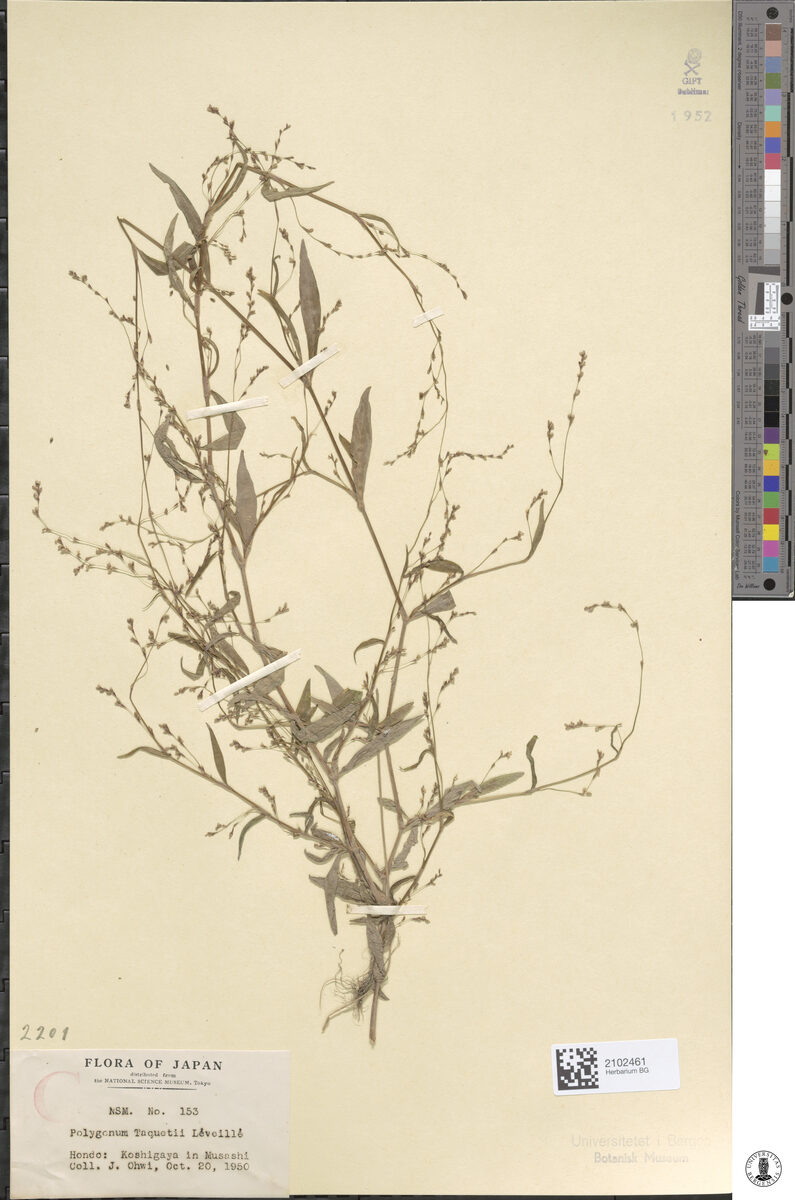
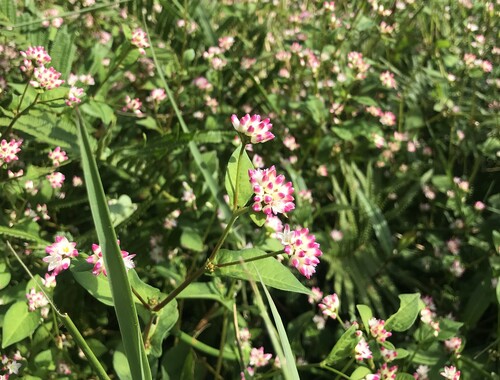
Persicaria stagnina
(Buch.-Ham. ex Meiss. in Wall.) Qaiser
Ratooti sag
gbif· cc-by
Royal Botanic Gardens, Kew
gbif· cc0
Conveyor Belt
gbif· cc-by
Royal Botanic Gardens, Kew
Description
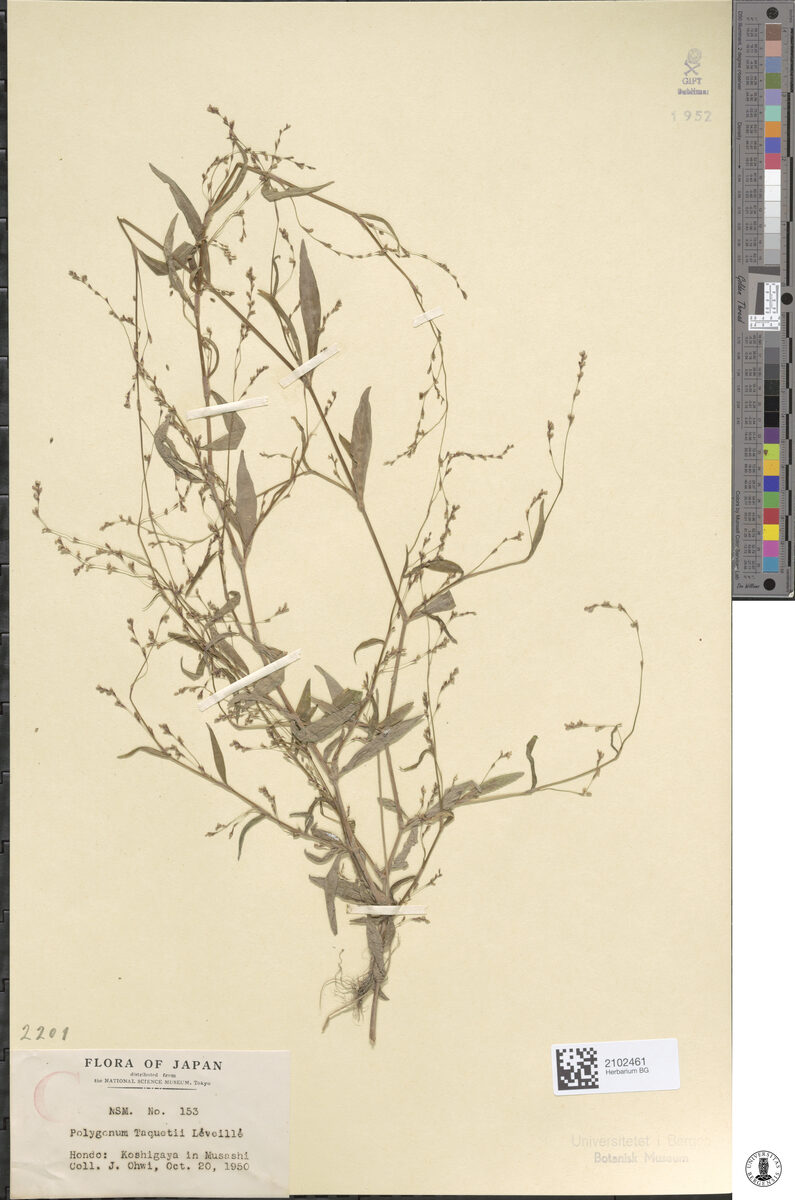
An erect herb. It grows 2 m tall. It is branched from the base. The stems are woody at the base. The leaves are narrowly sword shaped and 7-12 cm long by 2-5 cm wide. The flowering shoots are 7-10 cm long.
Edible Uses
Used as a pot herb; the leaves and roots are edible, though caution is advised with the roots. Also eaten as a famine food.
Traditional Uses
It is used as a pot herb.
This uses section is brief — help expand it
Medicinal Uses
Used as a medicine.
Distribution
It grows in ponds and ditches.
Where It Grows
Asia, Bangladesh, India, Manchuria, Myanmar, Pakistan, SE Asia,
Other Information
It is a famine food and also a medicine.
Notes
Chemical composition: Water = 76.82% (fresh). Fat = 3.16% (dry). Albumenoids = 18.28% (dry). Carbohydrates = 40.00% (dry). Fibre = 15.05% (dry). Ash = 23.51% (dry). Nitrogen = 2.92% (dry). Phosphoric acid = .48% (dry). Silicates = 11.72% (dry). There are about 50 Polygonum species.
Synonyms
References (2)
- Famine foods.
- HOOPER, (As Polygonum stagninum)