Persicaria tinctoria
(Aiton) H. Gross
Chinese indigo
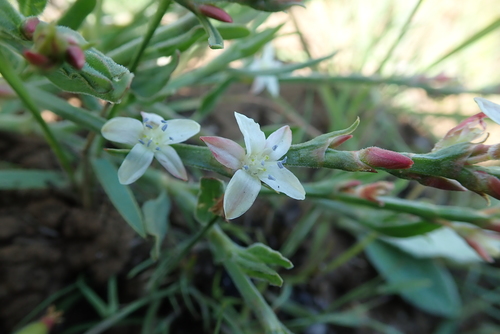
iNaturalist· cc-by-nc
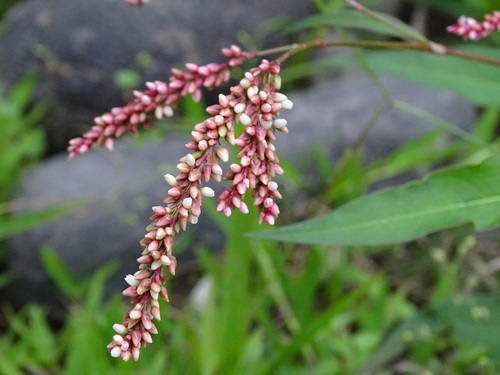
(c) Lisa, some rights reserved (CC BY-NC), uploaded by Lisa
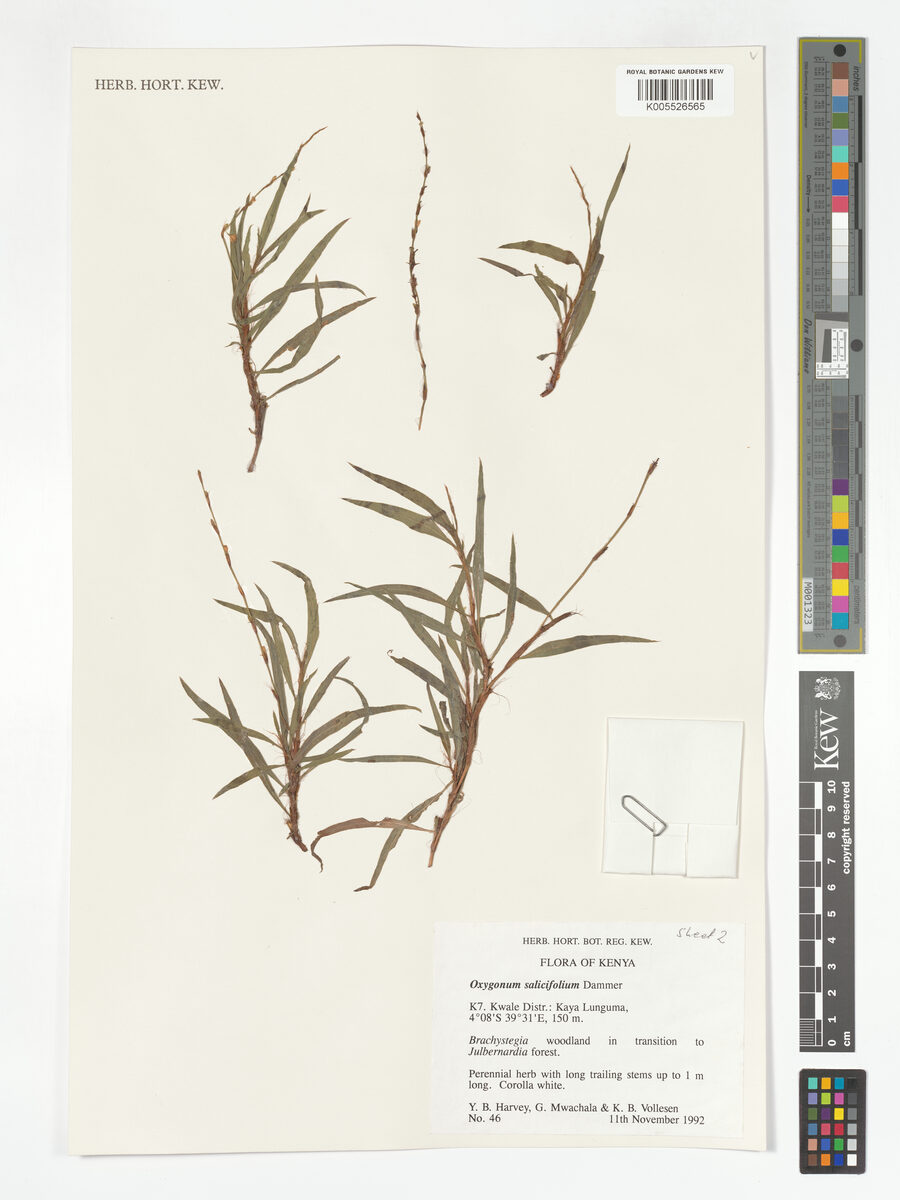
iNaturalist· cc-by-sa
(c) Kenlo Nasahara, some rights reserved (CC BY-SA)
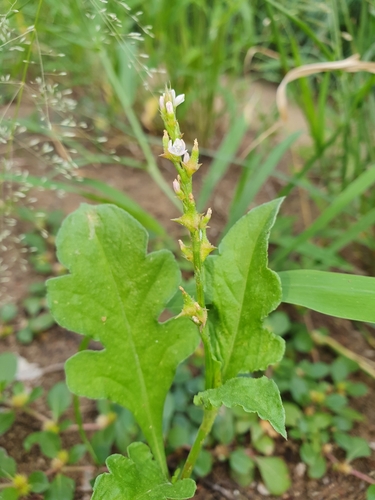
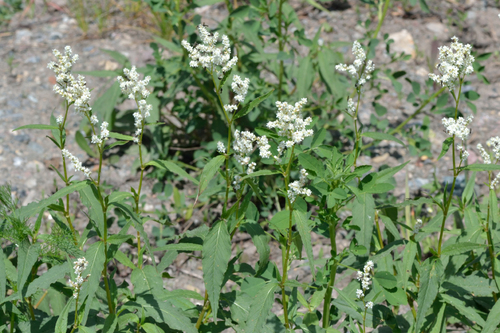
iNaturalist· cc-by-nc
(c) Tessie, some rights reserved (CC BY-NC), uploaded by Tessie
Summary
Source: WikipediaPersicaria tinctoria is a species of flowering plant in the buckwheat family. Common names include Chinese indigo, Japanese indigo and dyer's knotweed. It is native to Southern China and Vietnam, and has been introduced to other parts of China, as well as Germany, Japan, Korea, Tibet, North and South Caucasus, parts of the Russian Far-East, and Ukraine. The leaves are a source of indigo dye. It was already in use in the Western Zhou period (c. 1045 BC – 771 BC), and was the most important blue dye in East Asia until the arrival of Indigofera from the south.
Description
An annual herb of the Polygonaceae family growing about 75 cm tall. It is a tropical plant that can also grow in temperate regions but is sensitive to frost, preferring moist valleys and stream banks in full sun with fertile, humid soil.
Edible Uses
Young plant - cooked. We have no specific information for this species, but the seed of most, if not all, members of the genus is edible both raw and cooked, and is potentially a good source of amino acids. Unfortunately the seed is also usually rather small and fiddly to utilize.
Traditional Uses
The young leaves are cooked and eaten. The seeds are eaten raw or cooked.
This uses section is brief — help expand it
Medicinal Uses
The stems and the leaves are antidote, anti-inflammatory, antiphlogistic, antipyretic and depurative. Their use increases the phagocytosis of white blood cells and decreases the permeability of the capillaries. The indigo pigment in the leaves is used. It is used in the treatment of freckles, pimples, erysipelas, mumps, thrush, epidemic protitis, infantile convulsions and high febrile conditions of children. The leaves and fruits are used in Korea to help protect the liver and to treat burns and food poisoning caused by eating fish. The fruits are antidote and febrifuge. The plant is anti-inflammatory.
Known Hazards
Although no specific mention has been made for this species, there have been reports that some members of this genus can cause photosensitivity in susceptible people. Many species also contain oxalic acid (the distinctive lemony flavour of sorrel) - whilst not toxic this substance can bind up other minerals making them unavailable to the body and leading to mineral deficiency. Having said that, a number of common foods such as sorrel and rhubarb contain oxalic acid and the leaves of most members of this genus are nutritious and beneficial to eat in moderate quantities. Cooking the leaves will reduce their content of oxalic acid. People with a tendency to rheumatism, arthritis, gout, kidney stones or hyperacidity should take especial caution if including this plant in their diet since it can aggravate their condition.
Distribution
It is a tropical plant but can grow in temperate places. It is sensitive to frost. It grows in moist valleys and along stream banks. In China it grows between 200-1,000 m above sea level. It is best in full sun, a fertile soil and a humid climate.
Where It Grows
Asia, China, Europe, Indochina, Korea, SE Asia, Vietnam,
Cultivation
Plants are easily grown from seeds. Plants the seeds where the plants are to grow.
Propagation
Seed - sow in situ, germination is usually free and easy.
Other Uses
A dark blue dye is obtained from the leaves of this plant. It is used for dyeing cotton cloth. The leaves produce about 4 - 5% indigo by hydrolysis and acidification.
Notes
There are about 50 Polygonum species.
Synonyms
Also Known As
Nghe cham
References (3)
- Fern, K., 2012, Tropical Species Database http://theferns.info/tropical/
- Hort. kew. 2:31. 1789 (As Polygonum tinctorium)
- Plants for a Future database, The Field, Penpol, Lostwithiel, Cornwall, PL22 0NG, UK. http://www.scs.leeds.ac.uk/pfaf/ (As Polygonum tinctorium)