Aquilegia canadensis
L.
Wild columbine, Fairy flower, Canada columbine, Meeting houses, Rock bells
iNaturalist· cc-by-nc
(c) Sadie Hickey, some rights reserved (CC BY-NC), uploaded by Sadie Hickey
iNaturalist· cc-by-nc
(c) Susan Elliott, some rights reserved (CC BY-NC), uploaded by Susan Elliott
iNaturalist· cc-by-nc
(c) capricada, some rights reserved (CC BY-NC)
Summary
Source: WikipediaAquilegia canadensis, the Canadian columbine, Canada columbine, eastern red columbine, or wild columbine, is a species of flowering plant in the buttercup family. It is a perennial plant that is native to the woodlands and rocky areas in eastern North America in both the United States and southern Canada. It readily hybridizes with other plants in the columbine genus and is a common garden plant.
Description
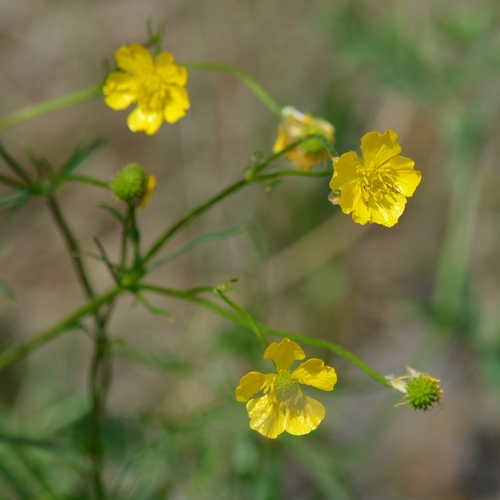
A fine stemmed herb. It grows 60-90 cm high and spreads 30-35 cm wide. It grows from a thick rhizome or underground stem. The leaves are compound and divided into small segments. The flower stems are wiry. The flowers are lemon-yellow with red spurs. They are 3-5 cm across.
Edible Uses
Edible Parts: Flowers Root Edible Uses: Flowers - raw. Sweet and delightful. Rich in nectar, they make a very attractive addition to mixed salads and can also be used as a thirst-quenching munch in the garden. Root. These reports possibly refer to the root being chewed for its medicinal virtues. Caution is advised, see notes above on toxicity.
Traditional Uses
CAUTION: This plant is recorded as poisonous. The roots are cooked and eaten as a vegetable. They can also be sliced and fried. They can be dried and stored.
Medicinal Uses
Anodyne Antispasmodic Astringent Diaphoretic Diuretic Febrifuge Parasiticide Parasiticide Resolvent Salve Antispasmodic, diaphoretic, parasiticide, resolvent, salve. The root is astringent and diuretic. It is chewed or made into a weak tea for the treatment of diarrhoea and stomach aches. The tea is used in the treatment of uterine bleeding. The boiled plant was used as a hair wash. The seed is anodyne and febrifuge. An infusion is used in the treatment of headaches and fevers.
Known Hazards
Although no records of toxicity have been seen for this species, it belongs to a family that contains a number of mildly toxic species. It is therefore wise to exercise some caution. The flowers are probably perfectly safe to eat.
Distribution
It is frost hardy. It does best in rocky or woody conditions. It suits hardiness zones 2-10.
Where It Grows
Australia, Britain, Canada, Europe, North America, Slovenia, USA
Cultivation
An easily grown and very tolerant plant, it succeeds in ordinary garden soil, preferring a moist but not wet soil and a sunny position. Intolerant of heavy clay. Does well in semi-shade. Prefers a rather poor slightly acid soil. A very ornamental and cold-hardy plant, it tolerates temperatures down to about -25°c. Plants seem to be immune to the predations of rabbits. A greedy plant inhibiting the growth of nearby plants, especially legumes. Plants are pollinated by humming birds in the wild. Most species in this genus are short-lived, dying out after 2 - 3 years, though they usually produce seed prolifically. However, they are very apt to hybridize with other members of the genus and so it becomes difficult to keep a species true to type if more than one is grown in the garden.
Propagation
Seed - best sown as soon as it is ripe in a cold frame. The seed can be slow to germinate. Stored seed can be sown in late winter in a cold frame. When large enough to handle, prick the seedlings out into individual pots and grow them on in a cold frame for their first winter. Plant out in late spring or early summer. Division in spring.
Other Uses
Essential Parasiticide Parasiticide The seed is rubbed into the scalp to rid the hair of lice. The crushed seed is pleasantly aromatic and is used as a perfume. The fragrance persists for a long time. Special Uses Food Forest Scented Plants
Notes
There are about 70 Aquilegia species.
Synonyms
Also Known As
Kanadska orlica
References (10)
- Cundall, P., (ed.), 2004, Gardening Australia: flora: the gardener's bible. ABC Books. p 166
- Esperanca, M. J., 1988. Surviving in the wild. A glance at the wild plants and their uses. Vol. 2. p 326
- Hedrick, U.P., 1919, (Ed.), Sturtevant's edible plants of the world. p 65
- Hibbert, M., 2002, The Aussie Plant Finder 2002, Florilegium. p 30
- Jackes, D. A., Edible Forest Gardens
Show all 10 references Hide references
- Joyce, D., 1998, The Garden Plant Selector. Ryland, Peters and Small. p 206
- Plants for a Future database, The Field, Penpol, Lostwithiel, Cornwall, PL22 0NG, UK. http://www.scs.leeds.ac.uk/pfaf/
- Sp. pl. 1:533. 1753
- Toupal, R. S. & Hollenback, K., 2009, An Ethnobotany of Indiana Dunes National Lakeshore: Plant Uses of the Ojibwa People. Bureau of Applied research in Anthropology. University of Arizona
- Wilson, S., 1997, Some Plants are Poisonous. Reed. p 17