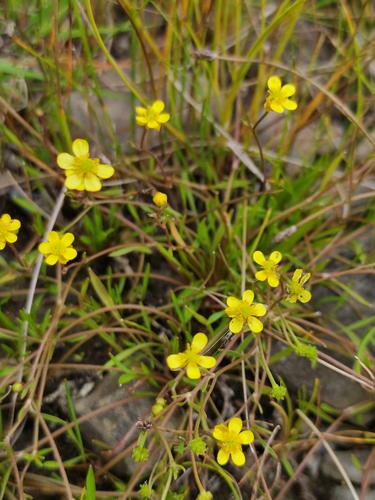
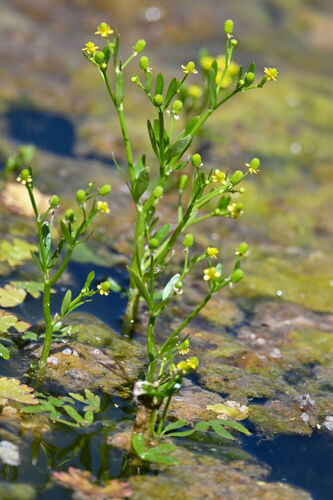
Nigella damascena
L.
Love-In-A-Mist, Devil in the bush
iNaturalist· cc-by-nc
(c) Serey Lek, some rights reserved (CC BY-NC), uploaded by Serey Lek
iNaturalist· cc-by
(c) Gordon Joly, some rights reserved (CC BY)
iNaturalist· cc-by
(c) Markus Krieger, some rights reserved (CC BY), uploaded by Markus Krieger
Description
Nigella damascena is a ANNUAL growing to 0.6 m (2ft) by 0.2 m (0ft 8in) at a fast rate. It is not frost tender. It is in flower from July to October, and the seeds ripen from August to October. The species is hermaphrodite (has both male and female organs) and is pollinated by Bees. Suitable for: light (sandy), medium (loamy) and heavy (clay) soils and prefers well-drained soil. Suitable pH: mildly acid, neutral and basic (mildly alkaline) soils. It cannot grow in the shade. It prefers dry or moist soil.
Edible Uses
Oil. Seed - raw or cooked. Normally used as a condiment, it has a nutmeg flavour.
Medicinal Uses
Expectorant. Expectorant.
Known Hazards
The oil contains about 9% damascenine, an alkaloid causing the blue colour, with mildly narcotic properties.
Distribution
Europe - Mediterranean. A rare casual in Britain.
Where It Grows
TEMPERATE ASIA: Cyprus, Iran, Iraq, Syria, Turkey, Russian Federation-Ciscaucasia (Ciscaucasia (west)), Azerbaijan EUROPE: Ukraine (Krym), Albania, Bulgaria, Bosnia and Herzegovina, Greece (incl. Crete), Croatia, Italy (incl. Sardinia, Sicily), North Macedonia, Malta, Montenegro, Serbia, Slovenia, Spain (incl. Baleares), France (incl. Corsica), Portugal AFRICA: Spain (Canarias), Algeria, Libya, Morocco, Tunisia
Cultivation
An easily grown plant, succeeding in any good garden soil, preferring a sunny position. A very ornamental plant, there are some named varieties. Plants are fast-growing and often self-sow if the ground is disturbed by some means such as hoeing. The flowers are very attractive to bees. A greedy plant, inhibiting the growth of nearby plants, especially legumes.
Propagation
Seed - sow spring or early autumn in situ. The autumn sowing might not be successful in harsh winters. Plants can be transplanted if necessary.
Other Uses
Essential OilAn essential oil distilled from the plant is used in perfumery and lipsticks. The seed contains about 43.5% fatty oil, consisting of 97% total fatty acids of which 30% is free fatty acid. No uses of this oil are given in the report.