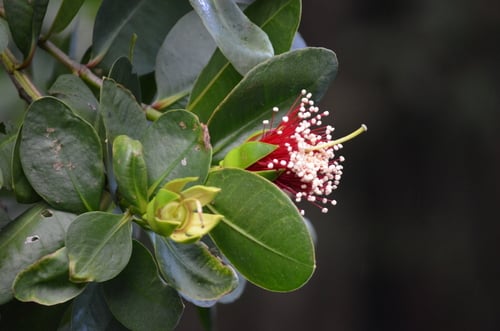
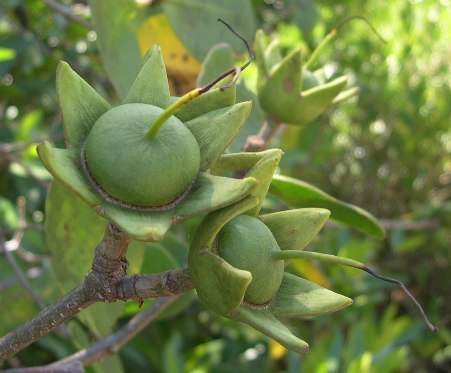
Rotala rotundifolia
(Buch.-Ham. ex Roxb.) Koehne
Round leaf toothcup
iNaturalist· cc0
no rights reserved, uploaded by 葉子
iNaturalist· cc0
no rights reserved, uploaded by 葉子
iNaturalist· cc-by-nc
(c) 長鬃山羊, some rights reserved (CC BY-NC), uploaded by 長鬃山羊
Summary
Source: WikipediaRotala rotundifolia, the dwarf rotala, is a plant species often confused with Rotala indica. It is sold in the aquarium trade, but is of uncertain status. It is a common weed in rice paddies and wet places in India, China, Taiwan, Thailand, Laos, and Vietnam, and has been introduced to the United States.
Description
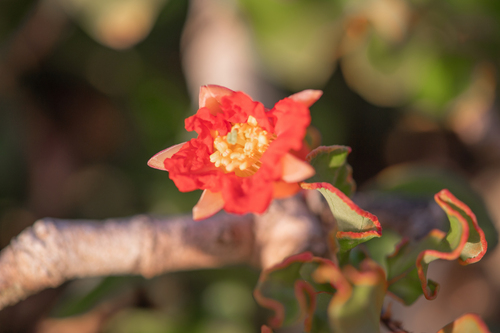
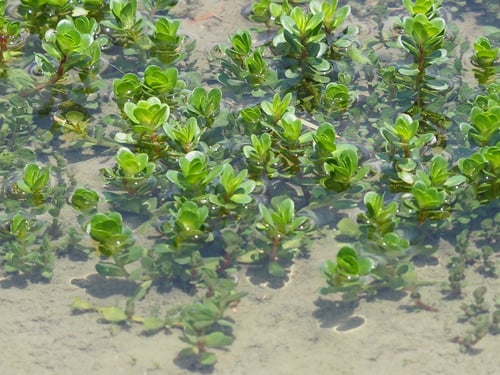
A herb. It lies along the ground. It is about 25 cm high. The leaves do not have leaf stalks. The leaves are in four rows along the stem with opposite pairs at right angles. They are 3-11 cm long by 2.5-10 cm wide. They are round or broadly oval. The flowers are pink. They occur in dense spikes at the ends of branches. The fruit is a capsule. It is oval.
Edible Uses
The tender leaves and shoots are cooked and eaten as a vegetable.
Traditional Uses
The tender leaves and shoots are cooked and eaten as a vegetable.
This uses section is brief — help expand it
Distribution
A tropical plant. In Nepal they grow between 300-3000 m altitude. They grow in moist, open places around water in the subtropical forest. It can grow in water with some leaves under the water.
Where It Grows
Asia, Bangladesh, Bhutan, China, Himalayas, India, Indochina, Japan, Laos, Myanmar, Nepal, SE Asia, Sri Lanka, Taiwan, Thailand, Vietnam,
Cultivation
Plants are grown from seed.
Nutrition
| Part | Moisture | kJ | kcal | Protein | Vit A | Vit C | Iron | Zinc |
|---|---|---|---|---|---|---|---|---|
| Leaves | — | — | — | — | 17 | — | — | — |
Synonyms
Also Known As
Ishing-kundo, Sim jhar
References (7)
- Bot. Jahrb. Syst. 1:175. 1880
- Luo, B., et al, 2019, Wild edible plants collected by Hani from terraced rice paddy agroecosystem in Honghe Prefecture, Yunnan, China. Journal of Ethnobiology and Ethnomedicine 15:56
- Manandhar, N.P., 2002, Plants and People of Nepal. Timber Press. Portland, Oregon. p 402
- Meitei, L. R., et al, 2022, An ethnobotanical study on the wild edible plants used by forest dwellers in Yangoupokpi Lokchao Wildlife Sanctuary, Manipur, India. Ethnobotany Research and Application 23:15
- Mot So Rau Dai an Duoc O Vietnam. Wild edible Vegetables. Ha Noi 1994, p 58
Show all 7 references Hide references
- Slocum, P.D. & Robinson, P., 1999, Water Gardening. Water Lilies and Lotuses. Timber Press. p 86
- Swapna, M. M. et al, 2011, A review on the medicinal and edible aspects of aquatic and wetland plants of India. J. Med. Plants Res. 5 (33) pp. 7163-7176