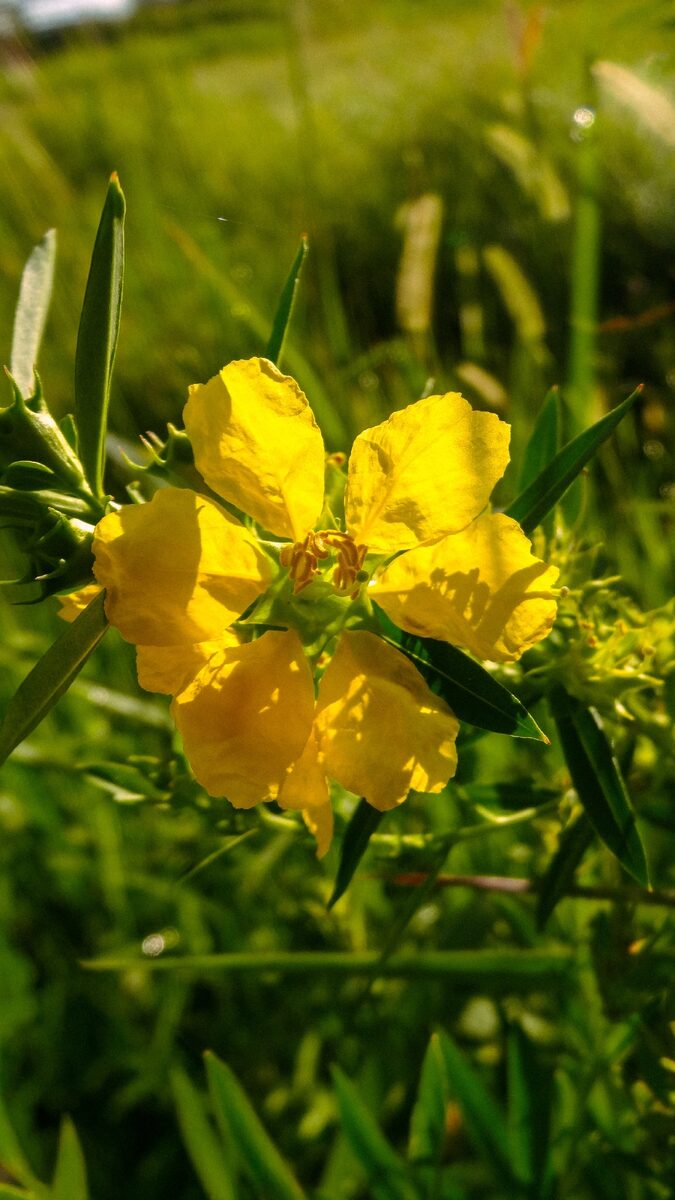
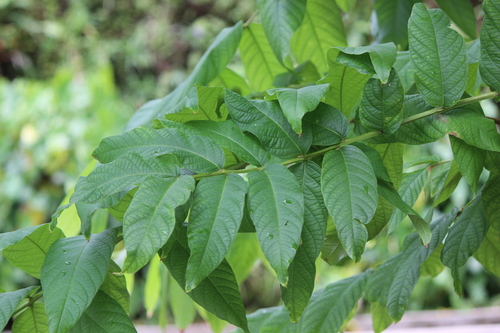
Lagerstroemia parviflora
Roxb.
Crepe myrtle
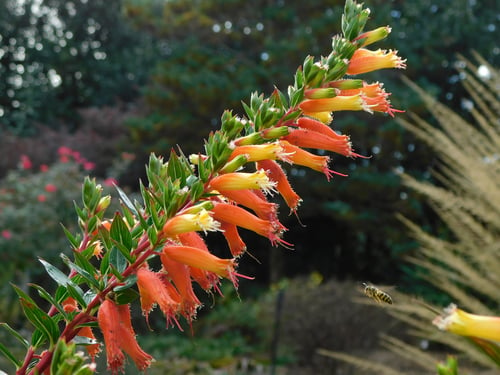
iNaturalist· cc0
no rights reserved, uploaded by S.MORE
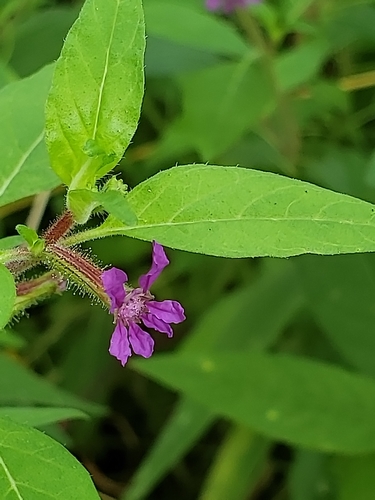
iNaturalist· cc-by
(c) Suhel Quader, some rights reserved (CC BY), uploaded by Suhel Quader
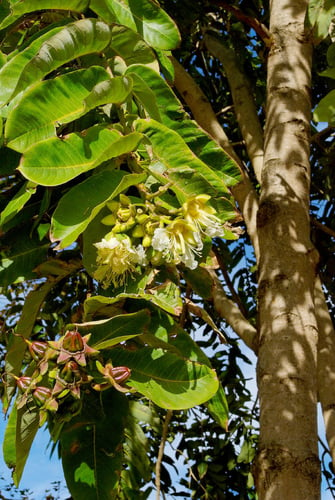
iNaturalist· cc-by
(c) Siddarth Machado, some rights reserved (CC BY), uploaded by Siddarth Machado
Description
A large deciduous tree. It grows 30 m tall. The bark is light brown. It peels off leaving lighter patches. The leaves are opposite and 5-10 cm long. The flowers are small and white. They are in panicles in the axils of the leaves near the ends of branches. They have a scent. The fruit are oval and 2 cm long. The base is enclosed in a cup.
Edible Uses
A sweet gum that exudes from wounds in the bark is eaten.
Traditional Uses
A sweet gum from wounds in the bark is eaten.
This uses section is brief — help expand it
Distribution
It is a tropical plant. It grows up to 1,000 m above sea level. It is best where the average temperature is between 20°C and 38°C. It is most common in areas with a distinct dry season. It suits areas with an average rainfall between 1,500-3,500 mm. It is best in a sunny position. It cannot grow in water logged soils. It is best with a pH between 5.5 to 6.5.
Where It Grows
Asia, Bhutan, Himalayas, India*, Indonesia, Myanmar, Nepal, Northeastern India, SE Asia, Sikkim,
Cultivation
Plants are grown from seeds. Seeds are best stored for 2 or 3 years before planting. The tree can be cut back and will re-grow. It can also be grown from cuttings.
Propagation
Seed - in some years virtually none of the seed germinates, though in some years germination can be very good. Sow the seed in a nursery seedbed with some shade. Growth is relatively fast, seedlings can reach a height of 30cm within 12 months, by which time they are ready to plant out.
Other Uses
The bark is a source of tannins. It can be used as a black dye. A fibre obtained from the bark is sometimes used to make a rough rope. A gum is obtained from the tree. The heartwood is grey or greyish brown, often almost red, with a darker coloured area near the centre. Large trees are often hollow in the centre, whilst the timber has the fault of splitting a good deal near the centre. The wood is very hard, durable. The timber, which is known locally as 'Sida' is used for general carpentry, and is widely employed locally for house posts, beams and rafters, door and window frames, carts, boats and agricultural implements. Some very high-class cabinet work has been executed, with this wood suggesting that it is far too valuable a wood to be used for common purposes. An excellent fuel tree, it gives a good charcoal. We have no more specific information on the wood of this species, but the following is a general description of wood from this genus:- The heartwood is light red to reddish brown, darkening on exposure; the sapwood is light yellow brown to greyish white, rather wide. The grain is usually straight; texture moderately fine to rather coarse; rather lustrous; without distinctive odour or taste. It is generally classified as moderately durable and somewhat resistant to termites, although the sapwood is liable to powder-post beetle attack. It saws and works well; finishes to a smooth surface; and takes a good polish. It is used for making furniture, interior joinery, boatbuilding, general construction, parquet flooring and panelling.
Synonyms
Also Known As
Budo dhayero, Kyetsa-dan, Kyet-tawsa, Locura, Mai-mawt-sao, Pohon bungur mayang, Sam, Samhka-lam, Waungbale-bo, Sinbye-bo
References (5)
- Fern, K., 2012, Tropical Species Database http://theferns.info/tropical/
- Hedrick, U.P., 1919, (Ed.), Sturtevant's edible plants of the world. p 369
- Kermath, B. M., et al, 2014, Food Plants in the Americas: A survey of the domesticated, cultivated and wild plants used for Human food in North, Central and South America and the Caribbean. On line draft. p 469
- Pl. Coromandel 1:47-48, t. 66. 1795
- Sukarya, D. G., (Ed.) 2013, 3,500 Plant Species of the Botanic Gardens of Indonesia. LIPI p 351