Punica granatum
L.
Pomegranate
iNaturalist· cc-by-sa
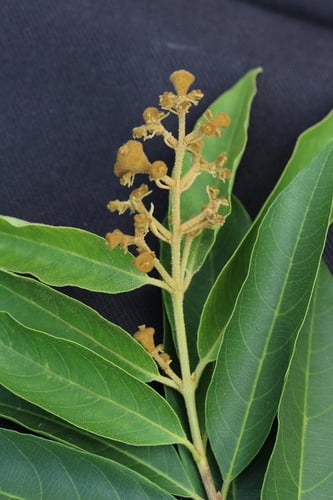
(c) H. Zell, some rights reserved (CC BY-SA)
iNaturalist· cc-by-nc
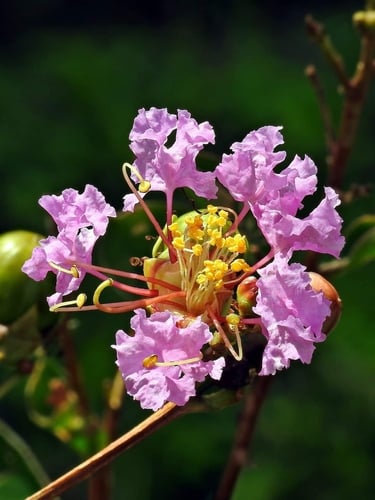
(c) kc_, some rights reserved (CC BY-NC)
iNaturalist· cc-by-nc
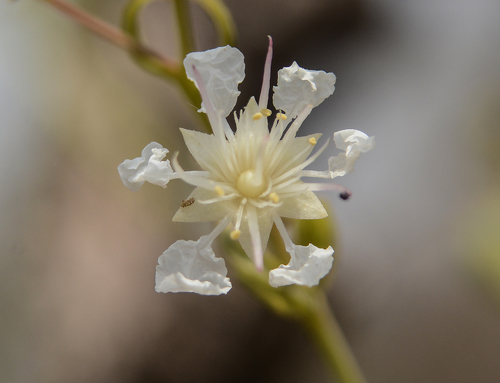
(c) gabisandner, some rights reserved (CC BY-NC)
Summary
Source: WikipediaA deciduous tree growing to 5m height and 8m width at a medium rate, hardy to UK zone 9. It flowers from June to September and is self-fertile. The plant attracts wildlife and thrives in light sandy, medium loamy, or heavy clay soils with good drainage. It tolerates both mildly acidic and basic soils, requires full sun, and adapts to dry or moist conditions.
Description
A shrub. It grows up to 2-6 m tall. It has short thorns. It can grow up to 10 m tall. Usually trees lose their leaves at one season during the year. The trunk is covered by reddish-brown bark. Trees often sucker near the base. The leaves are opposite, entire and 8 cm x 1.5 cm. Leaves narrow towards the base. It has large scarlet flowers. These are at the ends of branches. 1-3 flowers occur together. The fruit is round, leathery skinned and up to 10 cm across. It is yellow brown in colour. Inside there are angular hard seeds in a juicy yellow pulp. The seeds are 10 mm long. There are many named varieties.
Edible Uses
The fruit is eaten raw — juicy and refreshing with a sub-acid flavour, though opinions vary due to the large number of seeds relative to pulp. The juice works well in soups, sauces, jellies, ice cream and cakes. Fresh fruit contains approximately 1.5% protein, 1.6% fat, 16.8% carbohydrate and 0.6% ash. Wild trees in the Himalayas average annual yields of around 32kg per tree, with individual fruits reaching about 12cm in diameter. The fresh seed is soft enough to eat raw; when dried it is used as a seasoning in dal, fried samosa, stuffings and chutneys. The boiled leaves are also said to be eaten. Dry weight nutritional figures per 100g: 362 calories; protein 5g; fat 2.2g; carbohydrate 90.5g; fibre 12g; ash 2.6g; calcium 40mg; phosphorus 180mg; iron 3mg; sodium 4.35mg; potassium 1250mg; vitamin A 90mg; thiamine 0.27mg; riboflavin 0.25mg; niacin 3.2mg; vitamin C 43mg.
Traditional Uses
The juicy pulp around the seeds is eaten. The juice can be used for a drink. It provides a red colour. The seeds are dried with their aril and used in the Indian condiment Anardana. The fruit are used in sauces, soups, meat dishes, salads and other dishes. The flowers are eaten. Boiled leaves are also reported as eaten.
Medicinal Uses
The pomegranate has a herbal history stretching back more than 3,000 years. All parts contain unusual alkaloids called pelletierines, which paralyse tapeworms so they can be expelled with a laxative. The plant is also rich in tannin, making it an effective astringent used externally for vaginal discharges, mouth sores and throat infections. The whole plant, and the bark in particular, is antibacterial, antiviral and astringent — though this remedy should be used with caution as overdoses can be toxic. Flowers are used for dysentery, stomach ache and cough, and along with leaves and seeds have been used to expel worms. Flower juice treats nosebleeds. The seeds are demulcent and stomachic; a seed decoction is used for syphilis. The fruit is a mild astringent and refrigerant in fevers, especially biliousness, and is also cardiac and stomachic. Fruit juice treats jaundice and diarrhoea; combined with Cynodon dactylon leaf juice it is used for colds and runny noses. Dried fruit rind treats amoebic dysentery and diarrhoea and is a specific remedy for tapeworm; it is also ground in water and drunk each morning by diabetics. The dried pericarp is decocted with other herbs to treat colic, dysentery and leucorrhoea. Stem bark is emmenagogue; both stem and root bark expel tapeworms — the root bark should be used with particular caution as it can cause serious poisoning. Bark is harvested in autumn and dried for storage. An ethyl alcohol extract of the fruit has shown oestrogenic properties and has been shown to reduce oxidative cell death, giving the plant potential as an ingredient in preparations for treating skin ageing in post-menopausal women.
Known Hazards
Take recommended doses. Overdose symptoms include: gastric irritation, vomiting, dizziness, chills, vision disorders, collapse and death.
Distribution
A Mediterranean climate plant. It is native from SE Europe to the Himalayas. It suits drier subtropical climates. It suits areas with a long hot dry summer and cool winter. A temperature of 35-38°C is best for good fruit development. A humid climate affects fruit formation. They can tolerate some salinity. It can grow in soils with a wide range of pH. They have borne fruit in Papua New Guinea at 1620 m altitude. They are mostly coastal up to 500 m in the tropics. Trees are severely damaged by temperatures below -11°C. In Brisbane Botanical Gardens. In Nepal they grow to about 2700 m altitude. It grows in the drier parts of West Africa. It can grow in arid places. It grows in Miombo woodland in Africa. It suits hardiness zone 8-11.
Where It Grows
Afghanistan, Africa, Albania, Algeria, Andaman Is., Andes, Andorra, Antigua and Barbuda, Arabia, Armenia, Aruba, Asia, Australia, Azerbaijan, Bahamas, Balkans, Bangladesh, Belize, Bermuda, Bhutan, Bosnia, Brazil, Britain, Bulgaria, Burkina Faso, Cambodia, Cameroon, Canada, Canary Is., Cape Verde, Caucasus, Central Africa, Central America, Central Asia, Chad, China, Colombia, Comoros, Congo DR, Cook Islands, Croatia, Cuba, Curacao, Dagestan, Dominican Republic, East Africa, East Timor, Ecuador, Egypt, Eritrea, Ethiopia, Europe, Fiji, France, Georgia, Ghana, Greece, Grenada, Guam, Guyana, Haiti, Hawaii, Himalayas, Honduras, India, Indochina, Indonesia, Iran*, Iraq, Israel, Italy, Jamaica, Japan, Kenya, Korea, Laos, Lebanon, Libya, Macedonia, Madagascar, Malawi, Malaysia, Maldives, Mali, Marquesas, Mauritania, Mediterranean*, Mexico, Middle East, Montenegro, Morocco, Mozambique, Myanmar, Nepal, New Caledonia, Niger, Nigeria, Niue, Norfolk Island, North Africa, North America, Northeastern India, NW India, Oman, Pacific, Pakistan, Palestine, Panama, Papua New Guinea, PNG, Peru, Philippines, Portugal, Puerto Rico, Reunion, Romania, Rotuma, Russia, Samoa, Sao Tome and Principe, Saudi Arabia, SE Asia, Serbia, Sierra Leone, Singapore, Slovenia, Somalia, South Africa, Southern Africa, South America, Spain, Sri Lanka, St Helena, St Lucia, Sudan, Suriname, Sweden, Switzerland, Syria, Tajikistan, Tanzania, Tasmania, Thailand, Timor-Leste, Tonga, Trinidad-Tobago, Tunisia, Turkey*, Turkmenistan, Uganda, USA, Uzbekistan, Vanuatu, Vietnam, West Africa, West Indies, West Timor, Yemen, Yugoslavia, Zambia, Zimbabwe,
Cultivation
An easily grown plant, it prefers a well-drained fertile soil and succeeds in a hot dry position. Requires a sheltered sunny position. Not very hardy in Britain, the pomegranate tolerates temperatures down to about -11°c, but it is best grown on a south facing wall even in the south of the country because it requires higher summer temperatures than are normally experienced in this country in order to ripen its fruit and its wood. The wood is also liable to be cut back by winter frosts when it is grown away from the protection of a wall. Trees do not grow so well in the damper western part of Britain. Most plants of this species grown in Britain are of the dwarf cultivar 'Nana'. This is hardier than the type but its fruit is not such good quality. This sub-species fruited on an east-facing wall at Kew in the hot summer of 1989. The pomegranate is often cultivated in warm temperate zones for its edible fruit, there are many named varieties. In Britain fruits are only produced after very hot summers. Plants often sucker freely. Flowers are produced on the tips of the current years growth. Plants in this genus are notably resistant to honey fungus. In garden design, as well as the above-ground architecture of a plant, root structure considerations help in choosing plants that work together for their optimal soil requirements including nutrients and water. Heat zone: 12-7. Espalier: tree or other plant that is trained to grow flat against a support (such as a trellis or wall). Pomegranates are typically harvested in the autumn depending on the climate and variety. The flowering period usually occurs in late spring to early summer. Pomegranate trees are considered moderately fast-growing, reaching a height of 10 to 12 feet (3 to 4 meters) in about 3 to 4 years under optimal conditions. Pomegranate trees are generally self-fertile, but cross-pollination can improve fruit set and quality.
Propagation
Sow seed in spring in a greenhouse, preferably at 22°C. Prick seedlings into individual pots when large enough to handle and grow on under glass for at least two growing seasons before planting out in late spring or early summer. Cuttings of half-ripe wood, 4–5cm with a heel, can be taken in June or July in a frame with a good success rate. Hardwood cuttings 20–25cm long can be taken in November in a warm greenhouse. Layering is also effective. Suckers can be divided during the dormant season and planted directly into permanent positions, though potting them first and planting out when growing well in late spring or early summer is preferable.
Other Uses
Pomegranates can serve as windbreaks, hedgerows or landscape plants, and improve soil health through organic matter from leaf drop. Suitable uses include border, container, espalier, foundation, hedge and mass planting. The tree is deep-rooting and important for erosion control, particularly for stabilising riverbanks. It is drought-tolerant and suited to arid and semi-arid zone reforestation. Leaf litter decomposes slowly and can be used as mulch. The plant is also used in water purification schemes. In northwestern Himalayan communities it is grown in living fences to exclude livestock, mark land boundaries and provide medicinal and other resources. A red dye is obtained from the flowers and from the rind of unripe fruits; it can also yield a black dye and serves as an ink in coppery-brown colour, requiring no mordant. A fast yellow dye comes from the dried rind. The dried peel contains around 26% tannin; the bark is also a tannin source; root bark contains about 22% tannin and yields a jet-black ink. The wood is very hard, compact, close-grained, durable and yellow in colour, used for agricultural implements and as a possible substitute for box (Buxus spp.). Flowers attract pollinators, especially bees. Fruits provide food for birds and small mammals, and the dense foliage offers shelter for small birds and insects. Leaf litter and rough bark provide overwintering habitat for invertebrates.
Production
Plants grow quickly. Trees bear after about 2-3 years. Fruiting is seasonal. The season tends to be Dec. to May. The tree loses its vigour after about 15 years but trees can live for many years. The pomegranate is self-pollinated as well as cross-pollinated by insects. Cross-pollination increases the fruit set. Fruit matures 5 to 7 months after flowering. Fruit need to be picked when mature to prevent splitting. Fruit do not ripen further after harvesting. Fruit develop a distinctive colour and have a metallic sound when tapped, when they are ripe. A well maintained tree can produce 150-200 fruit in a year.
Other Information
Occurs in some areas of Papua New Guinea. It is an important cultivated food plant. It is sold in local markets.
Notes
There are 2 Punica species.
Nutrition
| Part | Moisture | kJ | kcal | Protein | Vit A | Vit C | Iron | Zinc |
|---|---|---|---|---|---|---|---|---|
| Fruit - raw | 81 | 285 | 38 | 1 | 0 | 6 | 0.3 | 0.1 |
Synonyms
Also Known As
Ananghorai, Anangori, Anar, Annaaru, Anor, Bakoh, Bedana, Brots'eili, Chimanga cha chizungu, Daaru, Dadam, Dadima, Dahua, Dalemshing, Dalim, Dalima, Dalimba, Dango, Danimma, Daroo, Darooni, Daroye, Daru, Delima, Delum, Delun, Dharek, Divlja sipak, Dulim, Dulima, Enkomamawanga, Gangsalan, Granaatappel, Granada, Granada cordelina, Granada enana, Granado, Granatapgelbaum, Granatno jabolko, Grenade, Hanar, Hennar, Hinar, Hta, Jangali anar, Kalumal, Limoni, Ljuti sipak, Lu'u, Madalai, Madulai, Magraner, Mak-sang, Matalam, Melograna, Melograno, Mkomamanga, Mogranata, Mukomamanga, Nar, Nargos, Nkoma mawanga, Nkomawawanga, Nur, Phila, Remuno, Rimman, Roma, Romazeira, Romeira, Rudi, Salebin, Se-bru, Shi liu pi, Shi liu, Soekryunamu, Tabilin, Tab sim, Thale-thi, Thapthim, Totim, Tuptim, Turchi, Zakuro
References (174)
- Abbiw, D.K., 1990, Useful Plants of Ghana. West African uses of wild and cultivated plants. Intermediate Technology Publications and the Royal Botanic Gardens, Kew. p 46
- Addis, G., et al, 2005, Ethnobotanical Study of Edible Wild Plants in Some Selected Districts of Ethiopia. Human Ecology, Vol. 33, No. 1, pp. 83-118
- Afzal, S., et al, 2009, Ethno-botanical Studies from Northern Pakistan. J. Ayub Med Coll Abbottabad 21(1)
- Ahmad, K. & Pieroni, A., 2016, Folk knowledge of wild food plants among the tribal communities of Thakht-e-Sulaiman Hills, North-West Pakistan. Journal of Ethnobiology and Ethnomedicine, 12:17
- Ambasta S.P. (Ed.), 2000, The Useful Plants of India. CSIR India. p 505
Show all 174 references Hide references
- Amin, M., et al, 2023, Edible wild plant species used by different linguistic groups of Kohistan Upper Khyber Pakhtunkhwa (KP), Pakistan. Journal of Ethnobiology and Ethnomedicine 19:6 p 11
- Anderson, E. F., 1993, Plants and people of the Golden Triangle. Dioscorides Press. p 219
- Arora, R. K., 2014, Diversity in Underutilized Plant Species - An Asia-Pacific Perspective. Bioversity International. p 84
- Ashton, M. S., et al 1997, A Field Guide to the Common Trees and Shrubs of Sri Lanka. WHT Publications Ltd. pdf p 295
- Bajpai, O., et al, 2015, Tree species of the Himalayan Terai region of Uttar Pradesh, India: a checklist. Check List 11(4): 1718
- Bajracharya, D., 1980, Nutritive Values of Nepalese Edible Wild Fruits. Z. Lebensm. Unters. Forsch. 171: 363-366
- Banerjee, A., et al, 2013, Ethnobotanical Documentation of Some Wild Edible Plants in Bankura District, West Bengal, India. The Journal of Ethnobiology and Traditional Medicine. Photon 120 (2013) 585-590
- Barkatullah and Ibrar, M., 2011, Plants profile of Malakand Pass Hills, District Malakand, Pakistan. African Journal of Biotechnology Vol. 10 (73) pp. 16521-16535
- Barwick, M., 2004, Tropical and Subtropical Trees. A Worldwide Encyclopedic Guide. Thames and Hudson p 351
- Benvenuti, S. & Mazzoncini, M., 2021, The Biodiversity of Edible Flowers: Discovering New Tastes and New Health Benefits. Frontiers in Plant Science Article 569499.
- Bernholt, H. et al, 2009, Plant species richness and diversity in urban and peri-urban gardens of Niamey, Niger. Agroforestry Systems 77:159-179
- Bhatia, H., et al, 2018, Traditionally used wild edible plants of district Udhampur, J&K, India. Journal of Ethnobiology and Ethnomedicine (2018) 14:73
- Bianchini, F., Corbetta, F., and Pistoia, M., 1975, Fruits of the Earth. Cassell. p 168
- Blamey, M and Grey-Wilson, C., 2005, Wild flowers of the Mediterranean. A & C Black London. p 152
- Blench, R., 2004, Fruits and Arboriculture in the Indo-Pacific Region. Indo-Pacific Prehistory Association Bulletin 24. (Taipei Papers Volume 2) p 40
- Bodkin, F., 1991, Encyclopedia Botanica. Cornstalk publishing, p 856
- Bonet, M. A. & Valles, J., 2002, Use of non-crop food vascular plants in Montseny biosphere reserve (Catalonia, Iberian Peninsula). International Journal of Food Sciences and Nutrition (2002) 53, 225–248
- Bourke, R. M., Altitudinal limits of 230 economic crop species in Papua New Guinea. Terra australis 32.
- Brickell, C. (Ed.), 1999, The Royal Horticultural Society A-Z Encyclopedia of Garden Plants. Convent Garden Books. p 848
- Burkill, H. M., 1985, The useful plants of west tropical Africa, Vol. 3. Kew.
- Burkill, I.H., 1966, A Dictionary of the Economic Products of the Malay Peninsula. Ministry of Agriculture and Cooperatives, Kuala Lumpur, Malaysia. Vol 2 (I-Z) p 1871
- Bussman, R. W., et al, 2016, A comparative ethnobotany of Khevsureti, Samtskhe-Javakheti, Tusheti, Svaneti, and Racha-Lechkhumi, Republic of Georgia (Sakartvelo), Caucasus. Journal of Ethnobiology and Ethnomedicine (2016) 12:4
- Bussman, R. W., et al, 2021, Unity in diversity—food plants and fungi of Sakartvelo (Republic of Georgia), Caucasus. Journal of Ethnobiology and Ethnomedicine (2021) 17:72 p 9
- Chatterjee, A. S., 1997, Fruit Trees in Cambodian Home Gardens. Trainers' training manual. Home garden series No.3 p 31
- Cerne, M., 1992, Wild Plants from Slovenia used as Vegetables. Acta Horticulturae 318
- Cheifetz, A., (ed), 1999, 500 popular vegetables, herbs, fruits and nuts for Australian Gardeners. Random House p 233
- Chin, H.F., & Yong, H.S., 1996, Malaysian Fruits in Colour. Tropical press, Kuala Lumpur p 38
- Coronel, R.E., 1982, Fruit Collections in the Philippines. IBPGR Newsletter p 8
- Cruz, I. M., et al, 2015, Edible fruits and seeds in the State of Mexico. Revista Mexicana de Ciencias Agricolas. Vol. 6. Num. 2 pp 331-346
- Cundall, P., (ed.), 2004, Gardening Australia: flora: the gardener's bible. ABC Books. p 1114
- Dangol, D. R. et al, 2017, Wild Edible Plants in Nepal. Proceedings of 2nd National Workshop on CUAOGR, 2017.
- Das, S. and De, B., 2013, Evaluation of Angiotension I-Converting Enzyme (ACE) inhibitory potential of some underutilized indigenous fruits of West Bengal using an in vitro model. Fruits, Vol. 68:499-506
- Das, T. & Das, A. K., 2005, Inventorying plant biodiversity in homegardens: A case study in Barak Valley, Assam, North East India. CURRENT SCIENCE, VOL. 89, NO. 1, 10 JULY 2005
- Demir, I. & Ayaz, N., 2022, Wild edible plants contributing to the traditional foods of Mardin (Turkey) Province. Indian Journal of Traditional Knowledge Vol 21(3), July 2022, pp 569-582
- Dharani, N., 2002, Field Guide to common Trees & Shrubs of East Africa. Struik. p 255
- Dolina, K. & Luczaj, L., 2014, Wild food plants used on the Dubrovnik coast (south-eastern Croatia) Acta Soc Bot Pol 83(3):175–181
- Duarte, M. C., et al, 2022, Diversity of Useful Plants in Cabo Verde Islands: A Biogeographic and Conservation Perspective. Plants 2022, 11, 1313 p 13
- Engel, D.H., & Phummai, S., 2000, A Field Guide to Tropical Plants of Asia. Timber Press. p 134, 189
- Ertug, F, Yenen Bitkiler. Resimli Türkiye Florası -I- Flora of Turkey - Ethnobotany supplement
- Ethnobotanical Study of Tehsil Kabal, Swat District, KPK, Pakistan, Table 1
- Facciola, S., 1998, Cornucopia 2: a Source Book of Edible Plants. Kampong Publications, p 189
- FAO, 1988, Traditional Food Plants, FAO Food and Nutrition Paper 42. FAO Rome p 420
- Farfan, B., et al, 2007, Mazahua Ethnobotany and Subsistence in the Monarch Butterfly Biosphere Reserve, Mexico. Economic Botany 61(2) 2007, pp 173-191
- Flora of Australia Volume 49, Oceanic Islands 1, Australian Government Publishing Service, Canberra. (1994) p 203
- Flora of Pakistan. www.eFloras.org
- Flowerdew, B., 2000, Complete Fruit Book. Kyle Cathie Ltd., London. p 138
- French, B.R., 1986, Food Plants of Papua New Guinea, A Compendium. Asia Pacific Science Foundation p 278
- Friday, J. B., 2005, Forestry and Agroforestry Trees of East Timor. http://www.ctahr.hawaii.edu/forestry/data/Timor/Timor trees.html
- Ghimire, S. K., et al, 2008, Non-Timber Forest Products of Nepal Himalaya. WWF Nepal p 121
- Ghosh, C. & Das A. P., 2011, Some useful and poisonous tea garden weeds from the Darjiling District of West Bengal, India. Pleione 5(1): 91 - 114
- Goode, P., 1989, Edible Plants of Uganda. FAO p 27
- Gouldstone, S., 1983, Growing your own Food-bearing Plants in Australia. Macmillan p 125
- Grubben, G. J. H. and Denton, O. A. (eds), 2004, Plant Resources of Tropical Africa 2. Vegetables. PROTA, Wageningen, Netherlands. p 564
- Gurdal, B. & Kultur, S., 2014, The edible and miscellaneous useful plants in Marmaris (Southwest Turkey). İstanbul Ecz. Fak. Derg. / J. Fac. Pharm. Istanbul 44(1) 2014 pp.69-78
- Haj, F., et al, 2012, Species Diversity and Ethno Botanical Classes of the Flora of Allai Valley District Battagram Pakistan. International Journal of Plant Research 2012, 2(4): 111-123
- Hamayun, M., Ethnobotanical Studies of some Useful Shrubs and Trees of District Buner, NWFP, Pakistan
- Hedrick, U.P., 1919, (Ed.), Sturtevant's edible plants of the world. p 535
- Hearne, D.A., & Rance, S.J., 1975, Trees for Darwin and Northern Australia. AGPS, Canberra p 101
- Hemphill, I, 2002, Spice Notes. Macmillan. p 314
- Heywood, V.H., Brummitt, R.K., Culham, A., and Seberg, O. 2007, Flowering Plant Families of the World. Royal Botanical Gardens, Kew. p 197
- Hibbert, M., 2002, The Aussie Plant Finder 2002, Florilegium. p 243
- Hinnawi, N. S. A., 2010, An ethnobotanical study of wild edible plants in the Northern West Bank "Palestine". An-Najah National University. p 97
- Holland, D. & Bar-Ya'akov, I., 2014, Pomegranate: Aspects Concerning Dynamics of Health Beneficial Phytochemicals and Therapeutic Properties with Respect to the Tree Cultivar and the Environment, in Z. Yaniv, N. Dudai (eds.), Medicinal and Aromatic Plants of the Middle-East, Springer
- http://www.botanic-gardens-ljubljana.com/en/plants
- Hu, Shiu-ying, 2005, Food Plants of China. The Chinese University Press. p 573
- Jardin, C., 1970, List of Foods Used In Africa, FAO Nutrition Information Document Series No 2.p 157
- John, L., & Stevenson, V., 1979, The Complete Book of Fruit. Angus & Robertson p 240
- Katende, A.B., Birnie, A & Tengnas B., 1995, Useful Trees and Shrubs for Uganda. Identification, Propagation and Management for Agricultural and Pastoral Communities. Technical handbook No 10. Regional Soil Conservation Unit, Nairobi, Kenya. p 524
- Kermath, B. M., et al, 2014, Food Plants in the Americas: A survey of the domesticated, cultivated and wild plants used for Human food in North, Central and South America and the Caribbean. On line draft. p 727 (Also as Punica nana)
- Khan, D. & Shaukat, S.S., 2006, The Fruits of Pakistan: Diversity, Distribution, Trends of Production and Use. Int. J. Biol. Biotech., 3(3):463-499
- Khan, M. & Hussain, S., 2014, Diversity of wild edible plants and flowering phenology of district Poonch (J & K) in the northwest Himalaya. Indian Journal of Sci, Res. 9(1): 032-038
- Khan, W., et al, Ethnomedicinal plants of Kakul Hills, District Abbottabad, KPK, Pakistan.
- Kaya, O. M., et al, 2020, An ethnobotanical research in Sanhurfa central district and attached Villages (Turkey). Indian Journal of Traditional Knowledge. Vol. 19(1) pp 7-23
- Kew Plants of the World Online
- Khan, A. H., et al, 2023, Traditional foraging for ecological transition? Wild food ethnobotany among three ethnic groups in the highlands of the eastern Hindukush, North Pakistan. Journal of Ethnobiology and Ethnomedicine 19:9
- Khojimatov, O. K. et al, 2015, Some wild growing plants in traditional foods of Uzbekistan. Journal of Ethnic Foods. 2 (2015) 25-28
- Kim, H. & Song, M., 2013, Ethnobotanical analysis for traditional knowledge of wild edible plants in North Jeolla Province (Korea). Genetic. Resour. Crop Evol. (2013) 60:1571-1585
- Kiple, K.F. & Ornelas, K.C., (eds), 2000, The Cambridge World History of Food. CUP p 1837
- Kohila, A. & Kensa, V. M., 2019, Survey of Wild Edible Plants of Dhanakarkulam Panchayath, Tirunelveli District, Tamil Nadu, India. Kong. Res. J. 6(2): 20-27, 2019
- Krishen P., 2006, Trees of Delhi, A Field Guide. DK Books. p 92
- Kumar, P. D., et al, 2015, Ethnobotanical Knowledge and Usage of Wild Plants in Theog Forest Division, Himachal Pradesh, North Western Himalaya. The Journal of Ethnobiology and Traditional Medicine. Photon 124(2015) 922-935
- Latham, P & Mbuta, A., 2017, Useful Plants of Central Province, Democratic Republic of Congo. Volume 2. Salvation Army p 125
- Lazarides, M. & Hince, B., 1993, Handbook of Economic Plants of Australia, CSIRO. p 202
- Lembaga Biologi Nasional, 1977, Buah-Buahan, Balai Pustaka, Jakarta. p 30
- Lentini, F. and Venza, F., 2007, Wild food plants of popular use in Sicily. J Ethnobiol Ethnomedicine. 3:15
- Liu, Yi-tao, & Long, Chun-Lin, 2002, Studies on Edible Flowers Consumed by Ethnic Groups in Yunnan. Acta Botanica Yunnanica. 24(1):41-56
- Little, E. L., et al, 1974, Trees of Puerto Rico and the Virgin Islands. USDA Handbook 449. Forestry Service. p 614
- Llamas, K.A., 2003, Tropical Flowering Plants. Timber Press. p 249
- Lord, E.E., & Willis, J.H., 1999, Shrubs and Trees for Australian gardens. Lothian. p 254
- Lorenzi, H., Bacher, L., Lacerda, M. & Sartori, S., 2006, Brazilian Fruits & Cultivated Exotics. Sao Paulo, Instituto Plantarum de Estuados da Flora Ltda. p 426
- Macmillan, H.F. (Revised Barlow, H.S., et al) 1991, Tropical Planting and Gardening. Sixth edition. Malayan Nature Society. Kuala Lumpur. p 307
- Maghirang, R. G., et al, 2018. Ethnobotanical Studies of Some Plants Commonly Used as Vegetables in Selected Provinces of the Philippines. Journal of Nature Studies. 17(2), 30-43.
- Manandhar, N.P., 2002, Plants and People of Nepal. Timber Press. Portland, Oregon. p 385
- Martin, F. W., et al, 1987, Perennial Edible Fruits of the Tropics. USDA Handbook 642 p 52
- Mashile, S. P., et al, 2019, Indigenous fruit plants species of the Mapulana of Ehlanzeni district in Mpumalanga province, South Africa. South African Journal of Botany 122 (2019) 180–183
- Masoodi, H. U. R. & Sundriyal, R. C., 2020, Richness of non-timber forest products in Himalayan communities—diversity, distribution, use pattern and conservation status. Journal of Ethnobiology and Ethnomedicine 16:56
- McMakin, P.D., 2000, Flowering Plants of Thailand. A Field Guide. White Lotus. p 108
- Medhi, P. & Borthakur, S. K., 2012, Phytoresources from North Cachur Hills of Assam -3: Edible plants sold at Hflong market. Indian Journal of Natural Products and Resources. 3(1) pp 84-109
- Miguel, E., et al, 1989, A checklist of the cultivated plants of Cuba. Kulturpflanze 37. 1989, 211-357
- Molla, A., Ethiopian Plant Names. http://www.ethiopic.com/aplants.htm
- Morley, B. & Everard, B., 1970, Wild Flowers of the World. Ebury press. Plate 28
- Morley, B.D., & Toelken, H.R., (Eds), 1983, Flowering Plants in Australia. Rigby. p 171
- Morton, Julia F., 1987, Fruits of Warm Climates. Creative Resources Systems, Inc. . p. 352
- Murtem, G. & Chaudhrey, P., 2016, An ethnobotanical note on wild edible plants of Upper Eastern Himalaya, India. Brazilian Journal of Biological Sciences, 2016, v. 3, no. 5, p. 63-81
- Nanagulyan, S., et al, 2020, Wild plants and fungi sold in the markets of Yerevan (Armenia). Journal of Ethnobiology and Ethnomedicine 16:26
- Nathan, A., & Wong Y Chee, 1987, A Guide to Fruits and Seeds, Singapore Science Centre. p 48
- Nebel, S., Pieroni, A. & Heinrich, M., 2006, Ta cho`rta: Wild edible greens used in the Graecanic area in Calabria, Southern Italy. Appetite 47 (2006) 333–342
- Omawale, 1973, Guyana's edible plants. Guyana University, Georgetown p 39
- Parmar, C., & Kaushel, M. K., 1982, In Wild Fruits. Kalyani Publishers, New Delhi, India. p 74
- Pascual-Mendoza, S. et al, 2021, Traditional knowledge of edible plants in an indigenous community in the Sierra Norte of Oaxaca, Mexico. Plant Biosystems - An International Journal Dealing with all Aspects of Plant Biology
- Pasha, M. K. & Uddin, S. B., 2019, Minor Edible Fruits of Bangladesh. Bangladesh J. Plant Taxon. 26(2): 299–313
- Peekel, P.G., 1984, (Translation E.E.Henty), Flora of the Bismarck Archipelago for Naturalists, Division of Botany, Lae, PNG. p 417, 414
- Perry, F., and Hay, R., 1982, Guide to Tropical and Subtropical Plants. Sun Books p 74
- Peter, K. V. (Ed.), 2004, Handbook of Herbs and Spices Vol. 2 Woodhead Publishing and CRC Press.
- Phon, P., 2000, Plants used in Cambodia. © Pauline Dy Phon, Phnom Penh, Cambodia. p 517
- Plants for a Future database, The Field, Penpol, Lostwithiel, Cornwall, PL22 0NG, UK. http://www.scs.leeds.ac.uk/pfaf/
- Plants of Haiti Smithsonian Institute http://botany.si.edu/antilles/West Indies
- Postman, J. D., et al, 2012, Recent NPGS Coordinated Expeditions in the Trans-Caucasus Region to Collect Wild Relatives of Temperate Fruit and Nut Crops. In Acta Horticulturae Number 948 p 191-198
- Priyadi, H., et al, Five hundred plant species in Gunung Halimun Salak National Park West Java. A checklist including Sundanese names, distribution and use. CIFOR, FFPRI, SLU p 40
- Purseglove, J.W., 1968, Tropical Crops Dicotyledons, Longmans. p 640
- Rajapaksha, U., 1998, Traditional Food Plants in Sri Lanka. HARTI, Sri Lanka. p 412
- Polunin, O., & Stainton, A., 2006, Flowers of the Himalaya, Oxford India Paperbacks. p 148
- Rashid, A., Anand, V.K. & Serwar, J., 2008, Less Known Wild Plants Used by the Gujjar Tribe of District Rajouri, Jammu and Kashmir State. International Journal of Botany 4(2):219-244
- Rashid, H. E., 1977, Geography of Bangladesh. Westview. p 347
- Redzic, S. J., 2006, Wild Edible Plants and their Traditional Use in the Human Nutrition in Bosnia-Herzegovina. Ecology of Food and Nutrition, 45:189-232
- Roa, J. A. G. & Boada, D. S. G., 2018, Fundación para el Fortalecimiento de la Fruticultura y Plantas Alimenticias no Convencionales en Colombia.
- Royal Botanic Gardens, Kew (1999). Survey of Economic Plants for Arid and Semi-Arid Lands (SEPASAL) database. Published on the Internet; http://www.rbgkew.org.uk/ceb/sepasal/internet [Accessed 3rd May 2011]
- Ruiters-Welcome, A. K., 2019, Food plants of southern Africa. Ph.D. thesis. Univ. of Johannesburg p 74
- Sansanelli, S., et al, 2014, Wild food plants traditionall consumed in the area of Bologna (Emilia Romagna region, Italy). Journal of Ethnobiology and Ethnomedicine 10:69
- Segura, S., et al, 2018, The edible fruit species in Mexico. Genet Resour Crop Evol (2018) 65:1767–1793
- Selvam, V., 2007, Trees and shrubs of the Maldives. RAP Publication No. 2007/12 p 144
- Sfikas, G., 1984, Trees and shrubs of Greece. Efstathiadis Group. Athens. p 104
- Sharma, B.B., 2005, Growing fruits and vegetables. Publications Division. Ministry of Information and broadcasting. India. p 129
- Sher, H. et al, 2011, Ethnobotanical and Economic Observations of Some Plant Resources from the Northern Parts of Pakistan. Ethnobotany research & Applications 9:027-041
- Sher, Z., Hussain, F., & Ibrar, M., 2014, Traditional knowledge on plant resources of Ashezai and Salarzai Valleys, District Buner, Pakistan. African Journal of Plant Science. Vol. 8(1), pp. 42-53, January 2014
- Sinclair, V., 1992, The Floral Charm of Cyprus. Interworld Publications. p 145
- Smith, K., 1998. Growing Uncommon Fruits and Vegetables. New Holland. p 146
- Smith, P.M., 1979, Pomegranate, in Simmonds, N.W., (ed), Crop Plant Evolution. Longmans. London. p 320
- Solomon, C., 2001, Encyclopedia of Asian Food. New Holland. p 285
- Song, M., et al, 2013, Traditional knowledge of wild edible plants in Jeju Island, Korea. Indian Journal of Traditional Knowledge. 12(2) pp 177-194
- Sp. pl. 1:472. 1753
- Stanley, T. D. & Ross, E. M., 1986, Flora of south-eastern Queensland Volume 2. Queensland Government p 218
- Sujanapal, P., & Sankaran, K. V., 2016, Common Plants of Maldives. FAO & Kerala FRI, p 225
- Sukarya, D. G., (Ed.) 2013, 3,500 Plant Species of the Botanic Gardens of Indonesia. LIPI p 694
- Strangeland, T et al, 2009, Total antioxidant activity in 35 Ugandan fruits and vegetables. Food Chemistry 113: 85-91
- Tankard, G., 1990, Tropical fruit. An Australian Guide to Growing and using exotic fruit. Viking p 113
- Tate, D., 1999, Tropical Fruit. Archipelago Press. Singapore. p 84
- TodaFruta.com.br
- Torre, de la, L., et al, 2008, Enciclopedia de las Plantas Útiles del Ecuador. Herbario QCA. Pontificia Universidad Católica del Ecuador. p 409
- Tsering, J., et al, 2017, Ethnobotanical appraisal on wild edible plants used by the Monpa community of Arunchal Pradesh. Indian Journal of Traditional Knowledge. Vol 16(4), October 2017, pp 626-637
- Tugume, P. & Nyakoojo, C., 2020, Traditional use of wild edible plants in the communities adjacent to Mabira Central Forest Reserve, Uganda. Ethnobotany Research & Applications 20:15 (2020)
- Tyagi, R. K., et al, 2004, Conservation of Spices Germplasm in India. Indian J. Plant Genet. Resour. 17(3): 163-174
- Upreti, K., et al, 2010, Diversity and Distribution of Wild Edible Fruit Plants of Uttarakhand. Bioversity Potentials of the Himalaya. p 181
- USDA, ARS, National Genetic Resources Program. Germplasm Resources Information Network - (GRIN). [Online Database] National Germplasm Resources Laboratory, Beltsville, Maryland. Available: www.ars-grin.gov/cgi-bin/npgs/html/econ.pl (10 April 2000)
- Vael, L., 2015, Ethnobotanical study of the plant use in the natural landscape of two mestizo communities in the Ucayali region of the Peruvian Amazon. Universiteit Gent.
- Valder, P., 1999, The Garden Plants of China. Florilegium. p 323
- van Wyk, B., 2005, Food Plants of the World. An illustrated guide. Timber press. p 316
- Vivien, J., & Faure, J.J., 1996, Fruitiers Sauvages d'Afrique. Especes du Cameroun. CTA p 267
- Walter, A. & Lebot, V., 2007, Gardens of Oceania. ACIAR Monograph No. 122. CD-ROM minor species p 15
- Welcome, A. K. & Van Wyk, B.-E., 2019, An inventory and analysis of the food plants of southern Africa. South African Journal of Botany 122 (2019) 136–179
- Wiersema, J. H. & Leon, B., 2013, World Economic Plants. A Standard Reference CRC Press. 2nd Ed. p 573
- Williamson, J., 2005, Useful Plants of Malawi. 3rd. Edition. Mdadzi Book Trust. p 212
- World Checklist of Useful Plant Species 2020. Royal Botanic Gardens, Kew
- www.worldagroforestrycentre.org/treedb/
- Yeshi, K. et al, 2017, Taxonomical Identification of Himalayan Edible Medicinal Plants in Bhutan and the Phenolic Contents and Antioxidant Activity of Selected Plants. TBAP 7 (2) 2017 pp 89 - 106
- Yesil, Y., et al, 2019, Traditional knowledge of wild edible plants in Hasankeyf (Batman Province, Turkey). Acta Societatis Botanicorum Poloniae. 88(3):3633
- Yuncker, T. G., 1943, The Flora of Niue Island. Bernice P. Bishop Museum Bulletin 178 p 88
- Yuncker, T.G., 1959, Plants of Tonga, Bernice P. Bishop Museum, Hawaii, Bulletin 220. p 196
- Zeven, A. C. & de West, J. M. J., 1982, Dictionary of cultivated plants and their regions of diversity. Wageningen. p 100