Lawsonia inermis
L.
Henna, Tree mignonette
iNaturalist· cc-by
(c) Aravinth, some rights reserved (CC BY), uploaded by Aravinth
iNaturalist· cc-by-nc
(c) adityamhatre385, some rights reserved (CC BY-NC)
iNaturalist· cc-by-sa
(c) Tatters ❀, some rights reserved (CC BY-SA)
Summary
Source: WikipediaLawsonia inermis, also known as hina, the henna tree, the mignonette tree, and the Egyptian privet, is a flowering plant and one of the only two species of the genus Lawsonia, with the other being Lawsonia odorata. It is used as a traditional medicinal plant. The species is named after the Scottish physician Isaac Lawson, a good friend of Linnaeus.
Description
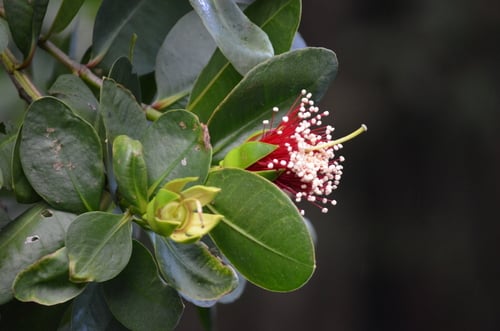
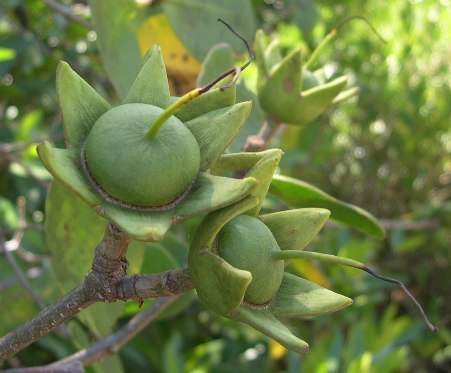
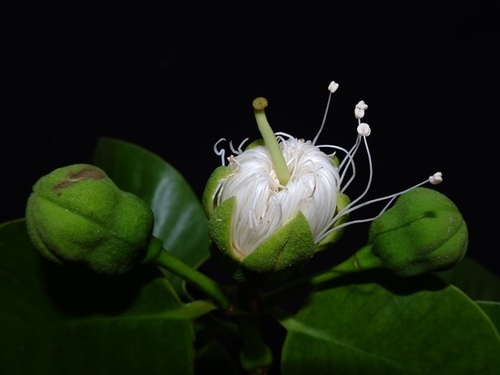
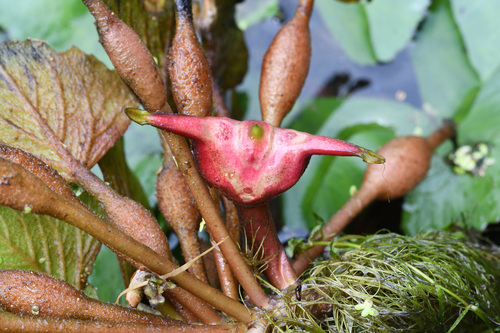
A shrub. It has a sweet smell. It grows 3-7 m tall. The bark is greyish-brown. The small branches have spines near their tip. The leaves are simple and opposite. The leaves vary and can be oval and 8-44 mm long by 2-20 mm wide. The flower panicles are 3-22 cm long. They are near the ends of branches. The flowers are white or red and have a scent. The fruit is a small round capsule. It is brown and splits into 4 sections. The seeds are angular and 3 mm across.
Edible Uses
No edible uses are known for this plant.
Medicinal Uses
Henna has a long history of use in traditional medicine across a wide range of conditions, though some of this reputation likely reflects the high cultural regard for the plant rather than proven efficacy. The plant does contain medically active compounds including coumarins, naphthaquinones (including lawsone), flavonoids, sterols, and tannins. It is an astringent herb with a tea-like aroma that controls bleeding and is antibacterial, and is regarded as an alterative and nerve tonic in Ayurvedic medicine. The leaves are taken internally to treat amoebic dysentery, diarrhoea, and to promote menstrual flow, and are used as a gargle for sore throats. Leaf extracts make the skin somewhat hydrophobic, and combined with a slight bactericidal and fungicidal action, this makes them useful externally for skin and nail complaints. The leaves are applied externally to treat skin diseases including leprosy, wounds, ulcers, and herpes. An infusion of leaves mixed with tobacco and salt is used as a mouthwash. Dyeing the hair with henna effectively kills lice. Young leafy shoots of 20–25cm are harvested during the growing season and dried for use in powders. A decoction of the bark is used as an emmenagogue and to treat liver problems and nervous symptoms. The stembark is chewed and held between the teeth for about 25 minutes to treat toothache. The bark is frequently used in herbal medicines.
Distribution
It is a tropical plant. It grows in the Sahel area in West Africa. It can grow in arid places. It tends to grow near water courses in semi-arid regions. At MARDI.
Where It Grows
Africa, Asia, Australia, Bahamas, Benin, Burkina Faso, Central Africa, Central Asia, China, Comoros, Congo, Côte d'Ivoire, Cuba, Dominican Republic, East Africa, Egypt*, Ethiopia, Gambia, Guinea, Guinée, Guinea-Bissau, Haiti, Himalayas, India, Indochina, Indonesia, Iraq, Israel, Ivory Coast, Jamaica, Kenya, Laos, Liberia, Libya, Madagascar, Malaysia, Maldives, Mali, Mediterranean, Middle East, Mozambique, Myanmar, Nepal, Niger, Nigeria, North Africa, Pakistan, Papua New Guinea, PNG, Puerto Rico, Sahel, Saudi Arabia, SE Asia, Senegal, Seychelles, Sierra Leone, Somalia, South Africa, Southern Africa, Sri Lanka, Sudan, Syria, Tajikistan, Togo, West Africa, West Indies,
Cultivation
It grows best in areas where annual daytime temperatures are within the range 19° - 27°c, but can tolerate 13° - 33°c. It prefers a mean annual rainfall in the range 500 - 1,500mm, but tolerates 250 - 4,200mm. Prefers a fertile, well-drained or dry soil in a sunny position. A very greedy plant, removing large quantities of nutrients from the soil. The plant is tolerant of poor, stony and sandy soils, but is also well adapted to heavy, fertile clay soils. Prefers a pH in the range 5 - 7, tolerating 4.3 - 8. Established plants are very drought tolerant. Henna can grow to the size of a large shrub or even small tree, but in cultivation is normally treated as a short-lived perennial crop and then grows up to 70cm tall. Plants produce their best yields during the first 4 - 8 years after planting, but are often left in the field for 12 - 15 years, sometimes for as long as 40 years. Under irrigation, yields of dry leaves may be 2 - 4 tonnes per hectare, while under rain fed conditions in northern India yields of 700 - 1,500 kilos per hectare are obtained. Under intensive cultivation the plants are usually harvested twice a year from the second year onwards. A very variable plant. There are two main forms, one with creamy white blooms, the other with light red. Both forms are heavily fragrant, although the cream form is more intensely so. Its odour at short range is rank and overpowering, but from a distance it is like that of mignonette. Plants flower all year round, though the seed capsules need to be removed since they inhibit flowering. Flowering Time: Late Spring/Early Summer. Bloom Color: Pale Pink Pink White/Near White. Spacing: 6-8 ft. (1.8-2.4 m) 8-10 ft. (2.4-3 m) 10-12 ft. (3-3.6 m). Carbon Farming - Cultivation: regional crop. Management: coppice. Industrial Crop: dye.
Propagation
Seed germinates best at around 25°C. Due to their hard seedcoats, seeds must be pre-germinated before sowing: steep them in water for 3–7 days, changing the water daily, then place in small heaps and keep moist and warm for a few more days, ensuring excess water drains away. When the seedcoat has softened and the seed begins to swell, sow in a nursery bed and keep the soil moist — daily irrigation is often needed in the early days. When plants reach about 40cm tall, lift them, cut back to around 15cm, and transplant. Softwood cuttings root easily using branches with 6–8 buds. Hardwood cuttings also root easily using branches with 6–8 buds. Layering is also an option.
Other Uses
Because of its dense habit and amenability to pruning, henna is particularly useful as a hedge and is traditionally planted as a windbreak in vineyards. The crushed leaves yield a fast reddish or yellowish dye used for colouring cloth and hair, and as a cosmetic for staining fingernails, toenails, palms, and the soles of the feet. It has long been used in Islamic culture for staining hair, beards, nails, and skin. The colour can be modified by adding other dyes such as indigo, gambier, or areca nut powder. In India, henna is traditionally used to paint intricate patterns on the skin, particularly on the hands and feet of a bride and her female wedding guests. It is commonly used as a hair conditioner and colouring, often mixed with chamomile flowers (Chamaemelum nobile). Mixed with indigo (Indigofera spp.), it imparts a blue-black colour to beards and hair. For hair dyeing, a paste of powdered leaves is applied and bound up with leaves, wax cloth, or oilskin; after half an hour or more it is washed off, leaving the hair bright red. A second application of indigo paste, left on for three hours, turns hair jet black. Ointments can be used to add gloss. The process must be repeated regularly as the hair grows. The active dyeing agent, lawsone, is present in dry leaves at 0.5–2% concentration and binds strongly to proteins, making the dye very fast. An essential oil from the flowers, which is lilac-scented, is used in perfumery; steam distillation yields 0.01–0.02% essential oil consisting mainly of α- and β-ionones. The fragrant flowers are macerated and infused in oil — traditionally Moringa peregrina (ben) oil, which resists rancidity — to produce a perfume with a greenish colour. Branch fibres and stem bark are used to make baskets; small twigs serve as toothbrushes. The seeds contain about 10% of a non-drying viscous oil composed mainly of oleic, linoleic, and stearic acids, used locally for anointing the body. The wood is fine-grained and hard, used for small objects such as tent pegs and tool handles, and also as fuel.
Notes
Unknown if edible. It is used in medicine. There is only one Lawsonia species.
Synonyms
Also Known As
Alcana, Alfeneiro, Camphire, Cilaan, Dan, Heenaa, Kuku pacar, Mendhi, Perdu mendi
References (10)
- Burkill, H. M., 1985, The useful plants of west tropical Africa, Vol. 3. Kew.
- INFOODSUpdatedFGU-list.xls
- Molla, A., Ethiopian Plant Names. http://www.ethiopic.com/aplants.htm
- Mutie, F. M., et al, 2023, Important Medicinal and Food Taxa (Orders and Families) in Kenya, Based on Three Quantitative Approaches. Plants 2023, 12, 1145
- Plants of Haiti Smithsonian Institute http://botany.si.edu/antilles/West Indies
Show all 10 references Hide references
- Selvam, V., 2007, Trees and shrubs of the Maldives. RAP Publication No. 2007/12 p 106
- Sujanapal, P., & Sankaran, K. V., 2016, Common Plants of Maldives. FAO & Kerala FRI, p 166
- Sukarya, D. G., (Ed.) 2013, 3,500 Plant Species of the Botanic Gardens of Indonesia. LIPI p 658
- Termote, C., et al, 2014, Assessing the potential of wild foods to reduce the cost of a nutritionally adequate diet: An example from eastern Baringo District, Kenya. Food and Nutrition Bulletin, vol. 35, no. 4
- World Checklist of Useful Plant Species 2020. Royal Botanic Gardens, Kew