Rogeria adenophylla
J. Gay ex Del.
iNaturalist· cc-by-nc
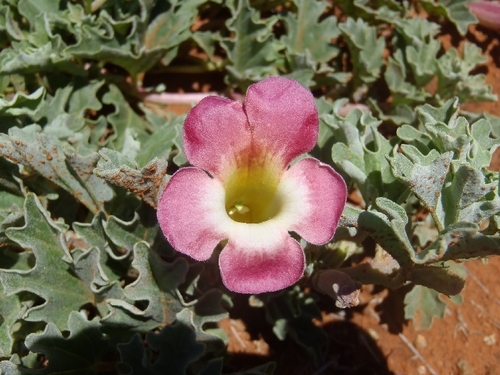
(c) Paulo Vasconcelos, some rights reserved (CC BY-NC), uploaded by Paulo Vasconcelos
iNaturalist· cc-by-nc
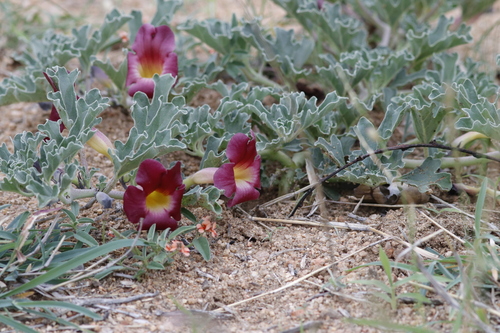
(c) mohamedmahmoudabidine, some rights reserved (CC BY-NC)
Description
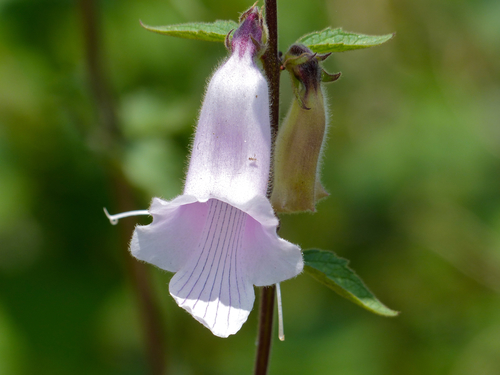
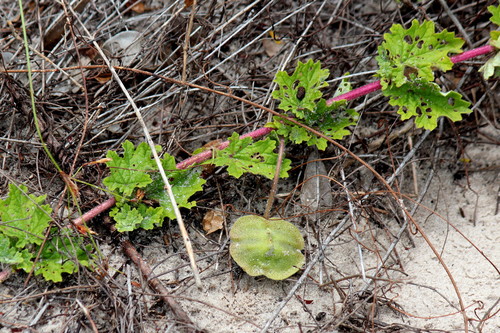
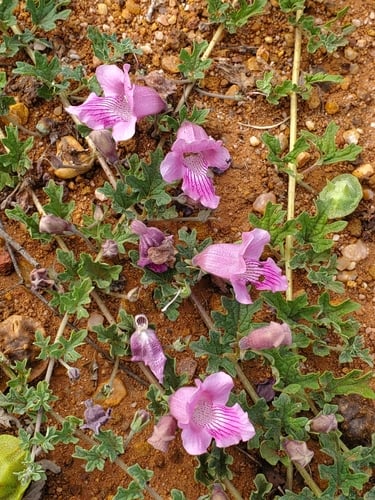
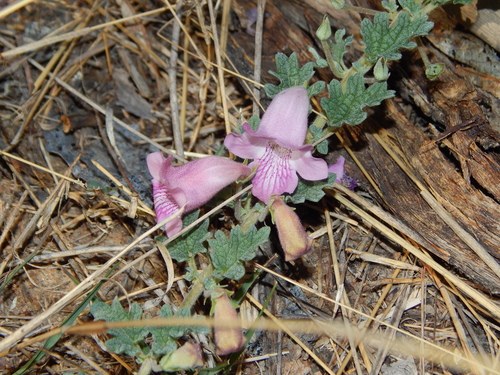
A herb. It grows 2.5 m high. It has an unpleasant smell. The leaves are large and almost triangle shaped. The leaf stalk is long. The flowers are white to purple. They are tube shaped. The fruit is woody with a sharp tip. There are several spines near the base. The seeds are black.
Edible Uses
The leaves are boiled. The seeds can be eaten.
Traditional Uses
The leaves are boiled. The seeds can be eaten.
This uses section is brief — help expand it
Medicinal Uses
A mucilaginous infusion obtained from the plant has been recommended in the treatment of diarrhoea.
Distribution
A tropical plant. It grows in the Sahel in West Africa. It suits dry savannah. It grows in hot arid places. It grows between 550-1,850 m above sea level. It can grow in arid places.
Where It Grows
Africa, Angola, Burkina Faso, Central Africa, Mauritania, Namibia, Niger, Nigeria, Sahara, Sahel, Senegal, Southern Africa, Sudan, West Africa,
Cultivation
Requires a sunny position. Succeeds in any very well-drained, fertile soil.
Also Known As
Atyentay, Genji-lemti, Haboto, Ndogolon, Omuzeba, Teletena
References (8)
- Ann. Sci. Nat. Ser. 1. 1:457. 1824
- Burkill, H. M., 1985, The useful plants of west tropical Africa, Vol. 4. Kew.
- Dalziel, J. M., 1937, The Useful plants of west tropical Africa. Crown Agents for the Colonies London.
- Grubben, G. J. H. and Denton, O. A. (eds), 2004, Plant Resources of Tropical Africa 2. Vegetables. PROTA, Wageningen, Netherlands. p 564
- Jardin, C., 1970, List of Foods Used In Africa, FAO Nutrition Information Document Series No 2.p 47, 98
Show all 8 references Hide references
- Monod, T., (On wild edible plants of Mauritania)
- Peters, C. R., O'Brien, E. M., and Drummond, R.B., 1992, Edible Wild plants of Sub-saharan Africa. Kew. p 160
- Royal Botanic Gardens, Kew (1999). Survey of Economic Plants for Arid and Semi-Arid Lands (SEPASAL) database. Published on the Internet; http://www.rbgkew.org.uk/ceb/sepasal/internet [Accessed 5th May 2011]