Rhus typhina
L.
Staghorn sumac, Indian lemonade, Velvet sumach, Virginian sumach, Vinegar tree
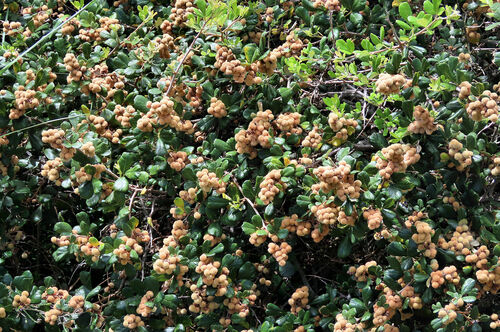
iNaturalist· cc-by-nc
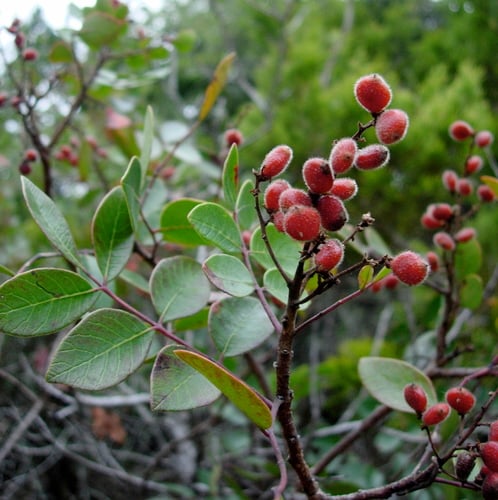
(c) mkosiewski, some rights reserved (CC BY-NC), uploaded by mkosiewski
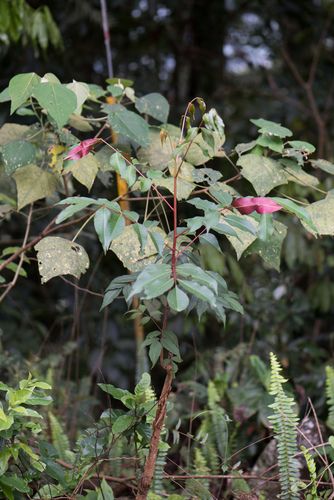
iNaturalist· cc-by-nc
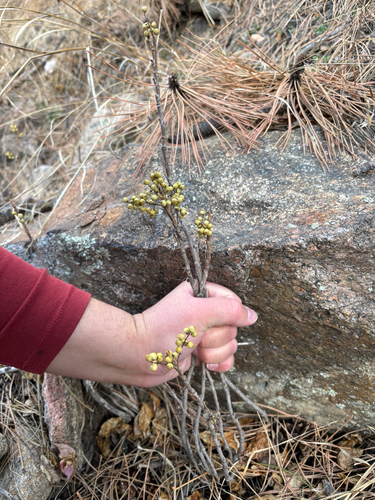
(c) Misha Zitser, some rights reserved (CC BY-NC), uploaded by Misha Zitser
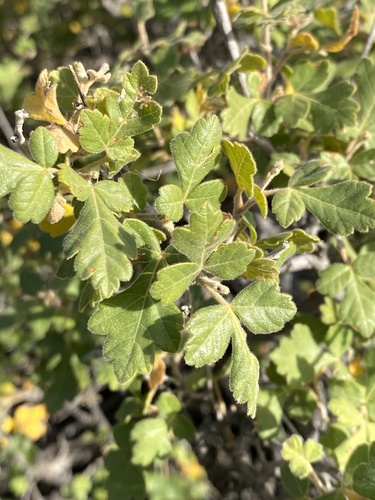
iNaturalist· cc-by-sa
(c) Douglas Goldman, some rights reserved (CC BY-SA), uploaded by Douglas Goldman
Summary
Source: WikipediaRhus typhina, the staghorn sumac, is a species of flowering plant in the family Anacardiaceae, native to eastern North America. It is primarily found in southeastern Canada, the northeastern and midwestern United States, and the Appalachian Mountains, but it is widely cultivated as an ornamental throughout the temperate world. It is an invasive species in some parts of the world.
Description
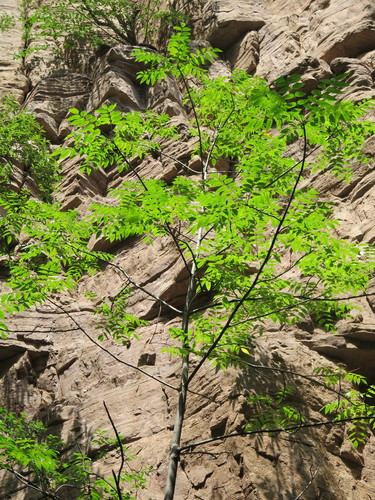
A shrub which grows 3-4.5 m high and 3.7-6 m wide. It loses its leaves during the year. The trunk can be 10 cm across. It develops suckers. Young stems have a velvet coating of red-brown hairs. The leaves are large and have leaflets along the stalk. There are 11-31 leaflets on a reddish and densely hairy central stalk. The leaflets are sword shaped and in pairs. They are 5-12 cm long. The central ones are largest. The leaves are dark green above and paler underneath. Male and female flowers occur on separate plants. The flowers are small and greenish-yellow. They occur in large dense clusters at the tip of a shoot. The male or pollen flowers are in clusters about 30 cm long. The female plants have fruit in dense clusters. They are dark crimson and hairy. They are 3-5 mm across and have a single seed.
Edible Uses
The fruit is cooked and used in pies, with a very sour flavour. Each fruit is rather small with little flesh, but the quite large clusters make harvesting easy. Soaking the fruit for 10–30 minutes in hot or cold water produces a very refreshing lemonade-like drink. The mixture should not be boiled, as this releases tannic acids and makes the drink astringent. An oil is also extracted from the seeds.
Traditional Uses
The very sour fruit are used in pies or soaked in water to produce a drink. The fruit are dried and the red skin removed by rubbing on a sieve and the powder is used as the seasoning sumac. This is used to flavour rice.
Medicinal Uses
Stag's horn sumach was often used medicinally by several native North American Indian tribes, who valued it especially for its astringent qualities. It is little used in modern herbalism. Some caution is advised in the use of the leaves and stems — see notes on toxicity. The bark is antiseptic, astringent, galactogogue, and tonic; an infusion treats diarrhoea, fevers, piles, general debility, and uterine prolapse, and is said to greatly increase milk flow in nursing mothers — small pieces of wood were also eaten for this purpose. The inner bark is considered a valuable remedy for piles. The roots are astringent, a blood purifier, diuretic, and emetic; an infusion combined with purple coneflower (Echinacea purpurea) has been used in the treatment of venereal disease, and a root poultice has been applied to boils. The leaves are astringent and have been used for asthma, diarrhoea, and stomatosis. A fruit infusion has been used as a tonic to improve appetite and treat diarrhoea; the berries are astringent and were chewed as a remedy for bed-wetting; a berry tea has treated sore throats. The flowers are astringent and stomachic — a flower infusion has been used for stomach pains. The sap has been applied externally to warts, though it can cause a rash on many people.
Known Hazards
Some caution advised regarding leaves and stems due to toxicity. Sap can cause rash on many people.
Distribution
It is a temperate plant. It is native to North America. It is frost hardy. They grow in open places on sandy and rocky soils. It needs good light. It suits hardiness zones 3-9.
Where It Grows
Australia, Britain, Canada, Central Asia, Europe, Iran, Jordan, Lebanon, Mediterranean, Middle East, North America*, Pakistan, Slovenia, Tajikistan, Turkey, Türkiye, USA,
Cultivation
Succeeds in a well-drained fertile soil in full sun. Tolerates poor soils. Succeeds in dry soils and is drought resistant once it is established. A fairly wind hardy plant, though the branches are brittle and can be broken off in very high winds. A very hardy plant, when fully dormant it can tolerate temperatures down to at least -25°c. However, the young growth in spring can be damaged by late frosts. A fast growing but short-lived tree, it can sucker freely, forming thickets and becoming quite anti-social when grown in small areas. Single-stem plants are short-lived in cultivation, but if the plants are coppiced regularly and allowed to form thickets, then they will live longer and also be more ornamental with larger leaves. Any coppicing is best carried out in early spring. A very ornamental plant, there are some named varieties. It is susceptible to coral spot fungus but is notably resistant to honey fungus. It transplants easily. This is a very good bee plant, the flowers producing an abundance of pollen and nectar. There is some doubt over the validity of this name and the earlier R. hirta. has been proposed as the correct name. However, it seems likely that R. typhina will be retained because it is so well known. This species is closely related to and hybridizes with R. glabra. Many of the species in this genus are highly toxic and can also cause severe irritation to the skin of some people, whilst other species such as this one are not poisonous. It is relatively simple to distinguish which is which, the poisonous species have axillary panicles and smooth fruits whilst non-poisonous species have compound terminal panicles and fruits covered with acid crimson hairs. The toxic species are sometimes separated into their own genus, Toxicodendron, by some botanists. Dioecious. Male and female plants must be grown if seed is required. The berries are typically harvested in late summer to early autumn, around August to September (Northern Hemisphere), when they are fully ripe. Sumac generally flowers in early to mid-summer, usually from June to July (Northern Hemisphere). Sumac species typically grow at a moderate pace, reaching maturity within a few years, and can establish rapidly in suitable conditions.
Propagation
Seed is best sown in a cold frame as soon as it is ripe. Pre-soak for 24 hours in hot water (starting at 80–90°C and allowing it to cool) to leach out germination inhibitors — this soak water is drinkable and has a delicious lemon flavour. Stored seed also needs hot water treatment and can be sown in early spring in a cold frame. Prick seedlings into individual pots when large enough to handle and grow on in a greenhouse for their first winter, then plant out in late spring or early summer after the last expected frosts. Cuttings of half-ripe wood, 10cm with a heel, can be taken in July/August in a frame. Root cuttings 4cm long taken in December should be potted up vertically in a greenhouse — a good percentage will take. Suckers can be taken in late autumn to winter.
Other Uses
The leaves are rich in tannin — up to 48% has been obtained in controlled plantations — and can be collected as they fall in autumn for use as a brown dye or as a mordant. The bark (especially root bark) and fruits are also very rich in tannin. A yellow dye can be obtained from the roots, and an orange dye from the inner bark and central pith of the stem mixed with bloodroot (Sanguinaria canadensis). A black ink can be made by boiling the leaves and fruit together. An oil extracted from the seeds attains a tallow-like consistency on standing and is used to make candles, which burn brilliantly but emit a pungent smoke. Young shoots are hollowed into pipes used for drawing sap from sugar maples (Acer spp.) and are also fashioned into flutes. The plant's extensive root system makes it useful as a windbreak and for preventing soil erosion. The wood is soft, light, brittle, and coarse-grained, weighing 27lb per cubic foot; it has no commercial value but is occasionally used for rough construction or turning.
Production
Trees live to 50 years old.
Notes
There are about 200 Rhus species.
Dangerous Lookalikes
This plant can be confused with the following toxic species. Always verify identification carefully before consuming any wild plant.
Poison Sumac
Toxicodendron vernix
Unknown
Staghorn sumac
Rhus typhina
(c) mkosiewski, some rights reserved (CC BY-NC), uploaded by mkosiewski
Poison Sumac: Drooping white/grey waxy berries, grows in wetlands/swamps, smooth stems, causes severe skin rash on contact.
Staghorn sumac: Upright fuzzy red berry clusters, grows in dry areas, velvety stems.
Synonyms
Also Known As
Octovec
References (30)
- Bioversity New World Fruits Database
- Bodkin, F., 1991, Encyclopedia Botanica. Cornstalk publishing, p 892
- Bremness, L., 1994, Herbs. Collins Eyewitness Handbooks. Harper Collins. p 119
- Cent. pl. II:14. 1756 (Amoen. acad. 4:311. 1759)
- Coombes, A.J., 2000, Trees. Dorling Kindersley Handbooks. p 106
Show all 30 references Hide references
- Cundall, P., (ed.), 2004, Gardening Australia: flora: the gardener's bible. ABC Books. p 1205
- Elias, T.S. & Dykeman P.A., 1990, Edible Wild Plants. A North American Field guide. Sterling, New York p 186, 250
- Esperanca, M. J., 1988. Surviving in the wild. A glance at the wild plants and their uses. Vol. 2. p 256
- Facciola, S., 1998, Cornucopia 2: a Source Book of Edible Plants. Kampong Publications, p 10
- Farrar, J.L., 1995, Trees of the Northern United States and Canada. Iowa State University press/Ames p 226
- Fisk, J. R. & Hoover, E., 2015, Wild Fruits of Minnesota. A Field Guide. University of Minnesota p 16 (As Rhus hirta)
- Flora of Pakistan.
- Harris, E & J., 1983, Field Guide to the Trees and Shrubs of Britain. Reader's Digest. p 178
- Hedrick, U.P., 1919, (Ed.), Sturtevant's edible plants of the world. p 561
- http://en.hortipedia.com
- http://www.botanic-gardens-ljubljana.com/en/plants
- Irving, M., 2009, The Forager Handbook, A Guide to the Edible Plants of Britain. Ebury Press p 133
- Jackes, D. A., 2007, Edible Forest Gardens (As Rhus hirta)
- Joyce, D., 1998, The Garden Plant Selector. Ryland, Peters and Small. p 157
- Kermath, B. M., et al, 2014, Food Plants in the Americas: A survey of the domesticated, cultivated and wild plants used for Human food in North, Central and South America and the Caribbean. On line draft. p 744 (As Rhus hirta)
- Kremer, B.P., 1995, Shrubs in the Wild and in Gardens. Barrons. p 193
- Little, E.L., 1980, National Audubon Society Field Guide to North American Trees. Alfred A. Knopf. p 551
- Lord, E.E., & Willis, J.H., 1999, Shrubs and Trees for Australian gardens. Lothian. p 71
- Mabberley, D.J. 1990. The plant-book: a portable dictionary of the higher plants. Cambridge University Press. NY.
- MacKinnon, A., et al, 2009, Edible & Medicinal Plants of Canada. Lone Pine. p 90
- Moerman, D. F., 2010, Native American Ethnobotany. Timber Press. p 471 (As Rhus hirta)
- Plants for a Future database, The Field, Penpol, Lostwithiel, Cornwall, PL22 0NG, UK. http://www.scs.leeds.ac.uk/pfaf/
- Saunders, C.F., 1948, Edible and Useful Wild Plants. Dover. New York. p 154
- Schuler, S., (Ed.), 1977, Simon & Schuster's Guide to Trees. Simon & Schuster. No. 160
- Toupal, R. S. & Hollenback, K., 2009, An Ethnobotany of Indiana Dunes National Lakeshore: Plant Uses of the Ojibwa People. Bureau of Applied Research in Anthropology. University of Arizona