Rhus succedanea
L.
Wax tree, Japanese wax tree, Japan tallow
iNaturalist· cc-by
(c) Cheng-Tao Lin, some rights reserved (CC BY)
iNaturalist· cc-by
(c) Cheng-Tao Lin, some rights reserved (CC BY)
iNaturalist· cc-by
(c) Cheng-Tao Lin, some rights reserved (CC BY)
Summary
Source: WikipediaRhus succedanea is a deciduous tree reaching 9m tall and wide. Hardy to UK zone 5, it flowers in July with seeds ripening September to November. Dioecious and bee-pollinated, both sexes are needed for seed production. Suitable for light, medium, or heavy well-drained soils with mildly acid to basic pH. Requires full sun and moist soil.
Description
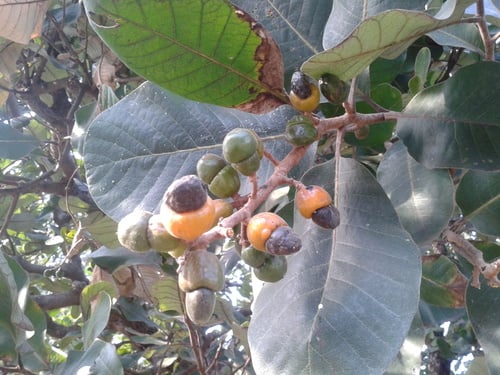
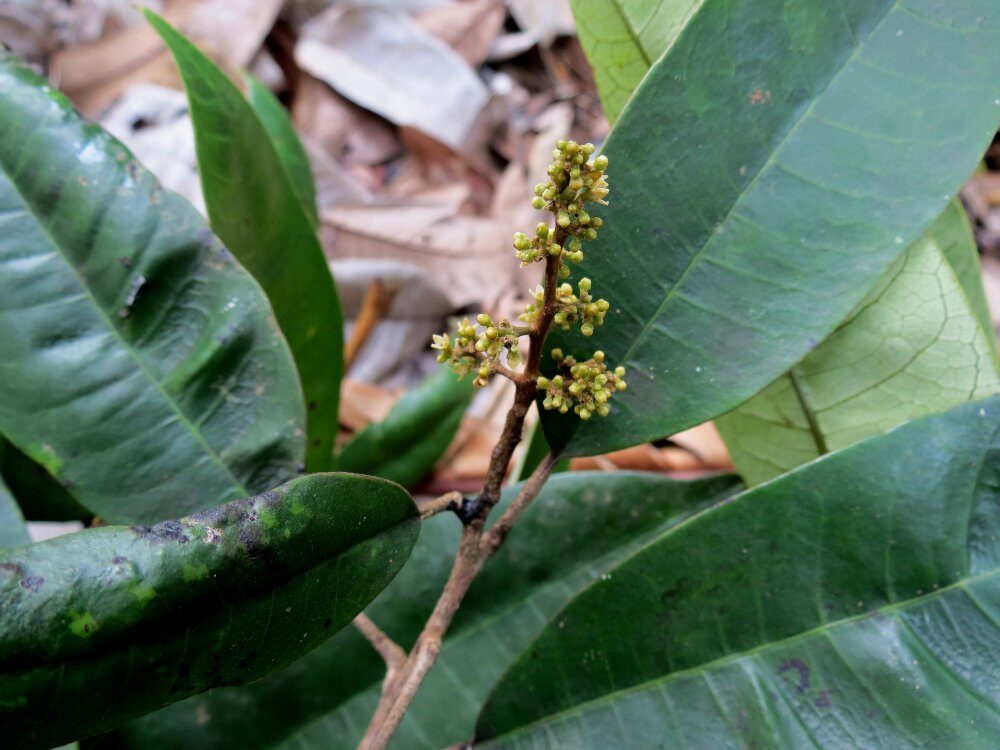
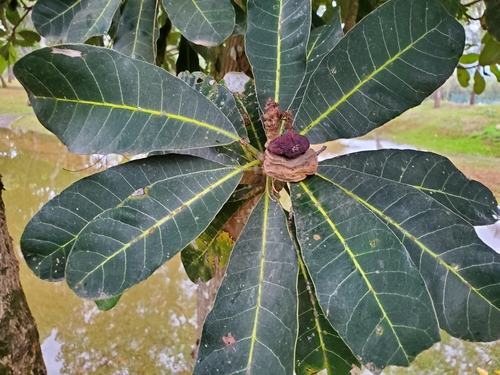
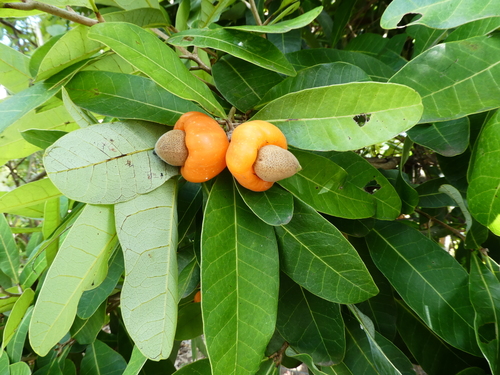
A tree. It grows about 10 m tall. The leaves have stalks. There are 7 leaflets which are oval and taper to the tip. The leaflets are arranged along the stalk. The leaflets are often reddish. The flowers are greenish. They occur in clusters in the axils of leaves. The fruit is fleshy with a hard covering over the seed. The fruit is brown and oblique.
Edible Uses
The fruit is eaten for its acid pulp and contains ellagic acid. These reports should be treated with some caution given the general toxicity of the species. An oil is also extracted from the seeds.
Traditional Uses
The acidic pulp of the fruit is edible. The oil from the fruit is used in cooking.
This uses section is brief — help expand it
Medicinal Uses
The plant has antidote, antivinous, cholagogue, febrifuge, and ophthalmic properties, and is used as a wash to counteract varnish poisoning. Use with extreme caution — see notes on toxicity. The fruit is used in the treatment of phthisis. A wax derived from the fruits is used in ointments. An ethanolic extract of the leaves has shown anticancer and antiviral activity.
Known Hazards
Use medicinal applications with extreme caution due to toxicity concerns.
Distribution
It is a warm temperate plant. In Nepal plants grown between 1300-2400 m altitude. They grow in open places. Hobart Botanical Gardens.
Where It Grows
Asia, Australia, Bhutan, Cambodia, China, Europe, Himalayas, India, Indochina, Japan, Laos, Myanmar, Nepal, Northeastern India, Pakistan, SE Asia, Sikkim, Taiwan, Tasmania, Thailand, Tibet, Turkey, Türkiye, Vietnam,
Cultivation
Succeeds in a well-drained fertile soil in full sun. Plants are not very hardy in Britain, though they succeed outdoors in the mildest areas of the country. The young growth in spring can be damaged by late frosts. Plants have brittle branches and these can be broken off in strong winds. Plants are also susceptible to coral spot fungus. Plants in this genus are notably resistant to honey fungus. This species is frequently cultivated in Japan for its sap and the wax obtained from its fruit. Many of the species in this genus, including this one, are highly toxic and can also cause severe irritation to the skin of some people, whilst other species are not poisonous. It is relatively simple to distinguish which is which, the poisonous species have axillary panicles and smooth fruits whilst non-poisonous species have compound terminal panicles and fruits covered with acid crimson hairs. The toxic species are sometimes separated into their own genus, Toxicodendron, by some botanists. Dioecious. Male and female plants must be grown if seed is required.
Propagation
Seed is best sown in a cold frame as soon as it is ripe. Pre-soak for 24 hours in hot water (starting at 80–90°C and allowing it to cool) to leach out germination inhibitors. Stored seed also needs hot water treatment and can be sown in early spring in a cold frame. Prick seedlings into individual pots when large enough to handle and grow on in a greenhouse for their first winter, then plant out in late spring or early summer after the last expected frosts. Cuttings of half-ripe wood, 10cm with a heel, can be taken in July/August in a frame. Root cuttings 4cm long taken in December should be potted up vertically in a greenhouse — a good percentage will take. Suckers can be taken in late autumn to winter.
Other Uses
The leaves contain about 20% tannin and can be collected as they fall in autumn for use as a brown dye or as a mordant. The sap is tapped and used as a lacquer, widely used in Japanese art; it must be kept in a cool, humid environment to dry properly — traditionally, Japanese paintings were stored in a damp cave until the lacquer had cured. A yellow dye is obtained from the wood. A wax obtained from the fruit is used to make candles, floor wax, varnish, and similar products; the fruit contains about 17% wax, with a fatty acid composition of 77% palmitic, 5% stearic and arachidic, 6% dibasic, 12% oleic, and a trace of linoleic. The seed oil contains 25% glycerides of palmitic, 47% oleic, and 28% linoleic.
Notes
There are about 200 Rhus species. It has anticancer properties.
Synonyms
Also Known As
Arkhol, Bhalayo, Bhalayo, Bol-khatthi, Bol-micheng, Choklu, Ding-keon, Habatul-khizra, Hakkai, Hala, Halashi, Kado ling, Kakada-shingi, Kakain, Kakeera-sryngi, Kakkata-theingi, Kakra-singri, Karkata-shringi, Karkkaadagasurgi, Kattara-thinche, Khaen mo, Khongma, Lakhar, Makkak khao, Makok kiam, Rani bhaleyo, Raniwhalayo, Rikhul, Sadao chaang, Serhnyok, Shah, Wild varnish tree, Woorsheng
References (14)
- Ambasta S.P. (Ed.), 2000, The Useful Plants of India. CSIR India. p 524
- Anderson, E. F., 1993, Plants and people of the Golden Triangle. Dioscorides Press. p 219
- Chayamarit, K., 1994, Preliminary Checklist of the Family Anacardiaceae in Thailand. Thai For. Bull. 22:1-25
- Gardner, S., et al, 2000, A Field Guide to Forest Trees of Northern Thailand, Kobfai Publishing Project. p 149
- Guite, C., 2016, Study of wild edible plants associated with the Paite Tribe of Manipur, India. International Journal of Current Research. Vol. 8, Issue 11, pp. 40927-40932
Show all 14 references Hide references
- Kintzios, S. E., 2006, Terrestrial Plant-Derived Anticancer Agents and Plant Species Used in Anticancer research Critical Reviews in Plant Sciences. 25: pp 79-113
- Lord, E.E., & Willis, J.H., 1999, Shrubs and Trees for Australian gardens. Lothian. p 71
- Manandhar, N.P., 2002, Plants and People of Nepal. Timber Press. Portland, Oregon. p 398
- Mant. pl. 2:221. 1771
- Plants for a Future database, The Field, Penpol, Lostwithiel, Cornwall, PL22 0NG, UK. http://www.scs.leeds.ac.uk/pfaf/
- Sundriyal, M. & Sundriyal, R. C., 2004, Structure, Phenology, Fruit Yield, and Future Prospects of some Prominent Wild Edible Plant Species of the Sikkim Himalaya, India. Journal of Ethnobiology 24(1): 113-138
- Tsering, J., et al, 2017, Ethnobotanical appraisal on wild edible plants used by the Monpa community of Arunchal Pradesh. Indian Journal of Traditional Knowledge. Vol 16(4), October 2017, pp 626-637
- Upreti, K., et al, 2010, Diversity and Distribution of Wild Edible Fruit Plants of Uttarakhand. Bioversity Potentials of the Himalaya. p 183
- Zeven, A. C. & de West, J. M. J., 1982, Dictionary of cultivated plants and their regions of diversity. Wageningen. p 32