Rhus trilobata
Nutt. ex Torr. & A. Gray
Three-lobed sumac
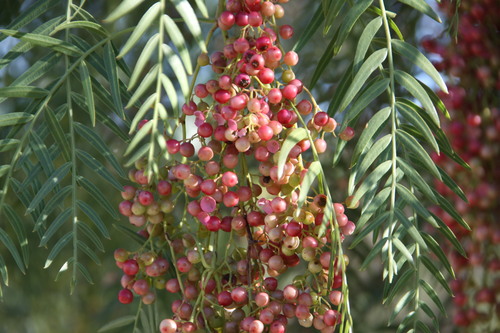
iNaturalist· cc-by-nc
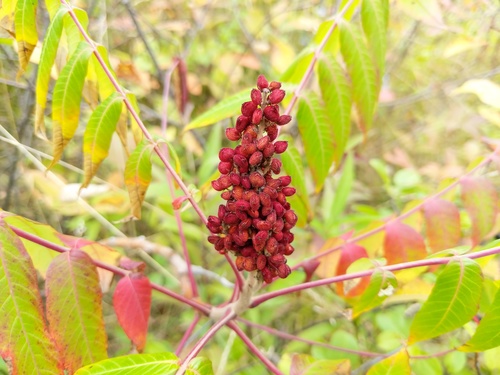
(c) privera5, some rights reserved (CC BY-NC)
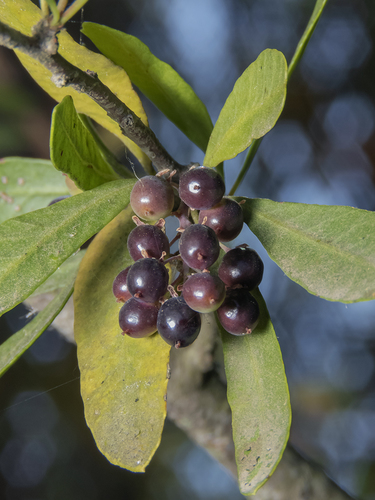
iNaturalist· cc-by
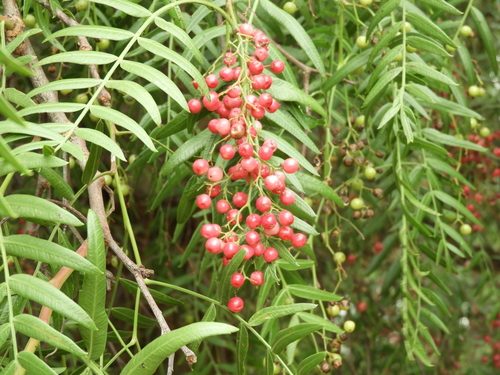
(c) Millie Basden, some rights reserved (CC BY), uploaded by Millie Basden
iNaturalist· cc-by-nc-nd
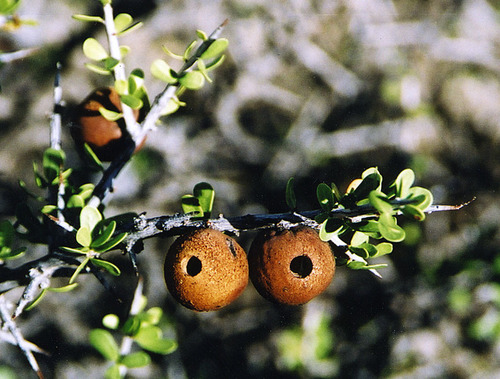
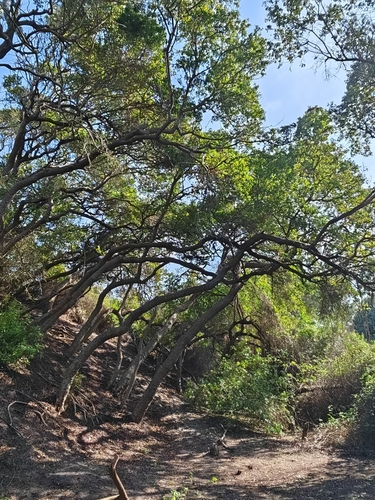
(c) Rick Long, some rights reserved (CC BY-NC-ND), uploaded by Rick Long
Summary
Source: WikipediaRhus trilobata is a North American shrub in the sumac genus (Rhus) with the common names skunkbush sumac, sourberry, skunkbush, and three-leaf sumac.
Description
A shrub. It loses its leaves during the year. It grows 2.4 m high and spreads 3 m wide. New growth is hairy. The leaves have leaflets with 3 lobes. The flowers are light green and in clusters. The fruit are round and red.
Edible Uses
The fruit can be eaten raw or cooked — fresh, dried, mixed with cornmeal, or made into a jam. Each fruit is about 6mm in diameter with very little flesh, but the fairly large panicles make harvesting easy. Soaking the fruit for 10–30 minutes in hot or cold water produces a very refreshing lemonade-like drink. The mixture should not be boiled, as this releases tannic acids and makes the drink astringent. An oil is also extracted from the seeds.
Traditional Uses
The fruit (berries) are eaten fresh or dried and mixed with corn meal. They can be used for jam or pies. They can be crushed and soaked in coal water to make a drink.
Medicinal Uses
Skunk bush was used medicinally by several native North American Indian tribes, who prized it especially for its astringent qualities and applied it to a wide range of complaints. It is little, if at all, used in modern herbalism. Due to its potentially toxic nature, it should be used with some caution and preferably only under the supervision of a qualified practitioner. The fruit is analgesic, astringent, and stomachic; it has been eaten to treat stomach problems and grippe, the dried berries ground to a powder and dusted on smallpox pustules, the fresh fruit chewed for toothache, and a fruit decoction used as a wash to prevent hair loss. The leaves are astringent, diuretic, emetic, and haemostatic; a leaf infusion has treated head colds, a decoction has been drunk to induce impotency as contraception, and a leaf poultice has been used to treat itching. An infusion of the bark has been used as a douche after childbirth, and the bark has been chewed with the juice swallowed to treat colds and sore gums. A decoction of the root bark has been taken to facilitate easy delivery of the placenta. The roots have been used as a deodorant, as have the buds, which have also been applied to the body as a perfume.
Known Hazards
Should be used with caution due to potentially toxic nature, preferably under qualified practitioner supervision.
Distribution
It is a temperate plant. It grows on dry hillsides. It suits hardiness zones 5-9.
Where It Grows
Australia, Central America, Canada, Mexico, North America, USA,
Cultivation
Succeeds in a well-drained fertile soil in full sun, but produces its best fruit when grown close to moist ground. Judging by the plants native habitat it should succeed in dry soils. The young growth in spring can be damaged by late frosts. This species is closely allied to R. aromatica. Plants have brittle branches and these can be broken off in strong winds. Plants are also susceptible to coral spot fungus. Plants in this genus are notably resistant to honey fungus. Many of the species in this genus are highly toxic and can also cause severe irritation to the skin of some people, whilst other species such as this one are not poisonous. It is relatively simple to distinguish which is which, the poisonous species have axillary panicles and smooth fruits whilst non-poisonous species have compound terminal panicles and fruits covered with acid crimson hairs. The toxic species are sometimes separated into their own genus, Toxicodendron, by some botanists. Dioecious. Male and female plants must be grown if seed is required. The berries are typically harvested in late summer to early autumn, around August to September (Northern Hemisphere) when they are fully ripe. Sumac generally flowers in early to mid-summer, usually from June to July (Northern Hemisphere). Sumac species typically grow at a moderate pace, reaching maturity within a few years, and can establish rapidly in suitable conditions.
Propagation
Seed is best sown in a cold frame as soon as it is ripe. Pre-soak for 24 hours in hot water (starting at 80–90°C and allowing it to cool) to leach out germination inhibitors — this soak water is drinkable and has a delicious lemon flavour. Stored seed also needs hot water treatment and can be sown in early spring in a cold frame. Prick seedlings into individual pots when large enough to handle and grow on in a greenhouse for their first winter, then plant out in late spring or early summer after the last expected frosts. Cuttings of half-ripe wood, 10cm with a heel, can be taken in July/August in a frame. Root cuttings 4cm long taken in December should be potted up vertically in a greenhouse — a good percentage will take. Suckers can be taken in late autumn to winter.
Other Uses
The leaves are rich in tannin and can be collected as they fall in autumn for use as a black to brown dye or as a mordant. The fruits can also be used as a mordant. A yellow dye is obtained from the twigs; mixed with pine gum they yield a black dye. A red-brown dye can be made from the bark and leaves, and a pink-tan dye from the fruit. The plant's ashes can serve as a mordant to fix dyes. An oil extracted from the seeds attains a tallow-like consistency on standing and is used to make candles, which burn brilliantly but emit a pungent smoke. The roots and buds have been used as a perfume and deodorant, and the leaves have been rubbed on the body as an insect and snake repellent — some caution should be used here, see notes on toxicity. The branches are tough and slender; stripped of bark and split into strands, they are used in basket making. Sumac is also used for erosion control and as a hedging or border plant, with dense growth providing cover and habitat for wildlife.
Notes
There are about 200 Rhus species.
Synonyms
Also Known As
Agrillo, Squawbush, Skunk bush
References (18)
- Anderson, B. A., (Rev.) 1996, Desert Plants of Utah. Utah State University Extension p 57
- Beckstrom-Sternberg, Stephen M., and James A. Duke. "The Foodplant Database." http://probe.nalusda.gov:8300/cgi-bin/browse/foodplantdb.(ACEDB version 4.0 - data version July 1994)
- Cormack, R. G. H., 1967, Wild Flowers of Alberta. Commercial Printers Edmonton, Canada. p 198
- Cundall, P., (ed.), 2004, Gardening Australia: flora: the gardener's bible. ABC Books. p 1205
- Elias, T.S. & Dykeman P.A., 1990, Edible Wild Plants. A North American Field guide. Sterling, New York p 186
Show all 18 references Hide references
- Esperanca, M. J., 1988. Surviving in the wild. A glance at the wild plants and their uses. Vol. 2. p 254
- Facciola, S., 1998, Cornucopia 2: a Source Book of Edible Plants. Kampong Publications, p 10
- Fl. N. Amer. 1:219. 1838
- http://www.stoller-eser.com/Flora/ethnobotany_table.htm
- https://www.fireflyforest.com/flowers/category/edible-plants/ Edible Plants – Southeastern Arizona Wildflowers and Plants
- Kermath, B. M., et al, 2014, Food Plants in the Americas: A survey of the domesticated, cultivated and wild plants used for Human food in North, Central and South America and the Caribbean. On line draft. p 744
- MacKinnon, A., et al, 2009, Edible & Medicinal Plants of Canada. Lone Pine. p 91
- Moerman, D. F., 2010, Native American Ethnobotany. Timber Press. p 473
- Plants for a Future database, The Field, Penpol, Lostwithiel, Cornwall, PL22 0NG, UK. http://www.scs.leeds.ac.uk/pfaf/
- Segura, S. et al, 2018, The edible fruit species in Mexico. Genet Resour Crop Evol (2018) 65:1767–1793
- Saunders, C.F., 1948, Edible and Useful Wild Plants. Dover. New York. p 154
- World Checklist of Useful Plant Species 2020. Royal Botanic Gardens, Kew
- www.desert-tropicals.com