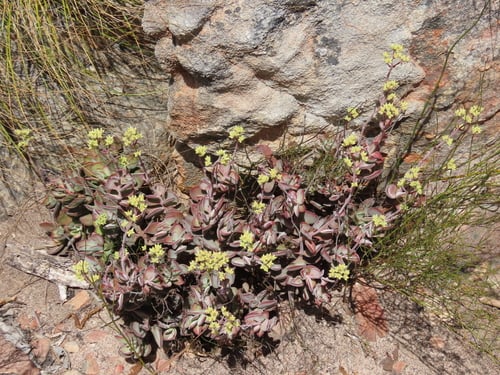
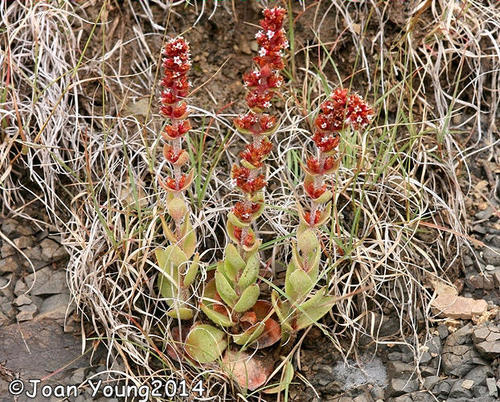
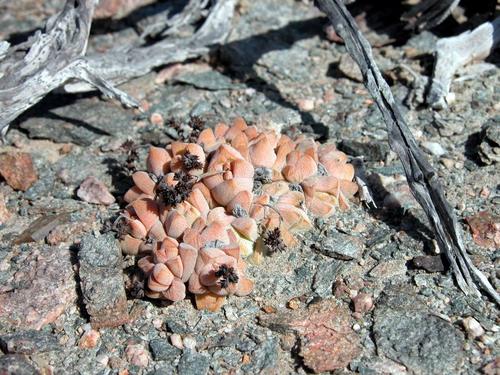
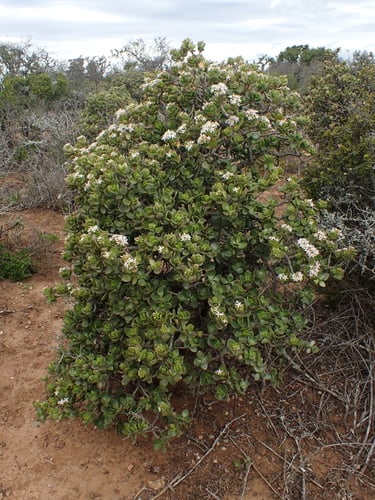
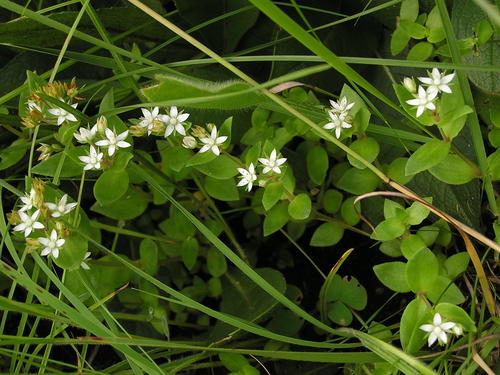
Rhodiola rhodantha
(A. Gray) Jacobsen
Queen's crown
iNaturalist· cc-by
(c) ayden, some rights reserved (CC BY), uploaded by ayden
iNaturalist· cc-by-nc
(c) epic2112, some rights reserved (CC BY-NC)
Summary
Source: WikipediaRhodiola rhodantha, common name redpod stonecrop or queen's crown, is a perennial flowering plant in the family Crassulaceae.
Description
A 0.4 m tall perennial, hardy to UK zone 4. Hermaphrodite flowers appear July to August with seeds ripening August to September, pollinated by insects and self-fertile. Accommodates light sandy, medium loamy, and heavy clay soils with good drainage, tolerating mildly acid to basic pH. Full sun required; tolerates both dry and moist conditions including drought.
Edible Uses
The leaves can be eaten raw or cooked as a potherb. They are best used young and work well chopped finely and added to salads.
Traditional Uses
The young shoots are cut into small pieces and mixed with lettuce in a salad. The young leaves can be eaten raw or cooked as a potherb.
This uses section is brief — help expand it
Medicinal Uses
None known
Distribution
It is a temperate plant.
Where It Grows
Australia, North America, USA,
Propagation
Surface sow seed in spring in well-drained soil in a sunny position in a greenhouse, keeping the soil consistently moist. Prick out seedlings into individual pots when large enough to handle and grow them on in the greenhouse through their first winter. Plant out in early summer of the following year. Division in spring or early summer is very straightforward. Larger divisions can go directly into their permanent positions; smaller ones are better potted up and grown on in light shade in a cold frame until well established before planting out in late spring or early summer.
Other Uses
None known Special Uses
Notes
There are about 50 Rhodiola species.
Synonyms
References (3)
- Cundall, P., (ed.), 2004, Gardening Australia: flora: the gardener's bible. ABC Books. p 1143
- Facciola, S., 1998, Cornucopia 2: a Source Book of Edible Plants. Kampong Publications, p 83 (As Sedum rhodanthum)
- Plants for a Future database, The Field, Penpol, Lostwithiel, Cornwall, PL22 0NG, UK. http://www.scs.leeds.ac.uk/pfaf/