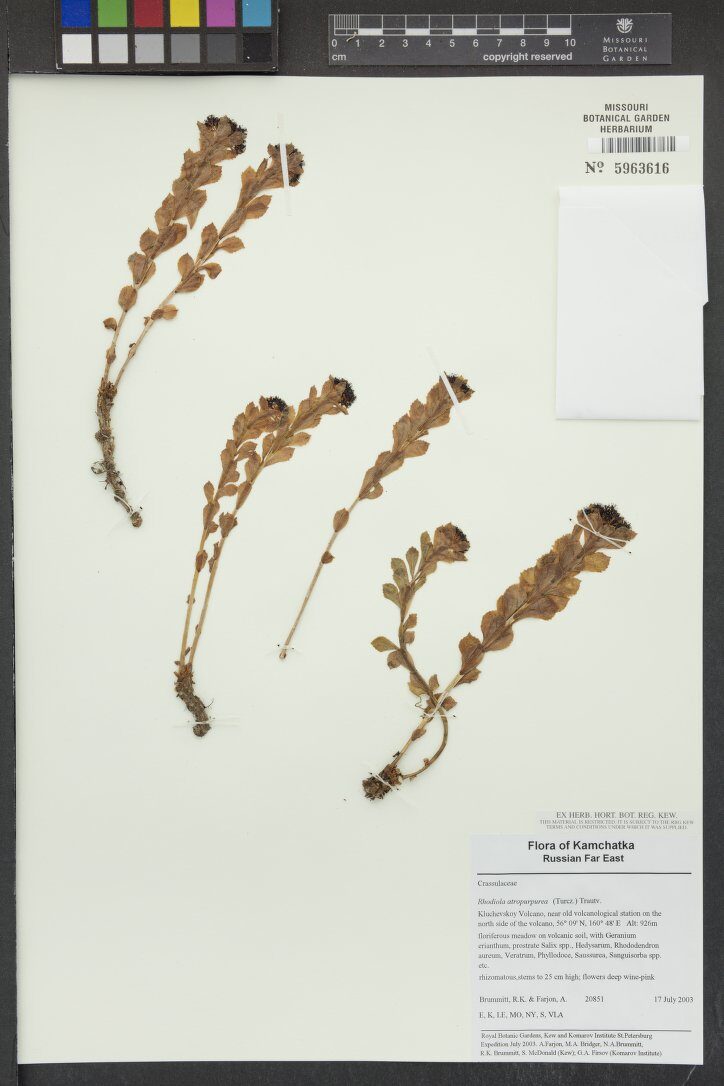
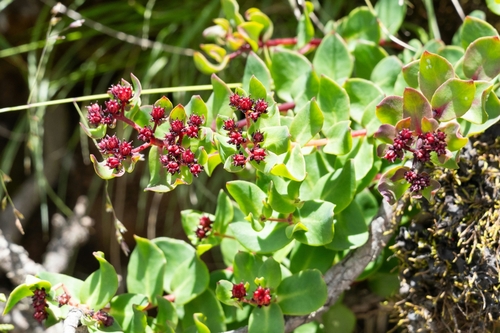
Sedum aizoon
L.
Aizoon Stonecrop
iNaturalist· cc0
no rights reserved
iNaturalist· cc0
no rights reserved
iNaturalist· cc-by-nc
(c) crowesm, some rights reserved (CC BY-NC)
Summary
Sedum aizoon is a medium-growing evergreen perennial reaching 40cm tall and wide. It flowers from July to August with seeds ripening August to September. Hardy to UK zone 7 and not frost tender. Grows year-round in leaf and attracts wildlife through insect pollination. Tolerates light sandy, medium loamy, and heavy clay soils with preference for well-drained conditions and poor fertility. Adapts to mildly acidic, neutral, and mildly alkaline pH. Requires full sun, cannot tolerate shade, and handles both drought and moist conditions.
Description
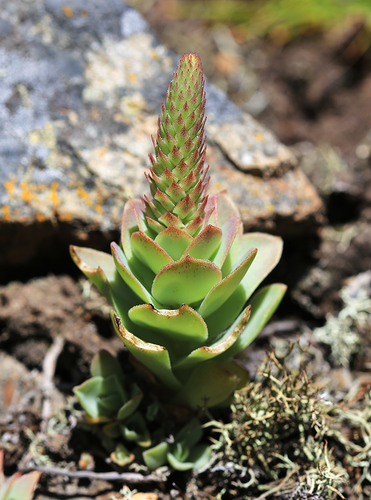
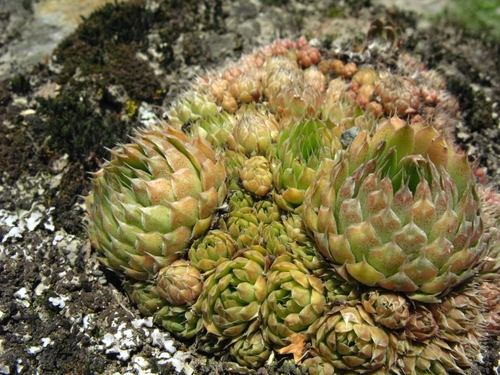
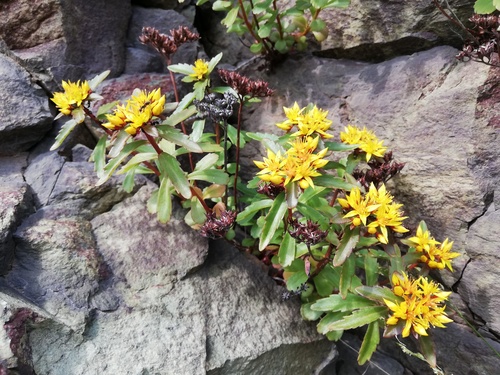
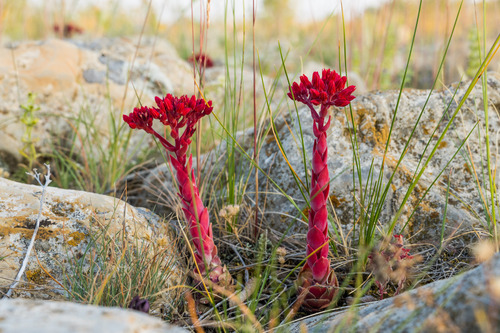
A small succulent plant. It grows 40 cm high and spreads 50 cm wide. The stems are upright. The leaves are fleshy and have teeth along the edge. They are 5-8 cm long and sword shaped. The flowers are golden yellow and in flat heads. These are 12 mm wide.
Edible Uses
The leaves and young stems can be eaten raw or cooked, though they have a definite bitterness that makes them unappealing as a regular part of the diet.
Medicinal Uses
The plant is used medicinally, though no further information is given.
Known Hazards
Although not poisonous, if large quantities of this plant are eaten it can cause a stomach upset.
Distribution
It is a temperate climate plant. It suits hardiness zones 7-10.
Where It Grows
Asia, Australia, China, Japan, Korea, Siberia, Slovenia,
Cultivation
A very easily grown plant, it succeeds in most soils, tolerating those on the poor side, though it prefers a fertile well-drained soil. Established plants are drought tolerant although it prefers a soil that stays moist in the summer. Requires a sunny position. Hardy to -15°c according to one report whilst another says that it is hardy to about -25°c. A polymorphic species. Butterflies are attracted to the flowers of this plant. All members of this genus are said to have edible leaves, though those species, such as this one, that have yellow flowers can cause stomach upsets if they are eaten in quantity. Plants in this genus seem to be immune to the predations of rabbits.
Propagation
Surface sow seed in spring in well-drained soil in a sunny greenhouse position, keeping the soil moist. Prick out seedlings into individual pots when large enough. Plant out during summer if growth is sufficient; otherwise overwinter in a cold frame or greenhouse and plant out in early summer the following year. Division can be carried out at almost any time during the growing season, though spring or early summer is preferred. Large divisions can go directly into permanent positions; smaller ones do best potted up and grown on in a lightly shaded cold frame until well established.
Other Uses
None known.
Notes
There are about 400 Sedum species.
Also Known As
Gouzacai, Zimzelena homulica
References (6)
- Cundall, P., (ed.), 2004, Gardening Australia: flora: the gardener's bible. ABC Books. p 1328
- http://www.botanic-gardens-ljubljana.com/en/plants
- Kang, Y., et al, 2012, Wild food plants and wild edible fungi in two valleys on the Qinling Mountains (Shaanxi, central China) Journal of Ethnobiology and Ethnomedicine; 9:26
- Plants for a Future database, The Field, Penpol, Lostwithiel, Cornwall, PL22 0NG, UK. http://www.scs.leeds.ac.uk/pfaf/
- Sp. pl. 1:430. 1753
Show all 6 references Hide references
- Wujisguleng, W., & Khasbagen. K., 2010, An integrated assessment of wild vegetable resources in Inner Mongolian Autonomous Region, China. Journal of Ethnobiology and Ethnomedicine 6:34