Sedum acre
L.
Common Stonecrop
iNaturalist· cc-by-nc
(c) obemgyorik, some rights reserved (CC BY-NC)
iNaturalist· cc-by-nc
(c) obemgyorik, some rights reserved (CC BY-NC)
iNaturalist· cc-by-nc
(c) obemgyorik, some rights reserved (CC BY-NC)
Summary
Source: WikipediaSedum acre, commonly known as the goldmoss stonecrop, mossy stonecrop, goldmoss sedum, biting stonecrop, and wallpepper, is a perennial flowering plant in the family Crassulaceae. It is native to Europe, northern and western Asia and North Africa, but is also naturalised in North America, southern South America, Japan, and New Zealand.
Description
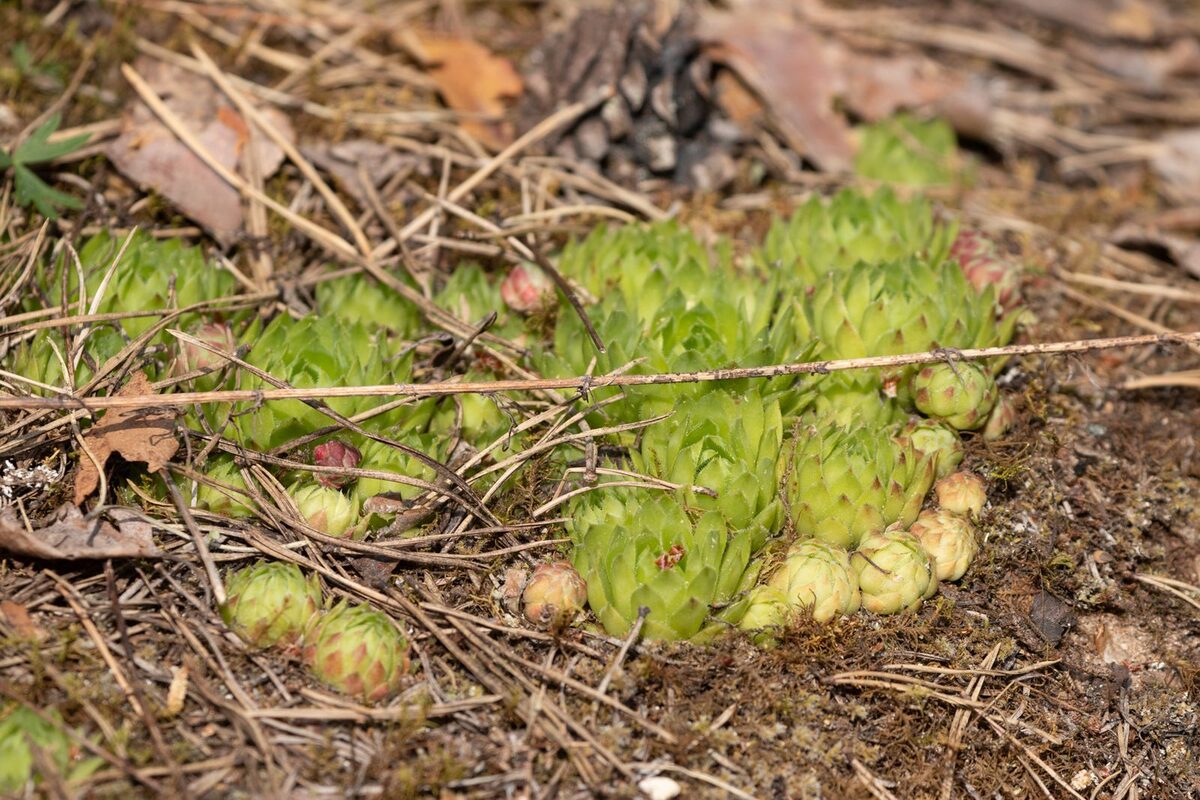
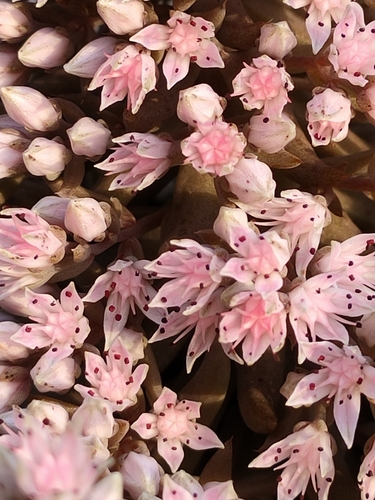
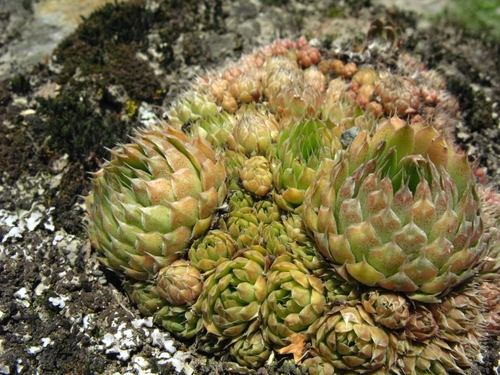
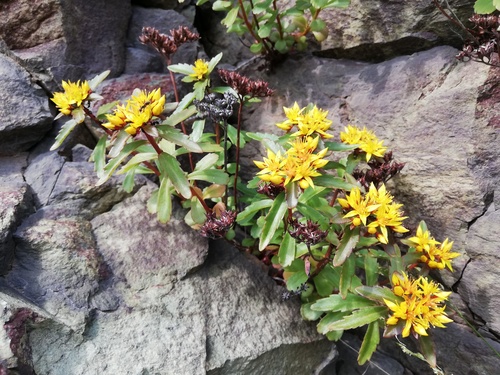
A small succulent plant. It grows 5-10 cm high and spreads 30-60 cm wide. It keeps growing from year to year. It forms mats of fine stems. The leaves are small, triangle shaped and light green. They overlap. They often develop a red tint in the sun. The flowers are small and yellow in heads.
Edible Uses
The leaves can be eaten raw or cooked, and are rich in vitamin C, though they have a bitter, acrid taste. This plant is of particular interest as a survival food, since it grows wild in both desert and arctic conditions. Eating large quantities can cause stomach upsets. The best approach is to dry the leaves — though this can be difficult given their fleshy nature — then grind them into a powder to add a peppery, spicy seasoning to food.
Traditional Uses
The leaves have a sharp taste and are used for seasoning. They are dried and ground.
This uses section is brief — help expand it
Medicinal Uses
The herb is astringent, hypotensive, laxative, rubefacient, vermifuge, and vulnerary. Some herbalists consider it a useful medicinal plant, though others avoid it due to the intensity of its internal effects. One of its most reliable uses is as an effective and harmless corn-remover; it can also be used to bring boils to a head, though this may cause some local irritation. The bruised fresh plant can be applied as a poultice to wounds and minor burns, though care should be taken as it may cause blisters or skin irritation. The herb is best used fresh, as it is difficult to dry, and can be harvested throughout spring and summer. A homeopathic remedy is made from the plant for use in treating piles and anal irritations.
Known Hazards
Poisonous? The sap can irritate the skin of some people. Other reports suggest that no members of this genus are poisonous. The flowers are yellow which suggests that in quantity the leaves can cause stomach upsets.
Distribution
It is a temperate plant. It does best in sandy, rocky and well-drained soil. It needs an open, sunny position. It is resistant to frost and drought. In Argentina it grows from sea level to 1,000 m above sea level. It suits hardiness zones 5-10. Kyneton Botanical Gardens.
Where It Grows
Africa, Argentina, Australia, Balkans, Bosnia, Britain, Belgium, Caledonia, Central America, Chile, Eurasia, Europe*, Falklands, Finland, France, Greece, Italy, Luxembourg, Mediterranean, Mexico, North Africa, North America, Norway, Scandinavia, South America, Spain, Tasmania, Turkey, Türkiye, Ukraine, USA,
Cultivation
A very easily grown plant, it succeeds in most soils but prefers a sunny position in a fertile well-drained soil. Established plants are drought tolerant. Grows well on walls. Plants can be very aggressive and invasive, spreading freely at the roots. If clearing the plant from an area it is quite important to try and remove every part of the plant since even a small part of the stem, if left in the ground, can form roots and develop into a new plant. All members of this genus are said to have edible leaves, though those species, such as this one, that have yellow flowers can cause stomach upsets if they are eaten in quantity. Plants in this genus seem to be immune to the predations of rabbits.
Propagation
Surface sow seed in spring in well-drained soil in a sunny greenhouse position, keeping the soil moist. Alternatively, sow in autumn in a cold frame — some seed germinates immediately, the rest in spring. Prick out seedlings into individual pots when large enough. Plant out during summer if growth is sufficient; otherwise overwinter in a cold frame or greenhouse and plant out in early summer the following year. Division is straightforward at almost any point during the growing season, though spring or early summer is best. Large divisions can go straight into permanent positions; smaller ones are best potted up and grown on in a lightly shaded cold frame until well established.
Other Uses
The plant spreads aggressively and works well as ground cover in sunny positions among plants tall enough not to be overrun by it. Strong-growing bulbs such as lilies can grow successfully through it.
Notes
There are about 400 Sedum species.
Also Known As
Biting stonecrop, Ditch-stonecrop, Jenny-stonecrop, Wall pepper, Zuti zednjak
References (13)
- Blamey, M and Grey-Wilson, C., 2005, Wild flowers of the Mediterranean. A & C Black London. p 72
- Bremness, L., 1994, Herbs. Collins Eyewitness Handbooks. Harper Collins. p 216
- Cundall, P., (ed.), 2004, Gardening Australia: flora: the gardener's bible. ABC Books. p 1328
- Facciola, S., 1998, Cornucopia 2: a Source Book of Edible Plants. Kampong Publications, p 83
- Hibbert, M., 2002, The Aussie Plant Finder 2002, Florilegium. p 289
Show all 13 references Hide references
- Kermath, B. M., et al, 2014, Food Plants in the Americas: A survey of the domesticated, cultivated and wild plants used for Human food in North, Central and South America and the Caribbean. On line draft. p 793
- Kiple, K.F. & Ornelas, K.C., (eds), 2000, The Cambridge World History of Food. CUP p 1858
- Morley, B.D., & Toelken, H.R., (Eds), 1983, Flowering Plants in Australia. Rigby. p 142
- Plants for a Future database, The Field, Penpol, Lostwithiel, Cornwall, PL22 0NG, UK. http://www.scs.leeds.ac.uk/pfaf/
- Redzic, S. J., 2006, Wild Edible Plants and their Traditional Use in the Human Nutrition in Bosnia-Herzegovina. Ecology of Food and Nutrition, 45:189-232
- Sp. pl. 1:432. 1753
- Tasmanian Herbarium Vascular Plants list p 23
- Upson, R., & Lewis R., 2014, Updated Vascular Plant Checklist and Atlas for the Falkland Islands. Falklands Conservation and Kew.