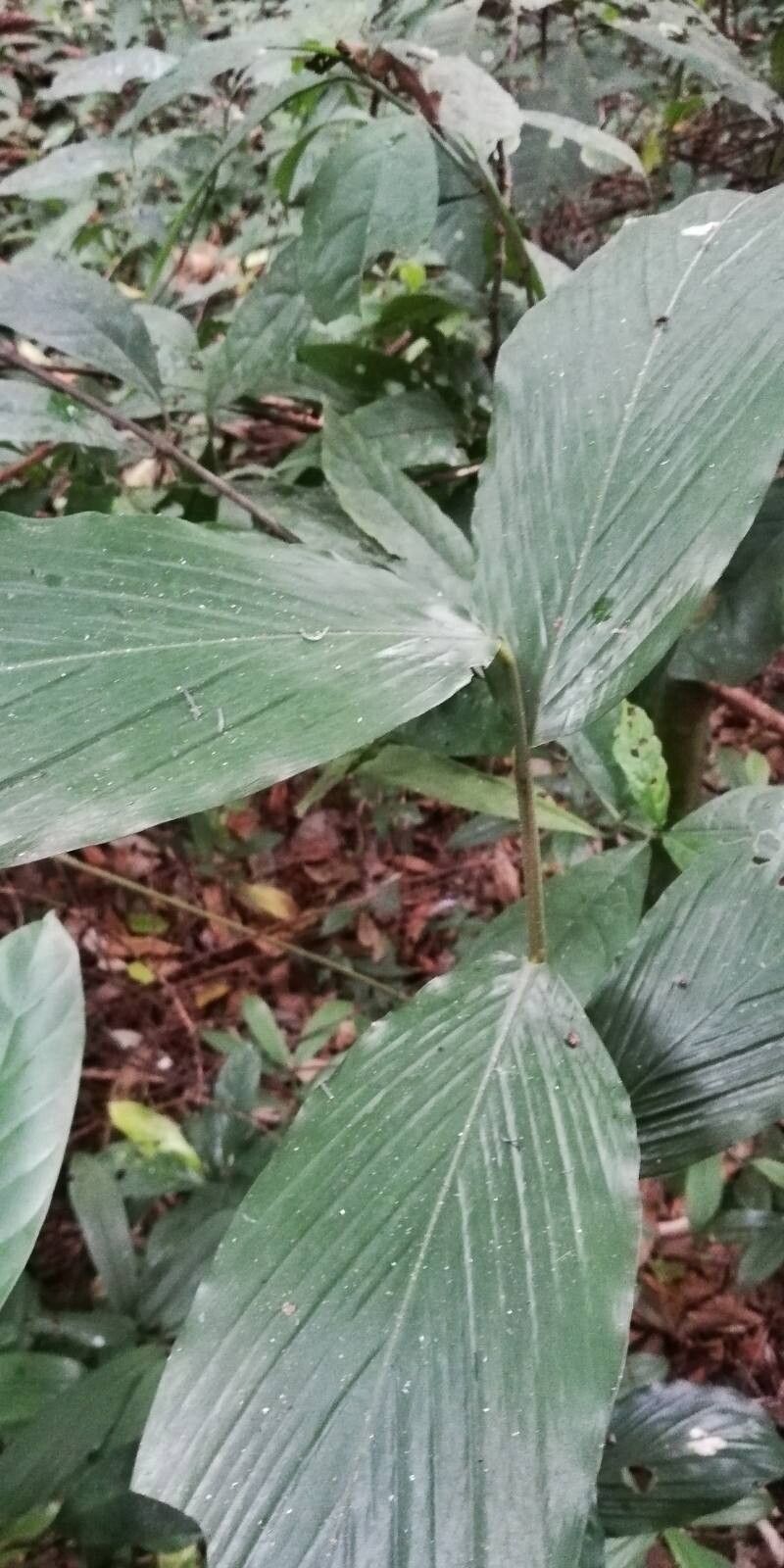
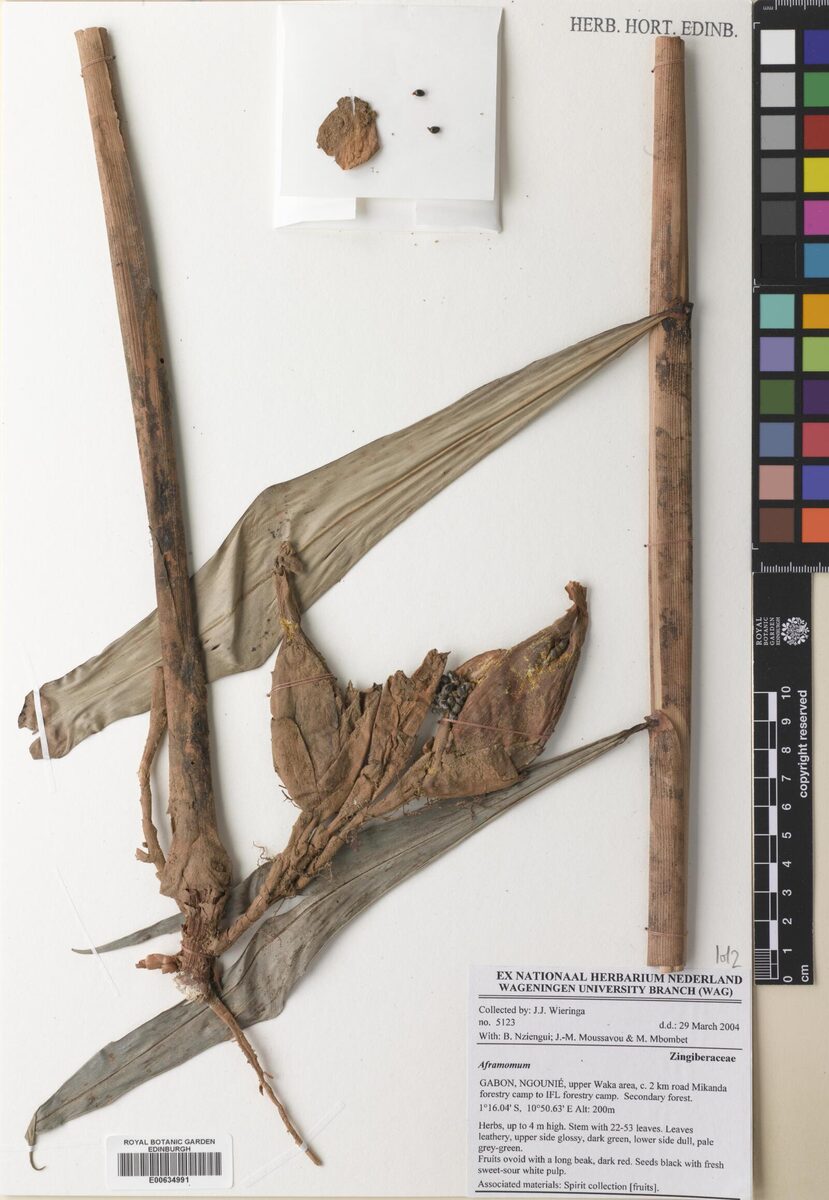
Renealmia alpinia
(Rottb.) Maas
Cumpia, Combia
iNaturalist· cc-by-nc-sa
(c) Mauricio Mercadante, some rights reserved (CC BY-NC-SA)
iNaturalist· cc-by-nc
(c) Rhilary, some rights reserved (CC BY-NC), uploaded by Rhilary
iNaturalist· cc-by-nc
(c) Clayton Bownds, some rights reserved (CC BY-NC), uploaded by Clayton Bownds
Summary
Source: WikipediaRenealmia alpinia is a flowering plant species native to the Americas, where it grows from southern Mexico through much of South America, though not in the Southern Cone. It can also be found on several Caribbean islands. In Quechua it is called misk'i p'anqa (misk'i sweet; honey, p'anqa bract, "sweet bract" or "honey bract"). The name alludes to R. alpinia's value as a culinary herb, especially for flavoring fish. Among Spanish-speakers this species is known as jenjibre-de-jardin ("garden ginger"). Both jenjibre-de-jardin and ginger (Zingiber officinale) are in the family Zingiberaceae. Renealmia alpinia is commonly known as mardi gras in Trinidad, where hunters administer it either orally or topically to their hunting dogs to treat a variety of conditions, from sprains to snakebite. In Suriname it's known as masoesa.
Description
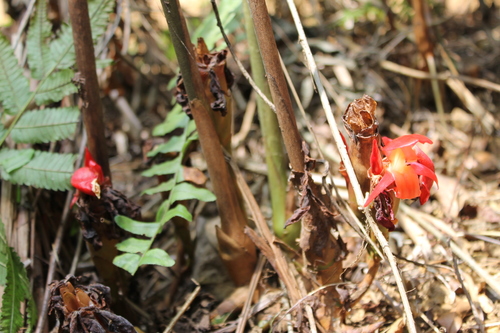
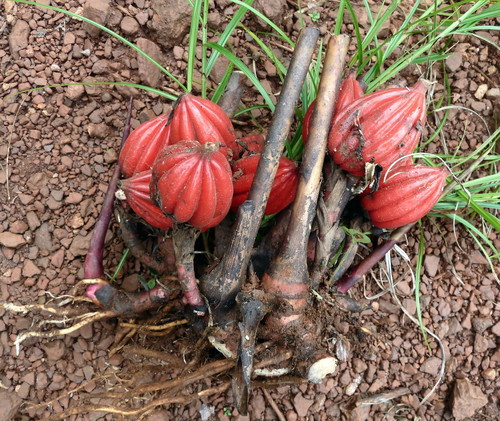
A robust ginger family plant. It keeps growing from year to year. It has a creeping rhizome. The leaves are 90 cm long. The flowers have white, pink or red bracts around them. The fruit are red capsules which mature to black. The seeds are brownish. There are orange yellow fibres and a fatty substance around the seeds. This is used to colour food and flavour rice.
Edible Uses
The fatty substance around the seeds is used to colour and flavour rice. The fruit fibres serve as flavouring, and the seeds are eaten fresh or mixed with beans. The leaves are used to wrap food and are also sold in local markets.
Traditional Uses
The fatty substance around the seeds is used to colour food and flavour rice. They are also eaten fresh or mixed with beans. The leaves are used to wrap food.
Medicinal Uses
Not mentioned in provided data.
Known Hazards
Not mentioned in provided data.
Distribution
A tropical plant. In the Cairns Botanical Gardens. It suits hardiness zones 10-12.
Where It Grows
Amazon, Andes, Australia, Belize, Bolivia, Brazil, Caribbean, Central America, Colombia, Costa Rica, Dominica, Ecuador, El Salvador, French Guiana, Grenada, Guadeloupe, Guatemala, Guianas, Guyana, Honduras, Leeward Is., Martinique, Mexico, Nicaragua, North America, Panama, Peru, Puerto Rico, South America, St. Kitts and Nevis, Suriname, Trinidad and Tobago, Venezuela, West Indies,
Cultivation
Plants can be grown from seed or by division.
Other Uses
The ripe fruits produce a purple dye that is used for dying fibres of plants species such as Astrocaryum that are used in weaving. The dye from the fruits is used as ink for writing and for skin tattoos. A yellow-orange dye is obtained from the root. A decoction of the leaves is used to wash the hair in order to remove dandruff.
Other Information
It is sold in local markets.
Notes
There are 70-75 Renealmia species. There are 55 in tropical America.
Synonyms
Also Known As
Assafroa, Big warakaba food, Ciruelo, Gua, Ink bush, Jenjibre-de-jardin, Konosa, Koruati, Kumpia, Matandrea, Mishquipanga, Mowo, Murushi, Murusi, Sarandango, Ucuisi, Urki shuwanku, Xquijit
References (20)
- Acta Bot. Neerl. 24:474. 1976
- Arellanes, Y., et al, 2013, Influence of traditional markets on plant management in the Tehuacan Valley. Journal of Ethnobiology and Ethnomedicine 9:38
- Bennett, B. C., 1990, Useful Plants of Amazonian Ecuador. US Agency for International Development. Fifth Progress Report. New York Botanical Gardens. p 40
- Caballero-Serrano, V., et al, 2019, Traditional ecological knowledge and medicinal plant diversity in Ecuadorian Amazon home gardens. Global Ecology and Conservation 17 (2019) e00524 p 14
- Creed-kanashiro, H., et al, Traditional food system of an Awajun community in Peru. Indigenous Peoples' food systems Chp. 4
Show all 20 references Hide references
- Cundall, P., (ed.), 2004, Gardening Australia: flora: the gardener's bible. ABC Books. p 1137
- Duchelle, A. E., 2007, Observations on Natural Resource use and Conservation by the Shuar In Ecuador's Cordillera del Condor. Ethnobotany Research & Applications 5:005-023
- Garcia-Serrano, C. R., & Del Monte, J. P., 2004, The Use of Tropical Forest (Agroecosystems and wild Plant harvesting) as a Source of Food in the Bribri and Cabecar Cultures in the Caribbean Coast of Costa Rica. Economic Botany 58(1) pp 58-71
- Kermath, B. M., et al, 2014, Food Plants in the Americas: A survey of the domesticated, cultivated and wild plants used for Human food in North, Central and South America and the Caribbean. On line draft. p 739
- Kuhnlein, H. V., et al, 2009, Indigenous Peoples' food systems. FAO Rome p 83
- Lentz, D. L., 1993, Medicinal and Other Economic Plants of the Paya of Honduras. Economic Botany, Vol. 47, No. 4, pp. 358-370
- Lopez-Diago, D. & Garcia, N., 2021, Wild edible fruits of Colombia. Biota ColomBiana 22 (2) p 54
- Maas, P.J. M., Non-Timber Forest Products of the North-West District of Guyana Part 2. The 85 most important NTFP species. p 198
- Piedra-Malagón, E. M., et al, 2022, Edible native plants of the Gulf of Mexico Province. Biodiversity Data Journal 10: e80565 p 32
- Roa, J. A. G. & Boada, D. S. G., 2018, Fundación para el Fortalecimiento de la Fruticultura y Plantas Alimenticias no Convencionales en Colombia.
- Segura, S., et al, 2018, The edible fruit species in Mexico. Genet Resour Crop Evol (2018) 65:1767–1793
- Torre, de la, L., et al, 2008, Enciclopedia de las Plantas Útiles del Ecuador. Herbario QCA. Pontificia Universidad Católica del Ecuador. p 623
- Van den Eynden, V., et al, 2003, Wild Foods from South Ecuador. Economic Botany 57(4): 576-603
- Wiersema, J. H. & Leon, B., 2013, World Economic Plants. A Standard Reference CRC Press. 2nd Ed. p 581
- World Checklist of Useful Plant Species 2020. Royal Botanic Gardens, Kew