Curcuma angustifolia
Roxb.
Indian arrowroot, East Indian arrowroot
iNaturalist· cc-by-sa
(c) Jeevan Jose , some rights reserved (CC BY-SA)
iNaturalist· cc-by-nc
(c) sreenivasan, some rights reserved (CC BY-NC)
Summary
Source: WikipediaCurcuma angustifolia is one of over 80 species belonging to the genus Curcuma , in the family Zingiberaceae. This species is native to the Indian subcontinent and is more commonly known as East Indian arrowroot or narrow-leaved turmeric in English, and is called "yaipan" in Manipuri, "Aipah" in Thadou-Kuki, "tikhur" in Bhojpuri, and "Koova" കൂവ in Malayalam/Tamil, and is called "Kutupah" in Poula. In the Eastern hemisphere, the plant plays an integral role in many cultures.
Description
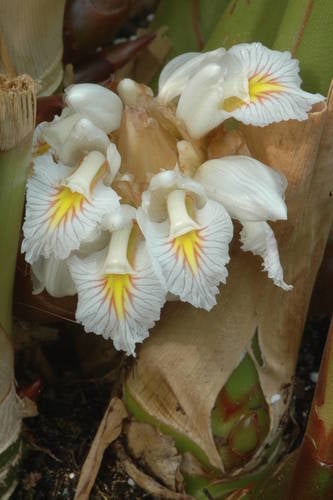
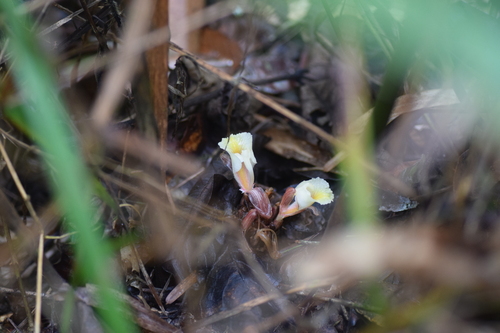
A ginger family herb. It has a rhizome. This can be 1.5 m long. It keeps growing from year to year. The plant grows about 1 m tall. The leaves are sword shaped and opposite. They are 36-37 cm long by 8-10 cm wide. The flowers are produced before the leaves. The flowers are in groups of 3 or 4 in a spike. They are funnel shaped and yellow or pink. Boat shaped bracts enclose the flower.
Edible Uses
This species of plant has nutritional value as a source of starch for Indian foods. The rhizomes of C. angustifolia are typically ground into a flour which can then be mixed together with milk or water to form a nutritious meal. This flour was a common commercial crop in the 1800s. Most importantly, the West has begun to notice its potential as a source of nutrition and as a non-irritating diet for patients with specific chronic ailments, recovering from fevers, or experiencing irritations of the gastrointestinal tract, the lungs, or the excretory system. A drink including C. angustifolia as an ingredient is also used as a replacement of breast-milk, or as a nutritional supplement for babies a short while after weaning. It is found as a primary ingredient in cakes, fruit preserves, biscuits, and puddings.
Traditional Uses
The tubers/rhizomes yield starch. The arrowroot has a yellow tinge and does not thicken in boiling water. It is used in cakes and preserves. The rhizome is crushed and washed in water then allowed to evaporate and sun-dried before using in cooking. The flowering shoots are cooked and eaten as a vegetable.
Medicinal Uses
The rhizomes of C. angustifolia are used to soothe coughs and as such is used to treat bronchitis. Essential oils from C. angustifolia have been extracted and are used in antifungal medications. Compounds in the leaves of this plant have also been shown to have potential as antibacterial agents.
Distribution
A tropical and subtropical plant. It grows in rainforests and open gaps in dipterocarp forest. It grows up to 1,200 m above sea level.
Where It Grows
Asia, China, Himalayas, India, Indochina, Indonesia, Laos, Myanmar, Nepal, Northeastern India, Pakistan, SE Asia, Thailand, Vietnam,
Cultivation
It can be grown by sections of the rhizome. It can also be grown from seeds.
Propagation
Seed - best sown as soon as it is ripe. Germinates best at temperatures around 20°c. Division of the rhizome when the plant is dormant.
Other Information
It is sold in local markets. It is cultivated.
Notes
There are about 50 Curcuma species. They are mostly in SE Asia.
Nutrition
| Part | Moisture | kJ | kcal | Protein | Vit A | Vit C | Iron | Zinc |
|---|---|---|---|---|---|---|---|---|
| Tuber | — | — | 2.5 | — | — | — | — | — |
Also Known As
Adalut, Ai chhia, Ararut gaddalu, Ararut-kizhangu, Besar, Keturi halodhi, Kodziiapa, Koova, Kunyit india, Kuturapa, Paala gunta, Palagunda, Palu kanda, Palua, Paro, Tavakhira, Tavakila, Tavakshira, Teekhur, Tikari, Tikhur, Tikor, Travancore starch, Yaipal, Yaipan