Curcuma australasica
Hook.f.
Cape York lily, Native Ginger, Native Turmeric, Aussie plume
iNaturalist· cc-by-nc-nd
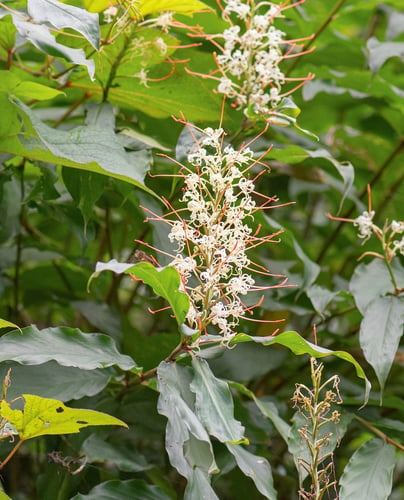
(c) Zig Madycki, some rights reserved (CC BY-NC-ND), uploaded by Zig Madycki
iNaturalist· cc-by
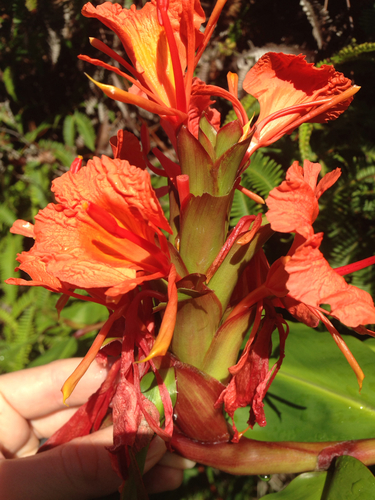
(c) Thomas Mesaglio, some rights reserved (CC BY)
Summary
Source: WikipediaCurcuma australasica, the native turmeric, wild turmeric, or Cape York lily, is a rhizomatous herbaceous perennial plant of the Zingiberaceae or ginger family.
Description
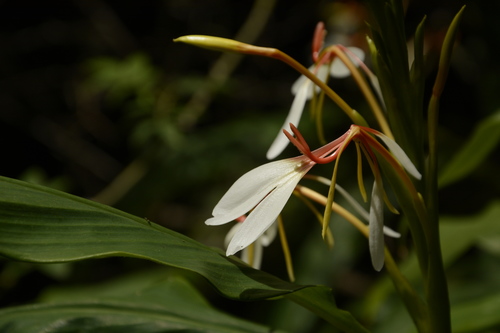
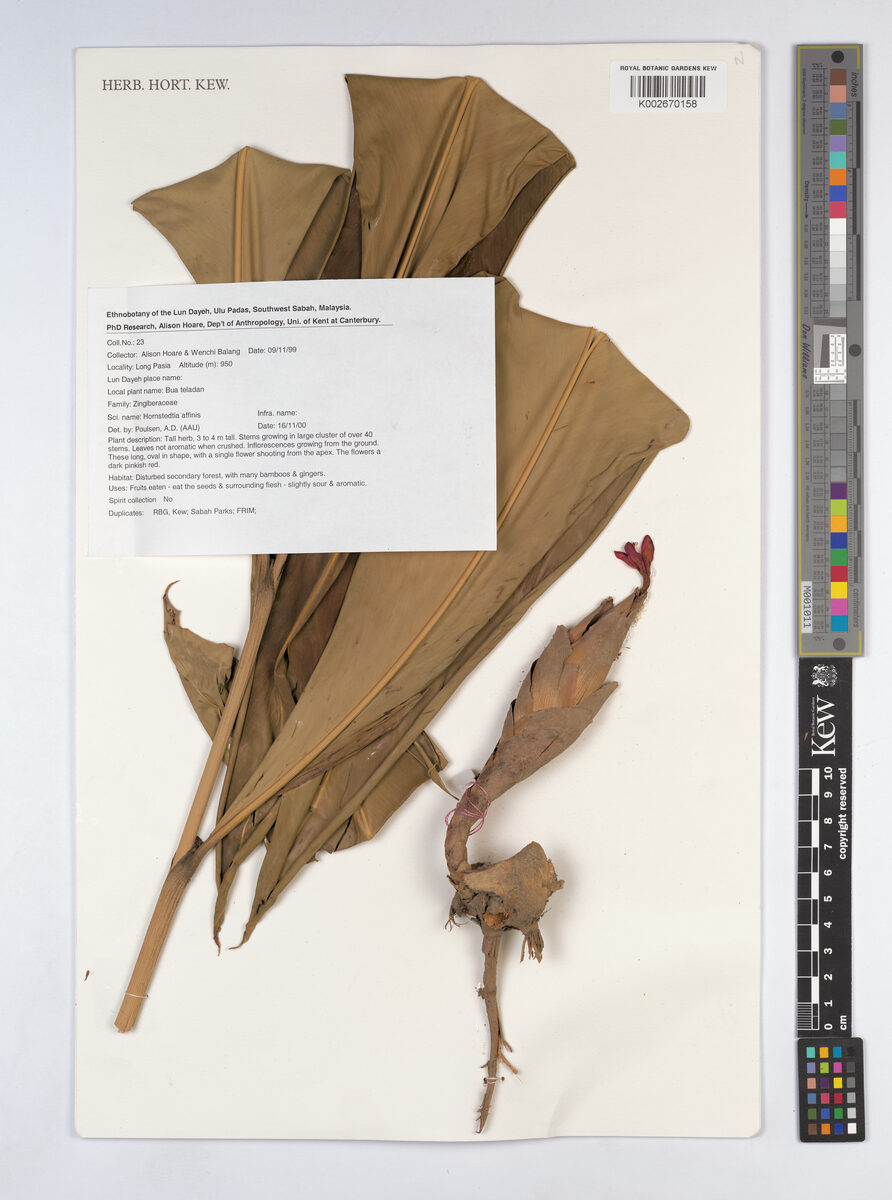
An evergreen ginger family herb. It re-grows each year from the underground fleshy rootstock. It grows to 0.5 m tall and spreads to 0.5 m wide. The stems are erect and flowering. The leaves are light green and large and like a spade. They are 25-70 cm long by 9-15 cm wide. They point upwards and are pleated and narrow towards the base. The leaves are thin textured. The stalk is fleshy and 20 cm long. The flowers are yellow with large bright pink bracts. They occur in clusters of 3-5 in the base of each bract. The lower flowers are green and fertile while the upper ones are pink and sterile. These flowers are in spikes 12-15 cm long. The fruit is a thin walled 3 celled capsule. The seeds are enclosed in papery bracts.
Edible Uses
The rhizome and roots are traditionally roasted and eaten.
Traditional Uses
The roots are roasted and eaten.
This uses section is brief — help expand it
Medicinal Uses
The plant has been used as a contraceptive.
Distribution
A tropical plant. It prefers well drained soil in a protected heavily shaded position. They can grow in the sun. It needs a wet summer and a dry winter. It is drought and frost tender. It grows naturally in sandstone country on the fringe of monsoon forests near streams. It needs an alkaline pH. In the Cairns Botanical Gardens. It suits hardiness zones 8-12. Coffs Harbour Botanical Gardens.
Where It Grows
Australia*, Britain, Cuba, Europe, Indonesia, Micronesia, Pacific, Papua New Guinea, PNG, SE Asia, West Indies, Yap,
Cultivation
Plants are grown by division of the clump. They can also be grown from seed.
Propagation
Seed - best sown as soon as it is ripe. Germinates best at temperatures around 20°c. Division of the rhizome when the plant is dormant.
Production
In Australia, plants flower in November to April and fruit in April.
Notes
The plant has been used as a contraceptive. There are about 50 Curcuma species. They are mostly in SE Asia.
Nutrition
| Part | Moisture | kJ | kcal | Protein | Vit A | Vit C | Iron | Zinc |
|---|---|---|---|---|---|---|---|---|
| Tuber | 80.6 | 271 | 65 | 1 | — | — | 2.1 | 3.8 |
Also Known As
Anngarranjngarranj, Curcuma
References (18)
- Beasley, J., 2011, Plants of Tropical North Queensland - the compact guide. Footloose publications. p 77
- Bodkin, F., 1991, Encyclopedia Botanica. Cornstalk publishing, p 308
- Brock, J., 1993, Native Plants of Northern Australia, Reed. p 131
- Cherikoff V. & Isaacs, J., The Bush Food Handbook. How to gather, grow, process and cook Australian Wild Foods. Ti Tree Press, Australia p 151, 198
- Cribb, A.B. & J.W., 1976, Wild Food in Australia, Fontana. p 148
Show all 18 references Hide references
- Elliot, W.R., & Jones, D.L., 1984, Encyclopedia of Australian Plants suitable for cultivation. Vol 3. Lothian. p 135
- Garde, M., et al, 2003, A Preliminary List of Kundedjnjenghmi Plant Names. Northern Land Council. (Arnhem Land, Australia)
- Hibbert, M., 2002, The Aussie Plant Finder 2002, Florilegium. p 78
- Jones D, L, 1986, Ornamental Rainforest Plants in Australia, Reed Books, p 267
- Lazarides, M. & Hince, B., 1993, Handbook of Economic Plants of Australia, CSIRO. p 70
- Lim, T. K., 2015, Edible Medicinal and Non Medicinal Plants. Volume 9, Modified Stems, Roots, Bulbs. Springer p 30
- Lim, T. K., 2016, Edible Medicinal and Non-Medicinal Plants: Volume 12 Modified Stems, Roots p 6
- Llamas, K.A., 2003, Tropical Flowering Plants. Timber Press. p 365
- Low, T., 1992, Bush Tucker. Australia’s Wild Food Harvest. Angus & Robertson. p 83
- Morley, B.D., & Toelken, H.R., (Eds), 1983, Flowering Plants in Australia. Rigby. p 353
- Nicholson, N & H., 1996, Australian Rainforest Plants 2, Terania Rainforest Publishing. NSW. p 21
- Scarth-Johnson, V., 2000, National Treasures. Flowering Plants of Cooktown and Northern Australia. Vera Scarth-Johnson Gallery Association. Cooktown, Australia. p 169
- Townsend, K., 1994, Across the Top. Gardening with Australian Plants in the tropics. Society for Growing Australian Plants, Townsville Branch Inc. p 150