Curcuma amada
Roxb.
Mango Ginger
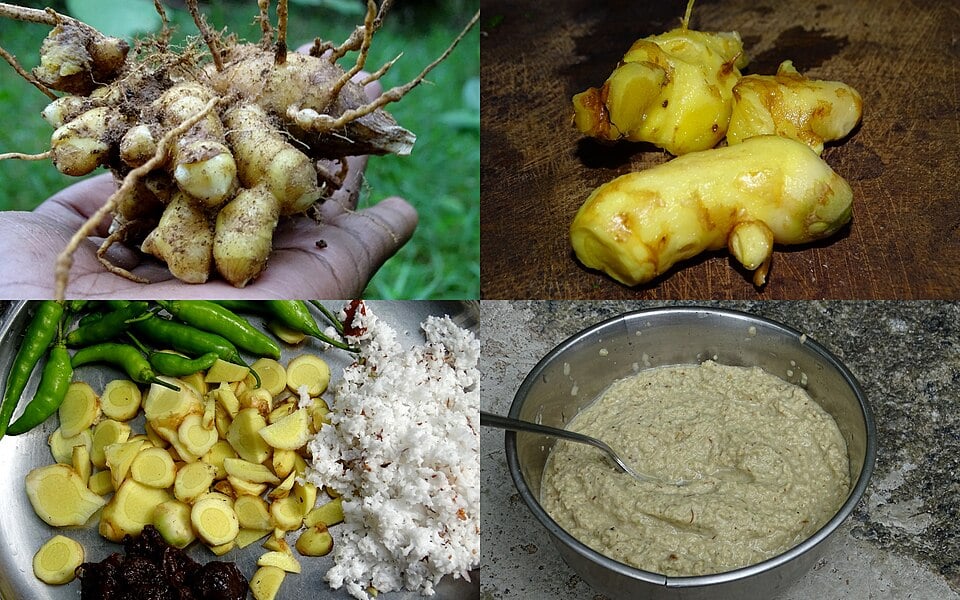
iNaturalist· cc-by-nc
(c) Moss Natthaphong, some rights reserved (CC BY-NC), uploaded by Moss Natthaphong
iNaturalist· cc-by-nc
(c) Ravi Naidu, some rights reserved (CC BY-NC)
Summary
Source: WikipediaCurcuma amada, or mango ginger is a plant of the ginger family Zingiberaceae and is closely related to turmeric (Curcuma longa). The rhizomes are very similar to common ginger but lack its pungency, and instead have a raw mango flavour.
Description
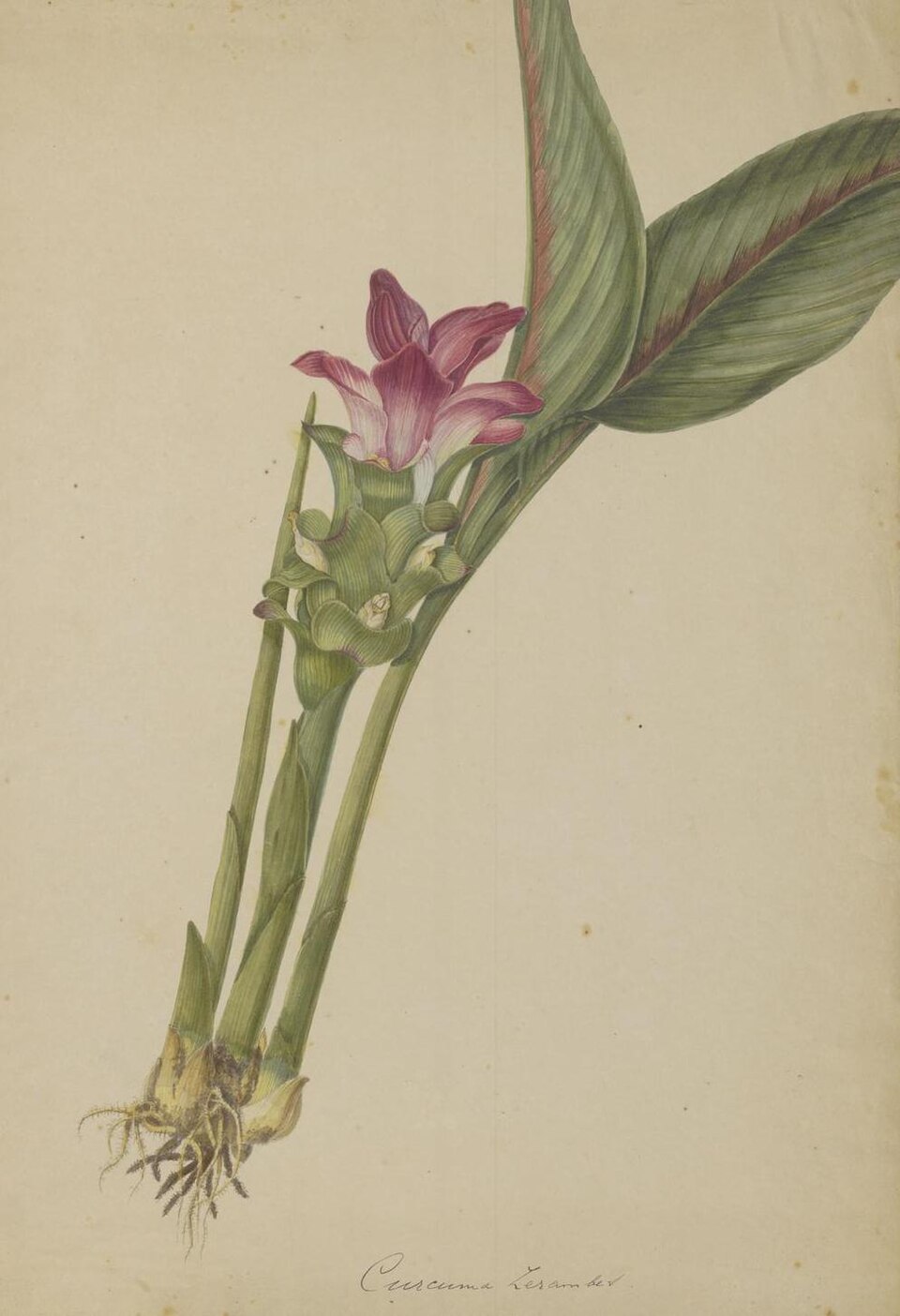
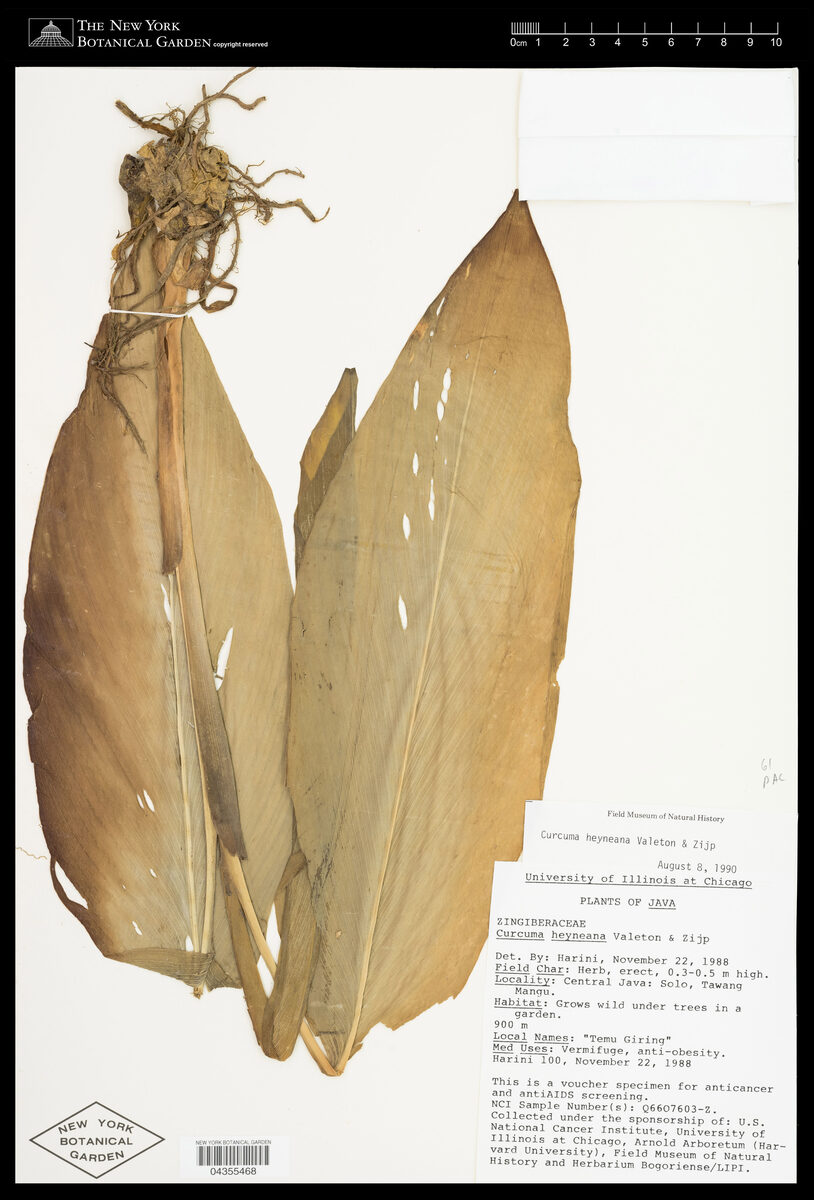
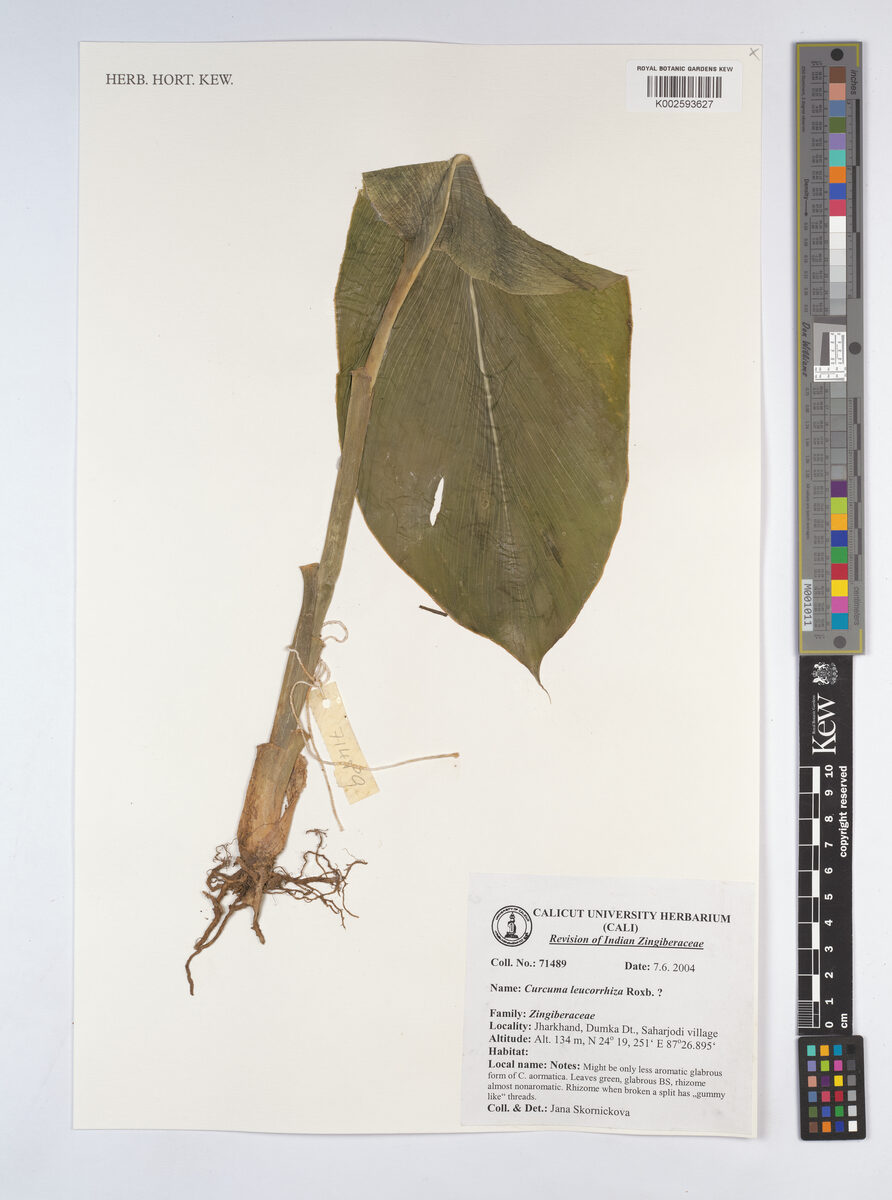
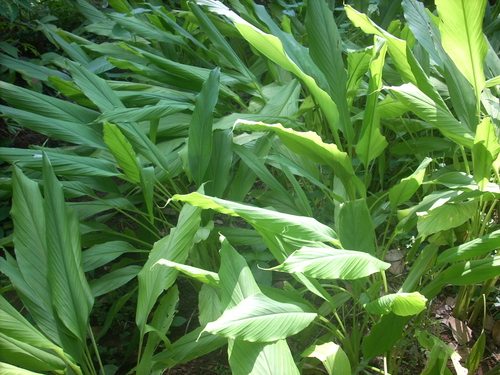
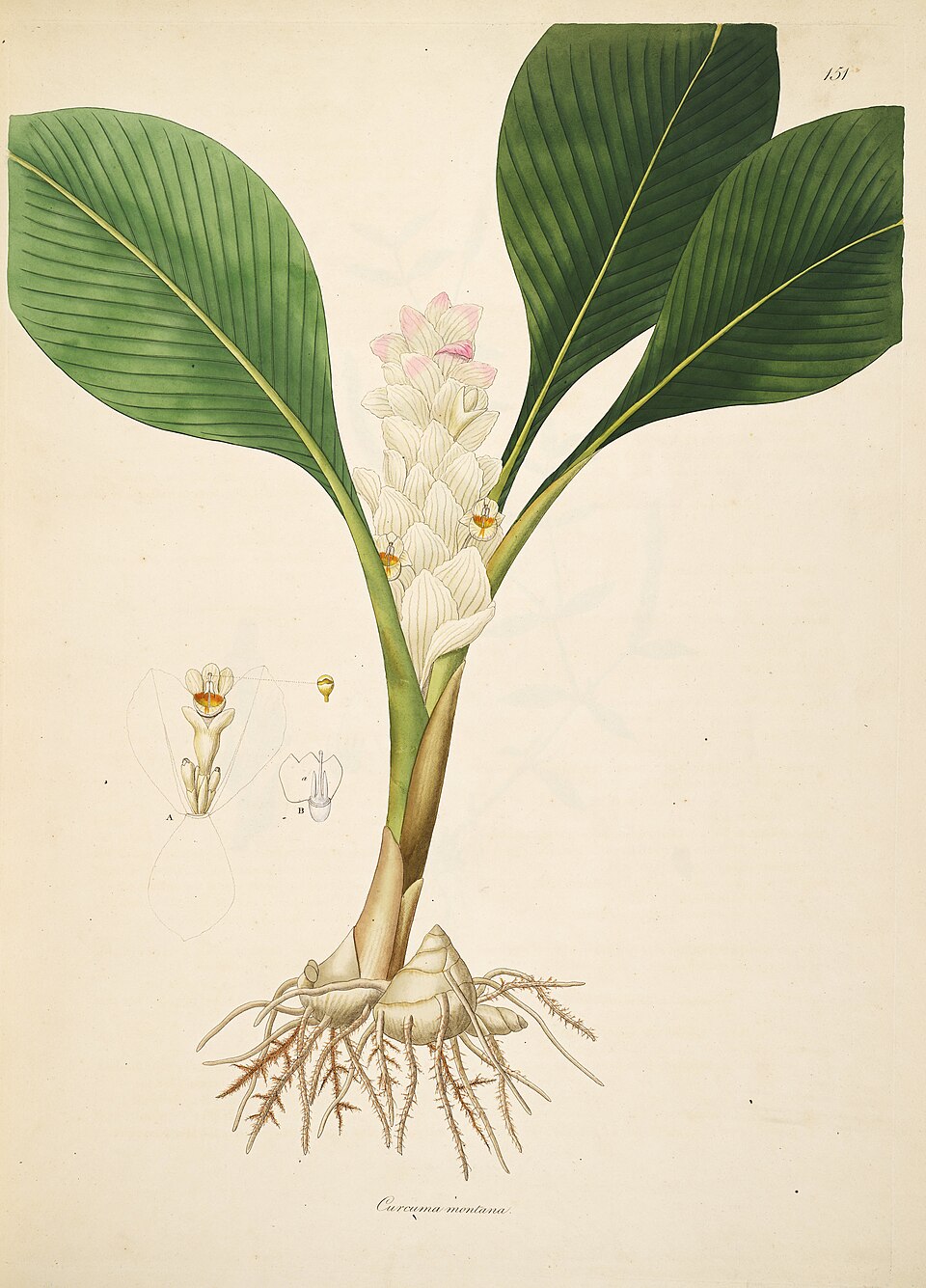
A ginger family herb. It has a creeping tuberous rhizome and the plant keeps growing from year to year. The rhizome is 4-5 cm by 3-4 cm. It is yellow inside. The root has the smell of a green mango. The tubers are 5-10 cm long by 2-3 cm wide. The leafy stem is 30-35 cm tall. There are 4-6 leaves. The leaf stalk is 5-10 cm long and the lower leaves are smaller. They are 18 cm long by 8 cm wide. The upper leaves are 45-60 cm long by 14-15 cm wide. The lower surface is hairy. The leafy aerial section dies back during winter. The flower stalk is 20-22 cm long and the spike is 12-18 cm long. The flowers are in a spike. They are yellowish-blue. The fruit is a capsule.
Edible Uses
Mango-ginger is a popular spice and vegetable due to its rich flavor, which is described as sweet with subtle earthy floral and pepper overtones and similar to that of raw mango. It is used as an addition to salads and stir fries, in South Asian and Southeast Asian as well as Far East Asian cuisines. Mango ginger are used in making pickles in south India and chutneys in north India. It is served as chutney in community feasts in Nepal's southern plains. Mango ginger and elephant foot yam pickle is popular in Nepal's southern plains.
Traditional Uses
The rhizomes are used in pickles. They are also used raw in salads and in chutneys. They are also eaten as a vegetable.
This uses section is brief — help expand it
Medicinal Uses
The root contains an essential oil and pungent principles. It strengthens the stomach and digestive system, is carminative and expectorant. It is used internally to treat a wide range of digestive problems such as wind, stomach pain, bad breath, loss of appetite, hiccups, indigestion, colic and constipation. It is also used internally in treating coughs and other chest complaints such as bronchitis. The mashed or grated root is applied externally to the skin in the treatment of ulcers, bruises, wounds and sprains.
Distribution
A tropical plant.
Where It Grows
Asia, Bangladesh, India, Indonesia, Myanmar, Northeastern India, Pakistan, SE Asia, Sri Lanka, Thailand,
Cultivation
Plants are grown from the rhizomes.
Propagation
Seed - best sown as soon as it is ripe. Germinates best at temperatures around 20°c. Division of the rhizome when the plant is dormant.
Other Uses
The aromatic root is used in perfumery.
Other Information
It is widely cultivated in India.
Notes
There are about 50-65 Curcuma species. They are mostly in SE Asia.
Synonyms
Also Known As
Aam haldi, Am haladhi, Am haldi, Am-ada, Amada, Amba ada, Amba haladi, Bana haldi, Ba-thae-kaw, Karpura-haridra, Mamidiallam, Mangai inji, Palo, Thaiju-hajing, Tharmit tharve, Thayetkin, Thermit therve
References (25)
- Ambasta, S.P. (Ed.), 2000, The Useful Plants of India. CSIR India. p 151
- Arora, R. K., 2014, Diversity in Underutilized Plant Species - An Asia-Pacific Perspective. Bioversity International. p 25, p102
- Asiat. Res. 11:341. 1810
- Banerjee, A., et al, 2013, Ethnobotanical Documentation of Some Wild Edible Plants in Bankura District, West Bengal, India. The Journal of Ethnobiology and Traditional Medicine. Photon 120 (2013) 585-590
- e-monocot.org/taxon/urn:kew.org:wcs:taxon:235188
Show all 25 references Hide references
- Kar, A., & Borthakur, S. K., 2008, Wild vegetables of Karbi - Anglong district, Assam, Natural Product Radiance, Vol. 7(5), pp 448-460
- Lim, T. K., 2015, Edible Medicinal and Non Medicinal Plants. Volume 9, Modified Stems, Roots, Bulbs. Springer p 30
- Lim, T. K., 2016, Edible Medicinal and Non-Medicinal Plants: Volume 12 Modified Stems, Roots p 6
- Martin, F.W. & Ruberte, R.M., 1979, Edible Leaves of the Tropics. Antillian College Press, Mayaguez, Puerto Rico. p 225
- Medhi, P., Sarma, A and Borthakur, S. K., 2014, Wild edible plants from the Dima Hasao district of Assam, India. Pleione 8(1): 133-148
- Mishra, M., 2013, Utilization of wild tuberous plants in extreme environmental condition: A Case of Baiga Tribe of Central India. The Journal of Ethnobiology and Traditional Medicine. Photon 118 (2013) 366-372
- Misra, R. C., et al, 2013, Genetic resources of wild tuberous food plants traditionally used in Similipal Biosphere Reserve, Odisha, India. Genetic Resources and Crop Evolution. Vol. 60 No. 2. Springer
- Patiri, B. & Borah, A., 2007, Wild Edible Plants of Assam. Geethaki Publishers. p 141
- Peter, K. V. (Ed.), 2004, Handbook of Herbs and Spices Vol. 2 Woodhead Publishing and CRC Press.
- Purseglove, J.W., 1972, Tropical Crops. Monocotyledons. Longmans p 521
- Seidemann J., 2005, World Spice Plants. Economic Usage, Botany, Taxonomy. Springer. p 126
- Shin, T., et al, 2018, Traditional knowledge of wild edible plants with special emphasis on medicinal uses in Southern Shan State, Myanmar. Journal of Ethnobiology and Ethnomedicine (2018) 14:48
- Singh, H.B., Arora R.K.,1978, Wild edible Plants of India. Indian Council of Agricultural Research, New Delhi. p12
- Teron, R. & Borthakur, S. K., 2016, Edible Medicines: An Exploration of Medicinal Plants in Dietary Practices of Karbi Tribal Population of Assam, Northeast India. In Mondal, N. & Sen, J.(Ed.) Nutrition and Health among tribal populations of India. p 157
- Terra, G.J.A., 1973, Tropical Vegetables. Communication 54e Royal Tropical Institute, Amsterdam, p 42
- USDA, ARS, National Genetic Resources Program. Germplasm Resources Information Network - (GRIN). [Online Database] National Germplasm Resources Laboratory, Beltsville, Maryland. Available: www.ars-grin.gov/cgi-bin/npgs/html/econ.pl (10 April 2000)
- van Wyk, B., 2005, Food Plants of the World. An illustrated guide. Timber press. p 165
- Wiersema, J. H. & Leon, B., 2013, World Economic Plants. A Standard Reference CRC Press. 2nd Ed. p 220
- World Checklist of Useful Plant Species 2020. Royal Botanic Gardens, Kew
- Zeven, A. C. & de West, J. M. J., 1982, Dictionary of cultivated plants and their regions of diversity. Wageningen. p 80