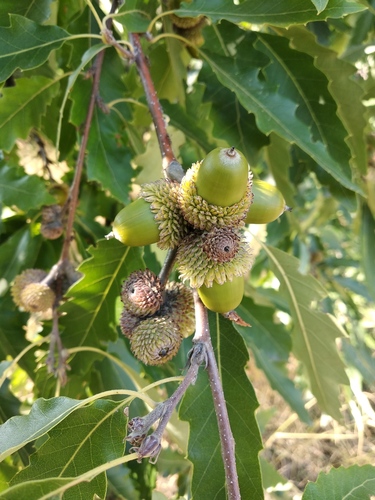
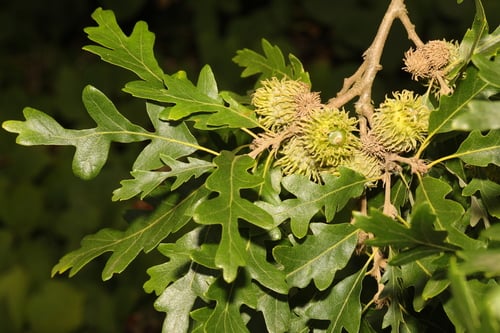
Quercus michauxii
Nutt.
Swamp chestnut oak, Basket oak, Cow oak
iNaturalist· cc-by-nc
(c) charles M allen, some rights reserved (CC BY-NC), uploaded by charles M allen
iNaturalist· cc-by
(c) Jeff Clark, some rights reserved (CC BY), uploaded by Jeff Clark
iNaturalist· cc-by-nc
(c) kommissar, some rights reserved (CC BY-NC), uploaded by kommissar
Summary
Source: WikipediaQuercus michauxii, the swamp chestnut oak, is a species of oak in the white oak section Quercus section Quercus in the beech family. It is native to bottomlands and wetlands in the southeastern and midwestern United States, in coastal states from New Jersey to Texas, inland primarily in the Mississippi–Ohio Valley as far as Oklahoma, Missouri, Illinois, and Indiana.
Description
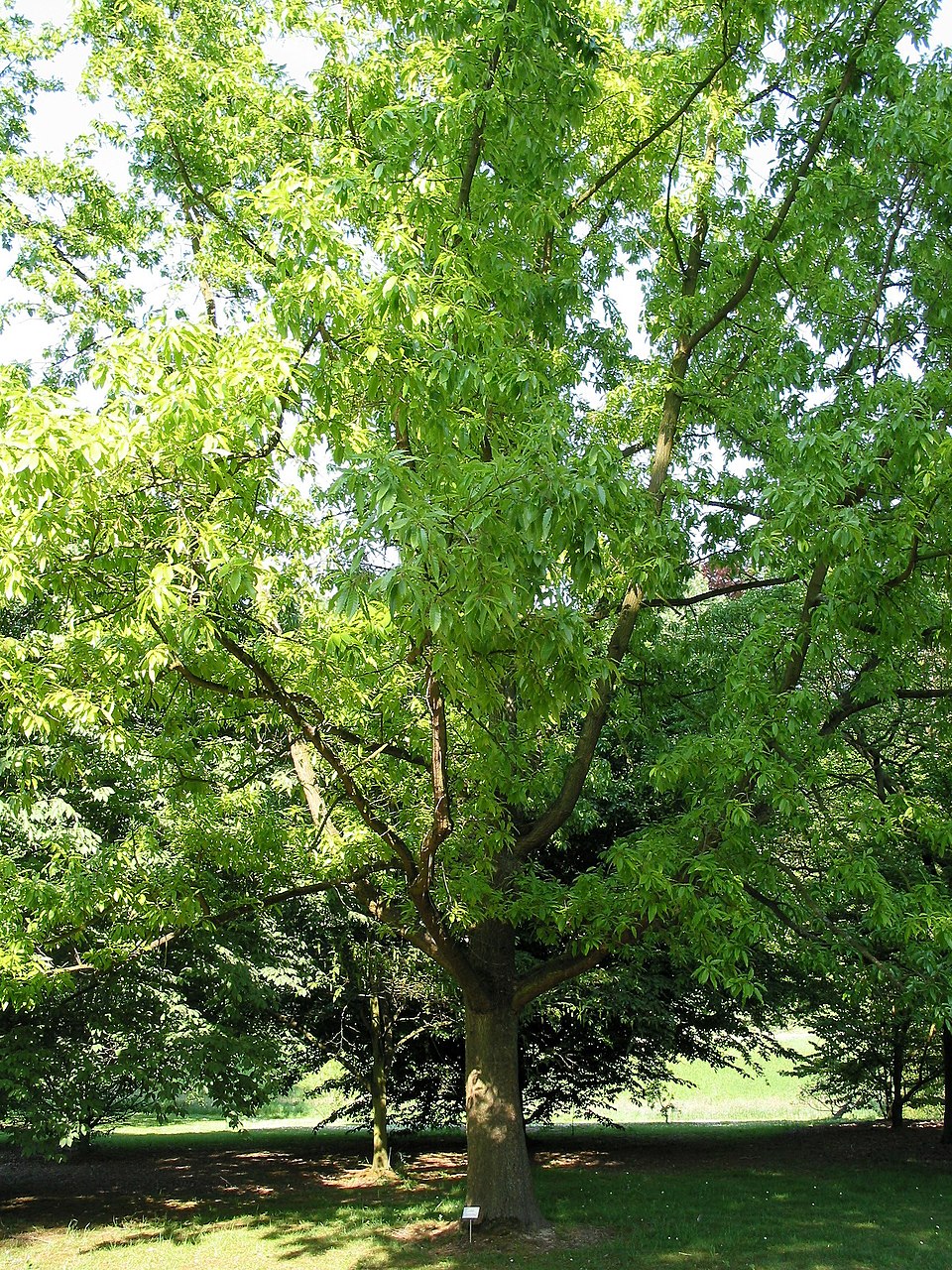
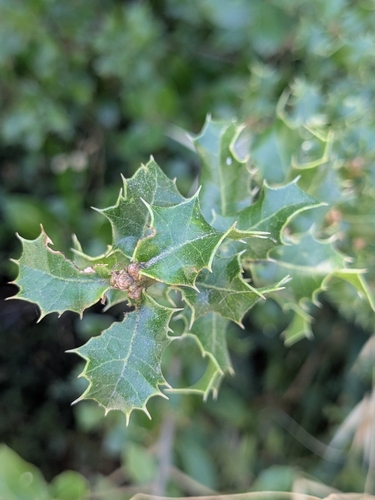
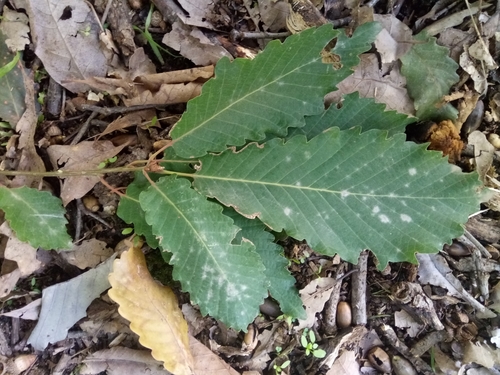
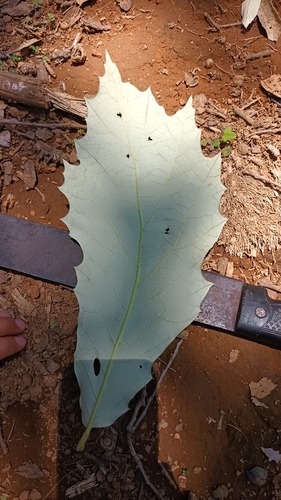
A large tree. The crown is compact and rounded. It grows to 18-24 m high. The trunk is 60-90 cm across. The bark is light grey and cracks into scaly plates. The leaves are 10-23 cm long and 5-14 cm wide. They are oval and broadest above the middle. The edges are wavy and there are 10-14 rounded teeth on each side. They are shiny green above and greyish green underneath with soft hairs. The acorns are large and sweet. They are 2.5-3 cm long and egg shaped. About 1/3 is enclosed in a deep thick cup.
Edible Uses
The seed must be cooked. It is large, reaching up to 35mm long and 30mm wide, though reports differ on flavour — some note bitter tannins while others describe the acorns as sweet and edible. The seed can be roasted, then dried and ground into a powder for use as a thickener in stews or mixed with cereals for bread. Bitter tannins, where present, can be leached out by washing thoroughly in running water, though minerals are also lost. Both whole seeds and ground powder can be leached — whole seeds may take several days or weeks, and a traditional method was to wrap them in a cloth bag and place them in a running stream. Ground powder leaches faster. A taste test confirms when tannins have been sufficiently removed. The traditional preparation method was to bury seeds in boggy ground over winter and dig up the germinating seeds in spring, by which point most astringency would have gone. The roasted seed also serves as a coffee substitute.
Traditional Uses
The acorns are sweet and can be eaten raw without boiling.
This uses section is brief — help expand it
Medicinal Uses
Any galls produced on the tree are strongly astringent and can be used in the treatment of haemorrhages, chronic diarrhoea, and dysentery.
Distribution
It is a temperate plant. It grows in moist sites and well-drained sandy loams. It SE regions of the USA it grows up to 300 m altitude. It suits hardiness zone 6.
Where It Grows
North America, USA,
Cultivation
Prefers a good deep fertile loam which can be on the stiff side. Young plants tolerate reasonable levels of side shade. Tolerates moderate exposure, surviving well but being somewhat stunted. Prefers warmer summers than are usually experienced in Britain, trees often grow poorly in this country and fail to properly ripen their wood resulting in frost damage overwinter. Closely related to Q. prinus. This species is often confused with Q. prinus, Q. prinoides and Q. muehlenbergii. The tree flowers on new growth produced in spring, the seed ripening in its first year. Intolerant of root disturbance, trees should be planted in their permanent positions whilst young. Hybridizes freely with other members of the genus. Plants in this genus are notably resistant to honey fungus.
Propagation
Seed loses viability quickly if allowed to dry out. It can be stored moist and cool over winter, but is best sown as soon as it is ripe in an outdoor seed bed with protection from mice and squirrels. Small quantities can be sown in deep pots in a cold frame. Because plants develop a deep taproot, they should be moved to their permanent positions as soon as possible — seeds sown in situ produce the best trees. Do not leave trees in a nursery bed for more than 2 growing seasons, as they will transplant very poorly.
Other Uses
The tree has been used in restoring degraded bottomland hardwood forests in the southeastern USA. Oak leaves are more or less rich in tannins; a mulch of partially decayed leaves placed around vulnerable plants repels slugs, snails, and grubs, and will in time break down to add humus and nutrients to the soil. Fresh leaves should be used with caution, as they utilize nitrogen in the soil as they decay and can inhibit plant growth. Oak galls, formed by insect larvae feeding within them, are a rich source of tannin once the insect has left, and are also used as a dyestuff and by many cultures to make ink. The bark is also rich in tannins and can be used as a dyestuff and for waterproofing rope. The wood is heavy, hard, very strong, tough, dense, durable, and easy to split, weighing 50lb per cubic foot. It machines well but is subject to checking and warping if not dried properly. It is widely used for flooring, furniture, boxes, barrels, boat-making, and veneer. The wood is also a favoured fuel, burning well and producing a lot of heat.
Notes
There are about 600 Quercus species.
References (6)
- Glowinski, L., 1999, The Complete Book of Fruit Growing in Australia. Lothian. p 136
- Hedrick, U.P., 1919, (Ed.), Sturtevant's edible plants of the world. p 546
- Jackes, D. A., 2007, Edible Forest Gardens
- Little, E.L., 1980, National Audubon Society Field Guide to North American Trees. Alfred A. Knopf. p 398
- Plants for a Future database, The Field, Penpol, Lostwithiel, Cornwall, PL22 0NG, UK. http://www.scs.leeds.ac.uk/pfaf/
Show all 6 references Hide references
- Saunders, C.F., 1948, Edible and Useful Wild Plants. Dover. New York. p 68