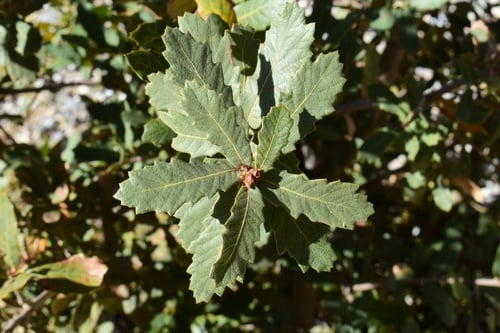
Fagus grandifolia
Ehrh.
American beech, Beech mast
iNaturalist· cc-by-nc
(c) Sara Rall, some rights reserved (CC BY-NC), uploaded by Sara Rall
iNaturalist· cc-by-nc
(c) Oliver Yung, some rights reserved (CC BY-NC)
Summary
Source: WikipediaFagus grandifolia, the American beech or North American beech, is a species of tree growing to 16–35 meters (52–115 feet) tall. It is one of two beech species native to North America, the other occurring in Mexico. It flourished over most of the continent prior to the last ice age, but is now limited to the east. The tree is shade tolerant and found in forests in the final stage of succession. The nuts are eaten by animals and humans. The leaves and inner bark can be prepared as well.
Description
A medium sized tree. It grows to 25 m high. It spreads 10 m wide. The trunk is 100 cm across. It loses its leaves during the year. The leaves are alternate and simple. They are narrowly oval and have teeth along the edge. The tip has a long point and the base is wedge shaped. The upper surface is dark bluish-green and it is paler underneath. The male and female flowers are separate but on the same tree. The male or pollen flowers are in ball like clusters at the end of long branches which hang down. The female or seed flowers are in small clusters of 2-4 in the axils of leaves. The fruit are nuts. They are edible. They usually occur in pairs in bristly red husk. This opens in 4 parts. Each nut is like a sharp 3 sided pyramid. They are 18-22 mm long. They ripen and are shed in autumn. The nuts are edible.
Edible Uses
Young leaves can be eaten raw or cooked as a potherb and have a pleasantly mild flavour, though they toughen quickly — only the youngest should be used. New growth appears during two periods of around 3 weeks each year, one in spring and one in mid-summer. The seed is small but very sweet and nutritious, sold in local markets in parts of Canada and the United States. It is rich in oil and contains up to 22% protein. Raw seed should not be eaten in large quantities as it is believed to cause enteritis. It can be dried and ground into a powder and used with cereal flours in bread, cakes, and similar foods. Germinating seeds can be eaten raw — they are tender, crisp, sweet, and nutty. The roasted seed makes a coffee substitute. A semi-drying edible oil is obtained from the seed. The inner bark can be dried, ground into a powder, and used as a soup thickener or mixed with cereals when making bread.
Traditional Uses
The nut is eaten raw and also roasted. They can be ground and made into flour. The seed coat is removed. It yields an attractive oil. This can be used for cooking. The expanding leaves can be cooked as a potherb. The germinating seeds can be eaten raw or cooked. Roasted seeds are roasted as a coffee substitute.
Medicinal Uses
A decoction of boiled leaves has been used as a wash and poultice for frostbite, burns, and poison ivy rash. The nuts have been eaten as a vermifuge. A tea made from the bark has been used for lung ailments and has also been used to procure an abortion when the mother was suffering.
Known Hazards
Large quantities of the raw seed may be toxic.
Distribution
It is a temperate plant. It grows on moist, well drained slopes. Trees are slow growing. They can tolerate shade. It suits hardiness zones 4-8. Arboretum Tasmania.
Where It Grows
Australia, Canada, North America, Tasmania, USA,
Cultivation
Thrives on a light or medium soil, doing well on chalk, but ill-adapted for heavy wet soils. Young trees are very shade tolerant, but are subject to frost damage so are best grown in a woodland position which will protect them. Although very cold hardy, this species requires hotter summers than are normally experienced in Britain so is not usually a success here and is very slow growing. The seeds are dispersed after the first frosts, they are sometimes gathered and sold in local markets in N. America. Good crops are produced every 2 - 3 years in the wild. This species produces suckers and often forms thickets in the wild. Trees have surface-feeding roots and also cast a dense shade, this greatly inhibits the growth of other plants and, especially where a number of the trees are growing together, the ground beneath them is often almost devoid of vegetation. A sprouting standard sending up shoots from the base.
Propagation
Seed has short viability and is best sown as soon as ripe in autumn in a cold frame, protected from mice. Germination occurs in spring. Prick out seedlings into individual pots when large enough and grow on under glass for at least their first winter. Plant out into permanent positions in late spring or early summer after the last expected frosts. Seedlings are slow-growing for the first few years and very susceptible to late frost damage. Seed can also be sown in an outdoor seedbed in autumn. Seedlings can remain in the open ground for three years before transplanting, but do best if moved to final positions as soon as possible with some protection from spring frosts.
Other Uses
The oil from the seed has been used as fuel in oil lamps. The wood is strong, hard, heavy, very close-grained, not durable, and difficult to cure, weighing 43lb per cubic foot. It is commercially harvested for furniture, flooring, tool handles, and crates. It makes excellent charcoal used in artwork.
Production
Trees are slow growing. Trees produce good seed crops at about 50 years of age. They produce good crops each 2-8 years. Trees can live for 200 years.
Other Information
An attractive nut.
Notes
There are 10 Fagus species. The nuts are sweet and nutritious.
Nutrition
| Part | Moisture | kJ | kcal | Protein | Vit A | Vit C | Iron | Zinc |
|---|---|---|---|---|---|---|---|---|
| Nuts | 6.6 | 2410 | 577 | 6.2 | 0 | 15.5 | 2.5 | 0.4 |
Synonyms
Also Known As
Carolina beech, Gray beech, Ridge beech
References (29)
- Beckstrom-Sternberg, Stephen M., and James A. Duke. "The Foodplant Database." http://probe.nalusda.gov:8300/cgi-bin/browse/foodplantdb.(ACEDB version 4.0 - data version July 1994)
- Beitr. Naturk. 3:22. 1788 (Gartenkalender 3:283-290. 1784)
- Bodkin, F., 1991, Encyclopedia Botanica. Cornstalk publishing, p 469
- Brickell, C. (Ed.), 1999, The Royal Horticultural Society A-Z Encyclopedia of Garden Plants. Convent Garden Books. p 433
- Coombes, A.J., 2000, Trees. Dorling Kindersley Handbooks. p 151
Show all 29 references Hide references
- Cundall, P., (ed.), 2004, Gardening Australia: flora: the gardener's bible. ABC Books. p 596
- Elias, T.S. & Dykeman P.A., 1990, Edible Wild Plants. A North American Field guide. Sterling, New York p 233
- Esperanca, M. J., 1988. Surviving in the wild. A glance at the wild plants and their uses. Vol. 1. p 45 (As Fagus ferruginea)
- Etherington, K., & Imwold, D., (Eds), 2001, Botanica's Trees & Shrubs. The illustrated A-Z of over 8500 trees and shrubs. Random House, Australia. p 322
- Facciola, S., 1998, Cornucopia 2: a Source Book of Edible Plants. Kampong Publications, p 115
- FAO, 1995, Edible Nuts. Non Wood Forest Products 5.
- Farrar, J.L., 1995, Trees of the Northern United States and Canada. Iowa State University press/Ames p 268
- Glowinski, L., 1999, The Complete Book of Fruit Growing in Australia. Lothian. p 137
- Grandtner, M. M., 2008, World Dictionary of Trees. Wood and Forest Science Department. Laval University, Quebec, Qc Canada. (Internet database http://www.wdt.qc.ca)
- Hedrick, U.P., 1919, (Ed.), Sturtevant's edible plants of the world. p 305 (As Fagus ferruginea)
- Jackes, D. A., Edible Forest Gardens
- Kermath, B. M., et al, 2014, Food Plants in the Americas: A survey of the domesticated, cultivated and wild plants used for Human food in North, Central and South America and the Caribbean. On line draft. p 365
- Kiple, K.F. & Ornelas, K.C., (eds), 2000, The Cambridge World History of Food. CUP p 1730
- Krochmal, A. & Krochmal, C., 1982, Uncultivated Nuts of The United States. United States Department of Agriculture Forest Service. p 19
- Little, E.L., 1980, National Audubon Society Field Guide to North American Trees. Alfred A. Knopf. p 380
- Lyle, S., 2006, Discovering fruit and nuts. Land Links. p 200
- MacKinnon, A., et al, 2009, Edible & Medicinal Plants of Canada. Lone Pine. p 61
- Menninger, E.A., 1977, Edible Nuts of the World. Horticultural Books. Florida p 17
- Moerman, D. F., 2010, Native American Ethnobotany. Timber Press. p 231
- Plants for a Future database, The Field, Penpol, Lostwithiel, Cornwall, PL22 0NG, UK. http://www.scs.leeds.ac.uk/pfaf/
- Ryan, S., 2008, Dicksonia. Rare Plants Manual. Hyland House. p 26
- Schuler, S., (Ed.), 1977, Simon & Schuster's Guide to Trees. Simon & Schuster. No. 109
- Toupal, R. S. & Hollenback, K., 2009, An Ethnobotany of Indiana Dunes National Lakeshore: Plant Uses of the Ojibwa People. Bureau of Applied Research in Anthropology. University of Arizona
- Wickens, G.E., 1995, Edible Nuts. FAO Non-wood forest products. FAO, Rome. p 45, 126