Annona reticulata
L.
Bullock’s heart
iNaturalist· cc-by-nc
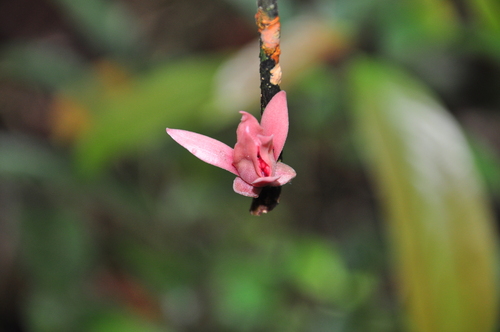
(c) Narendra Bhagwat, some rights reserved (CC BY-NC), uploaded by Narendra Bhagwat
iNaturalist· cc-by-nc
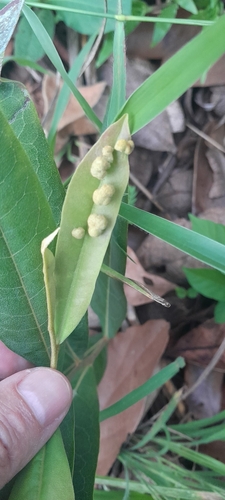
(c) Martin Reith, some rights reserved (CC BY-NC), uploaded by Martin Reith
iNaturalist· cc-by-sa
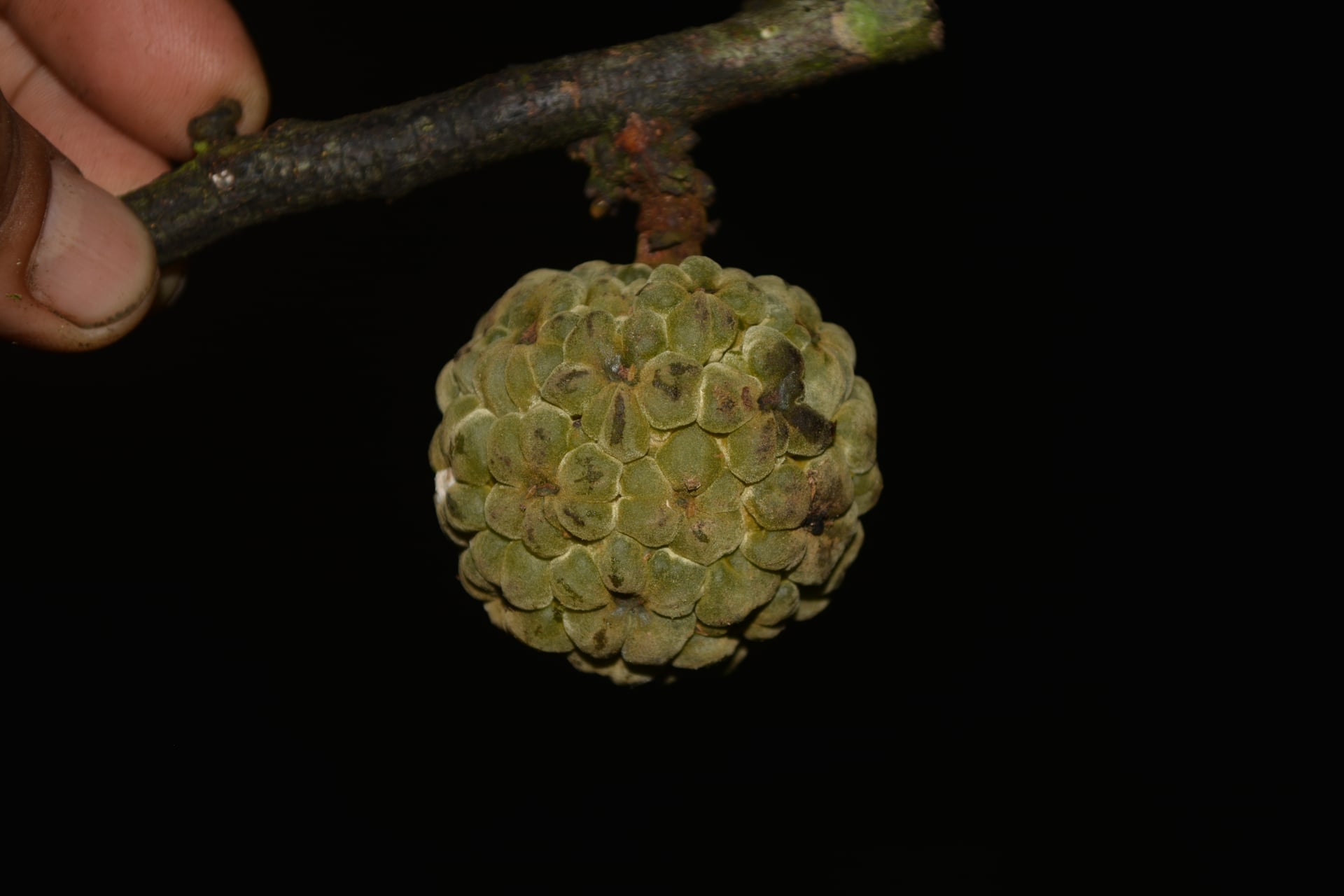
(c) Dinesh Valke, some rights reserved (CC BY-SA)
Summary
Source: WikipediaAnnona reticulata is a small deciduous or semi-evergreen tree in the plant family Annonaceae. It is best known for its fruit, called custard apple, a common name shared with fruits of several other species in the same genus: A. cherimola and A. squamosa. Other English common names include ox heart and bullock's heart. The fruit is sweet and useful in preparation of desserts, but is generally less popular for eating than that of A. cherimola.
Description
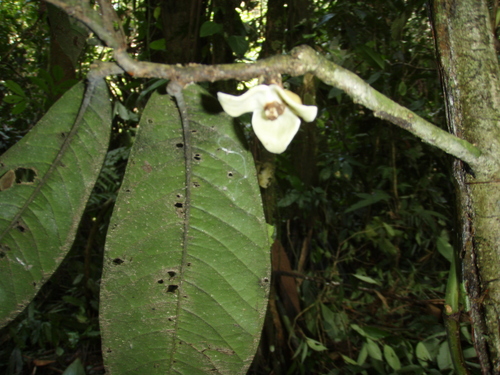
A small tree up to 7.5 m tall. It has several branches near the base. Trees loose their leaves at some times of the year. New shoots have short brown hairs but older wood is smooth and shiny. The leaves are long and spear shaped with short leaf stalks. Around the edge of the leaf is a clear edge. The leaves smell when crushed. Flowers are greenish yellow. They occur in groups where the leaves join the stalk. Flowers occur on new wood growth. The fruit are reddish brown in colour and 10-12 cm across. There is a fine hexagonal pattern over the fruit. Inside there are large brown seeds. The fruit are edible but the seeds are not eaten.
Edible Uses
The ripe fruit is eaten fresh and used for preserves, drinks, ice cream, custards, and other desserts.
Traditional Uses
The ripe fruit is eaten fresh. They are also used for preserves, drinks, ice cream, custards and other desserts CAUTION: The seed kernel is poisonous.
Medicinal Uses
Various traditional medicine uses have been reported over centuries for its dried fruits, bark, or leaves.
Known Hazards
The hard seeds are very toxic, but can be swallowed whole with no ill effects. All non-fruit parts of the plant are quite toxic. Sap from the cut branches is acrid and irritant and can severely injure the eyes. The bark contains 0.12% anonaine, and injection of an extract from the bark reportedly caused paralysis in a rear limb of an experimental toad.
Distribution
A tropical plant. It occurs in the tropical lowlands and grows up to at least 1200 m altitude. In Colombia it grows between 500-1,900 m above sea level. It can grow on poorer soils with different levels of acidity. It cannot stand water-logging. It suits humid climates. It is less suited to dry climates. It can grow in arid places. In Nepal it grows to 900 m altitude. It suits hardiness zones 10-12. In Yunnan. In Brisbane Botanical Gardens.
Where It Grows
Africa, Amazon, Andamans, Angola, Antilles, Asia, Australia, Bahamas, Bangladesh, Belize, Bolivia, Brazil, Cambodia, Cameroon, Cape Verde, Caribbean, Central Africa, Central America*, China, Colombia, Cook Islands, Costa Rica, Cuba, Dominica, Dominican Republic, East Africa, East Timor, Ecuador, Ethiopia, Fiji, Gabon, Grenada, Guam, Guatemala, Guyana, Haiti, Hawaii, Himalayas, Honduras, India, Indochina, Indonesia, Jamaica, Kenya, Laos, Madagascar, Malawi, Malaysia, Maldives, Mariana Islands, Marquesas, Marshall Is., Martinique, Mexico, Mozambique, Myanmar, Nauru, Nepal, Niue, North America, Northeastern India, Pacific, Pakistan, Palau, Panama, Papua New Guinea, PNG, Peru, Philippines, Puerto Rico, Rotuma, Sao Tome and Principe, SE Asia, Solomon Islands, South America, Sri Lanka, St. Vincent and Grenadines, Suriname, Taiwan, Tanzania, Timor-Leste, Thailand, Tonga, Uganda, USA, Vanuatu, Venezuela, Vietnam, West Africa, West Indies*, West Timor, Zambia, Zimbabwe,
Cultivation
Plants are normally grown from seeds. Seedling trees vary quite a bit. Seedlings are easy to transplant. A spacing of 4-7 m is suitable. Better kinds can be grown using budding or grafting.
Propagation
Seed - usually breeds true to type. Sow in individual pots, not deeper than 2cm, at 21c. The germination rate ranges from low to medium. The seed of many species in this genus has a hard seedcoat and may benefit from scarification before sowing in order to speed up germination. This can usually be done by pouring a small amount of nearly boiling water on the seeds (being careful not to cook them!) and then soaking them for 12 - 24 hours in warm water. By this time they should have imbibed moisture and swollen - if they have not, then carefully make a nick in the seedcoat (being careful not to damage the embryo) and soak for a further 12 hours before sowing. Semi-ripe cuttings.
Other Uses
The leaves are employed in tanning and also yield a blue or black dye. Young twigs provide good fibre. Superior to the bark fibre from Annona squamosa. The bark is used for tying the frames of huts. The seeds, leaves and young fruits have insecticidal properties. The plant is poisonous and has a potential as a pesticide for non-vertebrates. The yellow wood is soft, fibrous but durable, moderately close-grained, with a specific gravity of 0.65. It is used to make utensils, yokes for oxen.
Production
Trees begin fruiting at 3-5 years. Fruit setting is often improved by hand pollination. Fruit mature in about 200 days. Fruit can vary from 0.25 to 2.25 kg each. The fruit has 13% sugar. Fruit production is seasonal. A tree may bear 100-150 fruit in a season. The season is normally Dec. to March.
Other Information
It is a cultivated fruit tree. Commonly seen on Manus Island and in some other coastal areas in Papua New Guinea.
Notes
There are about 100-150 Annona species. It has anticancer properties.
Nutrition
| Part | Moisture | kJ | kcal | Protein | Vit A | Vit C | Iron | Zinc |
|---|---|---|---|---|---|---|---|---|
| Fruit | 66.4 | 462 | 111 | 2.06 | 10 | 50 | 0.5 | — |
Synonyms
Also Known As
Aanti, Aata, Anona colorado, Anonas, Ata, Atha, Attha, Balam, Chotka salifa, Condessa, Coracao-de-boi, Corazon, Corossol, Fat manao, Fat manaova, Fruto-conde, Gishxaa, Kasjoema, Keradebefo, Kisitaffeeli, Krishna-beejam, Lavani, Madargamja, Mamon, Neoa, Netted custard apple, Noi-nah, Nona ata, Nona kapri, Ox heart, Ramasita, Ramphal, Ramsitha, Sacha anona, Sitafal, Sita phal, Thinbaw-awza, Uto ni bulamakau, Voankobohobo, Weli-attha
References (123)
- Bullock’s heart references
- Ajesh, T. P., et al, 2012, Ethnobotanical Documentation of Wild Edible Fruits used by Muthuvan Tribes of Idukki, Kerala-India. International Journal of Pharma and Bio Sciences 3(3): 479-487
- Ambasta S.P. (Ed.), 2000, The Useful Plants of India. CSIR India. p 43
- Anderson, E. F., 1993, Plants and people of the Golden Triangle. Dioscorides Press. p 202
- Ashton, M. S., et al 1997, A Field Guide to the Common Trees and Shrubs of Sri Lanka. WHT Publications Ltd. p 100
Show all 123 references Hide references
- Bajpai, O., et al, 2015, Tree species of the Himalayan Terai region of Uttar Pradesh, India: a checklist. Check List 11(4): 1718
- Bandyopadhyay, S. et al, 2009, Wild edible plants of Koch Bihar district, West Bengal. Natural Products Radiance 8(1) 64-72
- Bandyopadhyay, S., et al, 2012, A Census of Wild Edible Plants from Howrah District, West Bengal, India. Proceedings of UGC sponsored National Seminar 2012
- Banerjee, A., et al, 2013, Ethnobotanical Documentation of Some Wild Edible Plants in Bankura District, West Bengal, India. The Journal of Ethnobiology and Traditional Medicine. Photon 120 (2013) 585-590
- Barwick, M., 2004, Tropical and Subtropical Trees. A Worldwide Encyclopedic Guide. Thames and Hudson p 27
- Bircher, A. G. & Bircher, W. H., 2000, Encyclopedia of Fruit Trees and Edible Flowering Plants in Egypt and the Subtropics. AUC Press. p 31
- Blench, R., 2004, Fruits and Arboriculture in the Indo-Pacific Region. Indo-Pacific Prehistory Association Bulletin 24. (Taipei Papers Volume 2) p 34
- Bodkin, F., 1991, Encyclopedia Botanica. Cornstalk publishing, p 86
- Bourret, D., 1981, Bonnes-Plantes de Nouvelle-Caledonie et des Loyaute. ORSTOM. p 38
- Brahma, S., et al, 2013, Wild edible fruits of Kokrajhar district of Assam, North-East India, Asian Journal of Plant Science and Research 3(6):95-100
- Brouk, B., 1975, Plants Consumed by Man. Academic Press, London. p 170
- Brown, 1951, Useful Plants of the Philippines.
- Burkill, H. M., 1985, The useful plants of west tropical Africa, Vol. 1. Kew.
- Burkill, I. H., 1935, A Dictionary of the Economic Products of the Malay Peninsula. p 168
- Casas, A., et al, 1996, Plant Management Among the Nahua and the Mixtec in the Balsas River Basin, Mexico: An Ethnobotanical Approach to the Study of Plant Domestication. Human Ecology, Vol. 24, No. 4 pp. 455-478
- Chakraborty, S. & Chaturbedi, H. P., 2014, Some Wild Edible Fruits of Tripura- A Survey. Indian Journal of Applied research. (4) 9
- Chandrashekara, U. M., 2009, Tree species yielding edible fruit in the coffee-based homegardens of Kerala, India: their diversity, uses and management. Food Sec. 1:361-370
- Chin, H.F., & Yong, H.S., 1996, Malaysian Fruits in Colour. Tropical press, Kuala Lumpur p 57
- Chizmar Fernandez, C., et al, 2009, Plantas comestibles de Centroamerica. Instituto de Biodiversidad, Costa Rica. p 38
- Chowdery, T., et al, 2014, Wild edible plants of Uttar Dinajpur District, West Bengal. Life Science Leaflets. 47:pp 20-36 http://lifesciencesleaflets.ning.com
- Chowdhury, M. & Mukherjee, R., 2012, Wild Edible Plants Consumed by Local Communities of Maldah of West Bengal, India. Indian J.Sci.Res.3(2) : 163-170
- Cooper, W. and Cooper, W., 2004, Fruits of the Australian Tropical Rainforest. Nokomis Editions, Victoria, Australia. p 19
- Coronel, R.E., 1982, Fruit Collections in the Philippines. IBPGR Newsletter p 6
- Darley, J.J., 1993, Know and Enjoy Tropical Fruit. P & S Publishers. p 2
- Das, S. and De, B., 2013, Evaluation of Angiotension I-Converting Enzyme (ACE) inhibitory potential of some underutilized indigenous fruits of West Bengal using an in vitro model. Fruits, Vol. 68:499-506
- Das, T. & Das, A. K., 2005, Inventorying plant biodiversity in homegardens: A case study in Barak Valley, Assam, North East India. CURRENT SCIENCE, VOL. 89, NO. 1, 10 JULY 2005
- Datar, M. N. & Upadhye, A. S., 2015, Forest foods of Northern Western Ghats: Mode of Consumption, Nutrition, and Availability. Asian Agri-History Vol. 19, No. 4, 2015 (293–316)
- Dobriyal, M. J. R. & Dobriyal, R., 2014, Non Wood Forest Produce an Option for Ethnic Food and Nutritional Security in India. Int. J. of Usuf. Mngt. 15(1):17-37
- Duarte, M. C., et al, 2022, Diversity of Useful Plants in Cabo Verde Islands: A Biogeographic and Conservation Perspective. Plants 2022, 11, 1313 p 8
- Emire, A., et al, 2021, Ethnobotanical Study of Wild Edible Fruit Tree and Shrub Species in Adola Rede and Odo Shakiso Midland Districts of Guji Zone, Southern Ethiopia. Int. J. Adv. Res. Biol. Sci. (2021). 8(12): 96-109
- Etherington, K., & Imwold, D., (Eds), 2001, Botanica's Trees & Shrubs. The illustrated A-Z of over 8500 trees and shrubs. Random House, Australia. p 96
- Facciola, S., 1998, Cornucopia 2: a Source Book of Edible Plants. Kampong Publications, p 12
- Flowerdew, B., 2000, Complete Fruit Book. Kyle Cathie Ltd., London. p 157
- French, B., 1986, Food Plants of Papua New Guinea, Asia Pacific Science Foundation p 213
- French, B.R., 2010, Food Plants of Solomon Islands. A Compendium. Food Plants International Inc. p 212
- Garner, R.J., and Chaudhri, S.A., (Ed.) 1976, The Propagation of Tropical fruit Trees. FAO/CAB. p 223. 239
- Grandtner, M. M. & Chevrette, J., 2013, Dictionary of Trees, Volume 2: South America: Nomenclature, Taxonomy and Ecology. Academic Press p 39
- Goode, P., 1989, Edible Plants of Uganda. FAO p 27
- Ghosh, C. & Das A. P., 2011, Some useful and poisonous tea garden weeds from the Darjiling District of West Bengal, India. Pleione 5(1): 91 - 114
- Grandtner, M. M., 2008, World Dictionary of Trees. Wood and Forest Science Department. Laval University, Quebec, Qc Canada. (Internet database http://www.WDT.QC.ca) (As Annona primigenia)
- Hazarika, B. et al. (2020). An overview of the unexplored underutilized fruit crops of Assam, India. Journal of Applied and Natural Science, 12(3): 442 - 453
- Hedrick, U.P., 1919, (Ed.), Sturtevant's edible plants of the world. p 58
- Hellmuth, N. M., 2011, Maya Ethnobotany. Complete Inventory of plants. Associacion FLAAR Mesoamerica. Tenth edition. (As Annona primigenia)
- Hermandez Bermejo, J.E., and Leon, J. (Eds.), 1994, Neglected Crops. 1492 from a different perspective. FAO Plant Production and Protection Series No 26. FAO, Rome. p14, 89
- Hibbert, M., 2002, The Aussie Plant Finder 2002, Florilegium. p 29
- Jadhav, R., et al, 2015, Forest Foods of Northern Western Ghats: Mode of Consumption, Nutrition and Availability. Asian Agri-History Vol. 19, No. 4: 293-317
- Jardin, C., 1970, List of Foods Used In Africa, FAO Nutrition Information Document Series No 2.p 120
- Johns, L. & Stevenson, V., 1979, The Complete Book of Fruit. Angus & Robertson. p 122
- Kintzios, S. E., 2006, Terrestrial Plant-Derived Anticancer Agents and Plant Species Used in Anticancer research Critical Reviews in Plant Sciences. 25: pp 79-113
- Kiple, K.F. & Ornelas, K.C., (eds), 2000, The Cambridge World History of Food. CUP p 1890
- Kiran, K. C., et al, 2019, Diversity and Seasonal Availability of Potential Wild Edible Plants from Vidarbha Region of Maharashtra State, India. Int.J.Curr.Microbiol.App.Sci (2019) 8(2): 1434-1446
- Kumar, S. A., Manus, D. & Mallika, M., 2018, Impact of non-timber forest products on Forest and in Livelihood Economy of the People of Adjoining Areas of Jalpaiguri Forest Division, West Bengal, India. Int. J. of Life Sciences, 2018; 6 (2):365-385
- Lazarides, M. & Hince, B., 1993, Handbook of Economic Plants of Australia, CSIRO. p 21
- Leal, M. L. et al, 2018, Knowledge, use, and disuse of unconventional food plants. Journal of Ethnobiology and Ethnomedicine (2018) 14:6
- Leon, J., 1968, Fundamentos Botanicos de los Cultivos tropicales. p
- Lorenzi, H., Bacher, L., Lacerda, M. & Sartori, S., 2006, Brazilian Fruits & Cultivated Exotics. Sao Paulo, Instituto Plantarum de Estuados da Flora Ltda. p 360
- Maas, P.J. M., et al, 2001, Annonaceae from Central-eastern Brazil. Rodriguesia 52(80): 65-98
- Macmillan, H.F. (Revised Barlow, H.S., et al) 1991, Tropical Planting and Gardening. Sixth edition. Malayan Nature Society. Kuala Lumpur. p 291
- Maisch, 1885, Amer. Journ. Pharm. 57 p339
- Manandhar, N.P., 2002, Plants and People of Nepal. Timber Press. Portland, Oregon. p 91
- Martin, F. W., et al, 1987, Perennial Edible Fruits of the Tropics. USDA Handbook 642 p 17 (Also as Annona lutescens)
- McMakin, P.D., 2000, Flowering Plants of Thailand. A Field Guide. White Lotus. p 104
- Miguel, E., et al, 1989, A checklist of the cultivated plants of Cuba. Kulturpflanze 37. 1989, 211-357 (Also as Annona lutescens)
- Milsum, 1919, Bull. 29. Dep. Agric. F.M.S. p 52
- Morton, J. F., 1987, Fruits of Warm Climates. Wipf & Stock Publishers p 80
- Murillo-A, J., 2001, Annonaceae of Colombia. Biota Colombiana 2(1): 49-51
- Nicholson, D. H., et al, 1991, Fora of Dominica, Part 2: Dicotyledoneae. Smithsonian Institution Press. Washington DC. p 21
- NYBG Herbarium "edible"
- Ochse. J.J. 1927, Indische Vruchten
- Ochse, J.J., 1930, Fruits and Fruit Culture in the Dutch East Indies. p
- Ochse, J.J., Dijkman, M.J., Soule, M.J. & Wehlburg,C., 1961, Tropical and Subtropical Agriculture. p
- Omawale, 1973, Guyana's edible plants. Guyana University, Georgetown p 15
- Paczkowska, G. & Chapman, A.R., 2000, The Western Australian Flora. A Descriptive Catalogue. Western Australian Herbarium. p 145
- Pasha, M. K. & Uddin, S. B., 2019, Minor Edible Fruits of Bangladesh. Bangladesh J. Plant Taxon. 26(2): 299–313
- Peekel, P.G., 1984, (Translation E.E.Henty), Flora of the Bismarck Archipelago for Naturalists, Division of Botany, Lae, PNG. p 183
- Perry, F., and Hay, R., 1982, Guide to Tropical and Subtropical Plants. Sun Books p 10
- Peters, C. R., O'Brien, E. M., and Drummond, R.B., 1992, Edible Wild plants of Sub-saharan Africa. Kew. p 54
- Pham-Hoang Ho, 1999, An Illustrated Flora of Vietnam. Nha Xuat Ban Tre. p 244
- Phon, P., 2000, Plants used in Cambodia. © Pauline Dy Phon, Phnom Penh, Cambodia. p 39
- Piedra-Malagón, E. M. et al, 2022, Edible native plants of the Gulf of Mexico Province. Biodiversity Data Journal 10: e80565 p 9
- Plants of Haiti Smithsonian Institute http://botany.si.edu
- Poponoe, W., 1920, Manual of Tropical and Subtropical fruits. Macmillan. p 186-188
- Rajapaksha, U., 1998, Traditional Food Plants in Sri Lanka. HARTI, Sri Lanka. p 59
- Raponda-Walker, A & Sillans, R., 1961, Les Plantes Utiles du Gabon. Editions Paul Lechevalier, Paris. p 63
- Rashid, H. E., 1977, Geography of Bangladesh. Westview. p 343
- Ramachandran, V.S. and Nair, V.J., 1981, Ethnobotanical studies in Cannanore District, Kerala State (India). J Econ. Tax. Bot. Vol 2 pp 65-72
- Reddy, B. M., 2012, Wild edible plants of Chandrapur district, Maharashtra, India. Indian Journal of Natural Products and Resources. 3(1) pp 110-117
- Roa, J. A. G. & Boada, D. S. G., 2018, Fundación para el Fortalecimiento de la Fruticultura y Plantas Alimenticias no Convencionales en Colombia.
- Royal Botanic Gardens, Kew (1999). Survey of Economic Plants for Arid and Semi-Arid Lands (SEPASAL) database. Published on the Internet; http://www.rbgkew.org.uk/ceb/sepasal/internet [Accessed 28th March 2011]
- Safford, W.E., 1905, Useful Plants of Guam. Contrib. US Nat. Herb., 9, 184.
- Segura, S. et al, 2018, The edible fruit species in Mexico. Genet Resour Crop Evol (2018) 65:1767–1793
- Selvam, V., 2007, Trees and shrubs of the Maldives. RAP Publication No. 2007/12
- Sharma, B.B., 2005, Growing fruits and vegetables. Publications Division. Ministry of Information and broadcasting. India. p 4
- Smith, A.C., 1981, Flora Vitiensis Nova, Lawaii, Kuai, Hawaii, Volume 2 p 40
- Solomon, C., 2001, Encyclopedia of Asian Food. New Holland. p 116
- Sp. pl. 1:537. 1753
- Sujanapal, P., & Sankaran, K. V., 2016, Common Plants of Maldives. FAO & Kerala FRI, p 36
- Swaminathan, M.S., and Kochnar, S.L., 2007, An Atlas of Major Flowering Trees in India. Macmillan. p 27
- Tabuti, J. R. S., 2012, Important Woody Plant Species, their Management and Conservation Status in Balawoli Sub-country, Uganda. Ethnobotany Research & Applications 10:269-286
- Tankard, G., 1990, Tropical fruit. An Australian Guide to Growing and using exotic fruit. Viking p 111
- Tate, D., 1999, Tropical Fruit. Archipelago Press. Singapore. p 20
- Thaman, R.R., 1976, The Tongan Agricultural System, University of the South Pacific, Suva, Fiji. p 381
- Torre, de la L., et al, 2008, Enciclopedia de las Plantas Útiles del Ecuador. Herbario QCA. Pontificia Universidad Católica del Ecuador. p 164
- Turreira-Garcia, N., et al, 2015, Wild edible plant knowledge, distribution and transmission: a case study of the Achi Mayans of Guatemala. Journal of Ethnobiology and Ethnomedicine. 11:52
- Unsure Philippines - Description of Trees and Shrubs at PATOM Watershed, Barangay Colongulo, Surallah, South Cotabato
- van Roosmalen, M.G.M., 1985, Fruits of the Guianan Flora. Utrecht Univ. & Wageningen Univ. p 8
- Vasquez, R. and Gentry, A. H., 1989, Use and Misuse of Forest-harvested Fruits in the Iquitos Area. Conservation Biology 3(4): 350f
- Vivien, J., & Faure, J.J., 1996, Fruitiers Sauvages d'Afrique. Especes du Cameroun. CTA p 51
- Vock, N.T., 1978, Diplodia rot of Custard apples. in A handbook of plant diseases in colour. Vol 1 Queensland DPI.
- Walter, A. & Lebot, V., 2007, Gardens of Oceania. ACIAR Monograph No. 122. p 114
- Wiersema, J. H. & Leon, B., 2013, World Economic Plants. A Standard Reference CRC Press. 2nd Ed. p 56
- Williams, C.N., Chew, W.Y., and Rajaratnam, J.A., 1989, Tree and Field Crops of the Wetter Regions of the Tropics. Longman, p 120
- Williamson, J., 2005, Useful Plants of Malawi. 3rd. Edition. Mdadzi Book Trust. p 25
- Wong, K. C., 1995, Collection and Evaluation of Under-Utilized Tropical and Subtropical Fruit Tree Genetic Resources in Malaysia. JIRCAS International Symposium Series No. 3: 27-38
- World Checklist of Useful Plant Species 2020. Royal Botanic Gardens, Kew
- www.worldagroforestrycentre.org/treedb/
- Yuncker, T. G., 1943, The Flora of Niue Island. Bernice P. Bishop Museum Bulletin 178 p 54
- Yuncker, T.G., 1959, Plants of Tonga, Bernice P. Bishop Museum, Hawaii, Bulletin 220. p 116