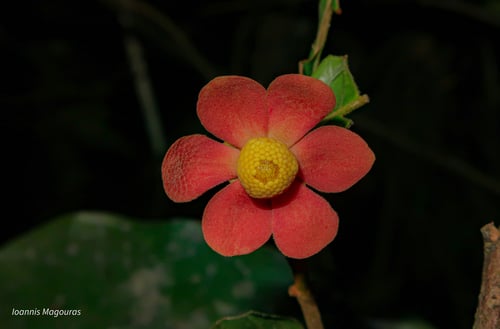
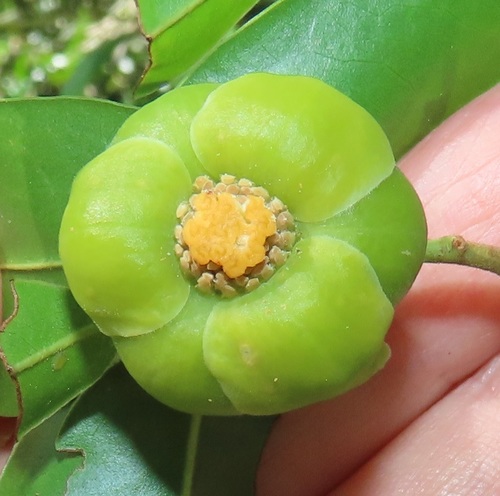
Annona jucunda
(Diels) H. Rainer
Pleasing annona
gbif· cc-by-nc
Rapid Reference Collection (RRC) | Field Museum of Natural History - Keller Science Action Center
gbif· cc-by-nc
Field Museum of Natural History - Botany Department | GDI 2013-2015
gbif· cc-by-nc
Field Museum of Natural History - Botany Department | GDI 2013-2015
Description
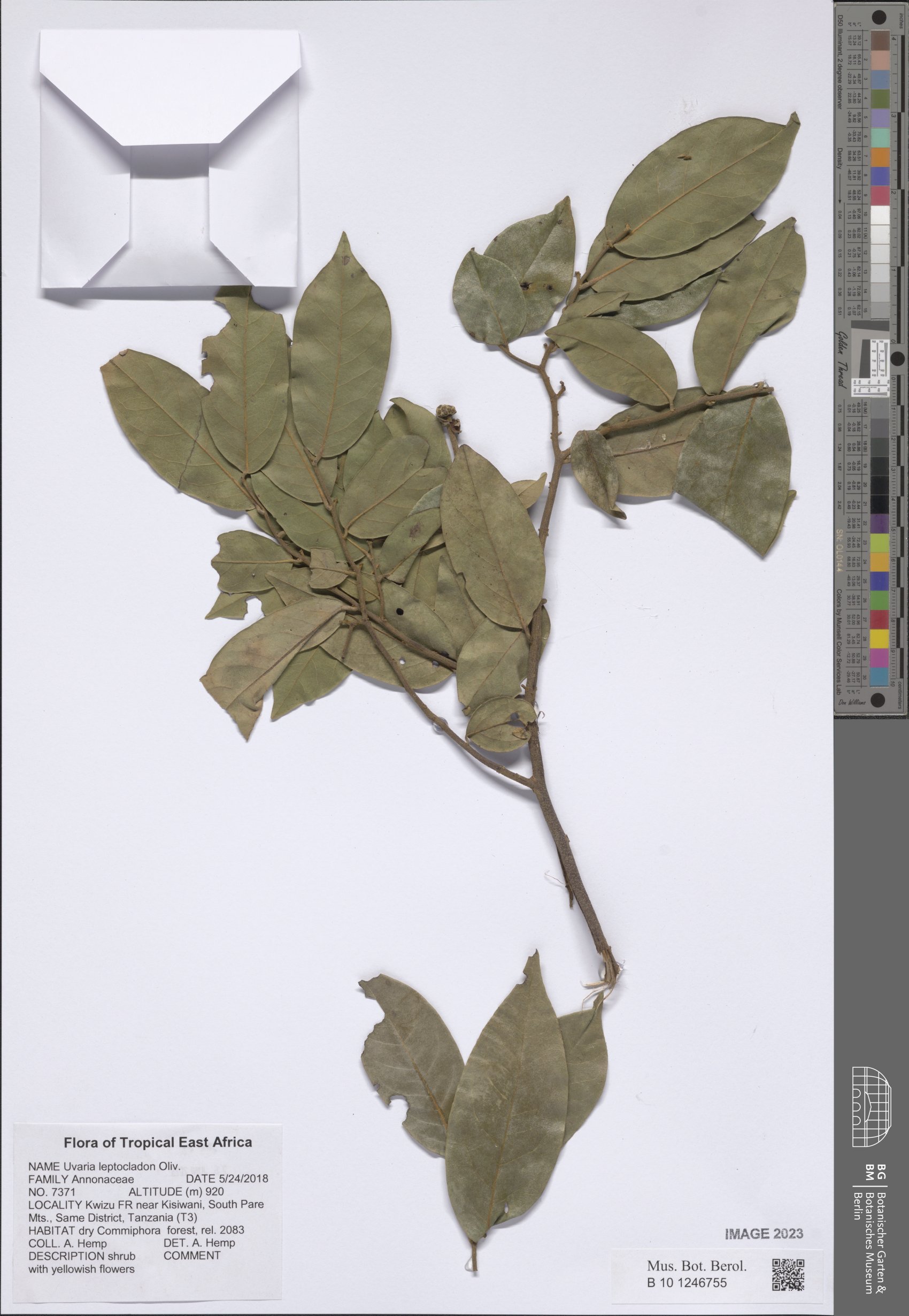
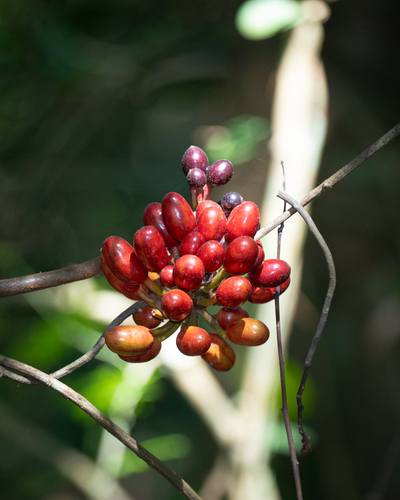
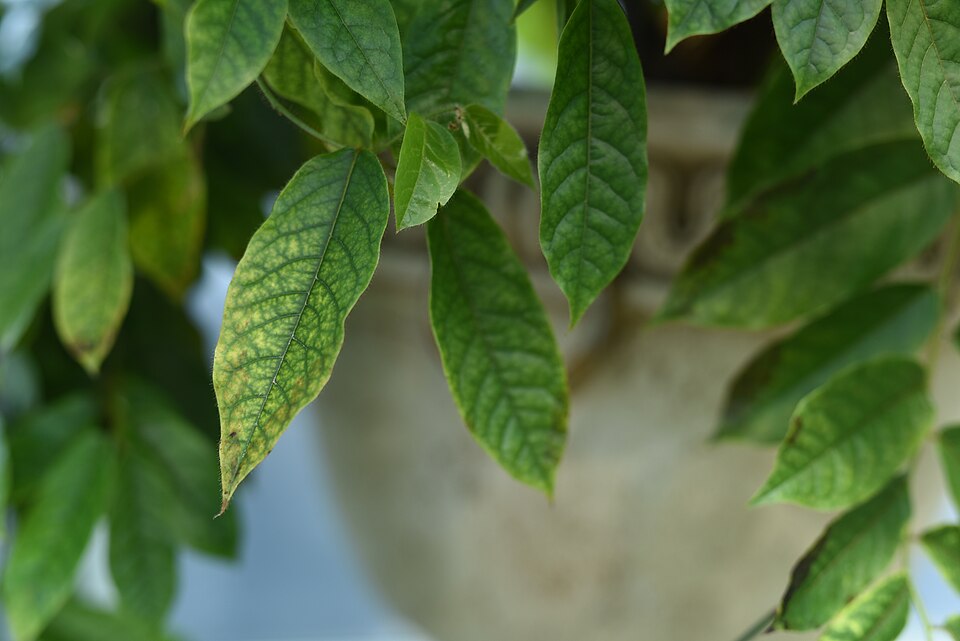
A tree. It grows 15 m tall. The leaves and twigs are covered with light brow hairs. The leaves are narrowly oval and 10-16 cm long by 2-7 cm wide. The are lighter greenish-brown underneath. The flowers are in groups of 1-4 opposite the leaves or in the leaf axils. The fruit are a flattened round shape and 1.5-2 cm long by 2-2.5 cm wide. They are green to yellow. The seeds are 9 mm long by 4 mm wide.
Edible Uses
Fruit - raw. The green to yellow, globose to depressed globose fruit is around 15 - 20mm long and 20 - 25mm in diameter, composed of 60 - 90 carpels each containing a seed up to 9mm long and 4mm wide.
Distribution
It is a tropical plant. It grows up to 500 m above sea level.
Where It Grows
Amazon, Bolivia, Brazil, Ecuador, Peru, South America,
Cultivation
Succeeds in wet soils. The flowers are fragrant, with a fragrance of ripe apples combined with a pineapple aroma.
Other Uses
The wood is hard. It is used for posts, beams, railway sleepers etc.
Synonyms
Also Known As
Espintana, Piriquina negra, Sacha guanabano
References (2)
- Grandtner, M. M. & Chevrette, J., 2013, Dictionary of Trees, Volume 2: South America: Nomenclature, Taxonomy and Ecology. Academic Press p 37
- Maas, Paulus J. M., et al. 1992. Rollinia. Fl. Neotrop. Monogr. 57: 1-188.