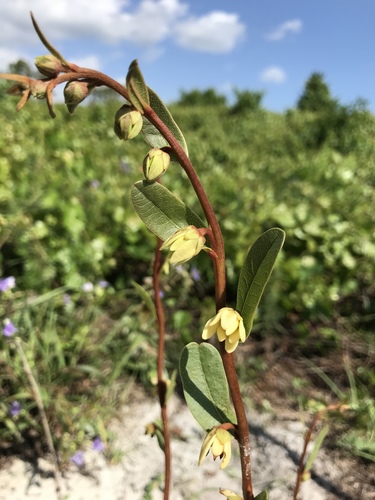
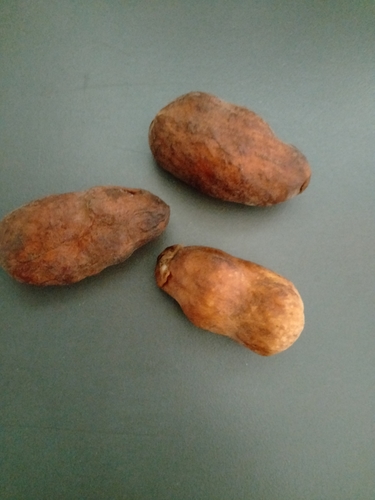
Annona liebmanniana
Baill.
Hardshell custard-apple, Posh-te
gbif· cc-by-nc-sa
University of South Florida Herbarium (USF)
gbif· cc-by-nc
Jan Meerman
Description
Annona liebmanniana is an evergreen Tree growing to 20 m (65ft) by 20 m (65ft) at a fast rate. See above for USDA hardiness. It is hardy to UK zone 10 and is frost tender. The plant is self-fertile. It is noted for attracting wildlife. Suitable for: light (sandy), medium (loamy) and heavy (clay) soils and prefers well-drained soil. Suitable pH: mildly acid, neutral and basic (mildly alkaline) soils and can grow in very acid and very alkaline soils. It can grow in semi-shade (light woodland) or no shade. It prefers moist or wet soil. The plant is not wind tolerant.
Edible Uses
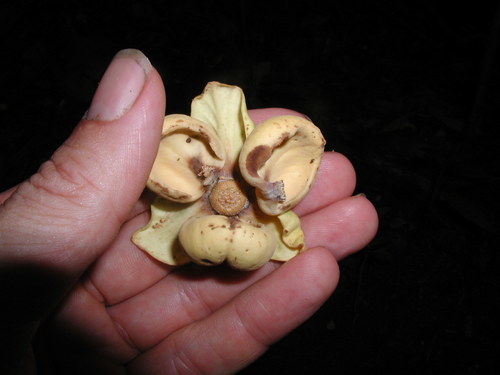
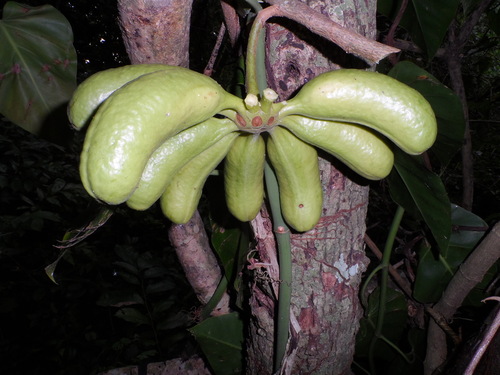
Fruit - raw. Delicious and aromatic, it is best eaten fresh from the plant. A richer flavour than the soursop (A. muricata) with a suggestion of the flavour of the white sapote (Casimiroa edulis). A creamy banana-pineapple like flavour, it is said to be one of the most flavourful and refreshing fruits in the genus. The fruit has an agreeable flavour, it is 8 - 10cm in diameter, but the seeds are very large, up to 2cm long.
Distribution
Central America - south Mexico, Guatemala, Honduras.
Where It Grows
NORTHERN AMERICA: Mexico, Chiapas, SOUTHERN AMERICA: Belize, Guatemala, Honduras,
Cultivation
A plant of the moister, lowland tropics, usually growing near sea level but also found at elevations up to 1,800 metres. It grows best in areas where annual daytime temperatures are within the range 23° - 26°c, but can tolerate 8° - 32°c. It prefers a mean annual rainfall in the range 3,500 - 4,500mm, but tolerates 3,000 - 5,000mm. Young trees seem to grow better in shade, but older trees grow well in sunny positions. Prefers a moist, well-drained, sandy loam with a pH of around 6. Prefers a pH in the range 5.5 - 6.5, tolerating 4.5 - 7. The tree may suffer from wind damage on exposed sites. Trees can commence fruiting in just 4 years from seed, by which time they are 4 - 6 metres tall. Trees flower on the previous year's growth. The fruit of this species has a thick exocarp, making it suitable for long-distant transport. This gives it potential in breeding programmes with other members of the genus to develop fruits with thick skins suitable for shipping. When is it harvested? Late Autumn to Early Winter. When does it flower? Late Spring to Early Summer. Are there any agroforestry uses? How fast does it grow? Cherimoya has a moderate growth rate and can take about 3 to 4 years to start producing fruit after planting.
Propagation
Seed - usually breeds true to type. Sow in individual pots, not deeper than 2cm, at 21c. The seed of many species in this genus has a hard seedcoat and may benefit from scarification before sowing in order to speed up germination. This can usually be done by pouring a small amount of nearly boiling water on the seeds (being careful not to cook them!) and then soaking them for 12 - 24 hours in warm water. By this time they should have imbibed moisture and swollen - if they have not, then carefully make a nick in the seedcoat (being careful not to damage the embryo) and soak for a further 12 hours before sowing. Semi-ripe cuttings.
Other Uses
Cherimoya can be used in agroforestry systems as a fruit tree. It provides shade and can be integrated into diverse cropping systems.
Synonyms
Also Known As
Posh-te tree, Hardshell custard-apple, Posh te custard-apple