Pterocarpus erinaceus
Poiret
West African rosewood
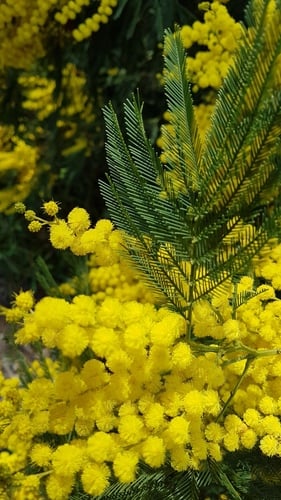
iNaturalist· cc-by-nc
(c) AMADOU BAHLEMAN FARID, some rights reserved (CC BY-NC), uploaded by AMADOU BAHLEMAN FARID
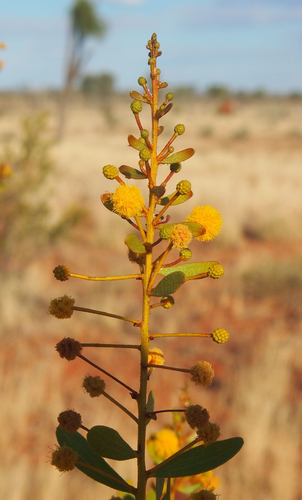
iNaturalist· cc-by-nc
(c) cteteli, some rights reserved (CC BY-NC)
Summary
Source: WikipediaPterocarpus erinaceus is an endangered tree species native to the Sahelian region of West Africa. It is listed in Appendix II of the Convention on International Trade in Endangered Species of Wild Fauna and Flora. It is used for fuel wood, for medicinal purposes, as a woodworking material, and is useful as a nitrogen-fixing plant to improve nutrient-depleted farming land. It has several common names, including kosso, barwood, African kino tree, muninga, and vène; mukwa is used for this species as well as other Pterocarpus. Groves of the tree can be found on the savannahs of West Africa, but it is becoming increasingly rare and is sometimes cultivated. The tree also grows in forests of Comoé National Park in Côte d'Ivoire, a region geographically close to the Sahel but with a higher moisture regime due to its location between two large rivers. Also, the tree grows in abundance in Kurmi Local Govt. of Taraba State in Nigeria. The tree grows to about 11 meters in height on average, and bears dark, scaly bark and yellow flowers. The fruits are winged pods. P. erinaceus grows well on sunny, hot African plains with long dry seasons and frequent fires. The wood, which varies from yellowish to rosy reds and rich browns, is valued for woodworking, and makes good charcoal and fuel wood. The tree exudes a red sap called kino, which is used as a dye in tanning and cloth-making. As a legume, the tree harbors rhizobia that return nitrogen to the soil, making it more fertile. Such plants are desirable on farmland. In addition, the foliage is a nutritious fodder for farm animals. Mali has an active market for P. erinaceus foliage, which is in high demand by sheep farmers for fodder. The tree has several medicinal uses, including reduction of fever and cough suppression. Pterocarpus erinaceus is one of the traditional djembe woods. It is also the only wood used to make the keys and part of the frame of the balafon and is the most common wood used to make the neck of the kora. Pterocarpus erinaceus was brought to Europe in the 19th century by the Scottish explorer Mungo Park. Currently, it is a threatened due to overexploitation, environmental degradation, and climatic changes. However, the tree is somewhat prolific and easy to cultivate, so reforestation efforts have shown some success. Other names for the tree include bani in Fulfulde, tolo in Djerma, wén in Wolof and ban in Serer.
Description
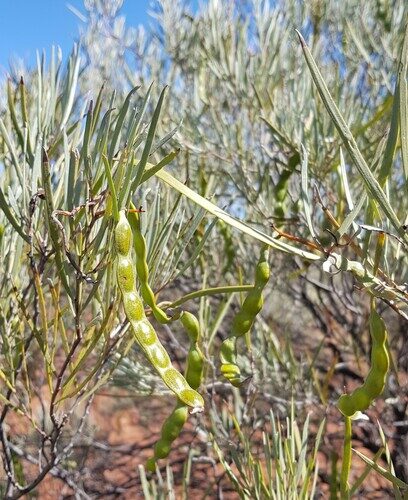
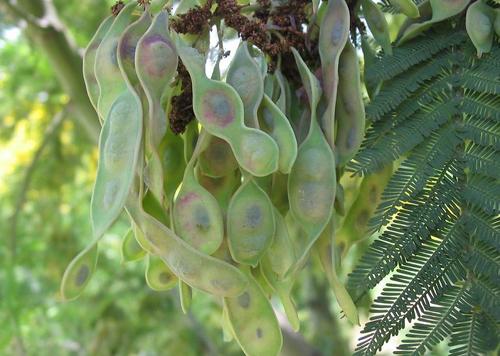
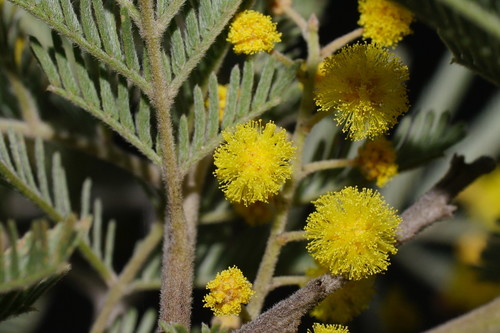
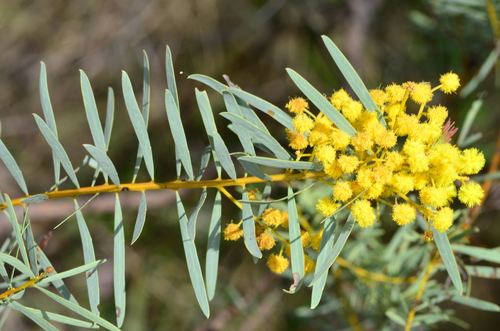
A tree. It grows 12-15 m high. It can be 35 m high. The trunk is straight. There can be buttresses in old trees. The crown is oval or round. The bark is dark brown. It is very scaly. The branches are hairy. The leaves are alternate and 30 cm long. There are up to 11 leaflets along the stalk with one at the end. The leaflets are 10 cm long by 5 cm wide. The flowers are light yellow and in groups. The fruit are green and become papery and rounded. They are 7.5 cm across.
Edible Uses
Leaves are cooked and eaten as a vegetable. Seeds are also eaten cooked, but must be thoroughly cooked to avoid emetic or intoxicating effects.
Traditional Uses
The leaves are cooked and eaten. Seeds need to be well cooked before eating.
This uses section is brief — help expand it
Medicinal Uses
The tree, and especially its resin, is widely used in traditional African medicine, with research confirming many traditional applications. The bark exudate hardens rapidly on exposure to air and contains 30–80% kinotannic acid, making it a powerful astringent. Bark extracts have shown in-vitro antibacterial and antifungal activity against several human pathogens, and have blocked ovulation and the oestrus cycle through antigonadotropic activity. Moderate in-vitro antimalarial activity was demonstrated against strains of Plasmodium falciparum. The bark's wound-healing effectiveness was confirmed in tests, attributed to phenolic compounds that influence the immune system, and significant antioxidant activity has also been shown. Water and methanol extracts showed in-vitro inhibitory activity against Mycobacterium smegmatis and Mycobacterium tuberculosis, the latter a cause of tuberculosis. The resin, known as kino, is astringent and haemostatic, taken internally for diarrhoea including dysentery, fever, gonorrhoea, and intestinal worm infections. Externally, it treats eye complaints, ulcers, and sores. Decoctions or infusions of bark or roots are used for bronchial infections, toothache, dysentery, menstruation complaints, anaemia, gonorrhoea, post-partum haemorrhage, ringworm, leprosy, wounds, tumours, and ulcers, and as an anti-emetic, purgative, and tonic. Root preparations are administered as an enema for venereal diseases. Leaf decoctions treat fever, syphilis, and are used as an aphrodisiac.
Known Hazards
Seeds contain compounds causing emetic or intoxicating effects if not thoroughly cooked.
Distribution
A tropical plant. It grows in the Sahel. It grows on shallow and gravelly soils. In Nigeria it has been recorded at 1,000 m above sea level. It grows in areas with between 700-1,200 mm of rain each year. It can grow in arid places.
Where It Grows
Africa, Angola, Benin, Burkina Faso, Cameroon, Central Africa, Central African Republic, CAR, Chad, Côte d'Ivoire, East Africa, Gabon, Gambia, Ghana, Guinea, Guinée, Guinea-Bissau, Ivory Coast, Mali, Mozambique, Niger, Nigeria, Sahel, Senegal, Sierra Leone, Sudan, Togo, West Africa,
Cultivation
A plant of semi-arid to sub-humid tree savannah in the tropics, where it is usually found at elevations up to 600 metres, exceptionally to 1,200 metres. It grows best in areas with a mean annual temperature of 15 - 32°c. It prefers a mean annual rainfall of 600 - 1,200mm, but can tolerate up to 1,600mm annual rainfall. It can tolerate up to 4,000mm of rain. It grows naturally in areas with a long dry season of up to 9 months. Requires a sunny position. Tolerant of most soil types, but prefers a light to medium, free-draining, acid to neutral soil. Succeeds on poor shallow soils, though growth is often stunted. Prefers a pH in the range 5 - 5.5, tolerating 4.5 - 6.5. Established plants are very drought tolerant. Young plants often grow away slowly, with two year old seedlings usually only reaching 42 - 100cm in height. In northern Cote d'Ivoire planted seedlings had an average height of 9 cm after 3 months, 50 cm after 18 months, 2.8 metres after 2.5 years, 4.4 metres after 4.5 years and 5.5 metres after 5.5 years. The fastest growing tree was 10 metres tall after 5.5 years. Trees respond well to coppicing, recovering well and growing more than 1 metre per year. Coppicing at a height of 10 cm above ground has been recommended as a means of harvesting wood and fodder, but a coppicing height of 50 cm has also been recommended. Trees do not resprout well when coppiced at ground levell. To avoid browsing of new growth, cutting at a height of over 1.5 metres seems recommendable. The flowers are much visited by bees, which are probably responsible for pollination. The tree may produce so many fruits that when the fruits are green it looks as if the tree is covered with leaves. Natural regeneration is often abundant and the species may be quite invasive if protected from grazing for some years. The plant can survive annual bush fires. The roots have nodules containing nitrogen-fixing bacteria. However, this species has low nitrogen-fixation potential in comparison with several other leguminous trees.
Propagation
Pre-soaking seed in water for 12–24 hours, or treatment with sulphuric acid for 30–60 minutes, improves germination rates from 50% to 70%. A germination rate of 100% was achieved using mechanical scarification, sowing in 1% agar, incubation at 21°C, and a 12-hour photoperiod. Seeds can be sown in pots or nursery beds spaced about 20–30cm apart. Germination is best at 25–35°C, with the first seeds sprouting after 6–10 days. Seedlings develop a long taproot and grow slowly; they can be planted out from pots or as bare-root plants, either as stumps or as entire seedlings. Survival rates are generally high when seedlings are protected from livestock and wild herbivores. Suckers develop regularly and can be used for vegetative propagation, and propagation by cuttings has also been successful.
Other Uses
A natural pioneer species in its native habitat, readily colonising fallow land. It fixes atmospheric nitrogen, though growth is fairly slow when young. The tree has potential as live fencing and is a source of good-quality nectar for bees. Kino — a red resin-like substance obtained by tapping the heartwood — is rich in tannins and used as a red dye and astringent. The heartwood also yields a red dye used to colour cloth, the body, or hair: the dyestuff is pulverised and mixed with water, the cloth dipped and dried, then shea or palm oil rubbed in to produce a dark purple colour. The bark is occasionally used for tanning, and the kino exudate is beaten onto cloth with a mallet to give it a glaze. Leaf decoctions are used as insect repellents. The heartwood is yellowish-brown to reddish-brown, often with purplish-brown streaks, clearly separated from a 2–8cm thick, yellowish or pale cream sapwood. The grain is straight to interlocked, the texture fine to moderately coarse, and fresh wood has an unpleasant aroma. The wood is moderately heavy to very heavy, hard, and very durable — highly resistant to fungi, dry-wood borers, termites, and freshwater organisms. It seasons slowly with very little risk of checking or distortion, and is stable in service once dry. The wood has a fairly high blunting effect and is difficult to saw and work, requiring considerable power; stellite-tipped sawteeth and tungsten carbide cutting tools are recommended. It finishes well but planing may cause pick-up due to interlocked grain. It holds nails and screws well but pre-boring is required due to brittleness; gluing is often poor due to exudates in the wood, though it accepts stains and polishes well, turns well, and has moderate bending properties. Highly valued for furniture and cabinet work, it is also used for heavy construction including waterworks, parquet flooring, stairs, implements, turning, sculpturing, and sliced veneer. Further uses include joinery, interior trim, mortars, pestles, house posts, mine props, ship and boat building, vehicle bodies, sporting goods, toys, novelties, musical instruments such as balafons, precision equipment, and bows made from the roots. The wood is suitable as fuel and makes a good-quality charcoal highly valued by local blacksmiths.
Other Information
The fruit are eaten especially by children.
Synonyms
Also Known As
Bane, Bani, Belele, Beliad-je, Beliedje, Betei, Buana, Djego, Kene, N'sila, Olei, Pau-sangue, Po-di-sangue, Psila, Queno, Sila, Toran, Ulei
References (11)
- Bonou, A., et al, 2013, Valeur economique des Produits Forestiers Non Ligneux (PFNL) au Benin. Editions Universitaires Europeennes p 85
- Chapman, J. D. & Chapman, H. M., 2001, The Forest Flora of Taraba and Andamawa States, Nigeria. WWF & University of Canterbury. p 186
- Encycl. 5:728. 1804
- Heubach, K., 2011, The socio-economic importance of non-timber forest products for rural livelihoods in West African savanna ecosystems: current status and future trends. PhD dissertation. Johann Wolfgang Goethe-Universitat. Frankfurt
- Jardin, C., 1970, List of Foods Used In Africa, FAO Nutrition Information Document Series No 2.p 96
Show all 11 references Hide references
- Kristensen, M and Lykke, A. M., 2003, Informant-Based Valuation of Use and Conservation Preferences of Savanna Trees in Burkina Faso. Economic Botany, Vol 57, No. 2, pp. 203-271
- Martin, F.W. & Ruberte, R.M., 1979, Edible Leaves of the Tropics. Antillian College Press, Mayaguez, Puerto Rico. p 200
- Maydell, H. von, 1990, Trees and shrubs of the Sahel: their characteristics and uses. Margraf. p 361
- Royal Botanic Gardens, Kew (1999). Survey of Economic Plants for Arid and Semi-Arid Lands (SEPASAL) database. Published on the Internet; http://www.rbgkew.org.uk/ceb/sepasal/internet [Accessed 29th April 2011]
- www.worldagroforestrycentre.org/treedb/
- Zika, A., et al, 2015, Traditional plant use in Burkina Faso (West Africa): a national-scale analysis with focus on traditional medicine. Journal of Ethnobiology and Ethnomedicine 2015, 11:9