Vachellia tortilis
(Forsk.) Galasso & Banfi
Umbrella thorn
iNaturalist· cc-by-nc
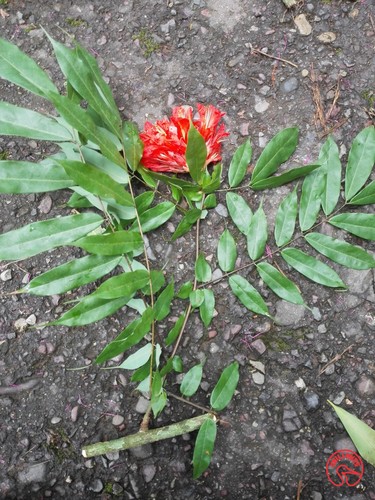
(c) David Renoult, some rights reserved (CC BY-NC), uploaded by David Renoult
iNaturalist· cc-by-nc
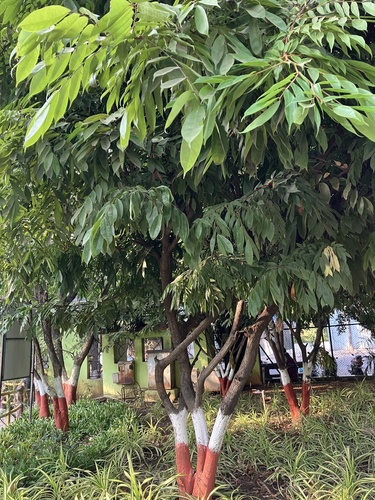
(c) Franco Colnago, some rights reserved (CC BY-NC), uploaded by Franco Colnago
iNaturalist· cc-by-nc
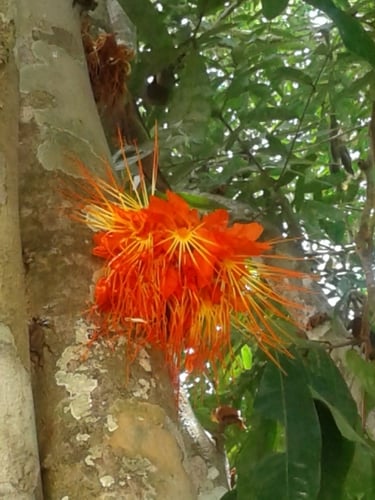
(c) Altaf Habib, some rights reserved (CC BY-NC), uploaded by Altaf Habib
Summary
Source: WikipediaVachellia tortilis, widely known as Acacia tortilis but now attributed to the genus Vachellia in the Fabaceae subfamily Mimosoideae, is the umbrella thorn acacia, also known as umbrella thorn and Israeli babool, a medium to large canopied tree native to most of Africa, primarily to the savanna and Sahel of Africa (especially the Somali peninsula and Sudan), but also occurring in the Middle East.
Description
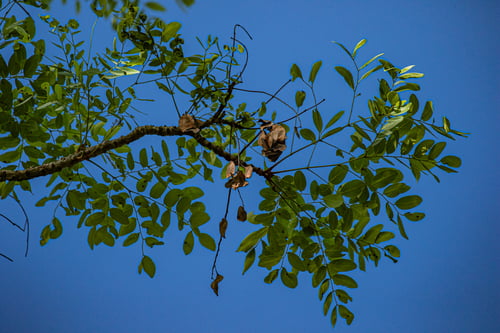
A flat topped shrub or tree. It grows to 4-21 m tall depending on rainfall. The crown occurs in layers. It is flat and spreading. The bark is grey brown and cracked when mature. It tends to shoot from the base rather than have a distinct trunk. It has two kinds of spines. Some are long and hooked and others are straight and long. The leaves are divided twice. There are 2-10 pairs of small leaflets. The stalk is only 2-4 cm long. The flowers are cream coloured round heads. The fruit are yellow to brown pods. These hang in dense bunches. The pods are twisted. Each pod has up to 10 brown seeds.
Edible Uses
Pods are used to make a porridge after the seeds have been extracted, and the immature seeds can be eaten directly. The stems yield an edible gum of moderate quality.
Traditional Uses
The gum is eaten. The bark is used as a snack and thirst quencher.
This uses section is brief — help expand it
Medicinal Uses
The dried, powdered bark serves as a disinfectant for healing wounds, and in Senegal the same powdered bark is used as an anthelmintic and dusted onto skin ailments. The stem is used to treat asthma, and seeds are taken internally to treat diarrhoea.
Known Hazards
None listed
Distribution
It grows in Mediterranean and tropical places. It is common all over Africa. It does best on alkaline soils. It grows in hot dry areas. Some forms have salt tolerance. It is drought resistant and cold tolerant. It grows between sea level and 2,000 m above sea level. It grows in areas with an annual rainfall between 50-1,000 mm. It can grow in arid places. It suits hardiness zones 9-11.
Where It Grows
Africa, Algeria, Angola, Arabia, Australia, Botswana, Burkina Faso, Central Africa, Chad, Djibouti, East Africa, Egypt, Eritrea, Eswatini, Ethiopia, India, Iran, Israel, Kenya, Lebanon, Libya, Madagascar, Malawi, Mali, Mauritania, Mediterranean, Middle East, Morocco, Mozambique, Namibia, Niger, Nigeria, North Africa, Oman, Pakistan, Palestine, Qatar, Sahel, Saudi Arabia, Senegal, Sinai, Socotra, Somalia, South Africa, Southern Africa, South Sudan, Sudan, Swaziland, Syria, Tanzania, Tunisia, Uganda, United Arab Emirates, UAE, West Africa, Western Sahara, Yemen, Zambia, Zimbabwe,
Cultivation
It is grow from seed. The seeds germinate slowly and only some seed germinate. The seed coat is very hard. To assist seed to grow they should be soaked in hot water then allowed to cool and soak overnight for 24 hours. Seed can be stored for a long time and will still grow. The plant can be cut back and will re-grow.
Propagation
Seeds require pre-treatment before sowing. The simplest method is to pour boiling water over the seeds and soak them in the cooling water for 24 hours. Commercially, scarification with 50% concentrated sulphuric acid for 40–50 minutes, followed by washing in cold running water and shade-drying overnight, is commonly used and achieves a maximum germination rate of around 95%. Older seeds are reported to produce healthier seedlings than fresh ones. Pre-treated seeds are sown in cylindrical metallic containers 10.2 cm in diameter and 30.5 cm long, filled with equal proportions of finely powdered farmyard manure, tank silt and soil sieved through a fine wire mesh, with two seeds per container. Sowing depth should not exceed 4 cm or seedling emergence will be impaired. Germination begins on the 4th day and is mostly complete within 10 days, though it may continue for 60–70 days; germination rates can be as low as 45%. Seedlings should be watered twice daily. Providing shade during summer reduces water requirements by 9.6% compared with open-grown plants. Seedlings in metallic containers placed in cemented beds immersed in water require 29% less water than those in earthen beds. Metallic containers are cheaper in the long run and last around 12 years. Seedlings are planted out at 0.5–1 m height and require initial weeding to support establishment. Plants under 2 years old are damaged by frost and sensitive to hot, desiccating winds. Seed storage behaviour is orthodox; viability can be maintained for several years in hermetic storage at 10°C with 4.5–9% moisture content.
Other Uses
The pods have been used as beads in necklaces and are the source of a resin known as Gomme Rouge. The bark is a rich source of tannin and yields a strong fibre. Fruits placed in fish ponds act as a powerful molluscicide and algicide, killing snail species that carry schistosomiasis without harming fish. Thorny branches can be used to construct barriers. The sapwood and heartwood are white and lustrous, the heartwood ageing to reddish-brown with distinct growth rings separated by brown lines. The wood is moderately soft, not very strong, and is readily attacked by decay fungi and insects; it should be converted promptly after felling and dried rapidly. Not durable in the open but moderately durable under cover, it is used for planking, boxes, poles, moisture-proof plywood, gun and rifle parts, furniture, house construction and farm implements. Tradition holds that Noah built his ark from this wood. The root is traditionally used to make arrow quivers: a 40–60 cm piece of root is left overnight in spent warm ashes, then a section of bark is removed at one end, a circular groove carved into the exposed core, wire wound around the groove with the other end attached to a tree, and the loosened bark pulled off whole — the remaining core often serving as a pestle. The plant begins producing fuel wood at 8–18 years at a rate of 50 kg per tree. Its fast growth, good coppicing behaviour, and high calorific value of 4,400 kcal/kg make it well suited for firewood and charcoal. Due to its drought hardiness and fast growth it is a promising species for afforesting shifting sand dunes, refractory sites, hill slopes, ravines and lateritic soils, and is the most recommended tree for reclaiming dunes in India and Africa. It has been grown successfully alongside Azadirachta indica in shelterbelts.
Production
It grows slowly. In Kenya pods are available September to November.
Notes
There are about 1,350 Acacia species. Over 1,000 occur in Australia. Also as Mimosaceae.
Synonyms
Also Known As
Abaq, Dadach, Dhetata, Etirr, Galool, Haak-en-steek, Israeli babool, Mgunga, Munga, Nchongwe, Ol-gorete, Ol-tepesi, Qudhac, Qurac, Sagararam, Timad, Ullaf, Xadacha
References (40)
- Allen, D. J., 2007, Wildflowers and Common Trees of East Africa. Camerapix Publishers p 72 (As Acacia tortilis)
- Balemie, K., & Kebebew, F., 2006, Ethnobotanical study of wild edible plants in Derashe and Kucha Districts, South Ethiopia. Journal of Ethnobiology and Ethnomedicine.
- Ballal, M. E., et al, 2014, Ethno-botany of Natural Forests of Nuba Mountains, South Kordofan State, Sudan. Journal of Forest Poducts & Industries. 3(1):13-19
- Barwick, M., 2004, Tropical and Subtropical Trees. A Worldwide Encyclopedic Guide. Thames and Hudson p 5
- Bekele-Tesemma A., Birnie, A., & Tengnas, B., 1993, Useful Trees and Shrubs for Ethiopia. Regional Soil Conservation Unit. Technical Handbook No 5. p 68
Show all 40 references Hide references
- Biocyclopedia Edible Plant Species (As Acacia tortilis)
- Bunderson, W. T. et al, 2002, Common Agroforestry Species in Malawi. Malawi Agroforestry Extension Project, Pubication No. 46, Lilongwe. p 15
- Burkill, H. M., 1985, The useful plants of west tropical Africa, Vol. 3. Kew.
- Cundall, P., (ed.), 2004, Gardening Australia: flora: the gardener's bible. ABC Books. p 79
- Dharani, N., 2002, Field Guide to common Trees & Shrubs of East Africa. Struik. p 37
- Etherington, K., & Imwold, D., (Eds), 2001, Botanica's Trees & Shrubs. The illustrated A-Z of over 8500 trees and shrubs. Random House, Australia. p 56
- Ethiopia: Famine Food Field Guide. http://www.africa.upenn.edu/faminefood/category1.htm
- Facciola, S., 1998, Cornucopia 2: a Source Book of Edible Plants. Kampong Publications, p 151
- Feyssa, D. H., et al, 2011, Seasonal availability an consumption of wild edible plants in semiarid Ethiopia; Implications to food security and climate change adaptation. Journal of Horticulture and Forestry 3(5): 138-149
- Flora of Pakistan. www.eFloras.org
- Getreue Darstell. Gew. 10: t. 31. 1827
- Hepper, E.N., 1993, Illustrated Encyclopedia of Bible Plants, IVP, England. p 57, 63
- ILDIS Legumes of the World http:www;ildis.org/Legume/Web
- Katende, A.B., Birnie, A & Tengnas B., 1995, Useful Trees and Shrubs for Uganda. Identification, Propagation and Management for Agricultural and Pastoral Communities. Technical handbook No 10. Regional Soil Conservation Unit, Nairobi, Kenya. p 60
- Kew Plants of the World Online
- Krishen P., 2006, Trees of Delhi, A Field Guide. DK Books. p 267
- Kuhnlein, H. V., et al, 2009, Indigenous Peoples' food systems. FAO Rome p 239
- Lulekal, E., et al, 2011, Wild edible plants in Ethiopia: a review on their potential to combat food insecurity. Afrika Focus - Vol. 24, No 2. pp 71-121
- Mahony, D., 1991, Trees of Somalia. A Field Guide for Development Workers. Oxfam Research Paper 3. p 9 (As Acacia tortilis)
- Mannheimer, C. A. & Curtis. B.A. (eds), 2009, Le Roux and Muller's Field Guide to the Trees and Shrubs of Namibia. Windhoek: Macmillan Education Namibia. p 120
- Maundu, P. et al, 1999, Traditional Food Plants of Kenya. National Museum of Kenya. p 49
- Maydell, H. von, 1990, Trees and shrubs of the Sahel: their characteristics and uses. Margraf. p 123
- Mbuya, L.P., Msanga, H.P., Ruffo, C.K., Birnie, A & Tengnas, B., 1994, Useful Trees and Shrubs for Tanzania. Regional Soil Conservation Unit. Technical Handbook No 6. p 70
- Molla, A., Ethiopian Plant Names. http://www.ethiopic.com/aplants.htm
- Mutie, F. M., et al, 2023, Important Medicinal and Food Taxa (Orders and Families) in Kenya, Based on Three Quantitative Approaches. Plants 2023, 12, 1145
- Omer, M., 2011, Diversity of Woody Species, Local Knowledge and Management Practices in Different Land Use Systems of Awbare Wereda, Jig-Jiga Zone of Somali Region, Ethiopia. M. Sc. thesis Addis Abba University p 47 (As Acacia tortilis)
- Palgrave, K.C., 1996, Trees of Southern Africa. Struik Publishers. p 252
- Peters, C. R., O'Brien, E. M., and Drummond, R.B., 1992, Edible Wild plants of Sub-saharan Africa. Kew. p 128
- Royal Botanic Gardens, Kew (1999). Survey of Economic Plants for Arid and Semi-Arid Lands (SEPASAL) database. Published on the Internet; http://www.rbgkew.org.uk/ceb/sepasal/internet [Accessed 27th April 2011]
- Ruiters-Welcome, A. K., 2019, Food plants of southern Africa. Ph.D. thesis. Univ. of Johannesburg p 62
- van Wyk, B, van Wyk, P, and van Wyk B., 2000, Photographic guide to Trees of Southern Africa. Briza. p 44
- van Wyk, Ben-Erik, 2019, The diversity and multiple uses of southern African legumes. Australian Systematic Botany, 2019, 32, 519–546
- Welcome, A. K. & Van Wyk, B.-E., 2019, An inventory and analysis of the food plants of southern Africa. South African Journal of Botany 122 (2019) 136–179
- World Checklist of Useful Plant Species 2020. Royal Botanic Gardens, Kew
- www.worldagroforestrycentre.org/sea/products/afdbases/af