Prostanthera rotundifolia
R. Br.
Native mint, Round leafed mintbush, Australian mint bush
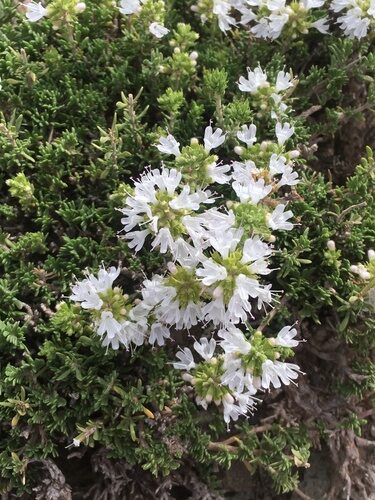
iNaturalist· cc-by-nd
(c) Greg Holland, some rights reserved (CC BY-ND), uploaded by Greg Holland
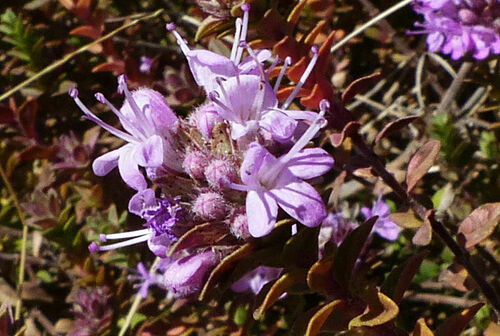
iNaturalist· cc-by-nc
(c) eesumner, some rights reserved (CC BY-NC), uploaded by eesumner
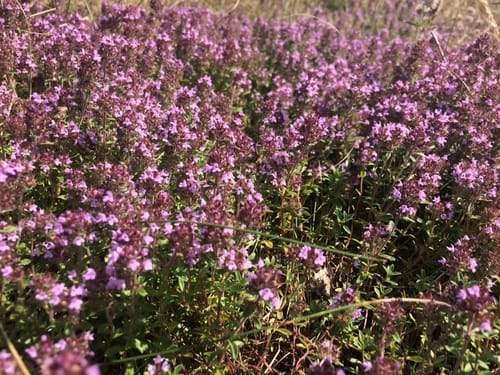
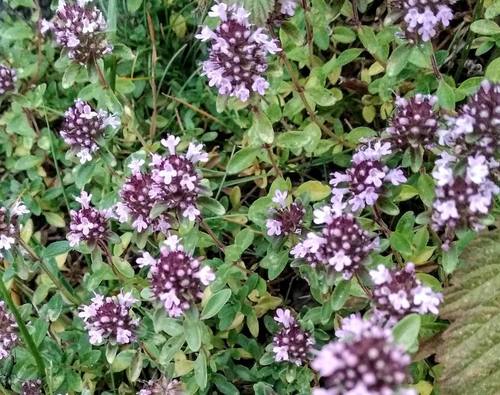
iNaturalist· cc-by-nc
(c) Indra Bone, some rights reserved (CC BY-NC), uploaded by Indra Bone
Summary
Source: WikipediaProstanthera rotundifolia, commonly known as round-leaved mintbush or round-leaf mint-bush is a species of flowering plant in the mint family Lamiaceae, and is endemic to south-eastern Australia. It is an erect shrub with aromatic branches covered with short hairs and glands, egg-shaped to more or less round leaves and purple to mauve or pinkish flowers on the ends of branchlets.
Description
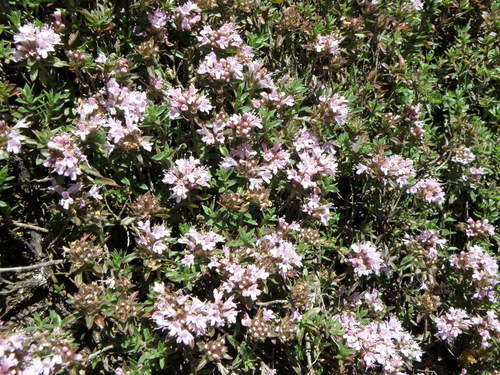
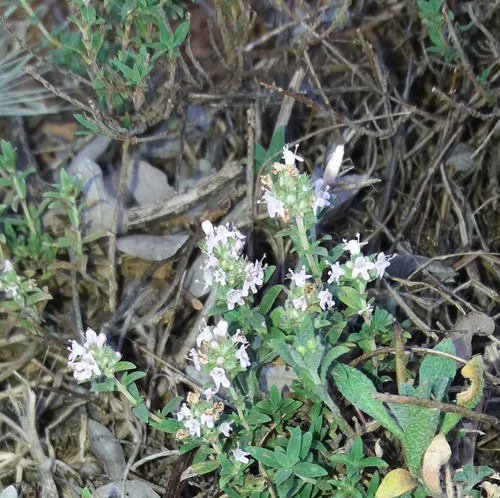
A compact shrub. It grows to 1.5-3 m high. It spreads 1-2.2 m wide. The leaves are oval or round and on short stalks. They are 2 cm long by 1.5 cm wide. The edges can have irregular lobes. The flowers are pink to purple and 1.5 cm across. The occur in clusters in the axils of leaves. The fruit is a small ridged nut.
Edible Uses
None known
Traditional Uses
The fresh or dried leaves are used for seasoning. They can be used with savoury and sweet foods. They can be used in dressings, sauces, meat dishes and desserts. The leaves can be used for tea. The flowers can be added to fruit jellies or used as garnish for cakes and desserts.
Medicinal Uses
The plant is rich in volatile oils, including menthol and cineole. The leaves are antibacterial, antifungal, and carminative, and are used externally to treat colds and headaches, presumably by infusing the leaves in hot water and inhaling the vapour.
Distribution
It grows in temperate places. It can also grow in the subtropics. It grows naturally in rocky situations in open forest. It needs well drained soil. It can grow in full sun or light shade. It can stand light frost. In Hobart Botanical gardens. It suits hardiness zones 9-11. Tasmania Herbarium. Arboretum Tasmania.
Where It Grows
Australia*, Tasmania*,
Cultivation
Requires a sunny position in a well drained soil and does not thrive on shallow chalky soils. Prefers a humus-rich lime-free soil. This species only succeeds outdoors in the mildest areas of the country. It is hardy to at least -7°c in Australian gardens though this cannot be translated directly to British gardens due to our cooler summers and longer colder and wetter winters. It does succeed outdoors in various places in Cornwall, though it is probably best on a wall even there. A short-lived plant, but it can be grafted onto the roots of Westringia fruticosa which allows it to be grown in less favourable conditions and also probably increases its life span. Plants are very tolerant of light trimming, but dislike hard pruning. Any trimming is best carried out immediately after flowering. Both leaves and flowers have a minty aroma.
Propagation
Sow seed in spring in a greenhouse; it usually germinates within a few weeks. Prick seedlings out into individual pots once large enough to handle and grow on under glass for at least their first winter. Plant out into permanent positions in late spring or early summer, after the last expected frosts. Seed remains viable for 2–3 years in normal storage. Softwood cuttings taken in early summer root readily in a frame. Half-ripe cuttings can also be taken in July or August in a frame.
Other Uses
An essential oil obtained from the leaves has medicinal properties; the leaves yield up to 0.7% of this oil. The dried leaves are used in pot-pourri. The plant is noted for its scent.
References (21)
- Alice, L. & O'Quinn, T., Australian Bush Superfoods. Explore Australia p 170
- Bodkin, F., 1991, Encyclopedia Botanica. Cornstalk publishing, p 836
- Bonney, N., 2012, Edible Wild Native Plants for Southern Australia. p 110
- Brickell, C. (Ed.), 1999, The Royal Horticultural Society A-Z Encyclopedia of Garden Plants. Convent Garden Books. p 834
- Cameron, M., (Ed.) 1981, A Guide to Flowers & Plants of Tasmania. Reed p 70
Show all 21 references Hide references
- Cronin, L., 1989, The Concise Australian Flora. Reed. p 19
- Cundall, P., (ed.), 2004, Gardening Australia: flora: the gardener's bible. ABC Books. p 1087
- Curtis, W.M., 1993, The Student's Flora of Tasmania. Part 3 St David's Park Publishing, Tasmania, p 553
- Facciola, S., 1998, Cornucopia 2: a Source Book of Edible Plants. Kampong Publications, p 133
- Greig, D., 1996, Flowering Natives for Home Gardens. Angus & Robertson. p 296
- Grieg, D., 2002, A photographic guide to Wildflowers of South-eastern Australia. New Holland. p 56
- Hastings Advance Community College, 2017, Uses for Native Plants of the Mornington Peninsula. 86pp. p 63
- Hibbert, M., 2002, The Aussie Plant Finder 2002, Florilegium. p 240
- Holliday, I., 1979, A Field Guide to Australian Native Shrubs. Rigby. p 184
- Lawton, B.P., 2002, Mints. A Family of Herbs and Ornamentals. Timber Press, Portland, Oregon. p 175
- Lord, E.E., & Willis, J.H., 1999, Shrubs and Trees for Australian gardens. Lothian. p 189
- Prodr. 509. 1827
- Robins, J., 1996, Wild Lime. Cooking from the Bush food garden. Allen & Unwin p 126
- Tasmanian Herbarium Vascular Plants list p 36
- Whiting, J. et al, 2004, Tasmania's Natural Flora. Tasmania's Natural Flora Editorial Committee PO Box 194, Ulverstone, Tasmania, Australia 7315 p 195
- www.ceres.org.au/bushfoodcatalogue