Salvia mukerjeei
Bennet & Raizada
Eastern Sage, Woolly sage, Glass-wort
iNaturalist· cc0
no rights reserved
iNaturalist· cc0
no rights reserved
Description
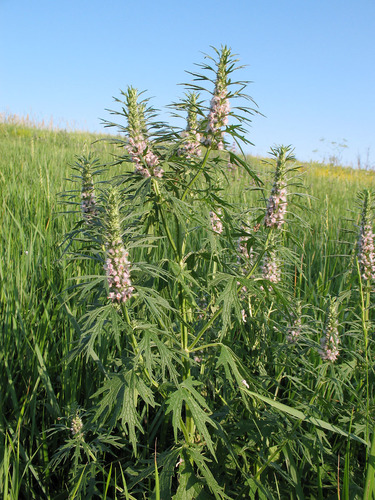
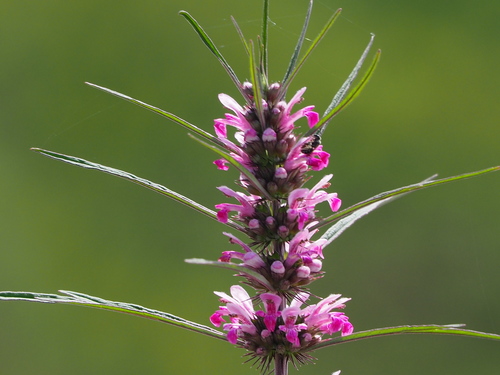
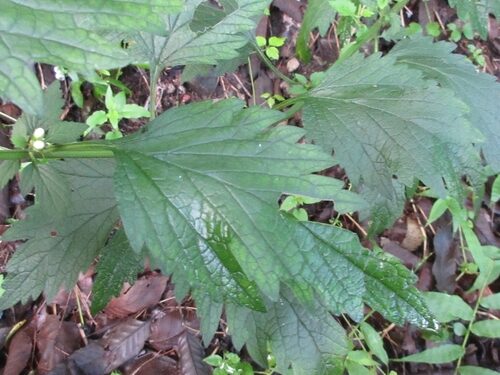
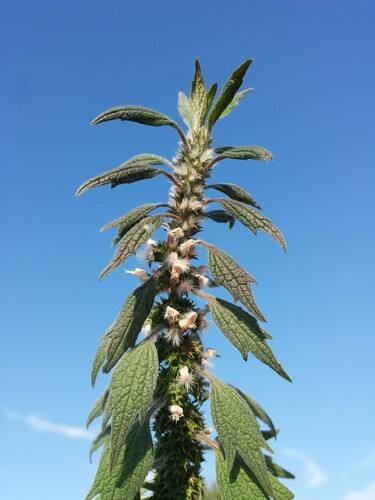
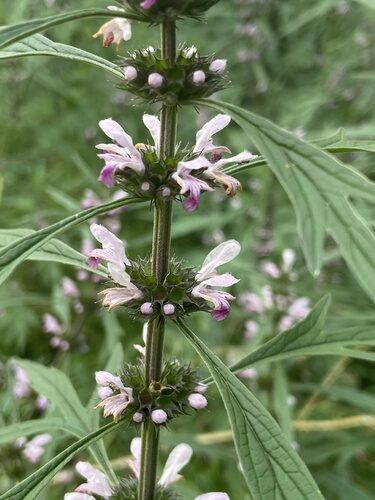
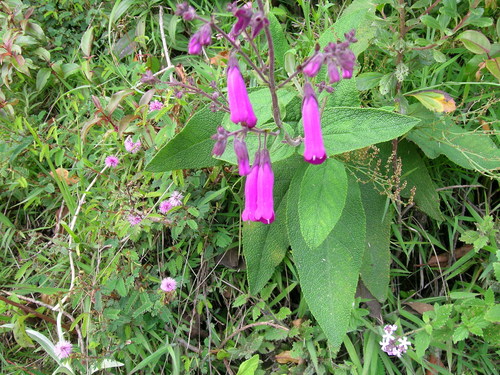
An erect herb. It grows 30 cm tall. It keeps growing from year to year. It has a white woolly covering. The leaves are clustered at the base of the stem. The leaves are 5-10 cm long by 1-3 cm wide. The flowers are white, purple or blue.
Edible Uses
The flowering tips and flower spikes are eaten raw in salads or cooked as a vegetable. The stems are peeled and eaten.
Traditional Uses
The flowering tips and flower spikes are eaten raw in salads. They are also cooked as a vegetable. The stems are peeled and eaten.
This uses section is brief — help expand it
Distribution
It is a subtropical plant. In the Himalayas it grows in drier areas between 1,500-3,000 m above sea level. It needs to be in a sunny position. It suits hardiness zone 6-9.
Where It Grows
Asia, Himalayas, India, Nepal, Pakistan,
Synonyms
Also Known As
Bunda, Ghanaii, Matter jarrai, Tooth
References (5)
- Ahmad, K., et al, 2018, Ethnobotanical investigation of wild vegetables used among local communities in northwest Pakistan. Acta Soc Bot Pol. 2019;88(1):3616.
- Ambasta, S.P. (Ed.), 2000, The Useful Plants of India. CSIR India. p 543 (As Salvia lanata)
- Hedrick, U.P., 1919, (Ed.), Sturtevant's edible plants of the world. p 591 (As Salvia lanata)
- Kumar, P. D., et al, 2015, Ethnobotanical Knowledge and Usage of Wild Plants in Theog Forest Division, Himachal Pradesh, North Western Himalaya. The Journal of Ethnobiology and Traditional Medicine. Photon 124(2015) 922-935 (As Salvia lanata)
- Negi, K.S., 1988, Some little known wild edible plants of U.P. Hills. J. Econ. Tax. Bot. Vol. 12 No. 2 pp 345-360 (As Salvia lanata)