Planchonia valida
(Blume) Blume
Putat tree
iNaturalist· cc-by-nc
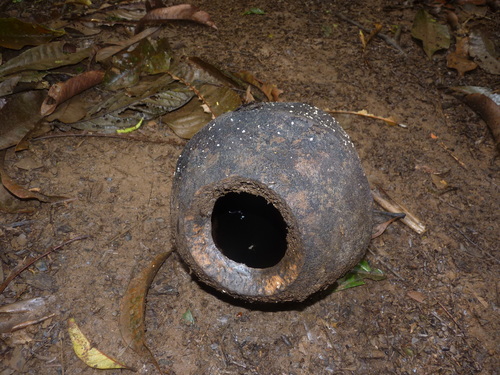
(c) thehousebunting, some rights reserved (CC BY-NC)
iNaturalist· cc-by
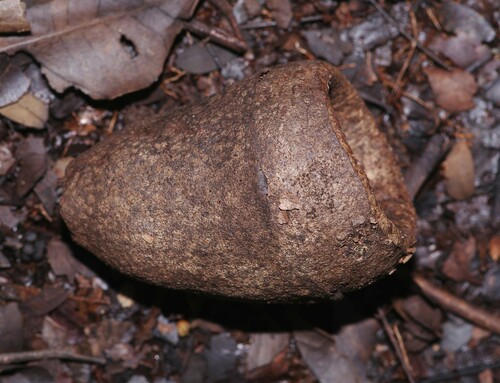
(c) T R Shankar Raman, some rights reserved (CC BY)
iNaturalist· cc-by
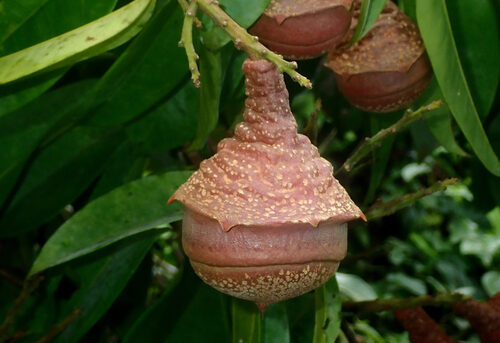
(c) T R Shankar Raman, some rights reserved (CC BY)
Summary
Source: WikipediaPlanchonia valida grows as a tree up to 50 metres (160 ft) tall, with a trunk diameter of up to 2 metres (6 ft 7 in). The bark is grey brown. The flowers are green. The tree grows in a variety of habitats from sea level to 1,000 metres (3,300 ft) elevation. P. valida is found in the Andaman and Nicobar Islands, Malaysia and Indonesia.
Description
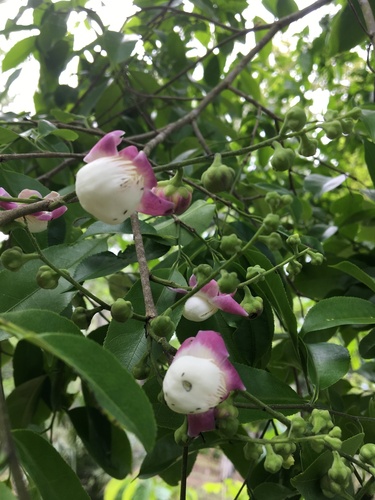
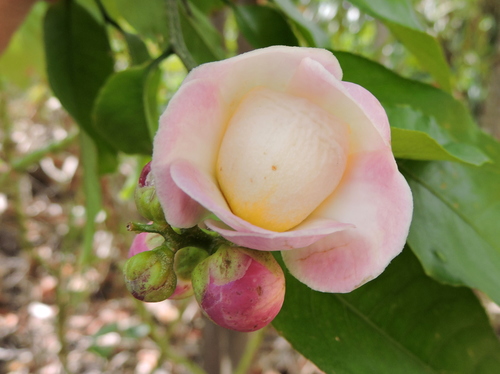
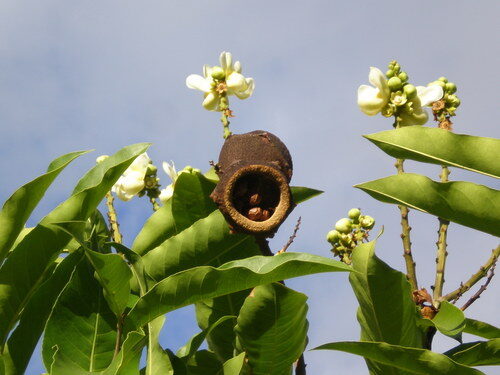
A tree. It grows to 56 m tall. The trunk can be 1.2 m across. The leaves are alternate and simple. They have teeth along the edge. The flowers are 4 cm across. They are pink to red. There are many protruding stamens. The flowers are in short groups. The fruit are about 6 cm long. They are green and fleshy. There are several seeds.
Edible Uses
Young leaves - eaten raw as a vegetable. Eaten as lalab (a vegetable salad served with sambal) with rice.
Traditional Uses
The young leaves are eaten with rice.
This uses section is brief — help expand it
Medicinal Uses
The bark is used as a treatment against skin diseases.
Distribution
A tropical plant. It grows in rainforest up to 300 m above sea level. It can be along rivers on on ridges. In Java it can be up to 1,000 m above sea level.
Where It Grows
Andaman Islands, Asia, East Timor, India, Indonesia, Malaysia, New Guinea, SE Asia, Timor-Leste,
Cultivation
Plants can be grown from seeds.
Other Uses
The wood is reddish brown with yellow specks. It is very hard and close-grained, seasons well and takes a fine polish. A valuable wood that should be better known. It is used locally.
Notes
There are about 14 Plachonia species. They grow in the Asian tropics.
Synonyms
Also Known As
Baila da, Kasui, Kayu putat, Lal bombway, Pohon putat, Pohon talisei, Putat, Putat gajah, Putat paya, Selangan kangkong, Talisei, Telisei, Talisai bukit, Talisai sugud
References (5)
- Ambasta, S.P. (Ed.), 2000, The Useful Plants of India. CSIR India. p 466
- Martin, F.W. & Ruberte, R.M., 1979, Edible Leaves of the Tropics. Antillian College Press, Mayaguez, Puerto Rico. p 197
- Ochse, J.J. et al, 1931, Vegetables of the Dutch East Indies. Asher reprint. p 360
- Slik, F., www.asianplant.net
- Sukarya, D. G., (Ed.) 2013, 3,500 Plant Species of the Botanic Gardens of Indonesia. LIPI p 458, 688