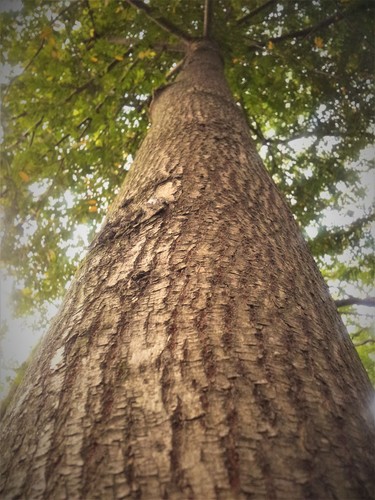
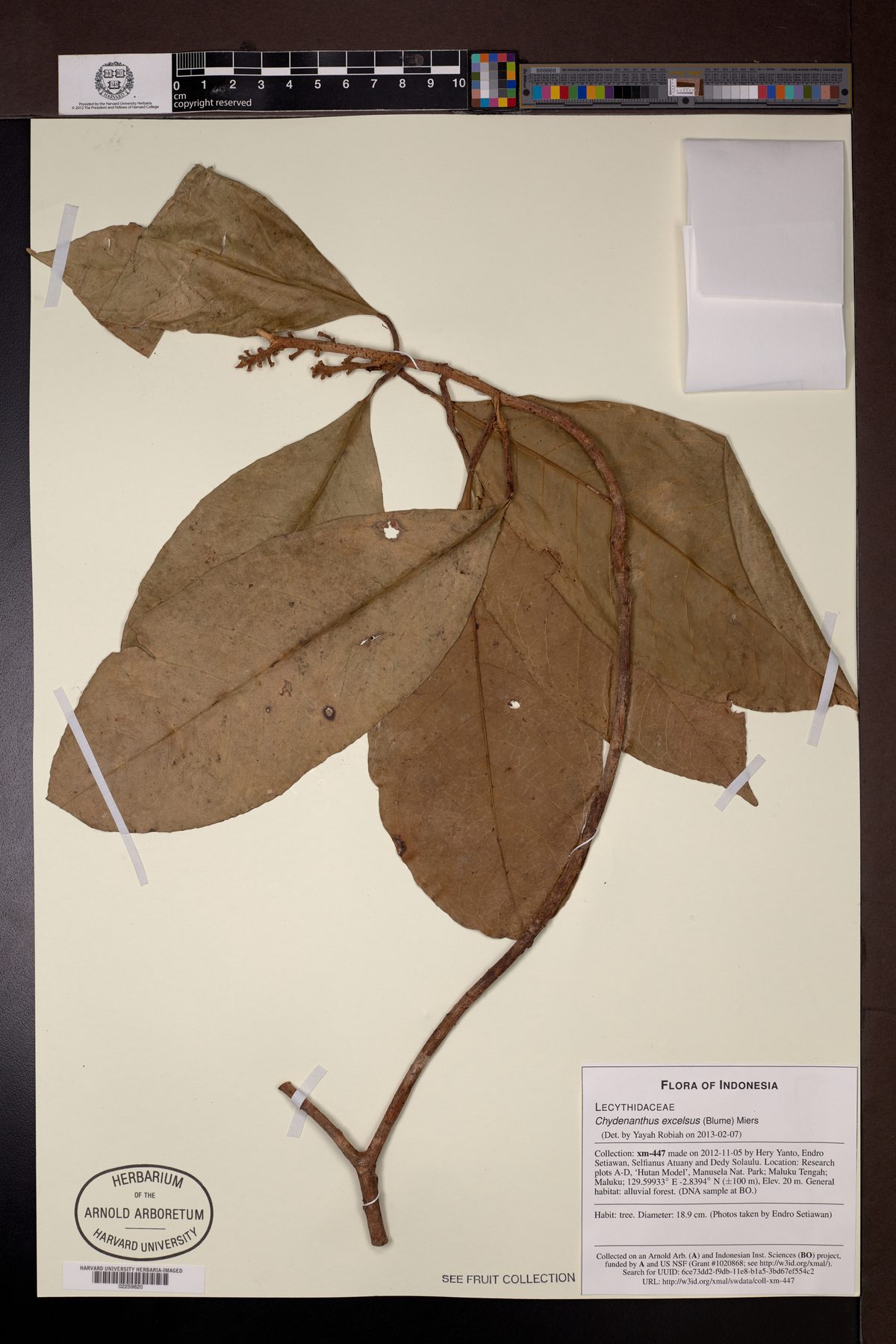
Couroupita subsessilis
Pilg.
Castanheiro do macaco, Cannon ball tree
iNaturalist· cc-by-nc
(c) Fernanda França, some rights reserved (CC BY-NC)
wikimedia· cc-by-sa
Wikimedia Commons - Ícaro D. Lima
gbif· cc-by-nc
Field Museum of Natural History - Botany Department | GDI 2013-2015
Description
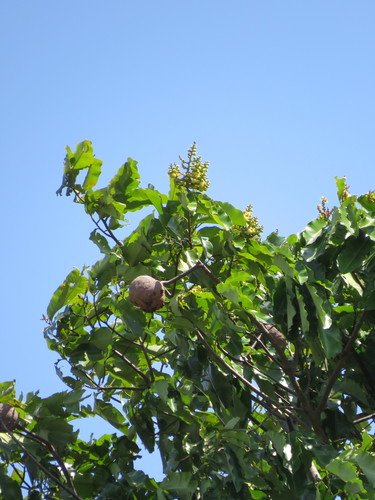
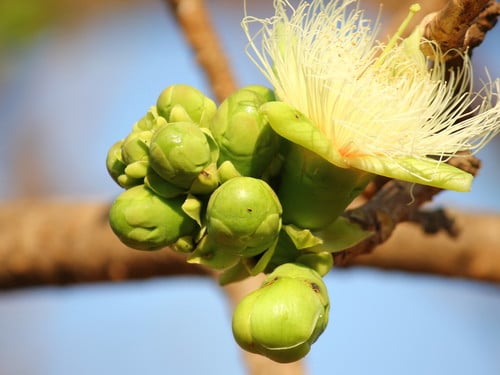
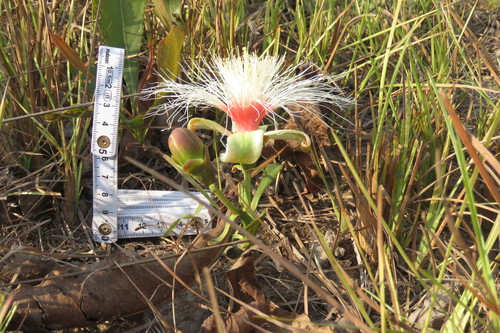
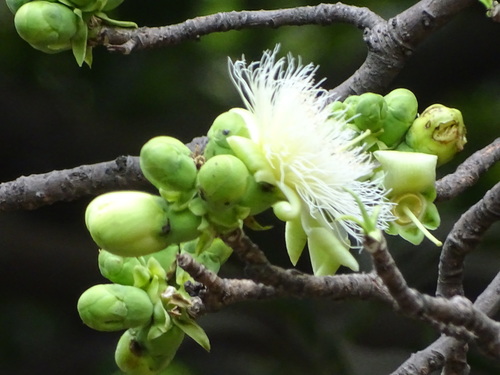
A tree. It grows 40-55 m tall. The leaves are large and taper gradually towards the base. They are sword shaped and 8-26 cm long by 3-8 cm wide. The flowers cn be hanging from the trunk or branches. The fruit are a flattened round shape 9-13 cm across.
Edible Uses
The fruit is edible.
Distribution
It is a tropical plant.
Where It Grows
Amazon, Brazil, Colombia, Peru, South America,
Other Uses
The heartwood is light yellow; it is not clearly demarcated from the sapwood. The texture is coarse; the grain straight or interlocked; there is an unpleasant odour from the green wood. The wood is light to very light in weight; very soft to soft; not durable, being susceptible to fungi, dry wood borers and termites. It seasons somewhat slowly, with only a slight risk of checking or distortion; once dry it is moderately stable in service. The wood works easily with ordinary tools, though there is a tendency to woolliness and filling is recommended in order to obtain a good finish; nailing and screwing are poor; gluing is correct. The wood is used for various lower value purposes including boxes and crates, matches, interior joinery and panelling, furniture components, wood-ware, floats, blockboard and fibre boards.
Notes
It is a timber tree. It is pollinated by bees.
Synonyms
Also Known As
Macacarecuia
References (2)
- Kermath, B. M., et al, 2014, Food Plants in the Americas: A survey of the domesticated, cultivated and wild plants used for Human food in North, Central and South America and the Caribbean. On line draft. p 273
- Martin, F. W., et al, 1987, Perennial Edible Fruits of the Tropics. USDA Handbook 642 p 97