Pittosporum resiniferum
Hemsl.
Resin cheesewood
iNaturalist· cc-by-nc
(c) Kaitlyn, some rights reserved (CC BY-NC), uploaded by Kaitlyn
iNaturalist· cc-by-nc
(c) Jeanne Benioff, some rights reserved (CC BY-NC)
iNaturalist· cc-by-nc
(c) Helle Hvitved, some rights reserved (CC BY-NC)
Summary
Source: WikipediaPittosporum resiniferum, the resin cheesewood or petroleum nut, is a tree that grows in the Philippines and Malaysia, particularly in the wilderness surrounding the Mayon Volcano and in the Cordillera of the Philippines and Mount Kinabalu of Sabah, Malaysia. The petroleum nut derives its name from the resemblance of the fruit's odor to petroleum-based fuels. The fruits of the tree burn brightly when ignited, and can be used for illumination as torches or candles. Its fruit is also highly suitable for use in producing biofuel. This use has been encouraged by the Philippines Department of Agrarian Reform and the Philippine Coconut Authority. In the Philippine Cordilleras petroleum nut is locally known as apisang, abkel, abkol and da-il, is found among other trees like oak and other mossy forest species. It can also grow well with pine trees. The oil obtained from the fruit contains a dihydroterpene(C10H18) and also considerable quantities of normal heptane, which had only twice before been found in nature, occurring in the Grey Pine (Pinus sabiniana) and the related Jeffrey Pine (Pinus jeffreyi) of California The oil can be distilled into a very pure form of n-Heptane.
Description
Large evergreen tree growing at medium rate to 25m tall by 20m wide. Hardy to UK zone 10. Tolerates light sandy, medium loamy, and heavy clay soils with good drainage across mildly acid to mildly alkaline pH. Requires full sun and prefers moist soil.
Edible Uses
None Known
Medicinal Uses
Herbalists in the Philippines use the petroleum nut as a universal medicine. An infusion of the fruit is used for intestinal and stomach pains. An oleoresin from the fruit is applied externally to treat leprosy and other skin diseases, and to relieve muscular pains. A decoction of the nuts is used for colds. The crushed nuts combined with coconut oil bring relief from myalgia. A decoction of the leaves is taken for coughs. The sap is used to treat ringworm.
Distribution
It is a tropical plant.
Where It Grows
Asia, Malaysia, Philippines, SE Asia,
Cultivation
Experimental Crop Industrial Crop: Hydrocarbon Management: StandardA plant of moderate to high elevations in the moist to wet tropics, where it can be found at elevations from 600 - 2,400 metres. It grows best in areas where the mean annual temperature is within the range 18 - 28°c. It prefers a mean annual rainfall in the range 1,500 - 5,000mm. Prefers a well-drained soil. The tree can commence fruiting when 6 - 12 metres tall. Tree can commence bearing fruit within five years from seed. One tree yields an average 250 - 300 kilos of fruit per year. One litre of high flammable oil can be obtained from 15 kilos of fresh fruits. There are considerable differences in the proportion of heptane and dihydroterpene found in the oil; the season and degree of ripeness of the fruits undoubtedly playing a considerable role in this respect. All parts of the tree are distinctly resiniferous and have the same pleasant, orange-like odour as the fruits. The flowers are fragrant. Climate: tropical highlands. Humidity: humid. Cultivation: experimental. Management: standard.
Propagation
Seed viability is probably very short — less than one month. Cuttings are also a viable propagation method.
Other Uses
Oil obtained from the fruit contains a dihydroterpene and significant quantities of normal heptane — a compound that at the time of writing had only once before been found in nature, in the digger pine (Pinus sabiniana) of California. The oil can be distilled into a very pure form of n-heptane. Dihydroterpene is used in perfumes and medicines; heptane is a component of gasoline and has been proposed as a component of paint and varnish. The oil is quite sticky and rapidly becomes resinous in thin layers. It burns strongly with a sooty flame in an open dish. It distils unchanged up to 165°C, then decomposes to give a resin oil; the fraction distilling between 100°C and 165°C is colourless with an orange-like odour. The essential oil makes up 8–10% of total fruit weight and comprises 40% myrcene and 38% a-pinene, with n-heptane and n-nonane as minor components. Even green fruits burn brilliantly when ignited and are used like torch nuts or candlenuts for illumination in the bush. The fruits are about 3cm long and borne in clusters on the stems; the oil comes from the fruit, not the seed. The nut has a carbon rating of 54, considerably higher than Jatropha curcas, which has a rating of 41.
Notes
There are about 200 Pittosporum species.
Synonyms
Also Known As
Pittosporum resiniferum, the resin cheesewood or petroleum nut. In the Philippine Cordilleras petroleum nut is locally known as apisang, abkel, abkol and da-il.
References (2)
- Bull. Misc. Inform. Kew 1894:344. 1894
- World Checklist of Useful Plant Species 2020. Royal Botanic Gardens, Kew
More from Pittosporaceae
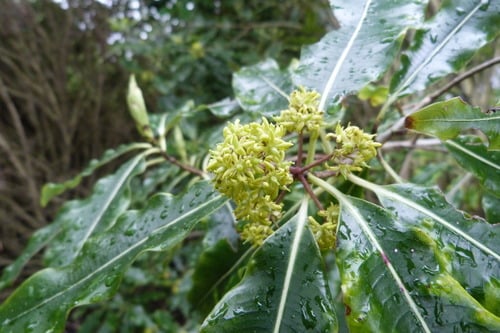
Pittosporum eugenioides
Lemonwood
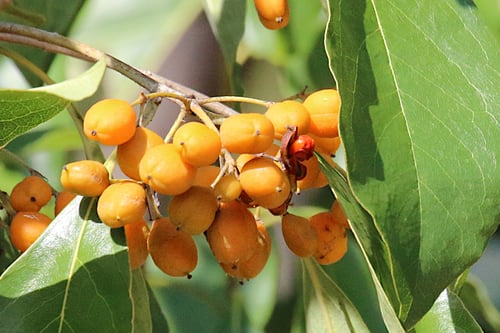
Pittosporum ferrugineum
Rusty Pittosporum, Mock Orange
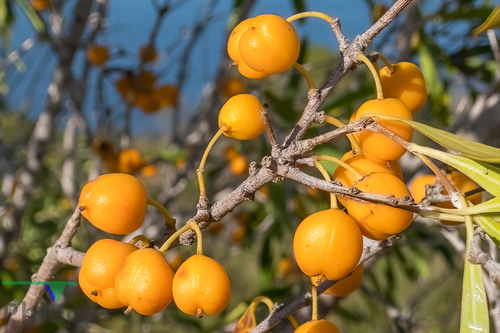
Pittosporum phillyreoides
Weeping pittosporum, Butter bush, Native willow, Meemeei, Wild apricot, Berrigan
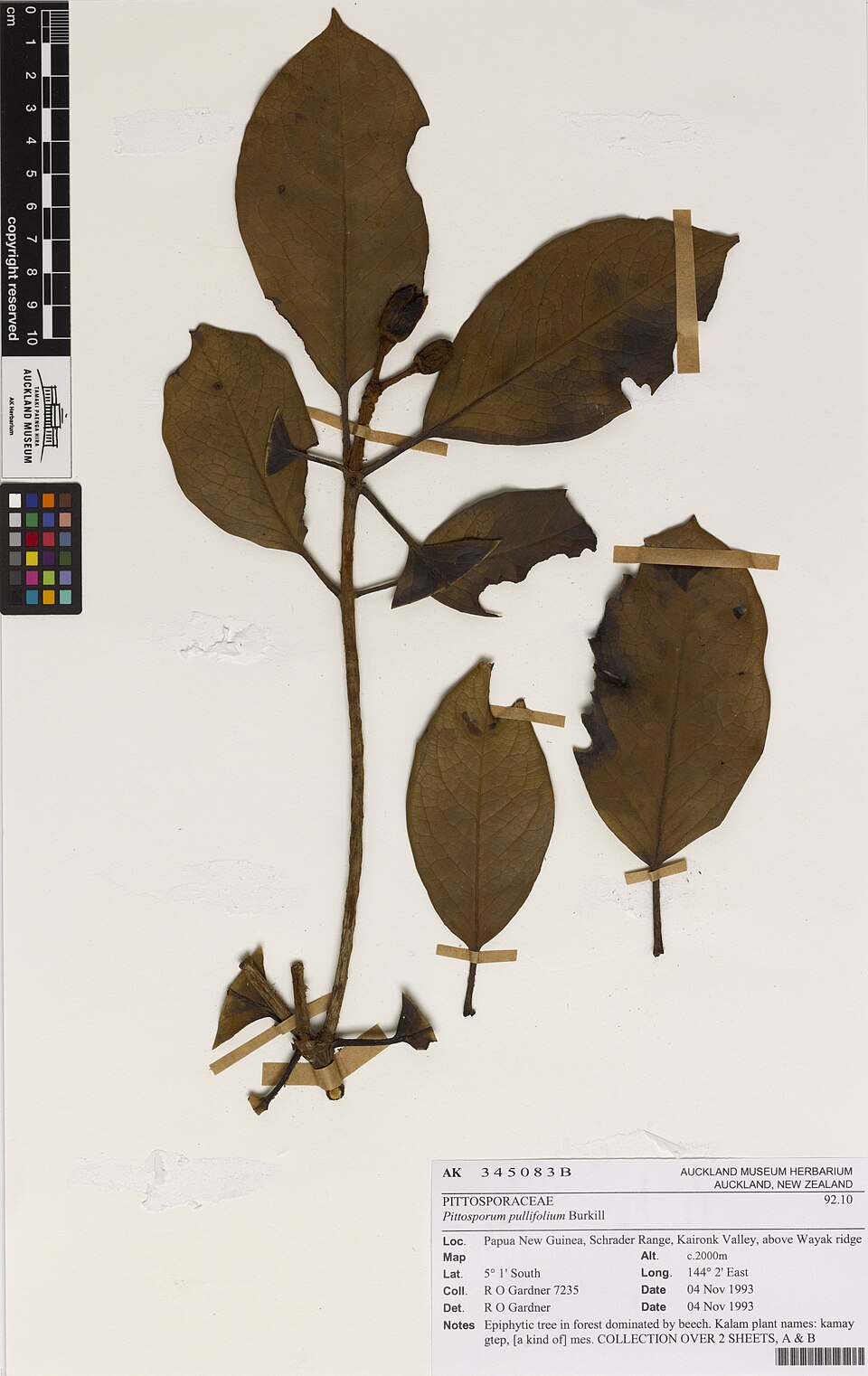
Pittosporum pullifolium
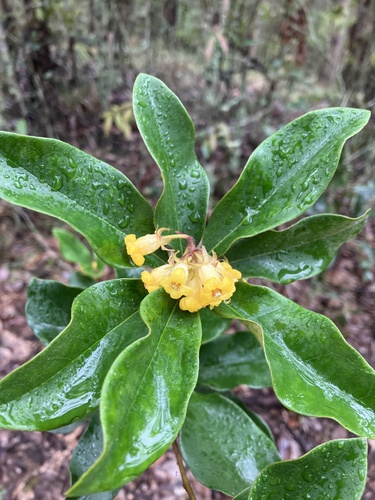
Pittosporum revolutum
Hairy pittosporum, Yellow Pittosporum, Rough-fruited Pittosporum, Mock orange
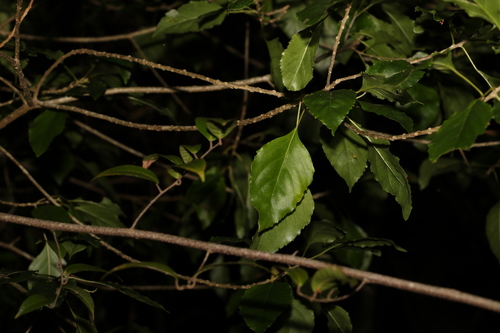
Pittosporum rhombifolium
Queensland pittosporum, Diamond leaf pittosporum