Pittosporum undulatum
Vent.
Sweet pittosporum, Australia cheesewood
iNaturalist· cc-by-nc
(c) Julián Maya, some rights reserved (CC BY-NC), uploaded by Julián Maya
Summary
Source: WikipediaPittosporum undulatum is a fast-growing tree in the family Pittosporaceae. It is sometimes also known as sweet pittosporum, native daphne, Australian cheesewood, Victorian box or mock orange. P. undulatum has become invasive in parts of Australia where it is not indigenous. It is also highly invasive in South Africa, the Caribbean, Hawaii, the Azores and southern Brazil.
Description
An evergreen shrub or small tree. It grows 14 m tall. The crown is dense. The bark is smooth and grey. The leaves are alternate and crowded at the ends of the branches. They are narrowly oval or sword shaped and shiny green. The edges are wavy. The flowers are in groups at the ends of the branches. They are white and have a scent. The fruit is an orange capsule. It is 1.6 cm long and has 25 angular seeds.
Edible Uses
None known
Traditional Uses
The seeds are roasted and then eaten. Sometimes they are crushed.
This uses section is brief — help expand it
Medicinal Uses
None known
Known Hazards
This plant contains saponins. Saponins are found in many foods, such as some beans, and although they are fairly toxic to people they are poorly absorbed by the body and most pass straight through without any problem. They are also broken down if the food is thoroughly cooked for a long time. Saponins are much more toxic to some creatures, such as fish, and hunting tribes have traditionally put large quantities of them in streams, lakes etc in order to stupefy or kill the fish.
Distribution
It is a subtropical plant.
Where It Grows
Asia, Australia*, Indonesia, SE Asia, Slovenia, St Helena, Tasmania,
Cultivation
Experimental Crop Industrial Crop: Hydrocarbon Management: Standard. Succeeds in most well-drained soils of reasonably good quality in full sun or light shade. Succeeds in dry soils. Tolerates maritime exposure. This species is only hardy outdoors in the mildest areas of Britain, tolerating temperatures down to about -5°c. Very amenable to pruning, plants can be cut right back into old wood if required. The species in this genus are very likely to hybridize with other members of the genus. When growing a species from seed it is important to ensure that the seed either comes from a known wild source, or from isolated specimens in cultivation. The flowers are powerfully scented at night and are pollinated by night-flying moths. Plants in this genus are notably resistant to honey fungus.
Propagation
Seed - sow when ripe in autumn or in late winter in a warm greenhouse; germination is usually free. Prick seedlings into individual pots when large enough to handle, move to a cold frame once established, and plant out in late spring the following year, with some cold protection during their first winter outdoors. Cuttings of half-ripe wood, 5–7cm with a heel, taken July/August in a frame give a poor to fair strike rate. Basal ripewood cuttings can also be taken in late autumn in a cold frame.
Other Uses
Can be grown as a windbreak hedge in the mildest areas, tolerating maritime exposure. The wood is used in the manufacture of golf clubs.
Also Known As
Pohon pitosa australia
References (4)
- Caton, J.M. & Hardwick, R. J., 2016, Field Guide to Useful Native Plants from Temperate Australia. Harbour Publishing House. p 56
- http://www.botanic-gardens-ljubljana.com/en/plants
- Yallakool Reserve Plant List July 1, 2009 Off internet
- Sukarya, D. G., (Ed.) 2013, 3,500 Plant Species of the Botanic Gardens of Indonesia. LIPI p 457
More from Pittosporaceae
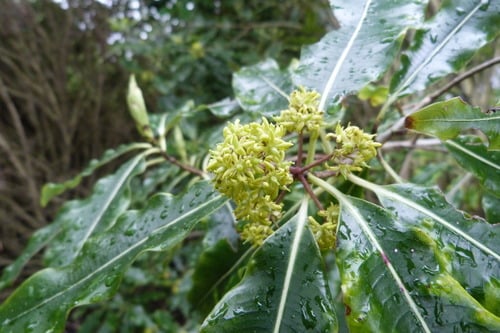
Pittosporum eugenioides
Lemonwood
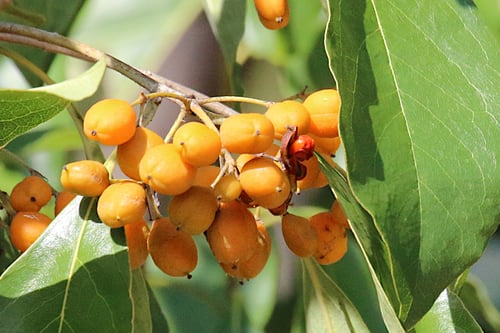
Pittosporum ferrugineum
Rusty Pittosporum, Mock Orange
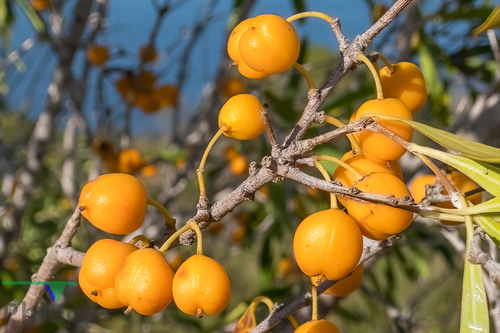
Pittosporum phillyreoides
Weeping pittosporum, Butter bush, Native willow, Meemeei, Wild apricot, Berrigan
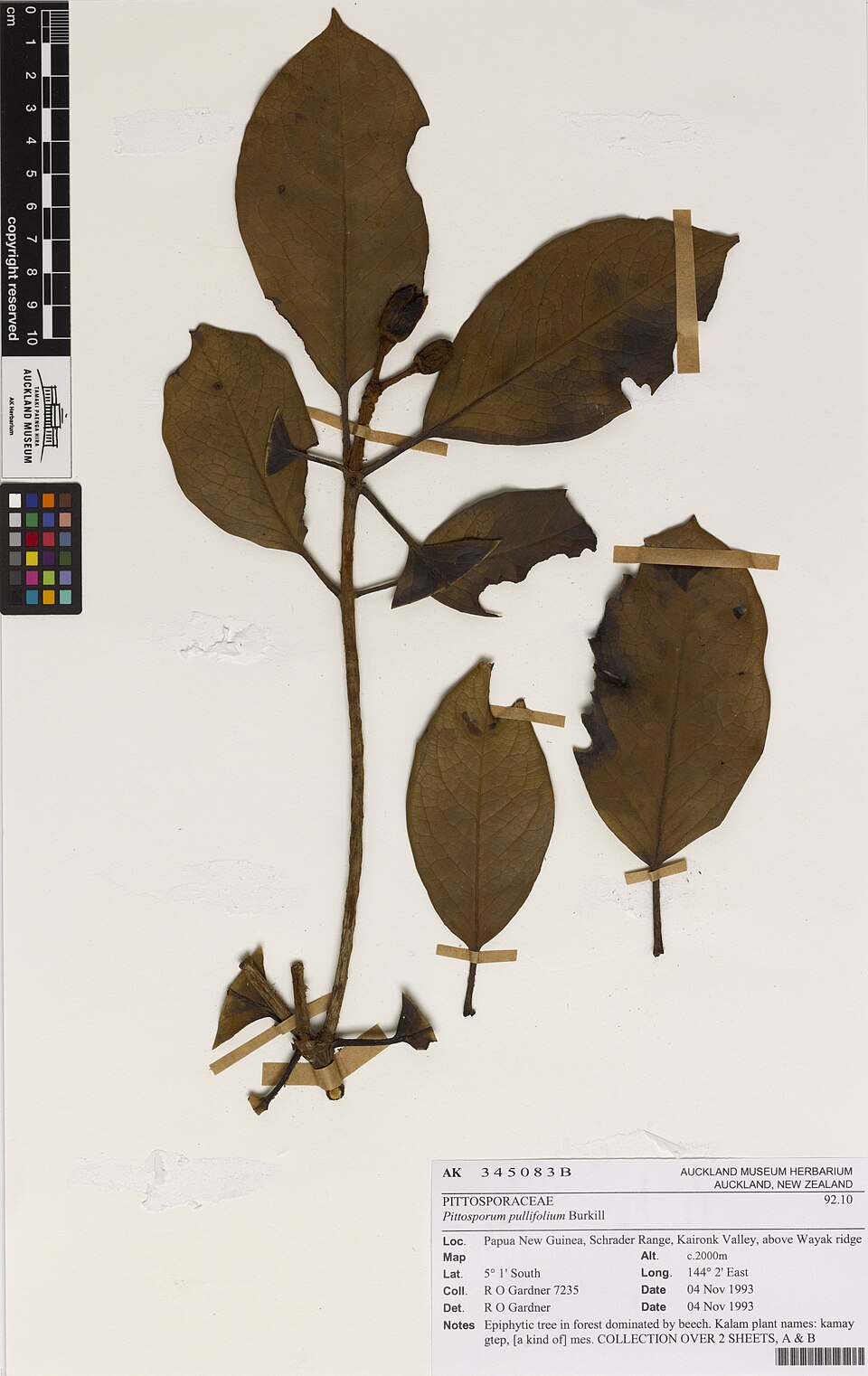
Pittosporum pullifolium
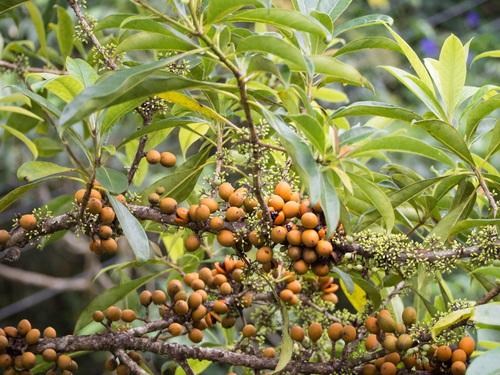
Pittosporum resiniferum
Resin cheesewood
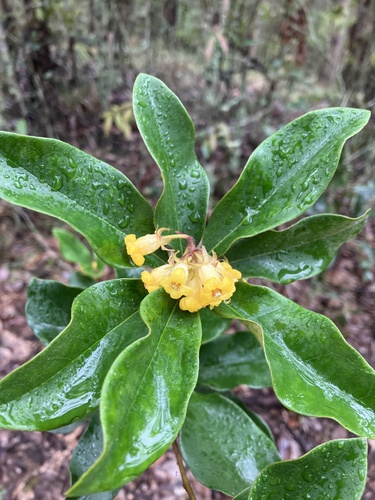
Pittosporum revolutum
Hairy pittosporum, Yellow Pittosporum, Rough-fruited Pittosporum, Mock orange