Pittosporum tenuifolium
Gaertn.
iNaturalist· cc-by
(c) David Orlovich, some rights reserved (CC BY), uploaded by David Orlovich
iNaturalist· cc-by-nc
(c) Isadora, some rights reserved (CC BY-NC)
iNaturalist· cc-by-nc
(c) Isadora, some rights reserved (CC BY-NC)
Summary
Source: WikipediaPittosporum tenuifolium is a small evergreen tree endemic to New Zealand – growing up to 10 m (33 ft) – commonly known as kōhūhū and black matipo, and by other Māori names kohukohu and tawhiwhi. Its small, very dark, reddish-purple flowers generally go unnoticed, and are scented only at night. The Latin tenuifolium means "slender-leaved".
Description
Evergreen tree growing at medium rate to 7m tall by 4m wide. Year-round foliage with fragrant hermaphroditic flowers in May, insect-pollinated. Hardy to UK zone 8. Adapts to light sandy and medium loamy well-drained soils across mildly acid to mildly alkaline pH. Grows in semi-shade or full sun; accepts dry or moist soil and tolerates maritime exposure.
Edible Uses
A fragrant gum is obtained from the bark, either by bruising it or making an incision.
Medicinal Uses
None known
Known Hazards
This plant contains saponins. Saponins are found in many foods, such as some beans, and although they are fairly toxic to people they are poorly absorbed by the body and most pass straight through without any problem. They are also broken down if the food is thoroughly cooked for a long time. Saponins are much more toxic to some creatures, such as fish, and hunting tribes have traditionally put large quantities of them in streams, lakes etc in order to stupefy or kill the fish.
Distribution
It is a temperate plant. Arboretum Tasmania.
Where It Grows
Africa, Australia, East Africa, New Zealand*, Tasmania, Zimbabwe,
Cultivation
Succeeds in most well-drained soils of reasonably good quality in full sun or light shade. Succeeds in dry soils. Fairly tolerant of maritime exposure, but it can be killed by cold winds. Hardy to about -10°c, it is tender outside the milder areas of Britain, but often self-sows when happy. Plants have reached a height of 9 metres in a sheltered position in eastern England. A very ornamental plant, there are many named varieties. Very amenable to pruning, plants can be cut right back into old wood if required. The species in this genus are very likely to hybridize with other members of the genus. When growing a species from seed it is important to ensure that the seed either comes from a known wild source, or from isolated specimens in cultivation. Plants are widely cultivated for their foliage which lasts a long time in water and is used in flower arranging. The flowers are honey-scented. Plants in this genus are notably resistant to honey fungus.
Propagation
Seed - sow when ripe in autumn or in late winter in a warm greenhouse; germination is usually free. Prick seedlings into individual pots when large enough to handle, move to a cold frame once established, and plant out in late spring the following year, with some cold protection during their first winter outdoors. Cuttings of half-ripe wood, 5–7cm with a heel, taken July/August in a frame give a poor to fair strike rate. Basal ripewood cuttings can also be taken in late autumn in a cold frame.
Other Uses
Very tolerant of trimming, this plant can be grown as a formal or informal hedge in exposed maritime areas, though it does not stand extreme exposure. When maintained as a formal hedge, trimming is best done in spring, though this reduces flowering. A practical compromise is to trim only every other year.
Synonyms
Also Known As
Kohuhu
References (2)
- Crowe, A., 1997, A Field Guide to the Native Edible Plants of New Zealand. Penguin. p 44
- Fruct. sem. pl. 1:286, t. 59, fig. 7. 1788
More from Pittosporaceae
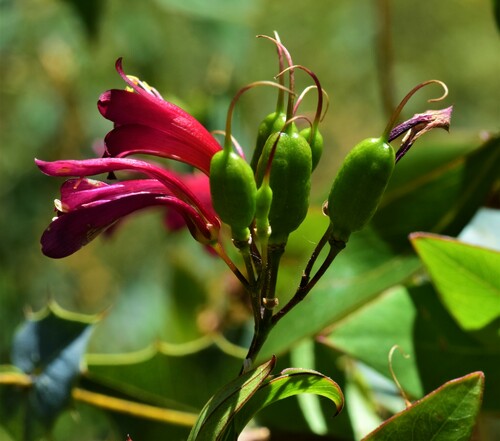
Billardiera erubescens
Red Billardiera
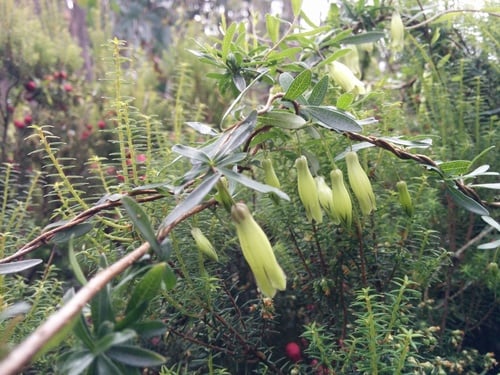
Billardiera longiflora
Purple Apple-berry, Mountain Blue Berry
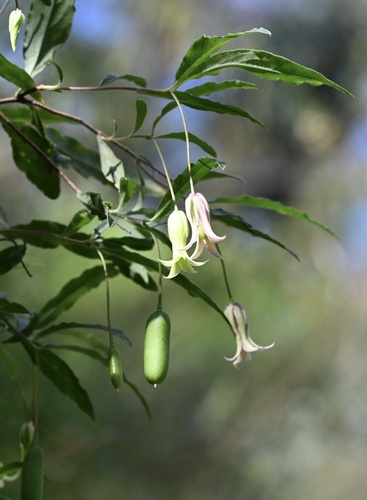
Billardiera mutabilis
Green appleberry
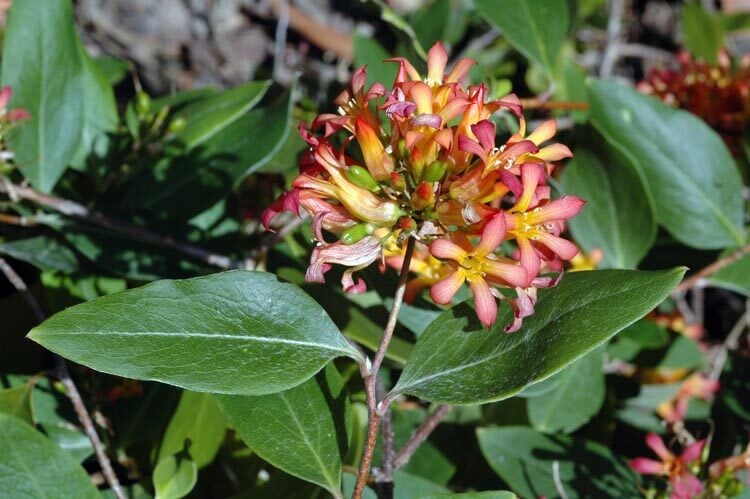
Billardiera ringens
Chapman River Climber, Chapman creeper
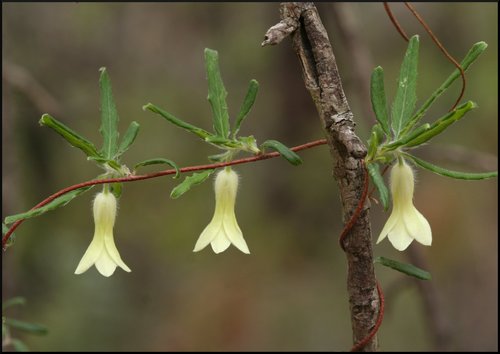
Billardiera scandens
Appleberry, Apple dumpling, Common Appleberry
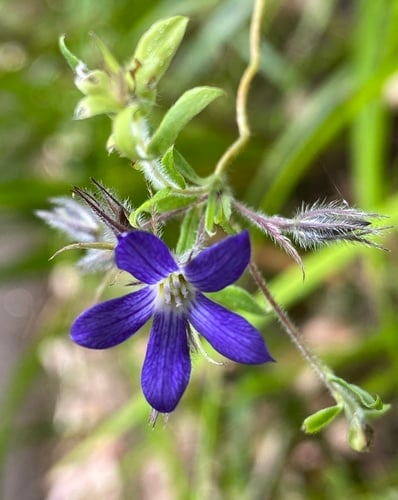
Billardiera variifolia
Western bluebell