Sollya heterophylla
Lindl.
Bluebell creeper, Australian Bluebell
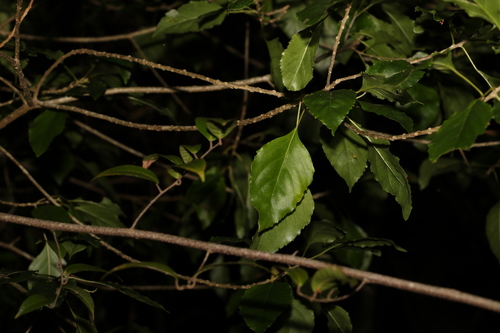
iNaturalist· cc-by-nc
(c) Liz Snow, some rights reserved (CC BY-NC)
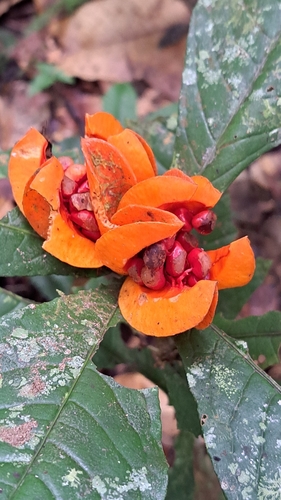
iNaturalist· cc-by-nc
(c) Liz Snow, some rights reserved (CC BY-NC)
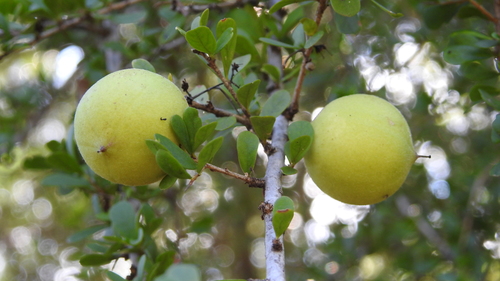
iNaturalist· cc-by-nc
(c) Liz Snow, some rights reserved (CC BY-NC)
Description
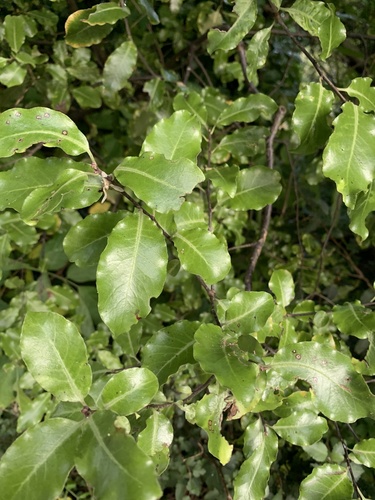
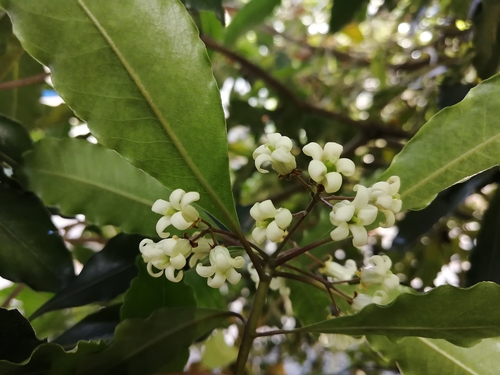
A small shrub or twiner. It climbs attaching by its stems. It grows to 1.5 m high. The leafy stems are long. These twist around themselves and other plants. It can climb 3-4 m. The leaves are glossy green. They are leathery and 5 cm long. The flower colour is intense blue. They can also be white or mauve. They hang downwards. They are 3 cm long and hang in loose clusters. The fruit are fleshy. They are blue berries up to 2.5 cm long. They are edible when ripe.
Edible Uses
The fleshy blue berries are edible when ripe.
Distribution
It grows in temperate regions. It can grow in the subtropics. It needs well drained soil. It can grow in full sun or light shade. It can stand light frosts. It grows in woodland areas in SW Western Australia. It suits hardiness zones 9-11. Tasmania Herbarium.
Where It Grows
Australia*, Europe, Tasmania,
Cultivation
Plants can be grown by seeds or cuttings.
Notes
There are 3 Sollya species.
Synonyms
References (23)
- Bindon, P., 1996, Useful Bush Plants. Western Australian Museum. p 235
- Blomberry, A.M., 1979, Australian Native Plants. Angus and Robertson p 162
- Bodkin, F., 1991, Encyclopedia Botanica. Cornstalk publishing, p 937
- Brickell, C. (Ed.), 1999, The Royal Horticultural Society A-Z Encyclopedia of Garden Plants. Convent Garden Books. p 968
- Cronin, L., 1989, The Concise Australian Flora. Reed. p 25
Show all 23 references Hide references
- Cundall, P., (ed.), 2004, Gardening Australia: flora: the gardener's bible. ABC Books. p 1352
- Dashorst, G.R.M., and Jessop, J.P., 1998, Plants of the Adelaide Plains & Hills. Botanic Gardens of Adelaide and State Herbarium. p 76
- Daw, B., Walley, T. & Keighery, G., 2001, Bush Tucker. Plants of the South-West. Department of Conservation and Land Management. Western Australia. p 36
- Edward's Bot. Reg. 17: t. 1466. 1832
- Greig, D., 1996, Flowering Natives for Home Gardens. Angus & Robertson. p 306
- Heywood, V.H., Brummitt, R.K., Culham, A., and Seberg, O., 2007, Flowering Plant Families of the World. Royal Botanical Gardens, Kew. p 256 (As Billardiera heterophylla)
- Hibbert, M., 2002, The Aussie Plant Finder 2002, Florilegium. p 292
- Jones, D.L. & Gray, B., 1977, Australian Climbing Plants. Reed. p 54, 144
- Leiper, G & Houser, J., Mutooroo. Plant Use by Australian Aboriginal People. Assembly press, Queensland.
- Lord, E.E., & Willis, J.H., 1999, Shrubs and Trees for Australian gardens. Lothian. p 325
- Low, T., 1991, Wild Food Plants of Australia. Australian Nature FieldGuide, Angus & Robertson. p 124
- Molyneux, B. and Forrester, S., 1997, The Austraflora A-Z of Australian Plants. Reed. p 150
- Morley, B. & Everard, B., 1970, Wild Flowers of the World. Ebury press. Plate 131
- Morley, B.D., & Toelken, H.R., (Eds), 1983, Flowering Plants in Australia. Rigby. p 139
- Paczkowska, G . & Chapman, A.R., 2000, The Western Australian Flora. A Descriptive Calatogue. Western Australian Herbarium. p 457
- Ratcliffe D & P., 1987, Australian Native Plants for Indoors. Little Hills press. p 131
- Rolsh, 1994, Wildflowers of the Western State, Rolsh Productions Albany WA. p 36
- Tasmanian Herbarium Vascular Plants list p 44