Pinus bungeana
Zuccarini ex Endlicher
Lace-bark pine, Bai pi song
iNaturalist· cc-by-nc
(c) 用心阁, some rights reserved (CC BY-NC)
iNaturalist· cc-by-sa
(c) Wikimedia Commons, some rights reserved (CC BY-SA)
iNaturalist· cc-by-sa
(c) Kenpei, some rights reserved (CC BY-SA)
Summary
Source: WikipediaPinus bungeana (Chinese: 白皮松; pinyin: báipísōng; Japanese: シロマツ; Korean: 백송; RR: baeksong), also known by the common names Bunge's pine, lacebark pine and white-barked pine, is a pine tree native to northeastern and central China. It is a slow-growing tree that can grow to heights of 15–25 metres (49–82 ft) is frost hardy down to below −26 °C (−15 °F). Its smooth, grey-green bark gradually sheds in round scales to reveal patches of pale yellow, which turn olive-brown, red and purple on exposure to light.
Description
A tree. It grows to 30 m tall. The trunk is usually single but it can be forked near the base. The trunk is 3 m across. The bark flakes off irregularly. The bark can flake off in thin scaly patches. The crown can be like a pyramid or like an umbrella. The first year branches are grey-green. There are 3 needles in a bundle. They are triangle shaped in cross section. They are 5-10 cm long by 0.5-2 mm wide. They are stiff. The seed cones occur singly. They have short stalks. They are usually pale green or yellowish brown at maturity. The are oval and 5-7 cm long by 4-6 cm wide. The seeds are grey-brown and 10 mm long by 5- mm wide. The wing is loosely attached.
Edible Uses
The seeds can be eaten raw or cooked. They are a reasonable size at up to 10mm x 8mm, rich in oil, and have a resinous flavour. A vanillin flavouring is also obtained as a by-product of resins released from the pulpwood.
Medicinal Uses
Turpentine from pine resin is antiseptic, diuretic, rubefacient, and vermifuge. Taken internally it is a valuable treatment for kidney and bladder complaints, and is used both internally and as a rub and steam bath for rheumatic conditions. It benefits the respiratory system and is useful for diseases of the mucous membranes and complaints such as coughs, colds, influenza, and TB. Externally it treats skin complaints, wounds, sores, burns, and boils, applied as liniment plasters, poultices, herbal steam baths, and inhalers.
Known Hazards
The wood, sawdust and resins from various species of pine can cause dermatitis in sensitive people.
Distribution
It is a temperate plant. It grows in China in the mountains between 500-1800 m altitude. It suits hardiness zones 5-9. Arboretum Tasmania. Sydney Botanical gardens.
Where It Grows
Asia, Australia, Britain, China*, Europe, Korea, Tasmania, USA,
Cultivation
Prefers a deep loamy soil. Thrives in a light well-drained sandy or gravelly loam. Dislikes poorly drained moorland soils. Established plants tolerate drought, succeeding in hot dry sites. A very ornamental tree with beautiful bark. Plants are strongly outbreeding, self-fertilized seed usually grows poorly. They hybridize freely with other members of this genus. This species is slow growing and hard to establish in Britain, doing best in the mild areas of the country. Leaf secretions inhibit the germination of seeds, thereby inhibiting the growth of other plants below the tree. Plants in this genus are notably susceptible to honey fungus.
Propagation
Sow seed in individual pots in a cold frame as soon as it is ripe, or in late winter if not possible. A short stratification of 6 weeks at 4°c can improve germination of stored seed. Plant seedlings into permanent positions as soon as possible and protect them for the first winter or two. Plants have a very sparse root system and establish best when moved young — ideally between 30 and 90cm tall, though we plant them out at around 5–10cm tall. A thorough weed-excluding mulch helps them establish well. Larger transplants check badly and may put on little growth for several years, which also impairs root development and wind resistance. Cuttings work only when taken from trees less than 10 years old. Use single leaf fascicles with the base of the short shoot; disbudding the shoots a few weeks before taking cuttings can help. Cuttings are normally slow to establish.
Other Uses
A tan or green dye is obtained from the needles. The needles contain terpene, released when rain washes over them, which inhibits germination of some plants including wheat. Oleo-resins occur in all pine tissues but are not always present in quantities that make extraction economically worthwhile. Resins are obtained by tapping the trunk or by destructive distillation of the wood; trees from warmer regions generally yield more. Turpentine makes up an average of 20% of the oleo-resin and is separated by distillation, with uses as a solvent for waxes, in varnish-making, and medicinally. Rosin, the residue after turpentine removal, is used by violinists and in sealing wax and varnish. Pitch from the resin is used for waterproofing and as a wood preservative.
Production
The cones take about 18 months to mature.
Notes
There are over 100 species of Pinus.
References (9)
- Coombes, A.J., 2000, Trees. Dorling Kindersley Handbooks p 66
- Cundall, P., (ed.), 2004, Gardening Australia: flora: the gardener's bible. ABC Books. p 1047
- Fu Liguo, Li Nan, Mill, R.R., Pinaceae. Flora of China.
- Hibbert, M., 2002, The Aussie Plant Finder 2002, Florilegium. p 234
- Hu, Shiu-ying, 2005, Food Plants of China. The Chinese University Press. p 278
Show all 9 references Hide references
- Plants for a Future database, The Field, Penpol, Lostwithiel, Cornwall, PL22 0NG, UK. http://www.scs.leeds.ac.uk/pfaf/
- Syn. conif. 166. 1847
- Valder, P., 1999, The Garden Plants of China. Florilegium. p 83
- Wickens, G.E., 1995, Edible Nuts. FAO Non-wood forest products. FAO, Rome. p176
More from Pinaceae
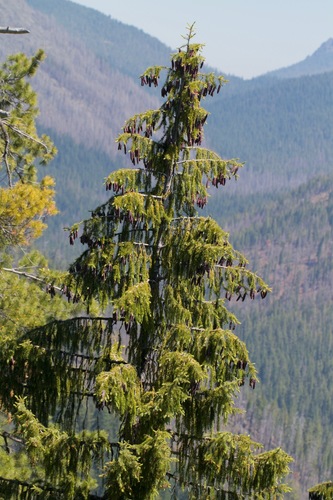
Picea breweriana
Weeping spruce, Brewer Spruce, Brewer's weeping spruce
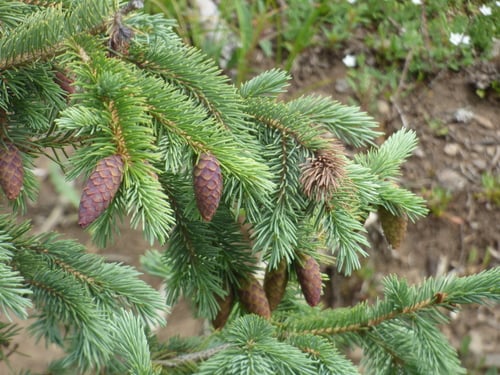
Picea engelmannii
Mountain spruce, Engelmann spruce, Columbian spruce
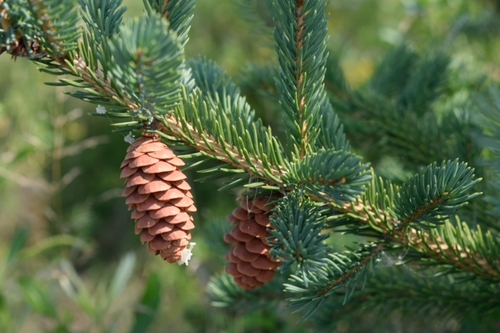
Picea glauca
Dwarf Alberta Spruce, White Spruce
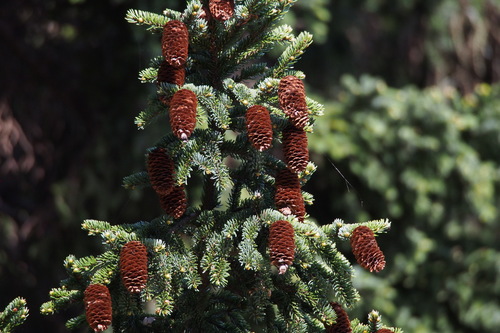
Picea glehnii
Sakhalin spruce
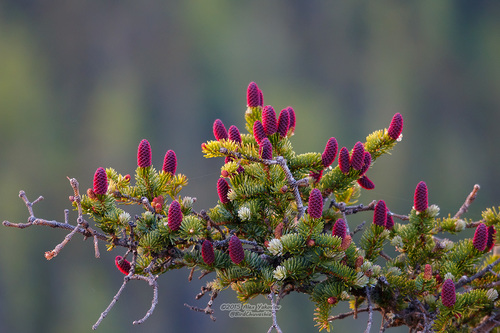
Picea jezoensis
Yezo spruce, Yeddo spruce
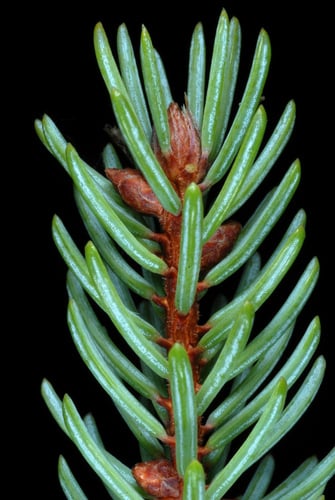
Picea mariana
Black spruce, Bog spruce, Swamp spruce